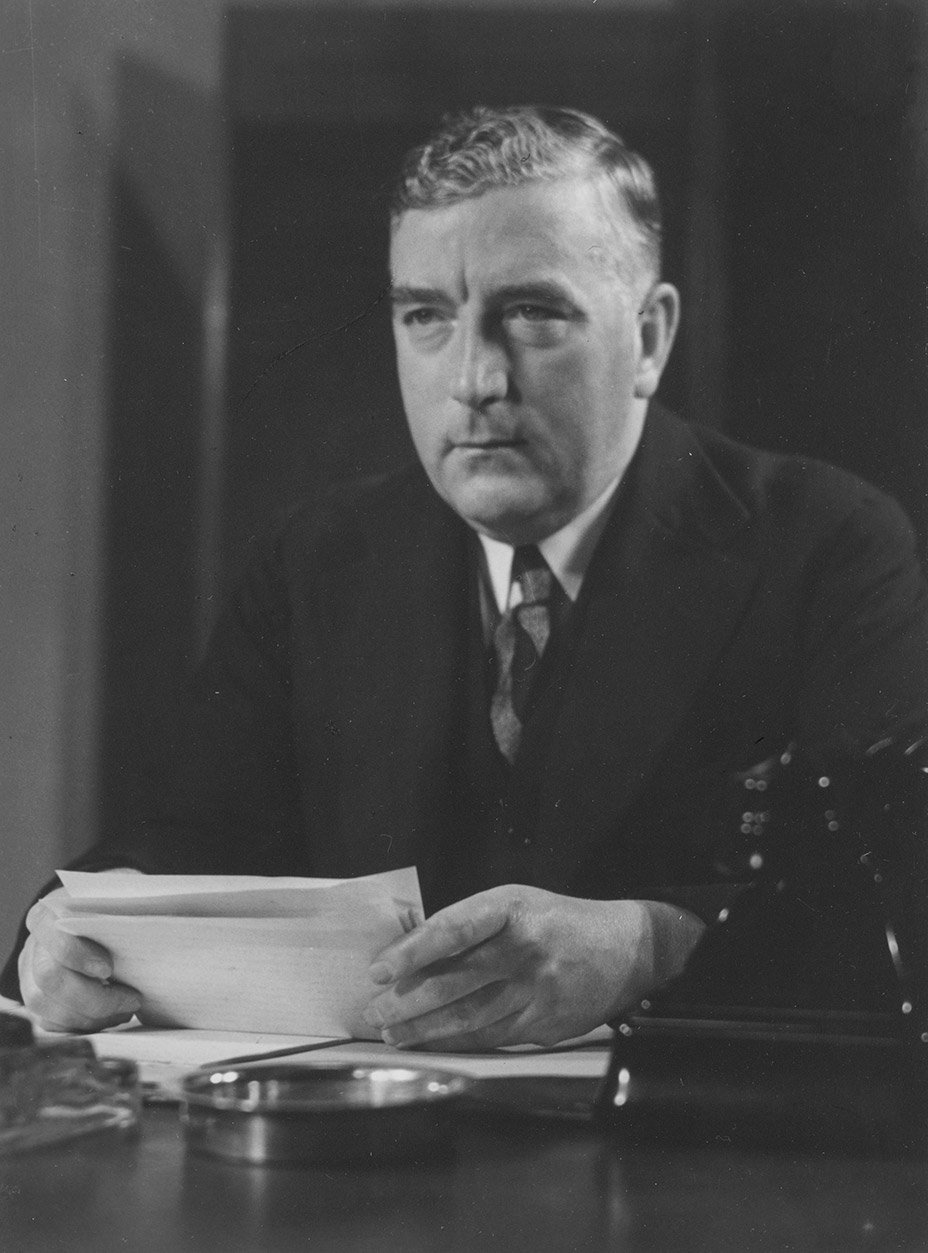
Sir Robert Menzies KT, AK, CH, PC, QC, FAA, FRS
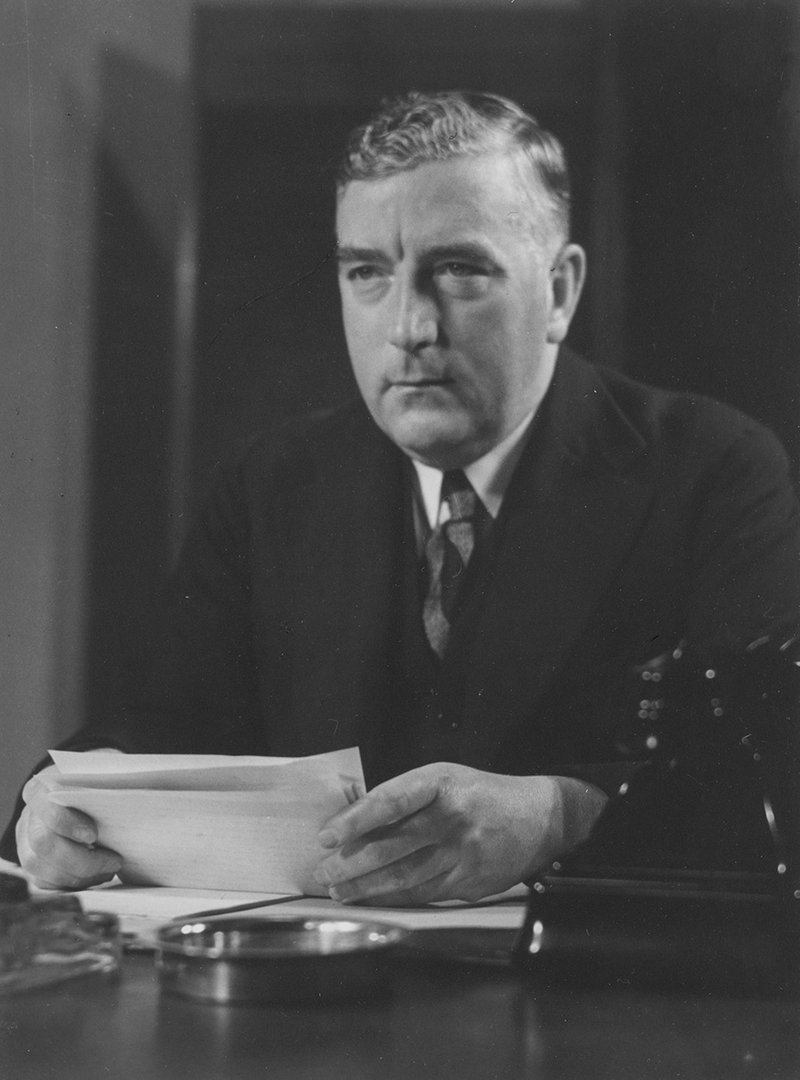 Click to enlarge image
© National Library of Australia
Readers note: This is an excerpt from the 200 Treasures exhibition catalogue, developed in 2017. This content was written as a brief biography on why this person was included in the exhibition.
1894 - 1978
Robert Gordon (Bob) Menzies, Australia’s longest-serving prime minister, was born in Jeparit, in western Victoria, in 1894 and educated in Ballarat. He won a scholarship to the University of Melbourne where he studied law, and was president of the Student’s Representative Council. Menzies was admitted to the Bar, but was drawn more to politics.
He joined the Nationalist Party and first served in Victorian politics before moving to the federal arena in 1934, when he won the seat of Kooyong for the newly formed United Australia Party (UAP). Menzies served in the new Joseph Lyons government where he generated a reputation for being combative. He earned himself the sobriquet ‘Pig-Iron Bob’ when he clashed with union workers who refused to load a shipment of pig-iron destined for Japan, which had launched brutal assaults on China. After Lyons died in 1939, Menzies assumed leadership at a time when the world was again on the brink of war. Menzies led Australia but the electorate did not follow him as he would have liked – he was presiding over a hung parliament. He resigned as prime minister in 1941, as Japan was about to enter the war.
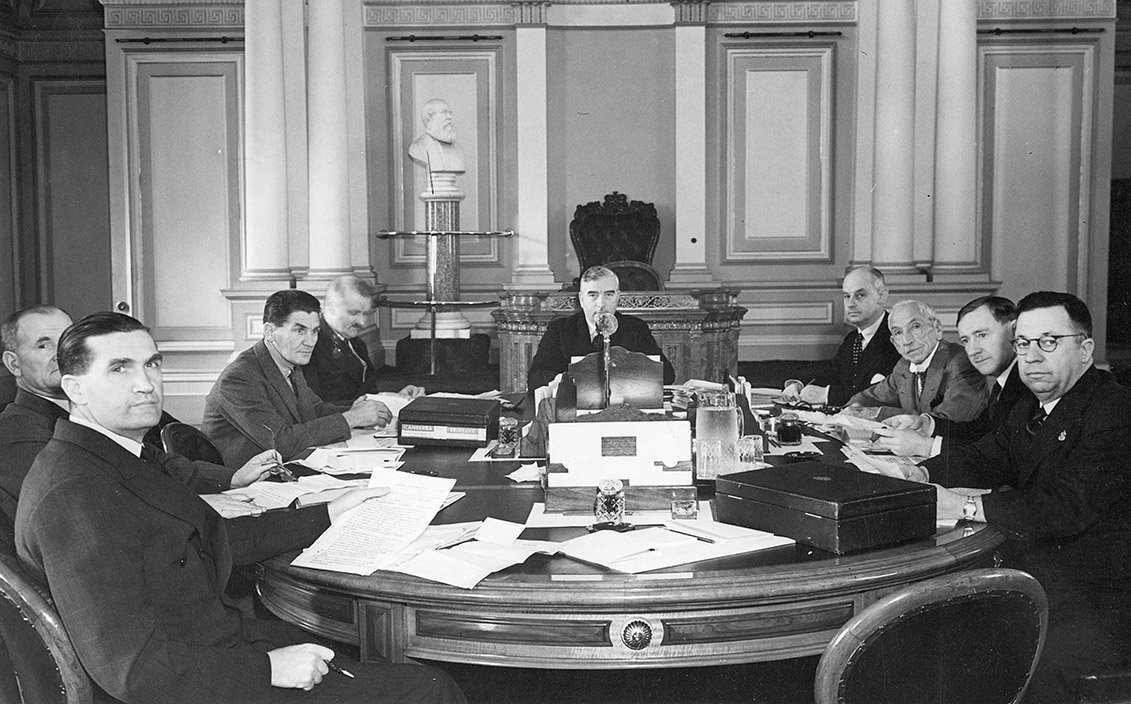
© State Library of Victoria

At war’s end, Menzies returned to politics with gusto, having founded the Liberal Party in 1945 as a way to break with the past. His second term as prime minister lasted from 1949 until his retirement in 1966. Menzies was a Cold War warrior: he waged war on the ‘Reds’ overseas and at home, and tried to ban the Australian Communist Party and break union power.
Much of his success can be attributed to his brilliant ability to capture the popular mood of the time – and the Labor Party split in 1955 certainly did not harm his electoral prospects, either. Menzies oversaw the deeply conservative but prosperous postwar era and directed the nation’s gaze to Britain, especially to the new young queen, Elizabeth II.