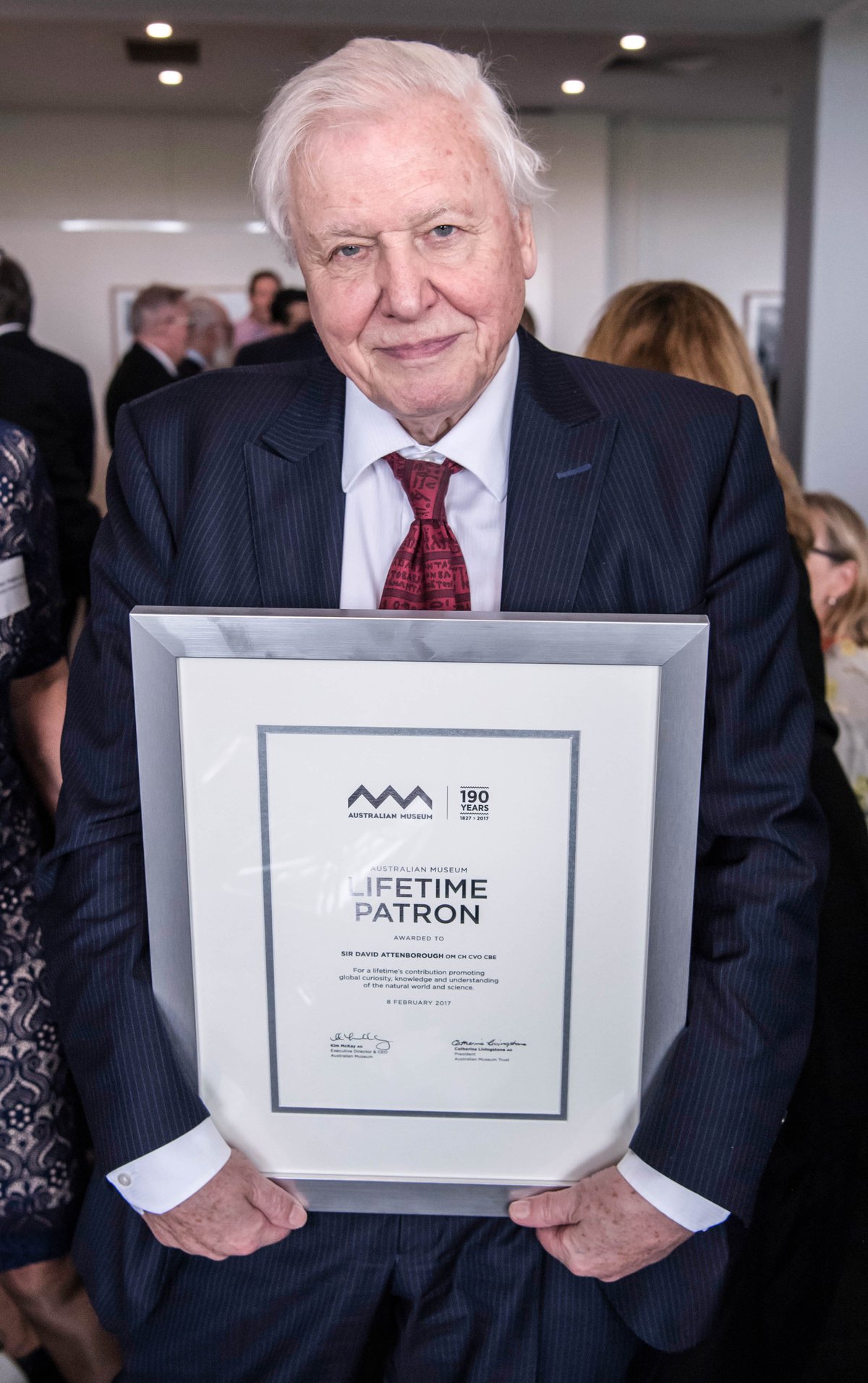
David Attenborough OM
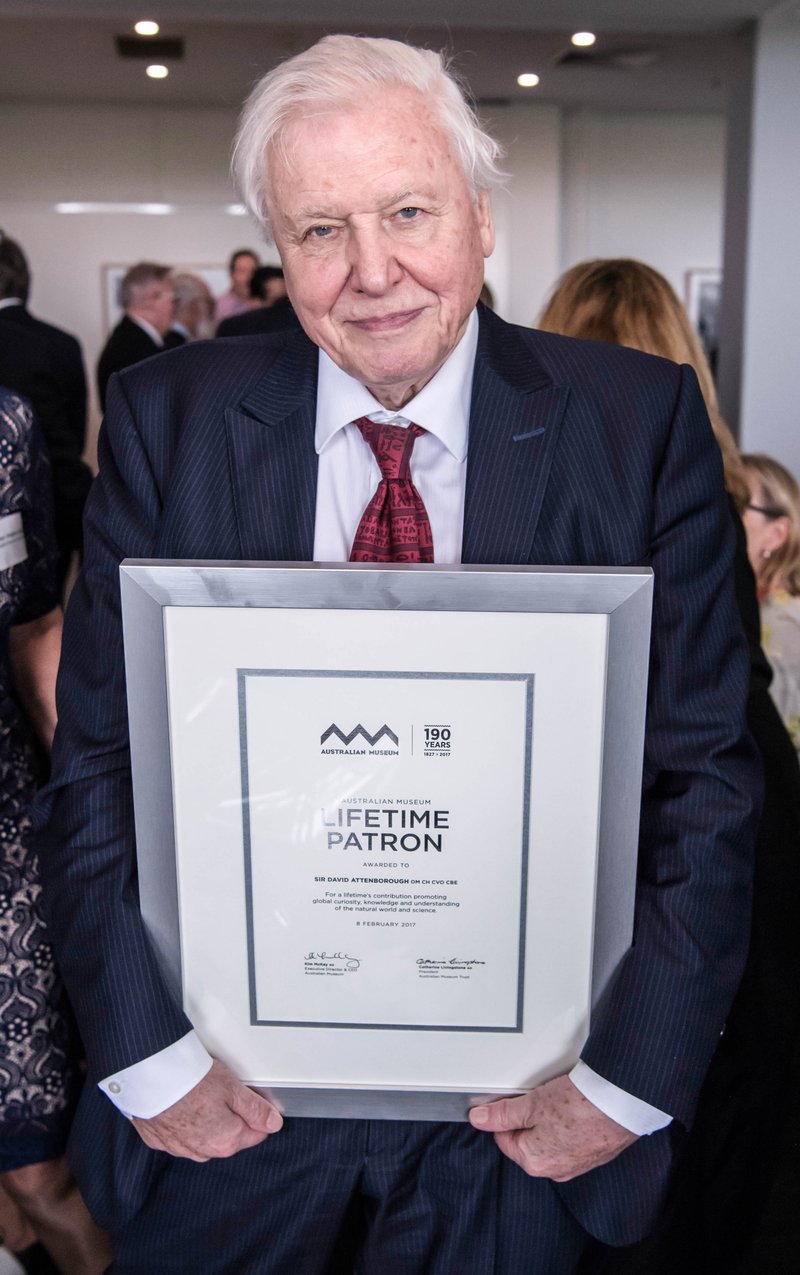 Click to enlarge image
© Australian Museum
Sir David Attenborough OM GCMG CH CVO CBE FRS FRSB FRSA FLS FZS FSA FRSGS has been an important part of the Australian Museum's history, inspiring staff and visitors for generations.
His formal association with the Australian Museum (AM) began in 1980, when he gave a special lecture during his publicity tour for Life on Earth. Since then, Attenborough's relationship with the AM only deepened through visits to the museum in Sydney and key research sites around Australia. Most recently, as part of the AM's 190th Anniversary in 2017, Sir Attenborough was bestowed the honour of the Australian Museum's Lifetime Patron in recognition of his lifetime's work in natural science and conservation.
Explore his journey from a curious child to Lifetime Patron of Australia's first museum below.
Early life and background
Born in London in 1926, Sir David Attenborough grew up in Leicester, England, where his father was principal of University College Leicester. In this academic environment, Attenborough quickly developed a fascination with the natural world. He started collecting fossils, rocks and specimens to build a small 'museum' of his own at home.
He was educated at Wyggeston Grammar School for Boys before receiving a scholarship to study natural sciences at Clare College, University of Cambridge, graduating in 1947. His formal training in geology and zoology, combined with his early curiosity about the world around us, laid the foundations for his distinctive story-telling approach to science communication in the decades to come.
Rise to fame as a presenter
Attenborough joined the BBC in 1952 at the young age of 26, with absolutely no ambition to be a presenter. He was recruited as a television producer and was, by his own admission, deeply sceptical of the emerging television industry.
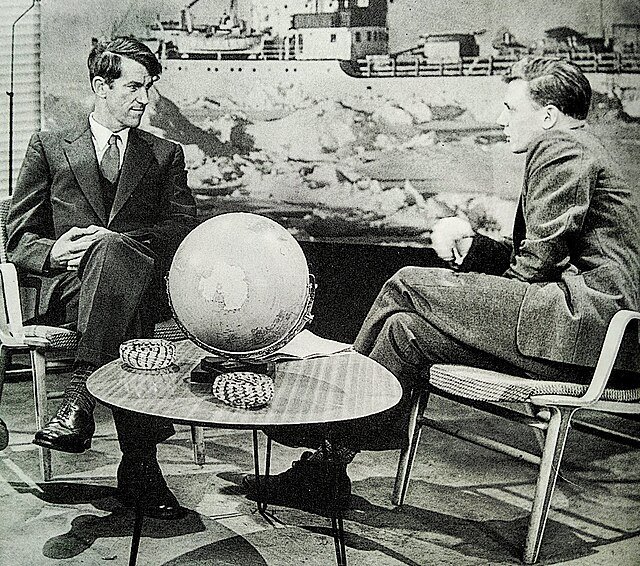
© Public domain
The turning point came just a few years later in 1954 during the production of Zoo Quest, a groundbreaking natural history series that aimed to film animals in the wild. The program originally had a different presenter, but he unfortunately fell ill during filming. This left Attenborough as the next best option since he was already deeply involved in planning and research as a producer.
The rest was history. Attenborough's natural delivery, scientific knowledge and visible curiosity meant that he was an immediate hit with audiences. Over the following decades, Attenborough gradually took on more and more presenting roles, becoming the public face and voice of natural history broadcasting. Through landmark series such as Life on Earth, The Living Planet and later Planet Earth and Blue Planet, he redefined how people understand and emotionally connect with the natural world.
Sir David Attenborough reflects on the making of Life on Earth in an archival recording from his lectures at the AM in 1991:
In truth, when I think of the three years that I had, an immensely privileged three years making life on Earth, going around the world seeing the most beautiful and spectacular and wonderful sights of nature anywhere, When I think of that and the effect it was on me, my only hope is that if, as a result of seeing the Life on Earth programmes, people do realise that we are the inheritors of an extraordinarily rich treasury, and if they do also feel that it's our responsibility to make sure that treasury survives, then I at once will at least be very, very pleased. Thank you very much.
Visits to the Australian Museum
1980 lecture for The Australian Museum Society
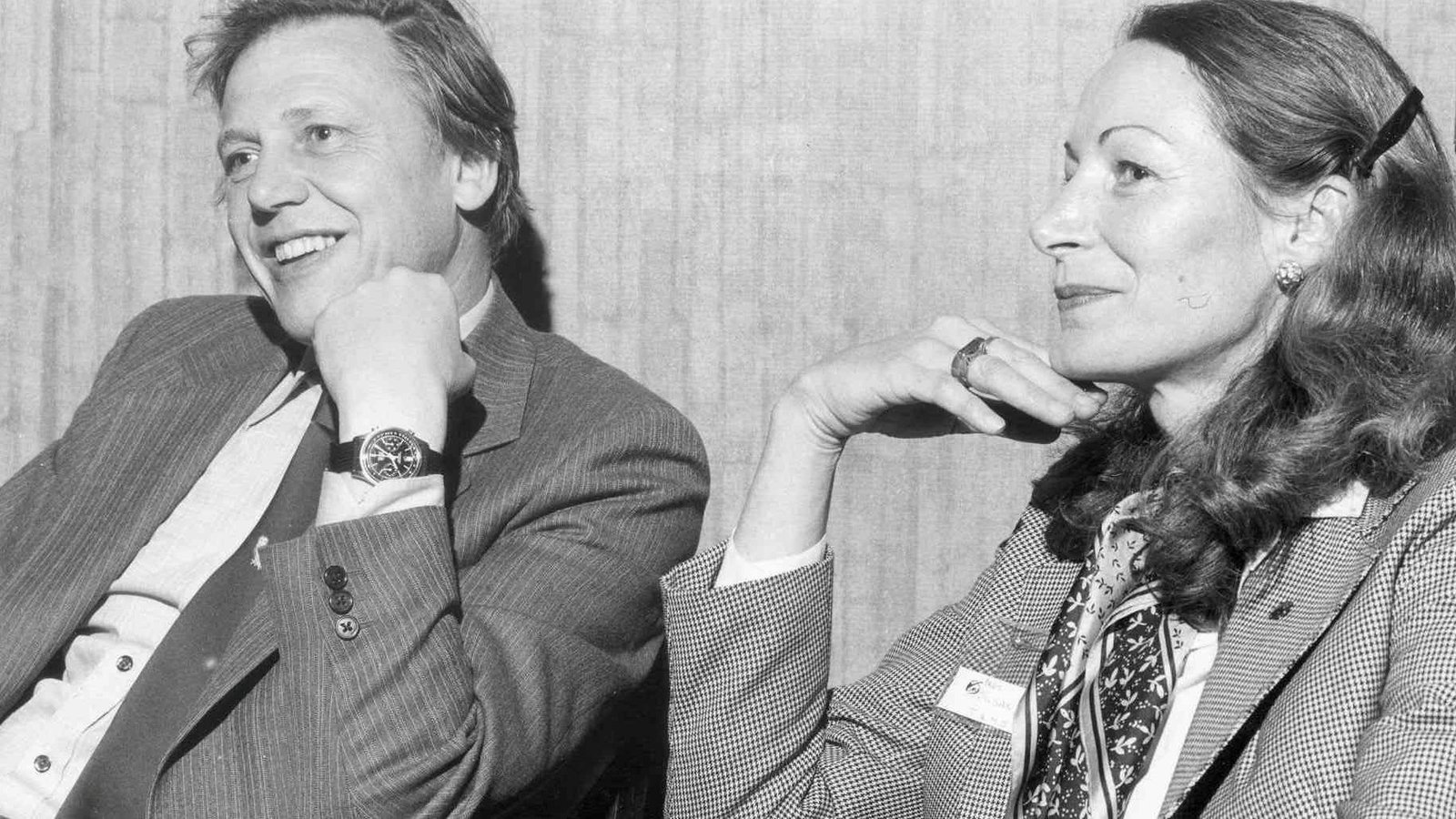
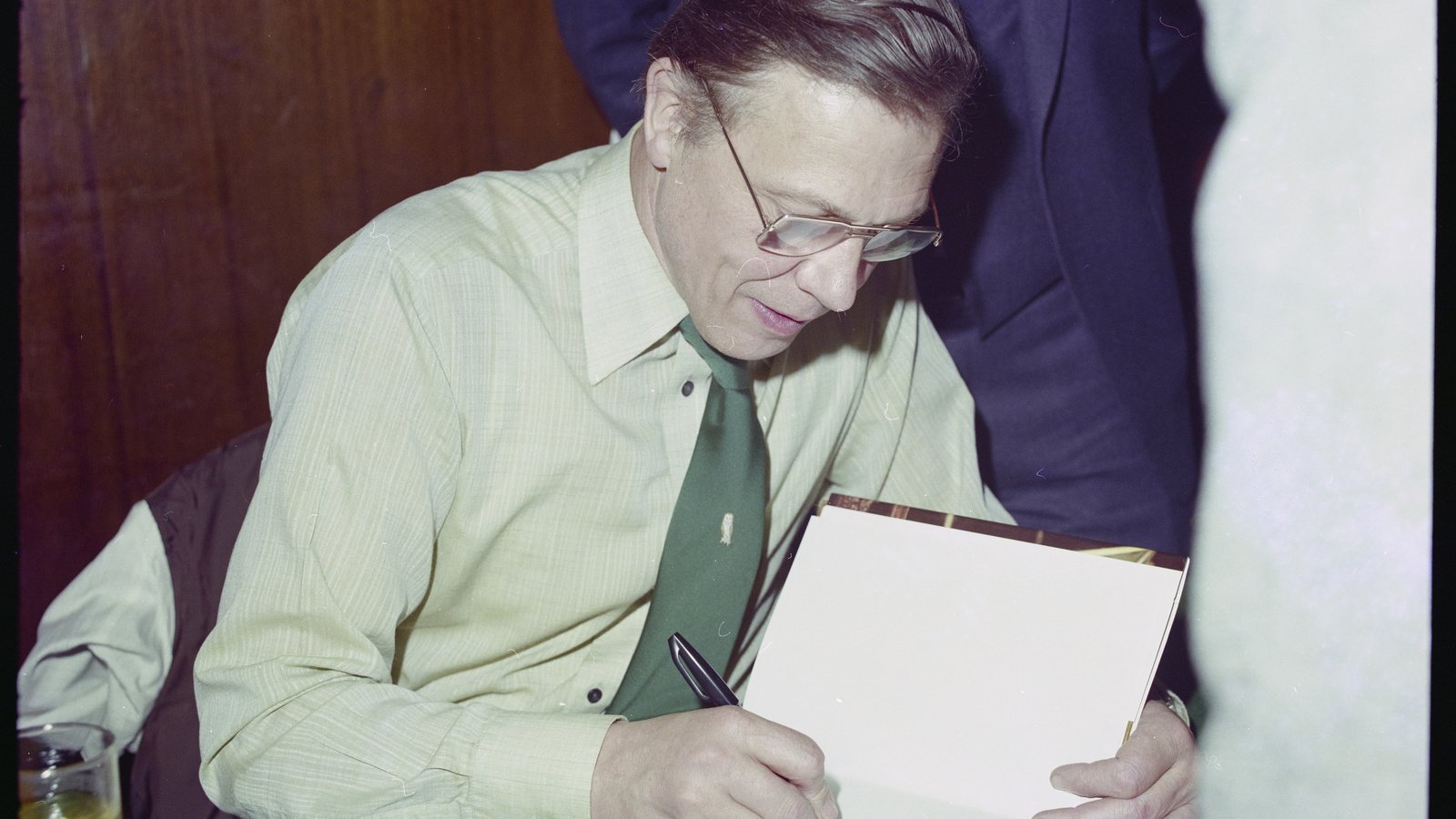
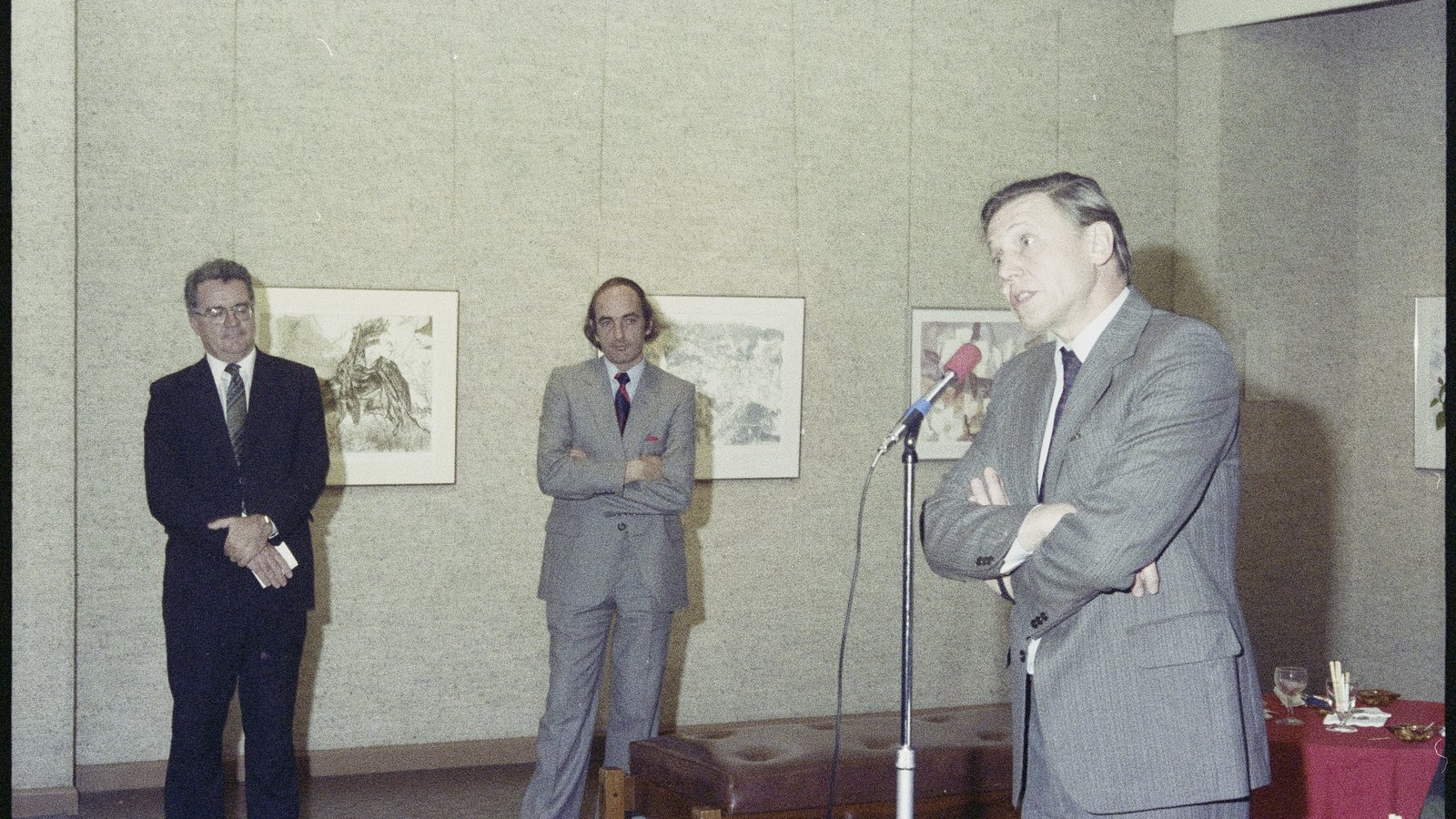
Sir David Attenborough had long inspired the AM from afar, but his 1980 visit to Australia officially brought him into the AM's orbit. While visiting Australia on his international publicity circuit for Life on Earth, Sir Attenborough stopped in to give a special lecture for The Australian Museum Society.
The lecture, held at the nearby Hilton Hotel, was so big that the AM sent its Photographic Department to capture it. These photographs, now held in the Australian Museum Archives, showcase the AM community's love of Sir Attenborough over four decades ago.
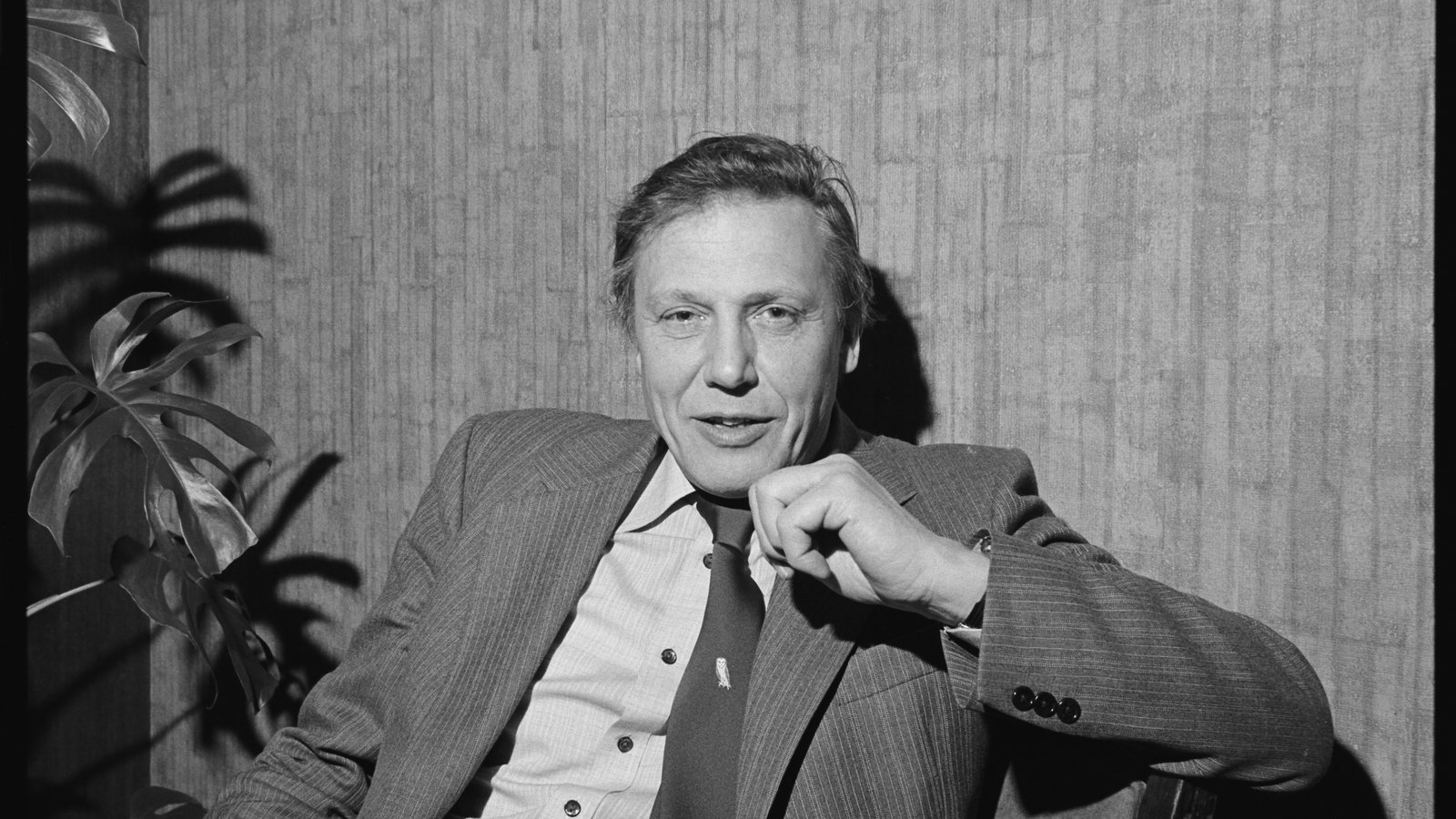
© Australian Museum
© Australian Museum
© Australian Museum
© Australian Museum
An outstanding event in a year of memorable activities was a lecture by Mr David Attenborough world famous naturalist, attended by 850 people at the Hilton Hotel. AM Annual Report 1979/80
1991 Super Science lectures at the AM
The 1980 TAMS lecture was such a hit that the AM was keen to welcome Sir Attenborough back for more. The opportunity arose in 1991, when he visited the AM three times for the Super Science Series. Recordings of these lectures are held in the Australian Museum Archives and you can listen to snippet from his talk called 'Unnatural History' below:
Sir David Attenborough reveals some of his filming tricks in an archival recording from his lectures at the AM in 1991:
But of course, sometimes we deliberately distort reality in order to make things clear. And one of the commonest ways of us distorting a picture, for example, is by speeding up the camera very fast and then replaying it at normal speed so that we may see just how some complex swift action is achieved. Watch, for example, this, of hummingbirds. Now, hummingbirds beat their wings so fast they literally hum, as this one is doing. But you can't see now at normal speed how those wings move. But here is a picture which was taken where the camera not taking just 25 frames per second, but 1,000 frames per second. So now it is slowed down, and now you can see how these marvellous little birds, as it were, row their wings like a skull through the air. And here's a fairy tern on which you can see exactly the same thing. And I have to say that we habitually tend to slightly overcrank, as the expression is. We slightly overcrank flying birds so that you can focus more clearly upon them, even when we don't slow them down as dramatically as that. Sometimes, of course, the sight of these speeded up shots can reveal all kinds of things which maybe nobody had suspected before. They can reveal actions which nobody knew happened before. And I've got a rather ghoulish little sequence, one shot, to show you, which is the reverse of speeding up. Instead of taking 1000 frames per second instead of 24, what you can do is to take perhaps 2 frames per second, or indeed one frame every hour, And that is a mechanism which, instead of slowing down things, speeds up things. And you would think that speeding up things wouldn't reveal anything, but it does. And this slightly ghoulish example, as I said, involves the body of a dead field mouse. My friend from Oxford Scientific Films, Sean Morris, one day said to himself, I wonder what actually happens to the body of a field mouse. as it decays and dies. So he found a dead field mouse and he set up his camera alongside it and started to film. And the first thing he saw was a blowy. A blowfly coming along and laying its eggs on the body of the field mouse. That's all in natural time. But now what happens when it's speeded up? No. Nobody. Nobody knew that blowfly larvae, the maggots, collaborate in this way in demolishing the body, working like a team. It's not a major discovery, but it was as vivid, a much more vivid way of showing one of the important and crucial processes of the natural world than the human eye could ever have seen unaided.
2013 visit to Canowindra
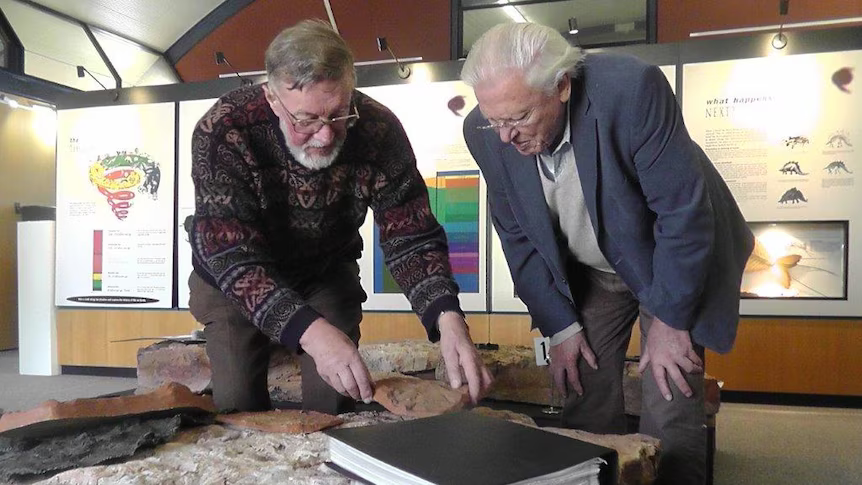
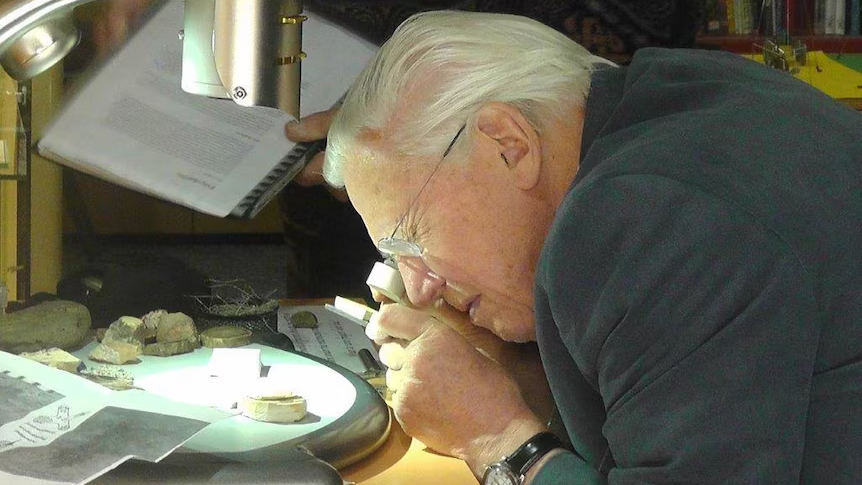
Attenborough's next visit in 2013 saw him travel not to the AM in Sydney, but instead to Canowindra to see one of the AM's most important fossil discoveries. While visiting the Age of Fishes Museum, Attenborough inspected the 360‑million‑year‑old Devonian fish fossils first excavated by Australian Museum palaeontologist Alex Ritchie and described them as "world‑class". His recognition cemented the international importance of the Canowindra site and shone a light on the AM’s leading role in uncovering some of Australia’s most extraordinary records of ancient life from the Devonian period.
© Cabonne Council
© Cabonne Council
2016 visit to Lizard Island
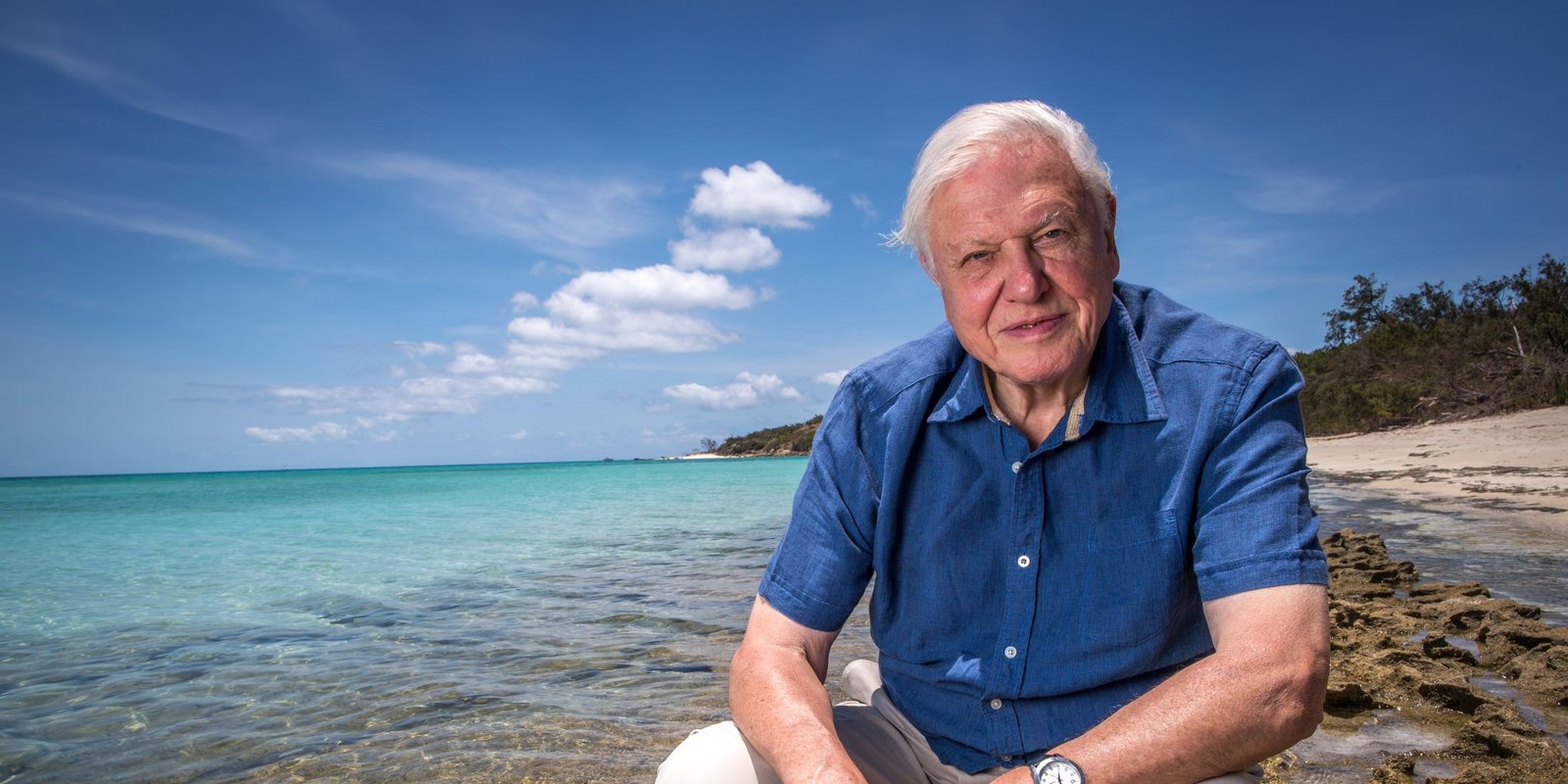
In 2015, Sir David Attenborough visited the Australian Museum’s Lizard Island Research Station on the northern Great Barrier Reef while filming his Great Barrier Reef documentary series. Attenborough’s filming at Lizard Island brought international attention to the Station’s research and also helped usher his relationship with the AM into the digital realm. Footage filmed on the Great Barrier Reef, including material captured at Lizard Island, became central to David Attenborough’s Great Barrier Reef Dive VR, an immersive experience premiered at the Australian Museum. Using real‑world footage and pioneering technologies, the VR dive allowed visitors to descend beneath the waves in a submersible with Attenborough as their guide.
CC BY 4.0
Becoming the AM's Lifetime Patron
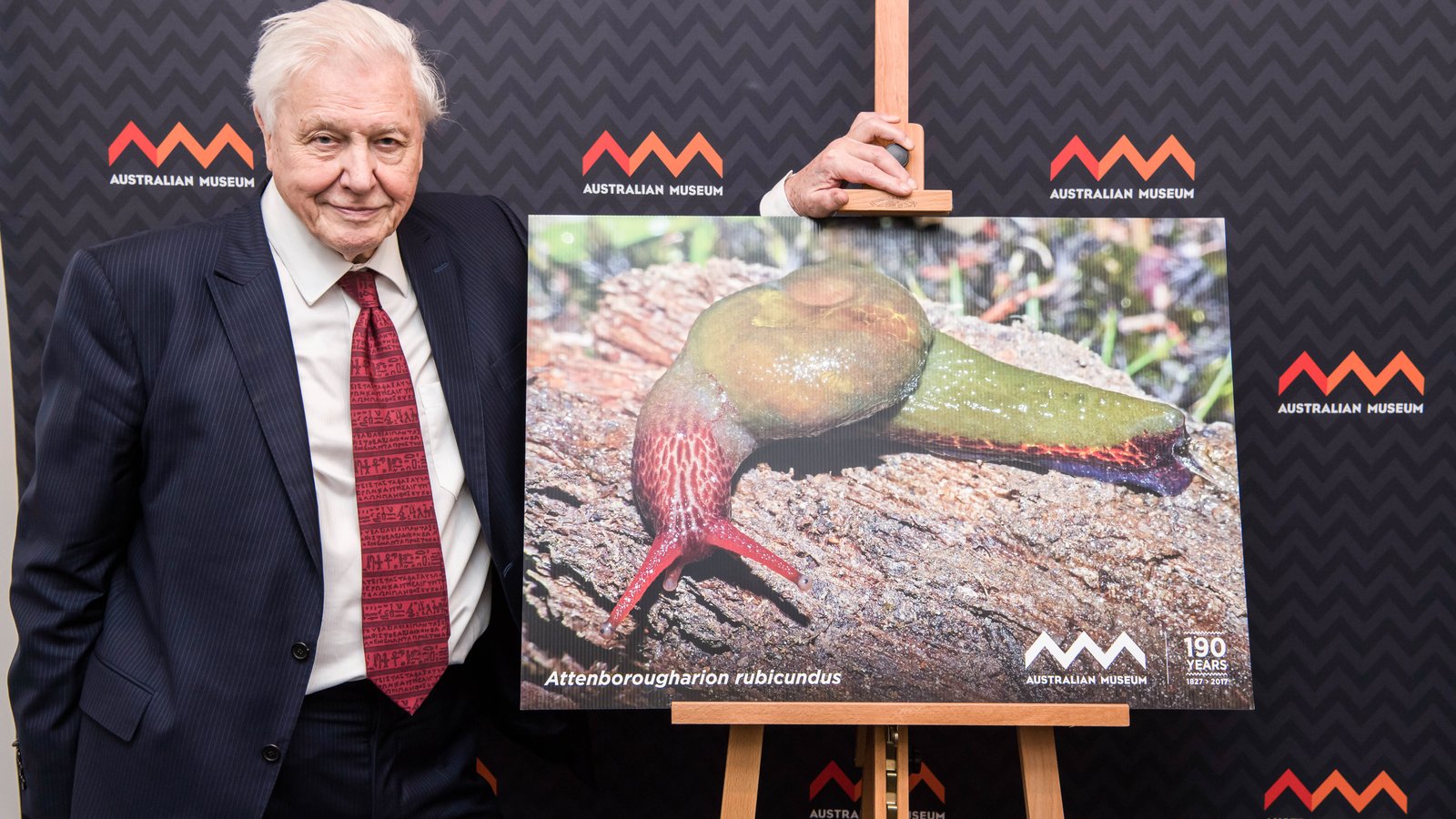
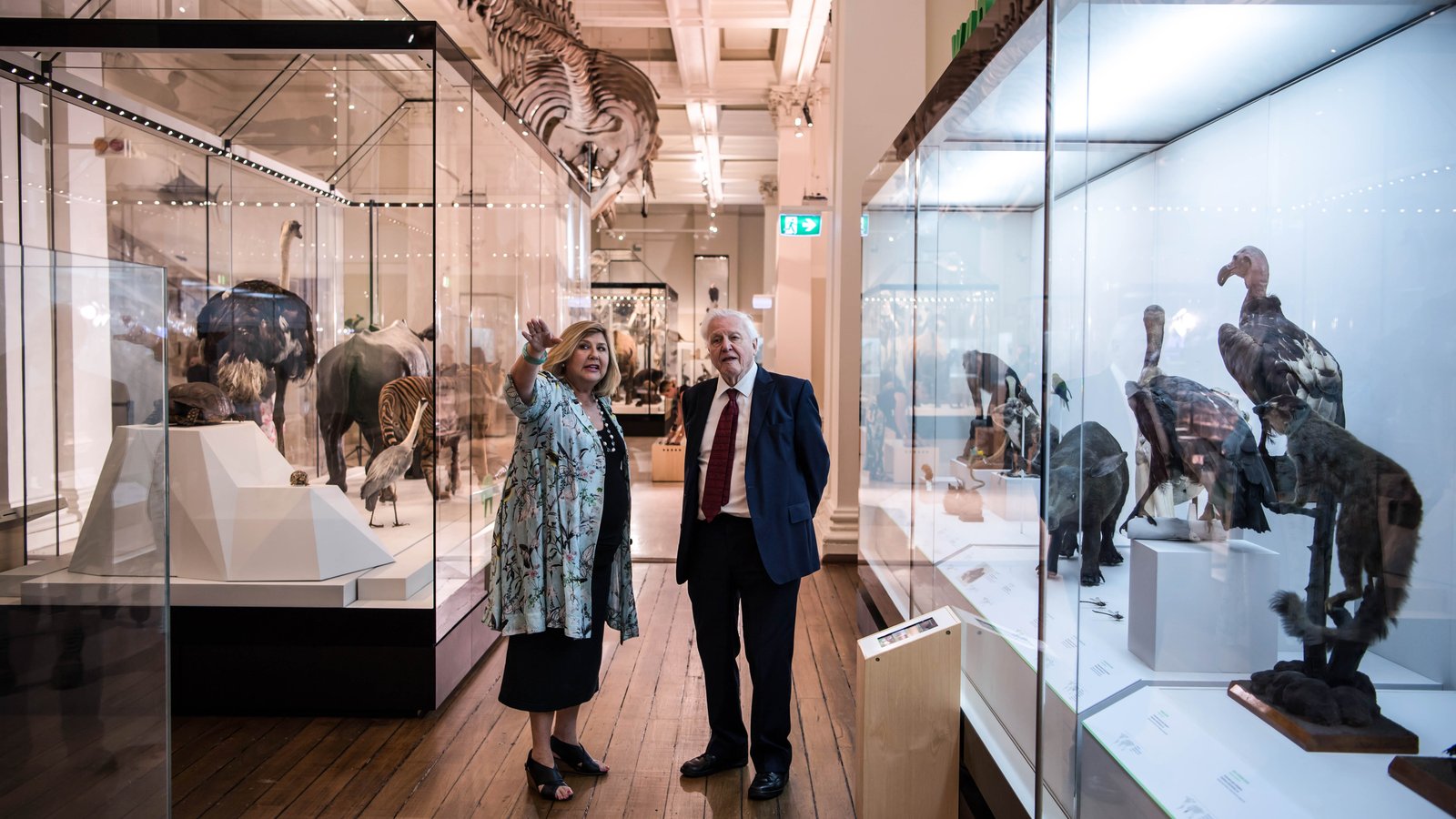
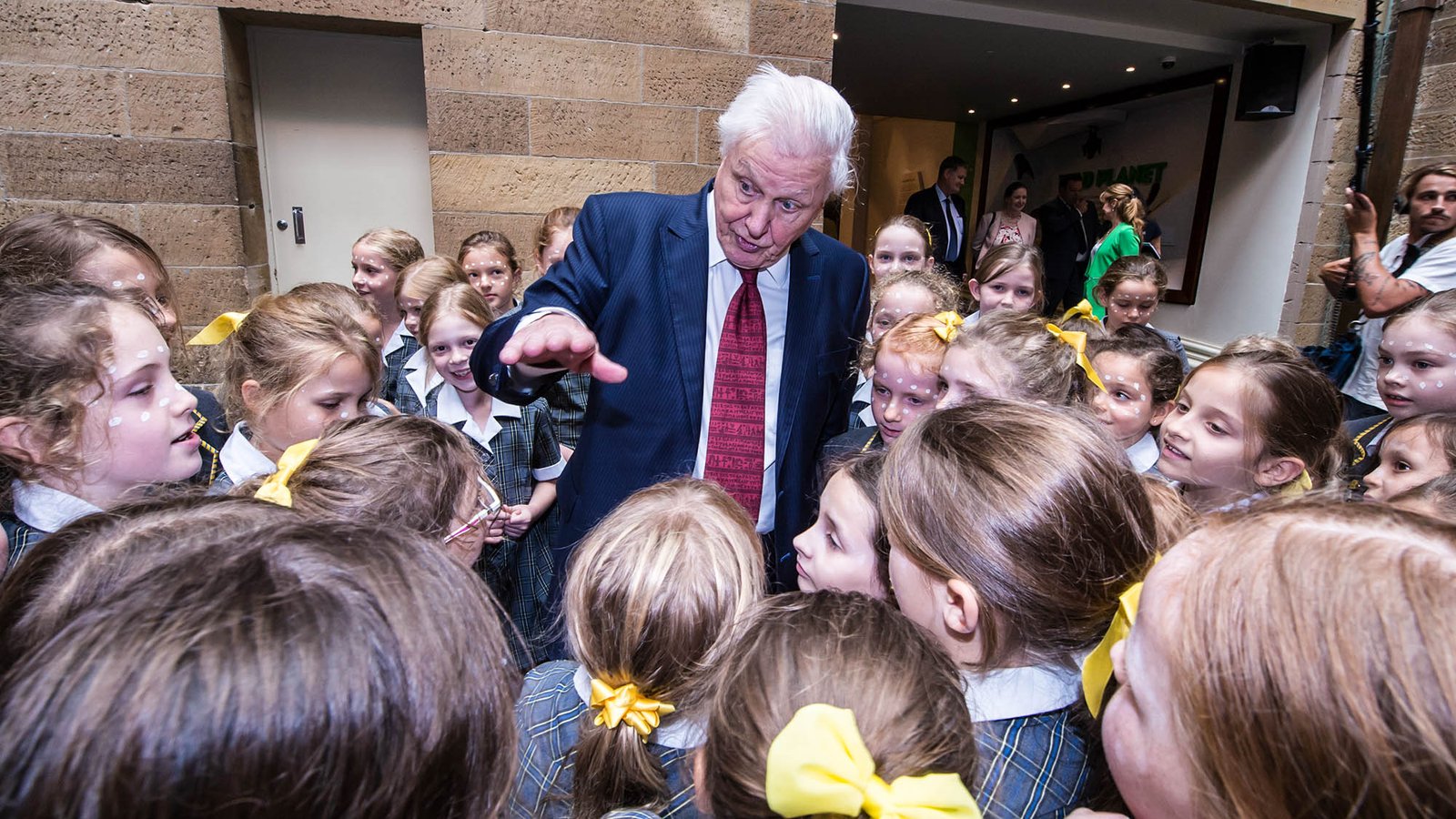
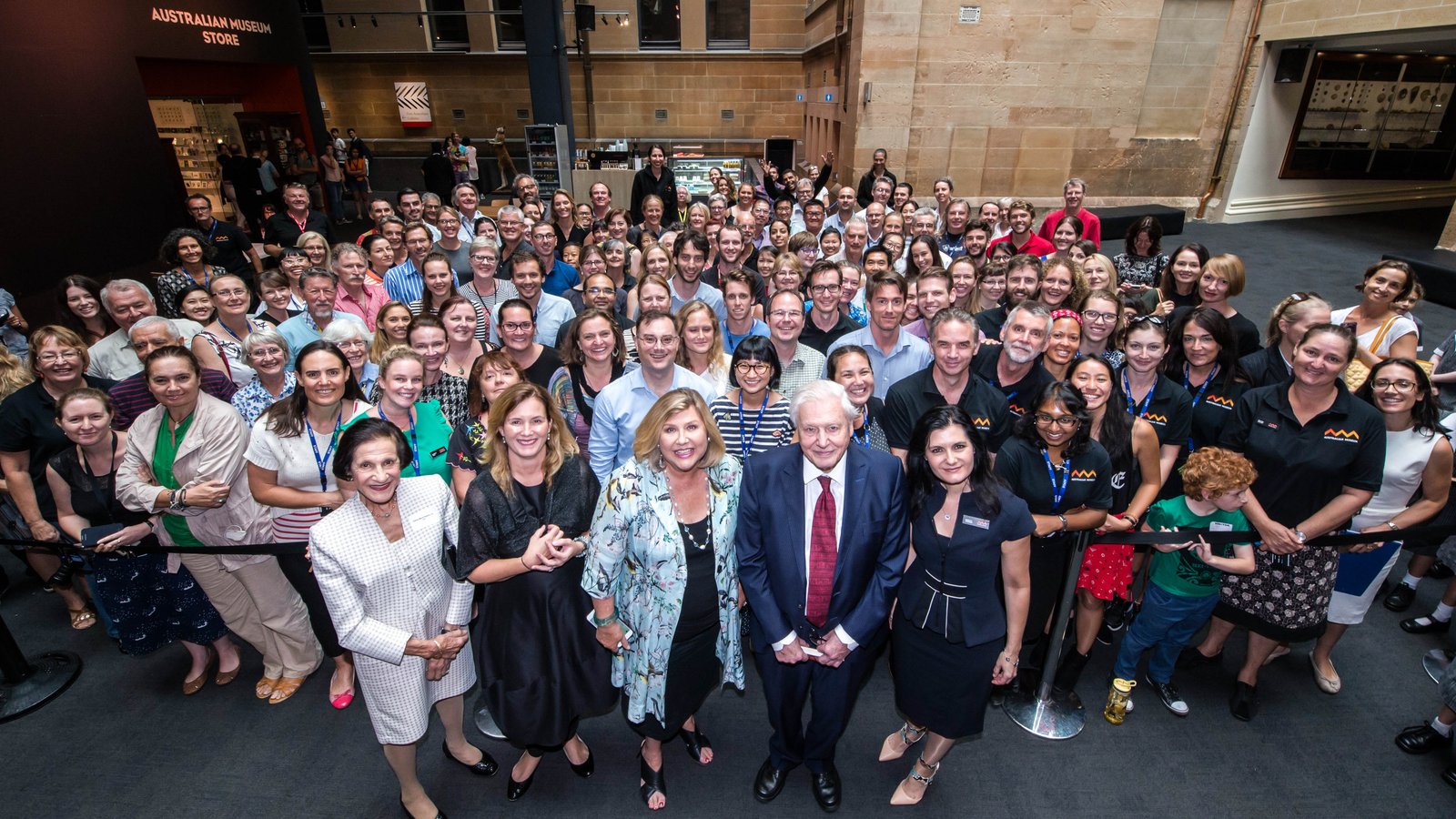
In 2017, Sir David Attenborough’s long and influential relationship with the AM was formally recognised when he was appointed as an Australian Museum Lifetime Patron. The honour was bestowed as part of the AM's 190th anniversary, acknowledging not only his global impact as a natural historian and communicator, but also his enduring connection to the AMs science, collections and public mission.
The Australian Museum, when it was founded 190 years ago, had the extraordinary and unique responsibility of starting the systematic collection of the animals and plants of an entire continent. Today, it is a scientific centre of world importance, and it is a great honour to be made the Lifetime Patron. Sir David Attenborough, 2017
To mark the occasion, Australian Museum Research Institute scientists named a new genus and species of colourful Tasmanian semi‑slug, Attenborougharion rubicundus, in his honour—a lasting scientific tribute to a figure whose work has helped bring unique animals, and the need to protect them, to audiences around the globe.
© Australian Museum
© Australian Museum
© Australian Museum
© Australian Museum
© Australian Museum
Legacy and impact
Sir David Attenborough’s legacy at the Australian Museum and beyond is measured not only through official honours and named species, but also in the way his work continues to shape how science is shared with the public.
The influence of his decades-long career endures in the AM’s commitment to combining engaging storytelling and rigorous science to help audiences see themselves as part of Planet Earth.
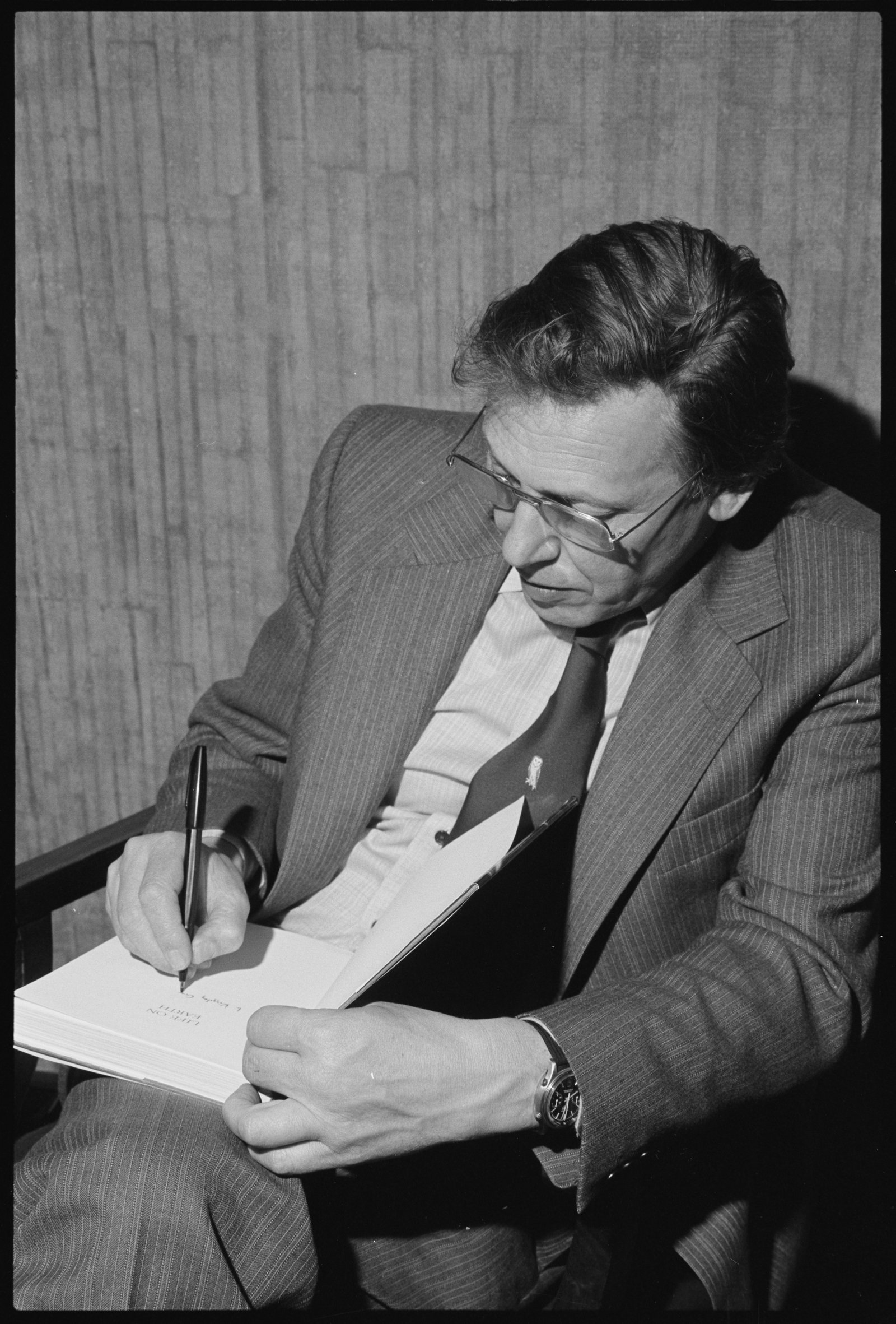
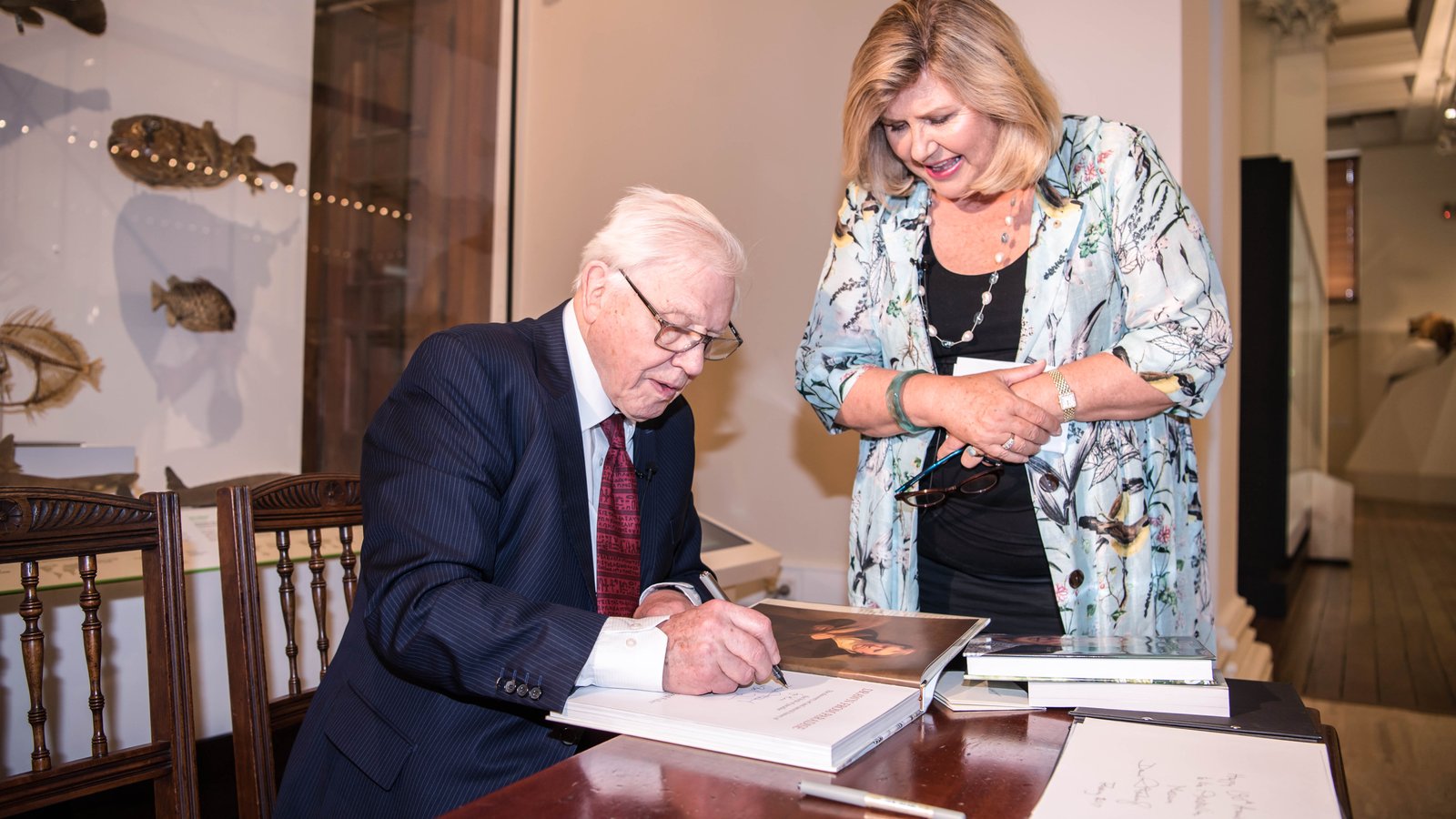
Sir David Attenborough signing a book at The Australian Museum Society lecture in 1980.
Image: John Fields© Australian Museum