
Entomology
Entomology is the study of insects including beetles, flies, cicadas, moths, earwigs, fleas, bugs, cockroaches, bees, dragonflies and termites.

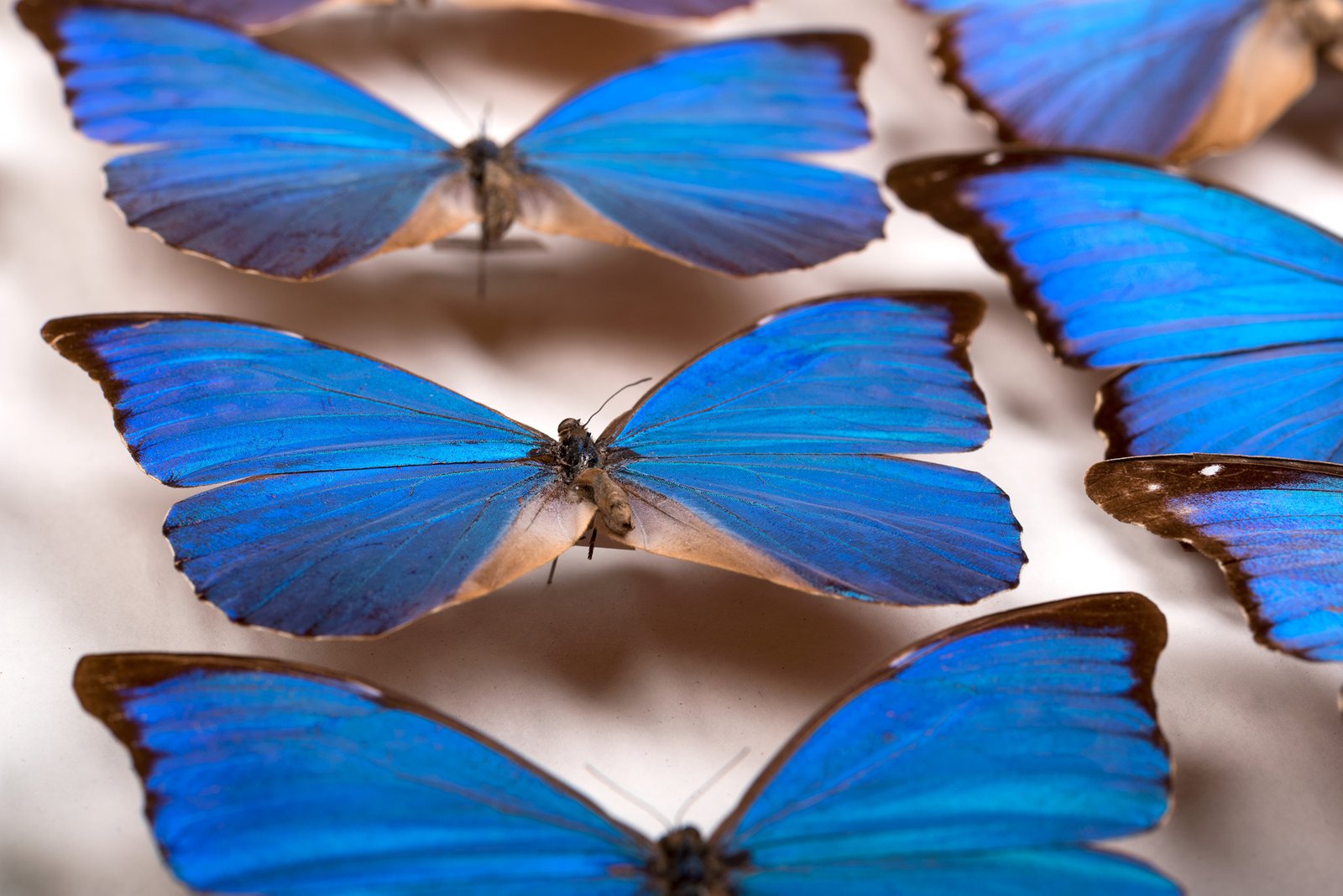
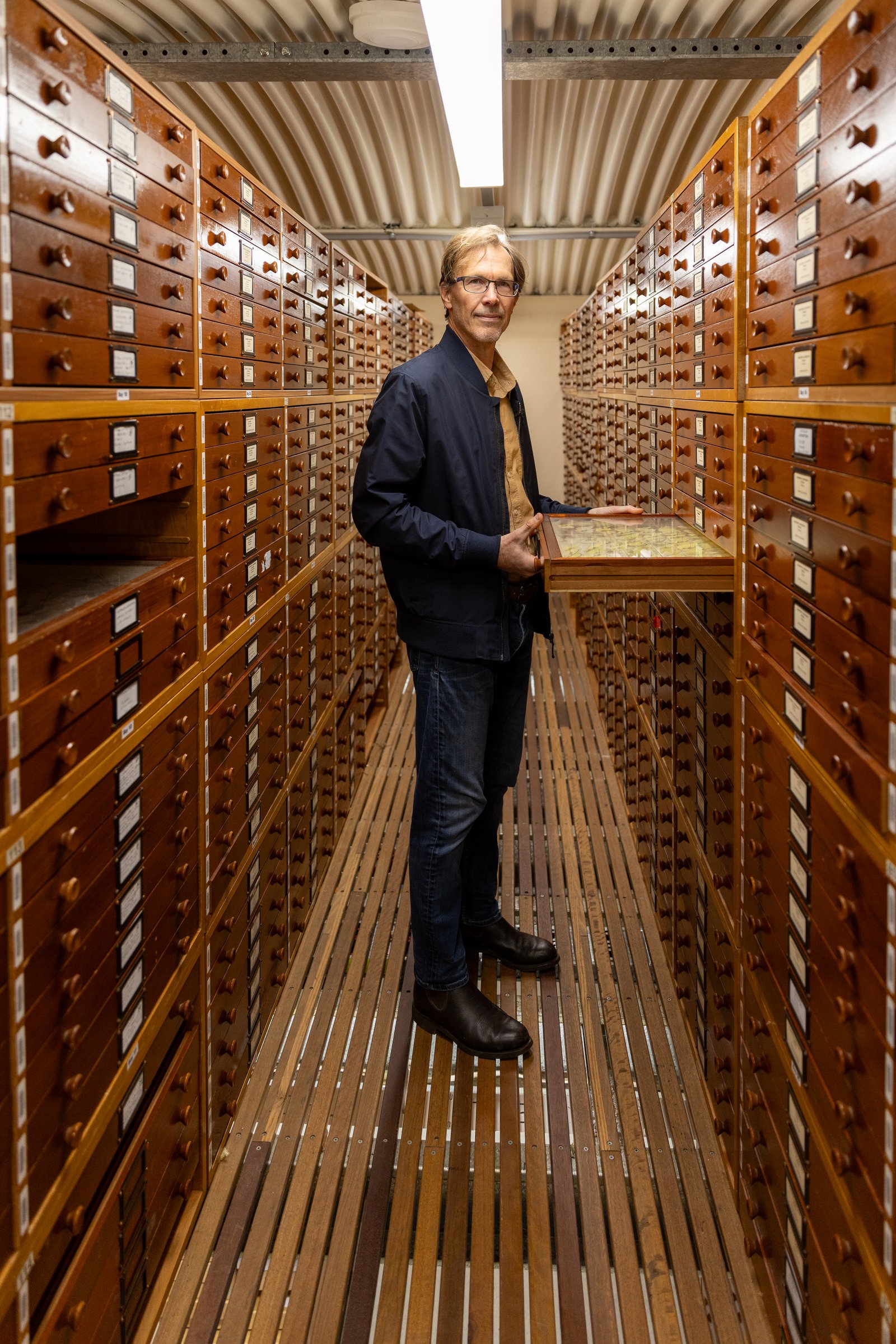
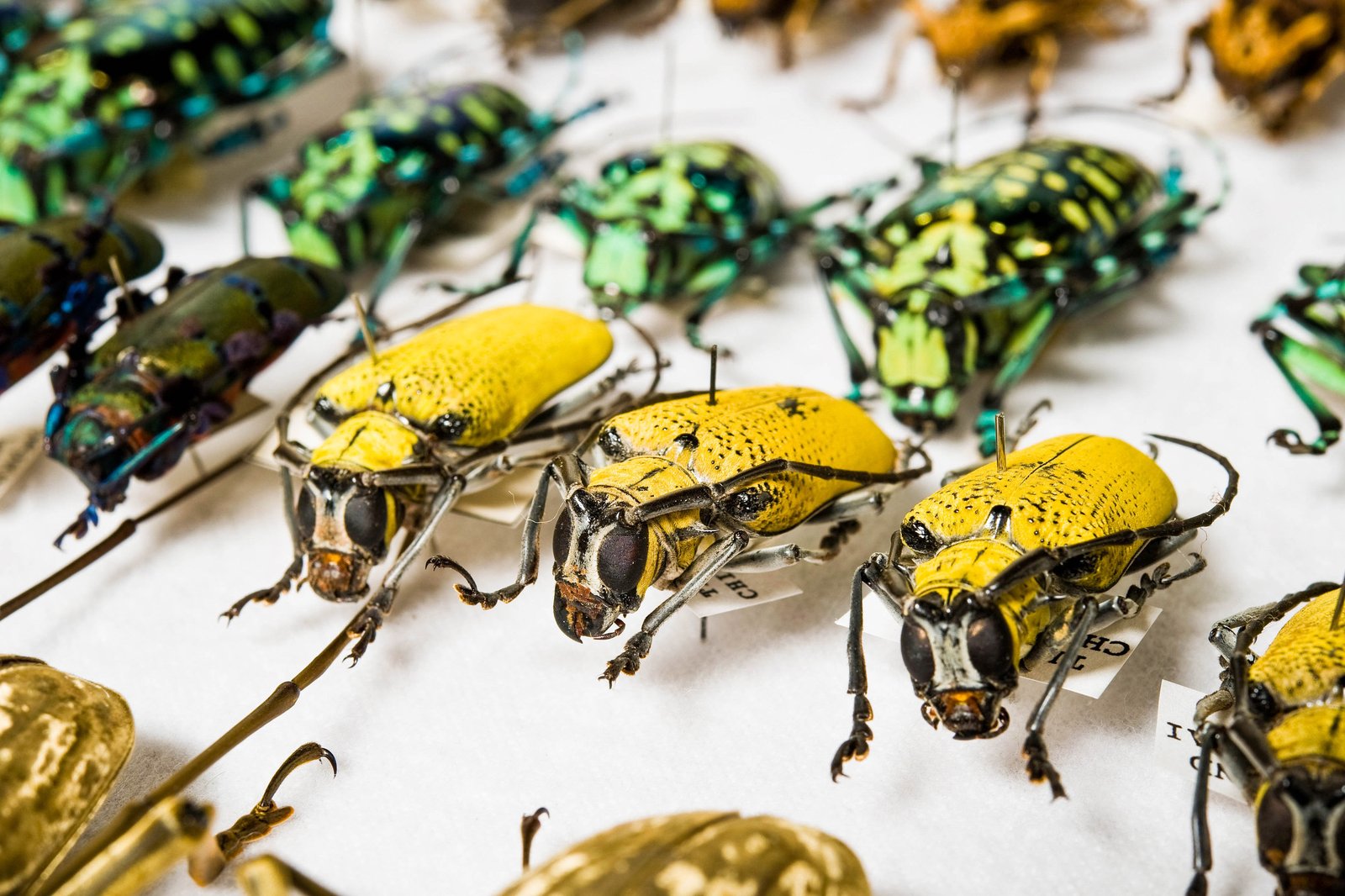
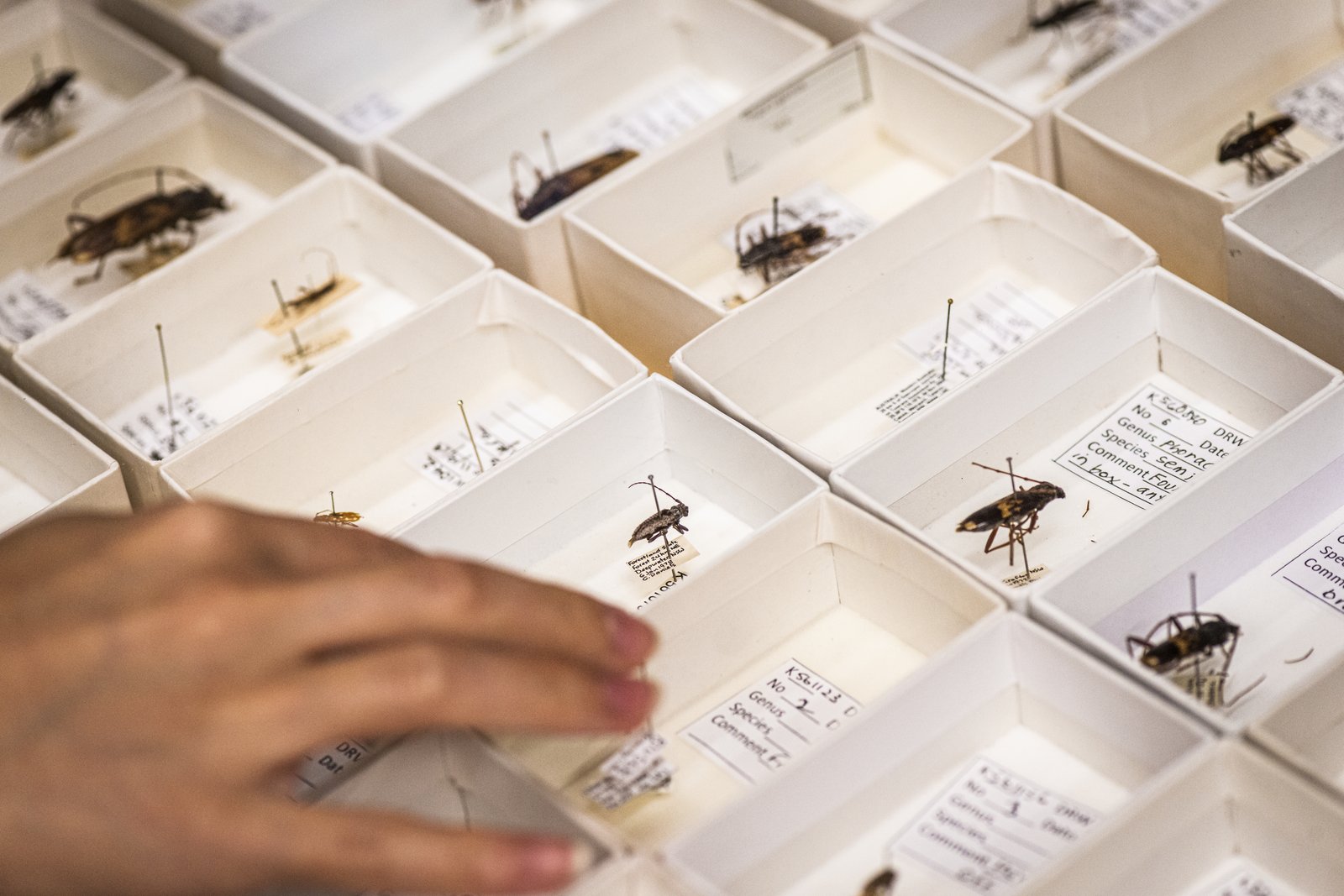
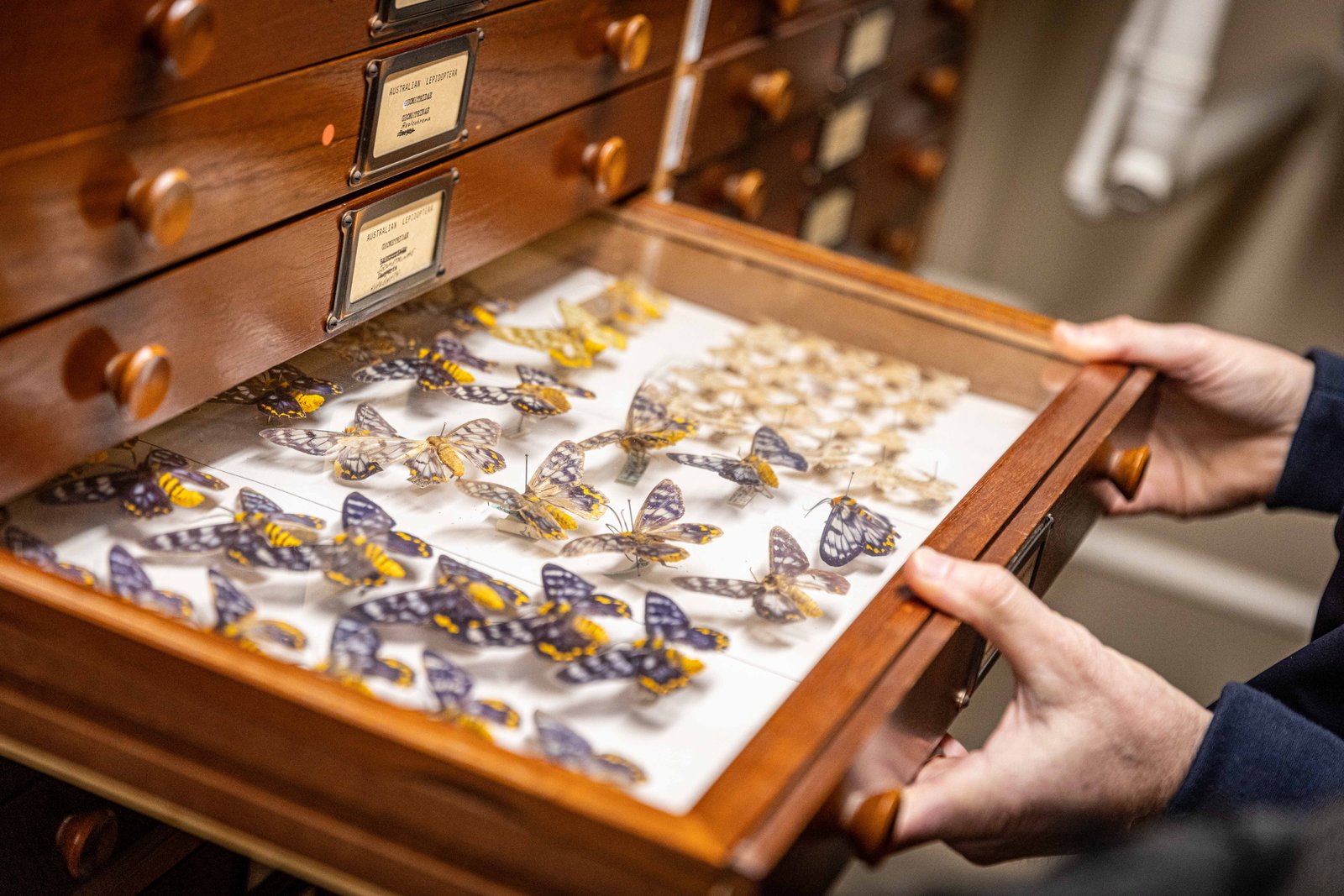
Insects are the most diverse class of terrestrial organisms. This is reflected in the Australian Museum's Entomology Collection. It is the second largest insect collection in Australia and the largest collection in the Museum. The entire collection is housed onsite at the Australian Museum (AM) in Sydney.
What is Entomology?
Entomology is the branch of zoology devoted to studying insects. Insects are the largest and most diverse animal group with an estimated 14-20 million insect species.
The Australian Museum Entomology Collection contains mostly Australian species of insects, but there is a significant non-Australian representation of beetles, psocids, flies, butterflies and moths. Learn about our Entomology Collection and why we collect and study insect specimens in our behind-the-scenes video revealing 'What is Entomology?'.
The Australian Museum Entomology Collection
The Australian Museum Entomology Collection comprises 10-20 million individual insects, of which 30% has been digitised. It includes:
- 595,363 registered specimens, as of 19 August 2026
- Over 488,000 insect records publicly available through Atlas of Living Australia
- Specimens include pinned specimens, microscope slides and SEM stubs, as well as over 500,000 lots permanently preserved in ethanol in our wet collection (a lot being a group of individual specimens of the same species from the same collection event).
- Over 5,000 primary type specimens (the reference specimens for a named species) and over 19,000 secondary types.
Some species of insect are represented by just a single specimen, which in some cases represent the only one ever collected.
Collection strengths
The AM Entomology Collection has particular strengths in Coleoptera (beetles, especially leaf beetles), Diptera (flies, especially long-legged flies, fruit flies, humpbacked flies, robber flies, stalk-eyed flies, dance flies, crane flies, and other smaller fly families), Lepidoptera (butterflies and moths, including the Waterhouse Collection, the John Landy Collection, and the Max Moulds Hawk Moth Collection, as well as an extensive and well-curated exotic butterfly collection), Hemiptera (especially true bugs and cicadas), Psocoptera (bark lice and book lice, including the Smithers, Thornton and New collections), Plecoptera (stoneflies), Odonata (dragonflies and damselflies), Hymenoptera (especially native bees and a parasitic wasp wet collection), and aquatic insects (including the NSW EPA Rivers Survey holdings).
The collection's geographic focus is predominantly New South Wales, with significant representation from other Australian states and territories, as well as material from expeditions to Lord Howe Island, Norfolk Island, Papua New Guinea, Timor-Leste, and the broader Pacific region.
History
Among the founders of the Australian Museum were Alexander Macleay and Phillip Parker King, both of whom deposited insect specimens in the Museum's collections during the 1830s. The first entomologist employed at the Museum was Arthur Sydney Olliff, who held the position from 1885 until 1890. Olliff specialised in beetles (Coleoptera) and butterflies and moths (Lepidoptera). After taking up the post of Government Entomologist with the New South Wales Department of Agriculture, he was replaced by Frederick Skuse, appointed Scientific Assistant in the Entomological Department on 15 October 1890. Skuse worked on flies (Diptera) until his death on 10 June 1896.
William Joseph Rainbow took up the position of Entomologist in 1896. Although principally interested in arachnids, he published some twenty contributions on Australian entomology. Rainbow was joined by Anthony Musgrave in February 1910, and after Rainbow's death in late 1919, Musgrave was appointed Entomologist. Musgrave worked on flies, true bugs (Hemiptera) and arachnids, as well as his landmark Bibliography of Australian Entomology, until his death in 1958. Keith McKeown, who worked on Australian longhorn beetles (Cerambycidae), assisted Musgrave from 1929 to 1952. Since 1953, many graduates have worked in Entomology as curators, scientific officers, research associates and volunteers across a wide range of insect groups.
Since the first entomologist was appointed in 1885, the collection has grown rapidly through both staff collecting and donations. Numerous important collections from amateur and professional entomologists have been donated to the Museum, for example, the G.A. Waterhouse Collection of Australian butterflies is considered to be the finest collection of these insects ever assembled by one collector. Today the collection supports taxonomic and biodiversity research and is being systematically digitised by staff and through the Collection Enhancement Project (CEP). Alongside staff, the collection is used by research staff, research associates, visiting researchers, students, volunteers and, even some artist or creatives seeking for inspiration every now and then.
How the collection is used
Entomologists and researchers use the collection to describe, name, and classify nature. The collection is a historical record documenting past and present species distributions, which is vital for environmental assessments and managing biodiversity.
The primary use of the collection is morphological taxonomy, the detailed examination and comparison of physical characteristics to identify, describe and classify species. This work underpins our understanding of insect diversity and is increasingly complemented by molecular approaches: researchers extract and sequence DNA to resolve complex species groupings and evolutionary relationships, with applications in forensic science, criminology, and identifying agricultural pests. Specimens are also referenced during major ecological projects (like the continent-wide BushBlitz surveys) to identify undescribed species.
Where needed, researchers may request destructive sampling of specimens for DNA extraction or other molecular work, subject to previous approval.
Collection loans and donations
The collection is made available to researchers in Australia and overseas through a formal loan programme. All loan enquiries should be directed to the Collection Manager.
All visits to the Entomology Collection must be approved in advance by the Collection Manager. Researchers who are unable to visit in person may request photographs of specimens, including label data, for identification or research purposes. Scientists and students are welcome to enquire about visiting, borrowing or requesting specimen photographs, or donating material via email to AMRI.


Specimens on display in the Museum
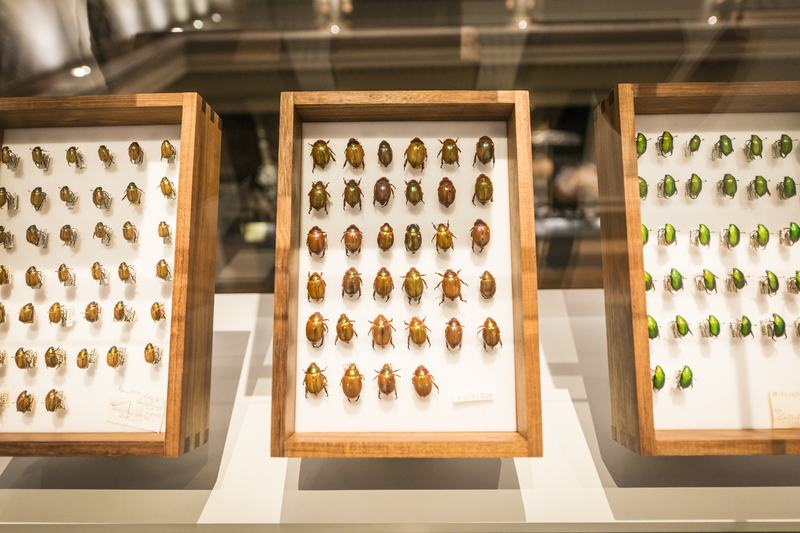
The AM's Entomology Collection has a permanent display of selected specimens in the Westpac Long Gallery 200 Treasures exhibition on Level 1. See Australia's exceptional large and often abundant Christmas beetles: there are 36 species in the genus Anoplognathus, all but one unique to Australia, with 21 species found in New South Wales alone. While they are seasonally popular with urban dwellers, Christmas beetles can be serious pests of plantation trees, as adults feed on eucalypt leaves while larvae feed on roots. However, there is strong evidence their populations are in decline in major cities. Similar looking but exotic species have become established in these localities and are often confused with Christmas beetles.
News articles


Learn more


Christmas Beetles
Discover the wonderful diversity of Australia's most famous beetles with our identification guide. Browse the comprehensive catalogue of Christmas beetles, including photos, maps and more!
Find out more