Worms
Invertebrates that are found worldwide: in fresh water, the sea and on land.

Worms are highly varied found in almost every environment on Earth - terrestrial, marine, as parasites within a host, even hostile environments such as deep-sea hydrothermal vents and Antarctic waters.
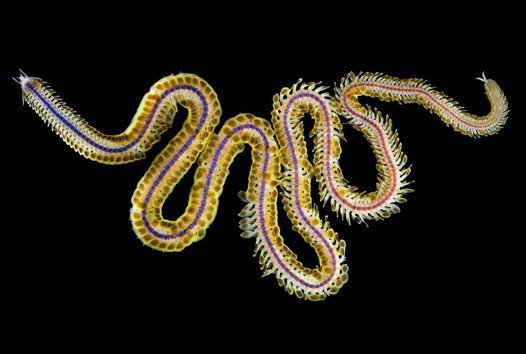
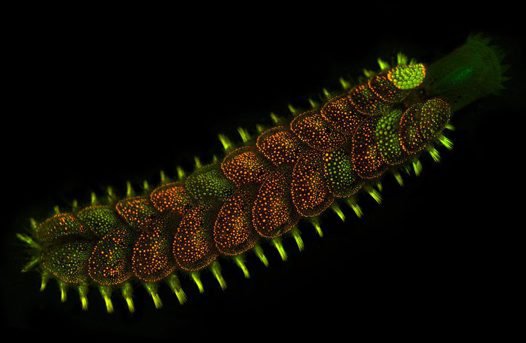
The word ‘polychaete’ comes from the Greek meaning ‘having much hair’ (referring to the chaetae or bristles found on many species).
Key facts:
- segmented, flat or round bodies
- can survive all habitats
- some are parasitic
- tube body, no limbs, usually no eyes
Characteristics
Worms are invertebrate animals. They have a long cylindrical tube-like body, no limbs, and usually no eyes. Most types of worms breathe through their skin, but many have gills. They can have one or two body openings to ingest food and excrete waste.
Groups of worms
Flatworms (platyhelminthes)
With a flat shape, these worms can contract or expand into unusual shapes. Example: Shovel-headed Garden worm - introduced into Australian habitats in potted-plants.
Segmented worms (annelids)
Body is divided in many identical segments. Phylum Annelida includes Bristle worms or Polychaetes, Australian Earthworms and Leeches.
Roundworms
Unsegmented worms (such as nematodes or roundworms) that play an important role in the nitrogen cycle and regulate bacterial populations in the soil.
Size and diversity
Worms vary in size from microscopic to over 1 metre in length for marine polychaete worms (bristle worms) and 6.7 metres for the African giant earthworm.
Polychaetes are bottom-dwelling marine animals that are mostly less than 10 centimetres long, but some species can reach 3 metres.
Habitat
Worms are found in almost every environment on Earth, even hostile environments such as deep-sea hydrothermal vents and Antarctic waters.
Polychaetes are bottom-dwelling marine animals found in estuaries, inshore waters, the open sea and the deep ocean.
In the AM Collection
The Australian Museum Marine Invertebrates Collection houses an important collection of earthworms, bristle worms and leeches, including one of the largest polychaete collections in the world with over 51,000 lots.
Worm factsheets
6 factsheets in this sectionCollection information

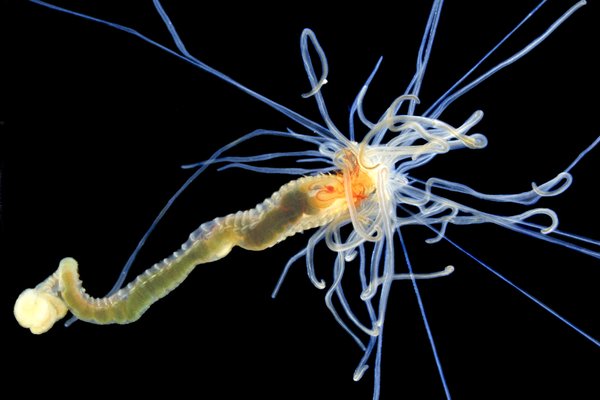


Polychaetes photography
View the work of professional underwater photographers and research scientists who are fascinated by the beauty and variety, as well as the reproductive, developmental and feeding habits of polychaete worms. Although polychaetes play a crucial role in marine ecosystems along with crustaceans, echinoderms, and molluscs, their delicate beauty is often undeservingly under-appreciated.