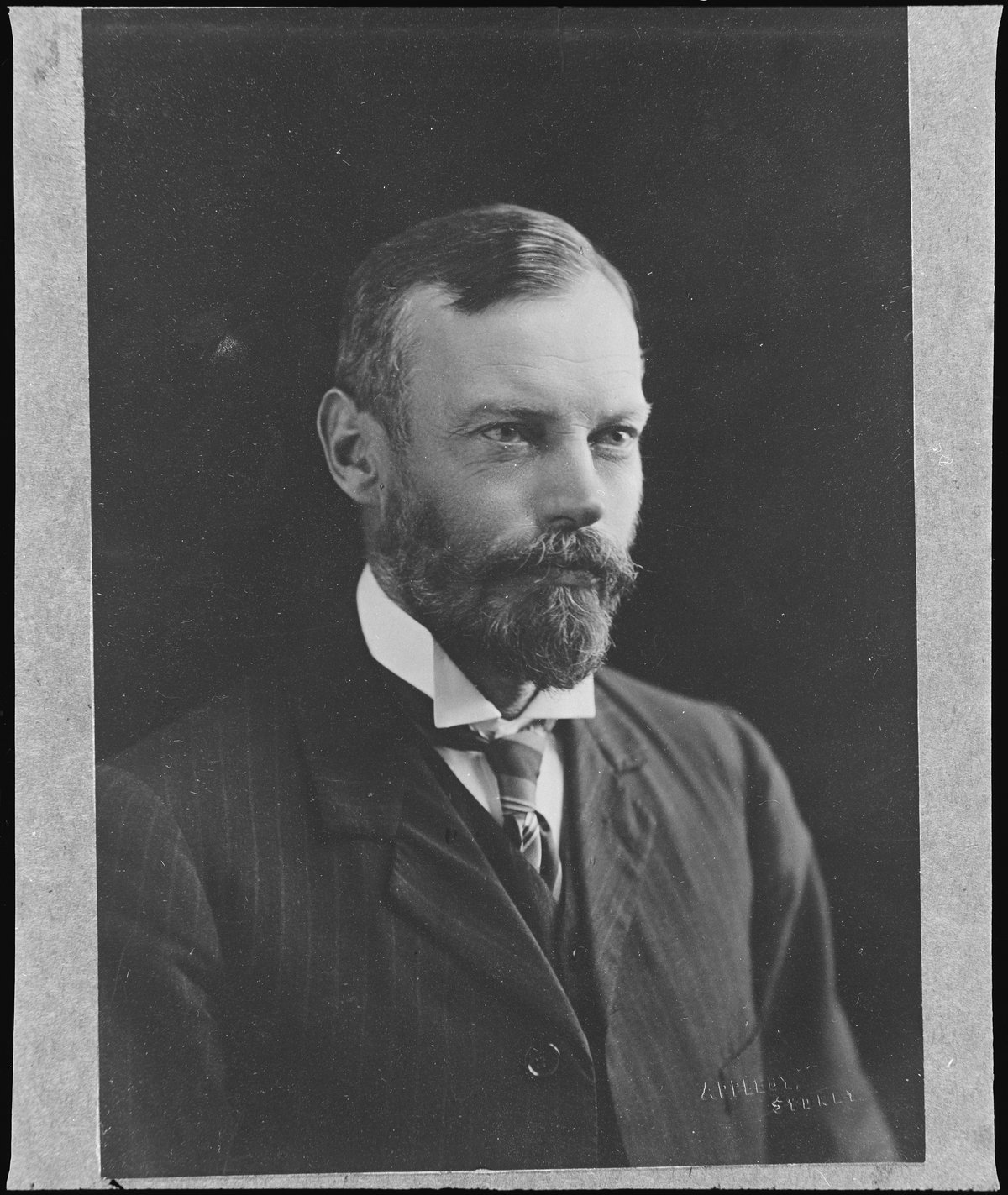
Charles Hedley
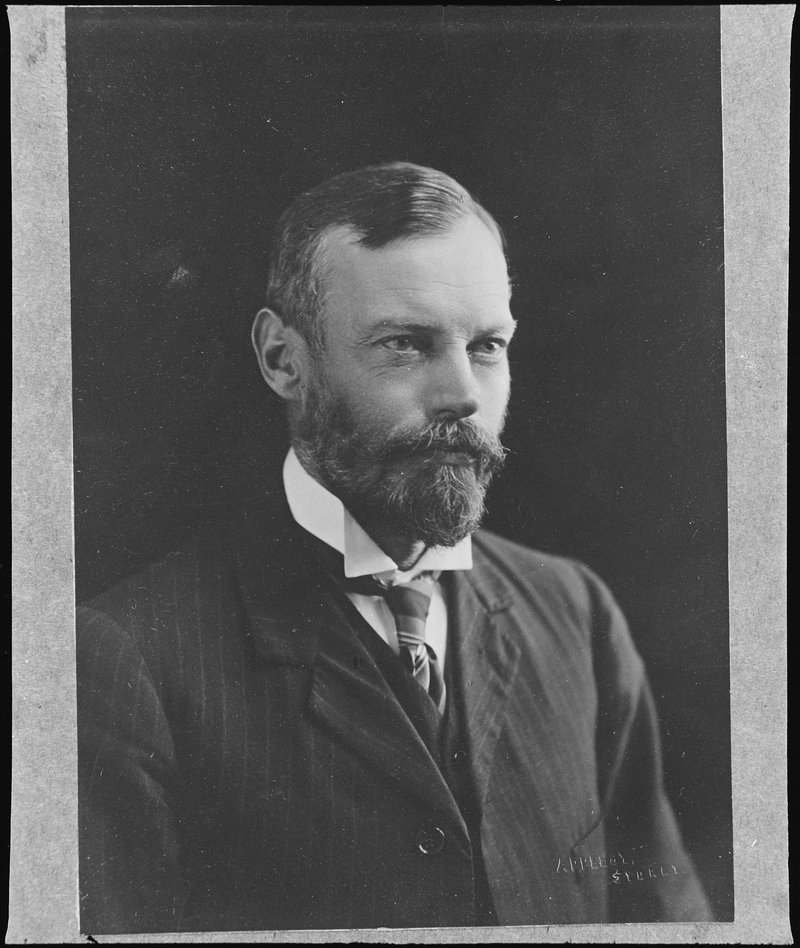 Click to enlarge image
© Australian Museum
Charles Hedley (1862-1926) was one of the Australian Museum’s most influential early scientists, serving the institution for more than three decades and shaping its collections, research culture and reputation at a critical moment in its history. Best known as Australia’s leading conchologist of his era, Hedley was also a prolific field collector and advocate for coral reef research.
Early life and background
Charles Hedley was born on 27 February 1862 in Masham, Yorkshire, England. After briefly attending Eastbourne College, chronic asthma forced him to leave school and continue his education at home.
This early health setback opened an unexpected door. His family moved abroad to France, and during his time there Hedley developed a fascination with natural history, particularly molluscs. This childhood interest would go on to shape the rest of his life.
Hoping warmer climates might improve his health, a young Hedley migrated to New Zealand in 1881 and arrived in Australia the following year. Over the next few years he lived in Sydney, Hay in inland New South Wales, and later Queensland, gradually discovering that coastal environments suited both his lungs and his scientific curiosity.
From field collector to Australian Museum scientist
Before museum work beckoned, Hedley tried his hand at fruit growing and oyster farming in coastal Queensland. A serious accident permanently damaged his arm, however, abruptly ending his ability to do hard manual labour and forcing a rethink of his future.
Science provided a new path. In 1888, Hedley began volunteering at the Queensland Museum in Brisbane and was appointed to staff the following year. His abilities as a collector and researcher were quickly recognised. In 1890, he was invited to join Sir William MacGregor, Administrator of British New Guinea, on a collecting expedition to Milne Bay. On the expedition, he assembled an important collection of land shells before contracting malaria and forced to return to Brisbane.
On arrival in Brisbane he set about studying his new collection of shells but, feeling that he would have better facilities in Sydney, he moved there in late 1890. He was soon after appointed Assistant to the Conchologist at the Australian Museum on the 1st April 1891 and became Conchologist when John William Brazier resigned in 1896.

Charles Hedley collecting on a reef near Lord Howe Island with pots in 1921.
Image: Australian Museum© Reproduction Rights Australian Museum
The Funafuti expedition
The 1896 Royal Society of London expedition to Funafuti Atoll near Tuvalu marked a turning point in Charles Hedley’s museum career and helped establish his reputation as a serious scientific authority. Although the young Hedley was not the Museum’s first choice of representative, he was eager to go on the expedition and prove himself through the scale and quality of his work.
He was eventually allowed to go and during his time on Funafuti, he assembled extensive faunal and ethnological collections and recorded detailed observations that formed the basis of some of the earliest scientific studies of the atoll.
Soon after his return, the Australian Museum published one of Hedley’s papers based on the expedition. This triggered objections from the Royal Society, which claimed that expedition results should not be published without committee approval. Crucially, neither Hedley nor the Museum’s Curator, Robert Etheridge, had been informed of any such restriction.
The dispute could have placed Hedley’s professional judgement under scrutiny at an early stage of his career. However, the dispute was short-lived. Senior scientists who had attended pre‑expedition meetings confirmed that no publication restrictions had ever been communicated and the Royal Society was forced to withdraw its objections. The work was later published as the Funafuti Memoir and the expedition is now regarded as a landmark in coral reef science.

Reef core samples taken from a Funafuti expedition in 1897, the year after Hedley's expedition with the Royal Society. Photographed for the 200 Treasures of the Australian Museum exhibition and catalogue in 2017.
Image: Stuart Humphries© Australian Museum
Later career and major works
Hedley's career advanced steadily after the Funafuti incident. He was a tireless and wide‑ranging scientist. He published extensively on molluscan taxonomy, describing hundreds of new species and numerous new genera. He also wrote on ethnology, botany, zoogeography and coral reef formation, reflecting the broad scope of natural history research at the time.
Alongside his museum career, Hedley was deeply involved in Australia’s scientific community, serving on the councils of multiple societies and as President of the Linnean Society of New South Wales from 1909 to 1911. His writings were published in a wide range of scientific journals in America, Great Britain and New Zealand, as well as all states of Australia. On top of his scientific publications, he produced a book called Wild Animals of the World: being a popular guide to Taronga Zoological Park at the behest of the zoo’s Trustees. The book received an enthusiastic review which claimed it provided ‘…a scientifically correct, yet interesting, description of each creature’.
This commitment to the scientific community helped fuel his own career at the museum, with Hedley becoming Assistant Curator in 1908 and then Acting Director in January 1920 following the death of Robert Etheridge Junior. Although widely seen as a strong candidate for the permanent directorship, Hedley’s relationship with trustee Frederick Albert Coghlan, the Auditor‑General of New South Wales, deteriorated during disputes over a proposed superannuation scheme.
The outcome was disappointing. Hedley was not appointed Director and was instead reassigned as 'Principal Keeper of Collections', a role he held for three years. In March 1924, he resigned from the Museum to take up the position of Scientific Director of the Great Barrier Reef Committee.
In the Australian Museum Collection
Charles Hedley’s legacy is strongly represented in the Australian Museum Collections through the specimens and publications he produced over more than three decades. In particular, his collecting greatly expanded the Museum’s collection of molluscs, particularly from Australia, Papua New Guinea and the Pacific. Hedley’s field notes and correspondence also provide valuable insight into museum science at the turn of the twentieth century.
Another lesser-known component of Hedley's legacy and collections are the cultural objects he collected during his scientific expeditions. For example, the Australian Museum has several toys and other cultural objects from Mer, collected by Hedley and McCulloch on their expedition to the Torres Strait in 1907.
Legacy and cultural impact
In September 1926, when he was preparing to visit Japan for the Pan-Pacific Science Congress, he caught a cold and died on 14 September at his home in Mosman, Sydney. The staff at the Museum were very saddened by the news of his death and he was greatly missed by a wide circle of friends and colleagues. Although his work kept him very busy, he regularly took long walks, usually with congenial companions, and he always found time to provide encouragement and advice to younger colleagues.
Today, he is remembered as one of the Australian Museum’s most significant early scientists, whose work strengthened its collections, research culture and international standing. Through persistence, careful observation and an extraordinary output of scientific work, Hedley helped establish Australia as a centre for molluscan and coral reef research.

Conchological Staff of the Australian Museum. Left to right: Charles Hedley, Phyllis Clarke, Joyce Allan and Rex Bretnall. This photograph is not dated though is thought to have been taken around 1920.
Image: unknown© Australian Museum