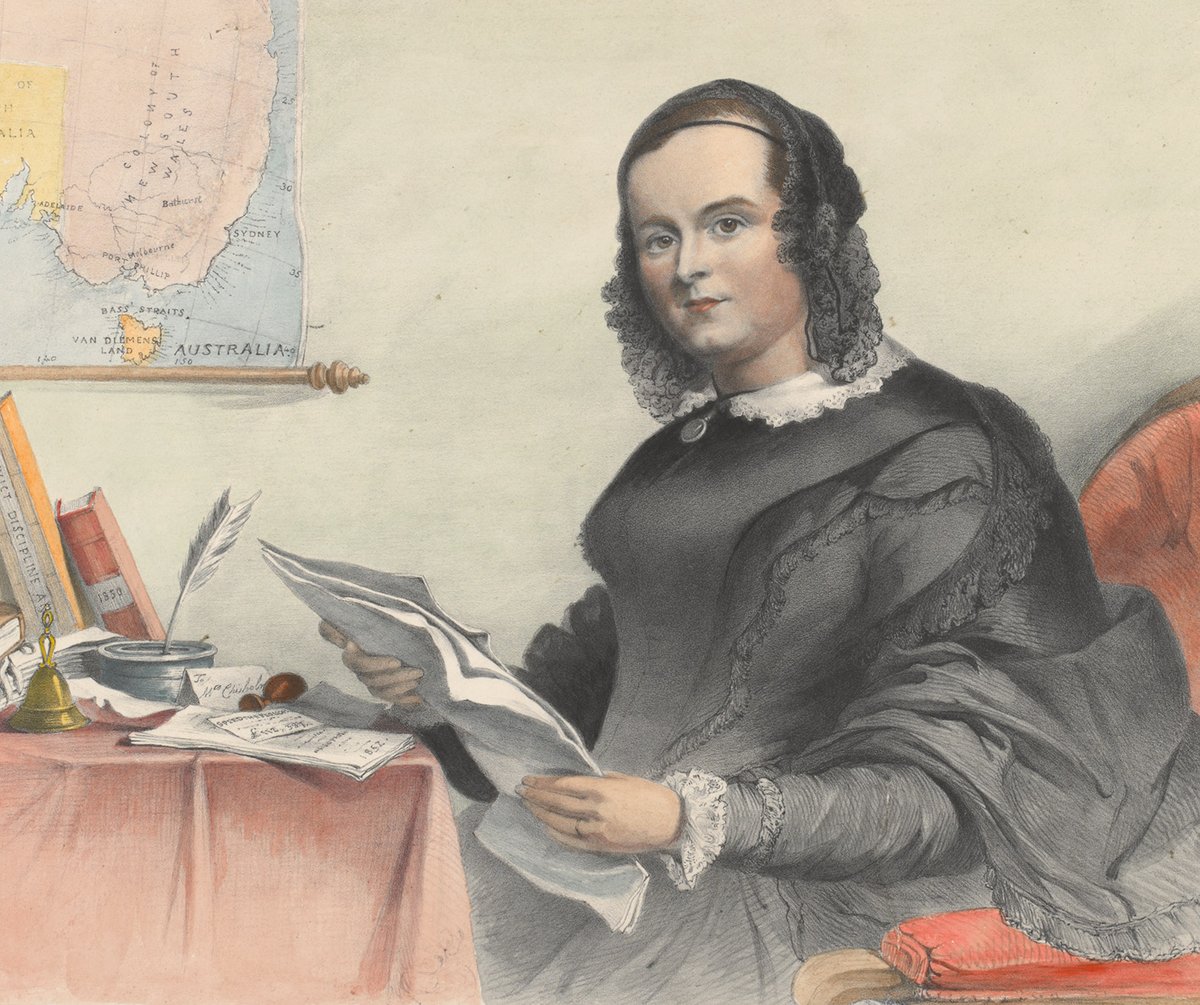
Caroline Chisholm
 Click to enlarge image
© State Library of Victoria
Readers note: This is an excerpt from the 200 Treasures exhibition catalogue, developed in 2017. This content was written as a brief biography on why this person was included in the exhibition.
1808 - 1877
Caroline Chisholm was born in Northampton, England, in 1808, and emigrated to Australia with her husband, via India, in 1838.
The Chisholms and their three sons settled in Windsor on the outskirts of Sydney. Chisholm was concerned by the huge numbers of migrants landing at Sydney’s wharves who received little to no direction or assistance upon arrival. The plight of the young women and girls (arriving in large numbers as part of the migration plan to address the huge colonial gender imbalance) caused Chisholm the greatest anxiety. The women - many of whom were Irish Catholics (Chisholm had converted to Catholicism around the time of her marriage) - were disregarded and discriminated against. Chisholm provided them accommodation, and tried to find them respectable employment and/ or husbands and shield them from unscrupulous characters. Her zeal to assist these women was not shared by government authorities, though her representations on their behalf eventually resulted in the establishment of the Female Immigrants’ Home (in Hyde Park Barracks) in 1841. Chisholm also lectured, toured and published guides for those considering emigrating to Australia, based on the testimony of more than 600 immigrants around New South Wales.
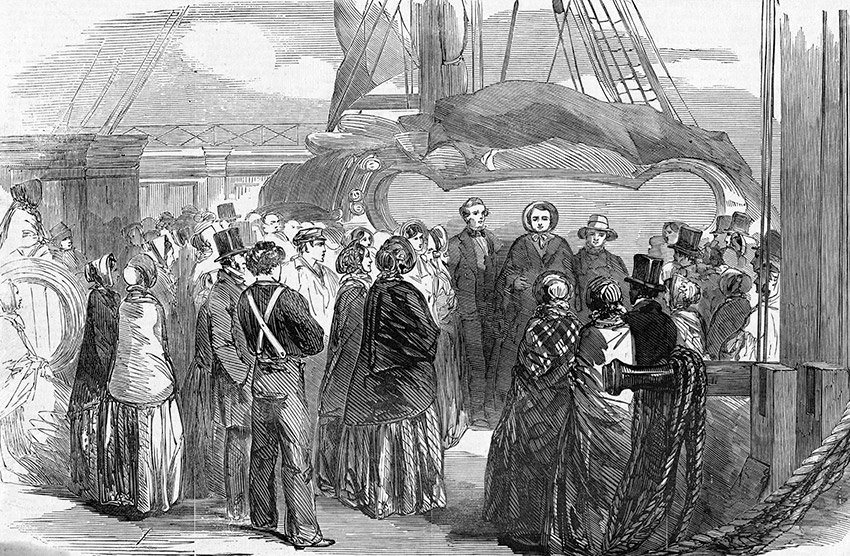
© National Library of Australia

Returning to England in 1846, she worked to found the Family Colonisation Loan Society in 1849. Chisholm attracted powerful enemies in the squatter class who resented her criticism of their political and economic power to the detriment of small family-owned farms. She returned to the colonies during the goldrushes in 1854 when she again aided new migrants, adding her voice to the growing movement aimed at breaking the squatter land monopoly and ‘unlocking the lands’ to make way for a family farmer class that she believed would ensure a moral foundation for Australian society. Chisholm left Australia in 1866 and died in London in 1877. She was controversial in life and death, with historians debating her contribution to the lives of women in colonial Australia.