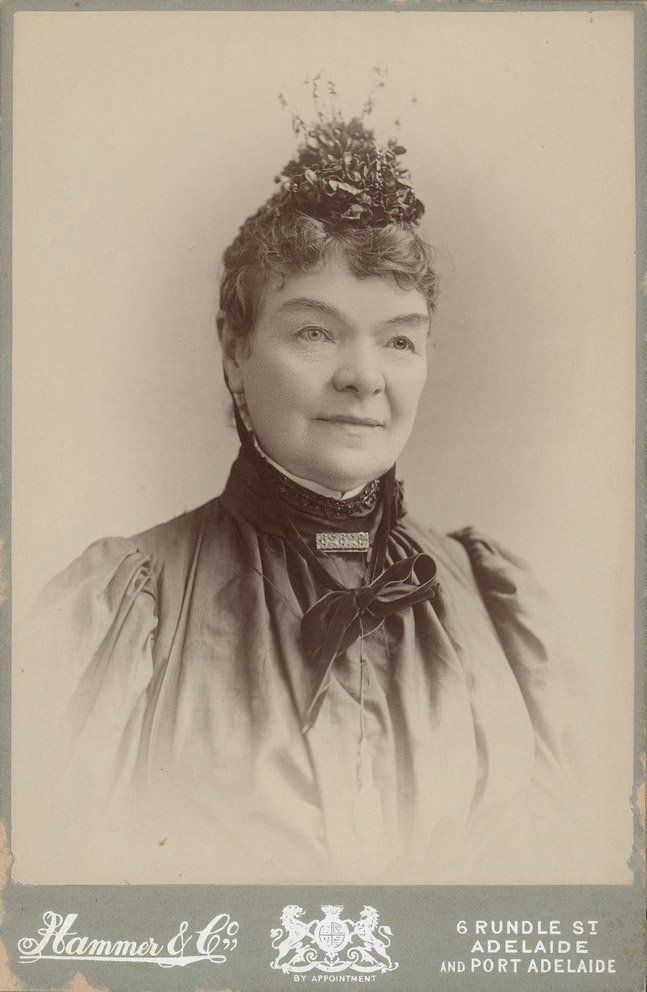
Mary Lee
 Click to enlarge image
© State Library of South Australia
Readers note: This is an excerpt from the 200 Treasures exhibition catalogue, developed in 2017. This content was written as a brief biography on why this person was included in the exhibition.
1821 - 1909
Mary Lee played a leading role in the campaign to get women the vote. She migrated to South Australia when she was 58. Over the course of the next 15 years, Lee transformed her adopted home and the status of women’s rights internationally.
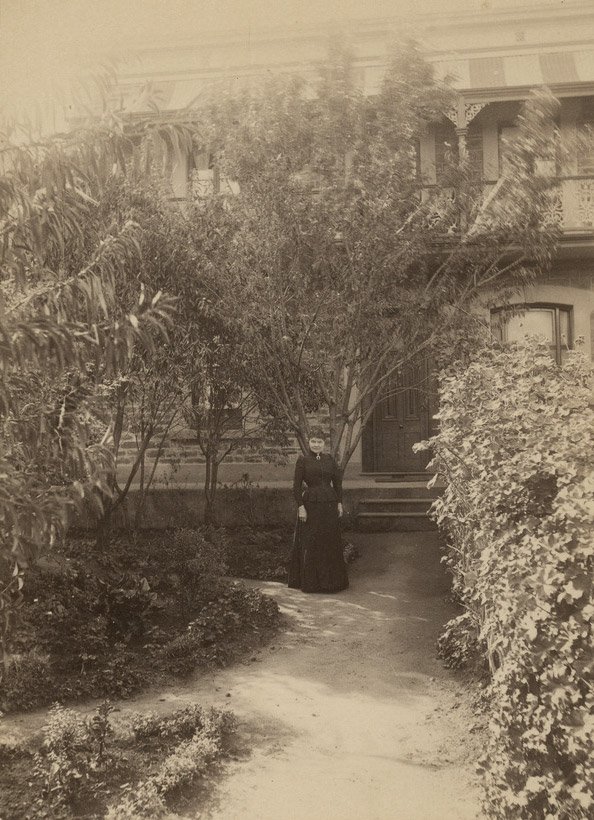
Lee was born Mary Walsh in Monaghan, Ireland, in 1821. At 23 she married George Lee, and bore him seven children. After George’s death, she travelled to Adelaide in 1879 with one of her daughters to care for her ailing son. Her intention was to return to Ireland, but she began a new life in South Australia. She became a tireless activist to improve the lives of women. Lee began her activism through the Social Purity Society, a Christian organisation concerned with the plight of girls as young as ten years of age, who worked in factories, or as domestic servants or newspaper sellers on the streets.
© State Library of South Australia
Lee’s first victories were legislative changes in 1885 that elevated the age of consent to 16 and offered women other protections. Lee realised that if the lot of women was to be materially improved, they had to have a political voice supported by legal rights. She turned her attention and vast energies to achieving women’s suffrage and establishing working women’s unions (the Working Women’s Trade Union began in 1890), making speeches and writing articles and letters championing the cause. Lee and others in the Women’s Suffrage League (inaugurated in 1888) faced the strenuous resistance of formidable opponents.

Through Lee’s persistent leadership and the efforts of other suffragists and politicians who supported the cause, South Australia passed the Constitution Amendment Act in 1894, giving women a parliamentary vote: South Australia was one of the first political entities in the world to do so. Lee advised other suffrage movements in Australia and around the world about how to proceed in the cause to empower women. All Lee’s good works for women did not pay, however; she lived out her final years in poverty.