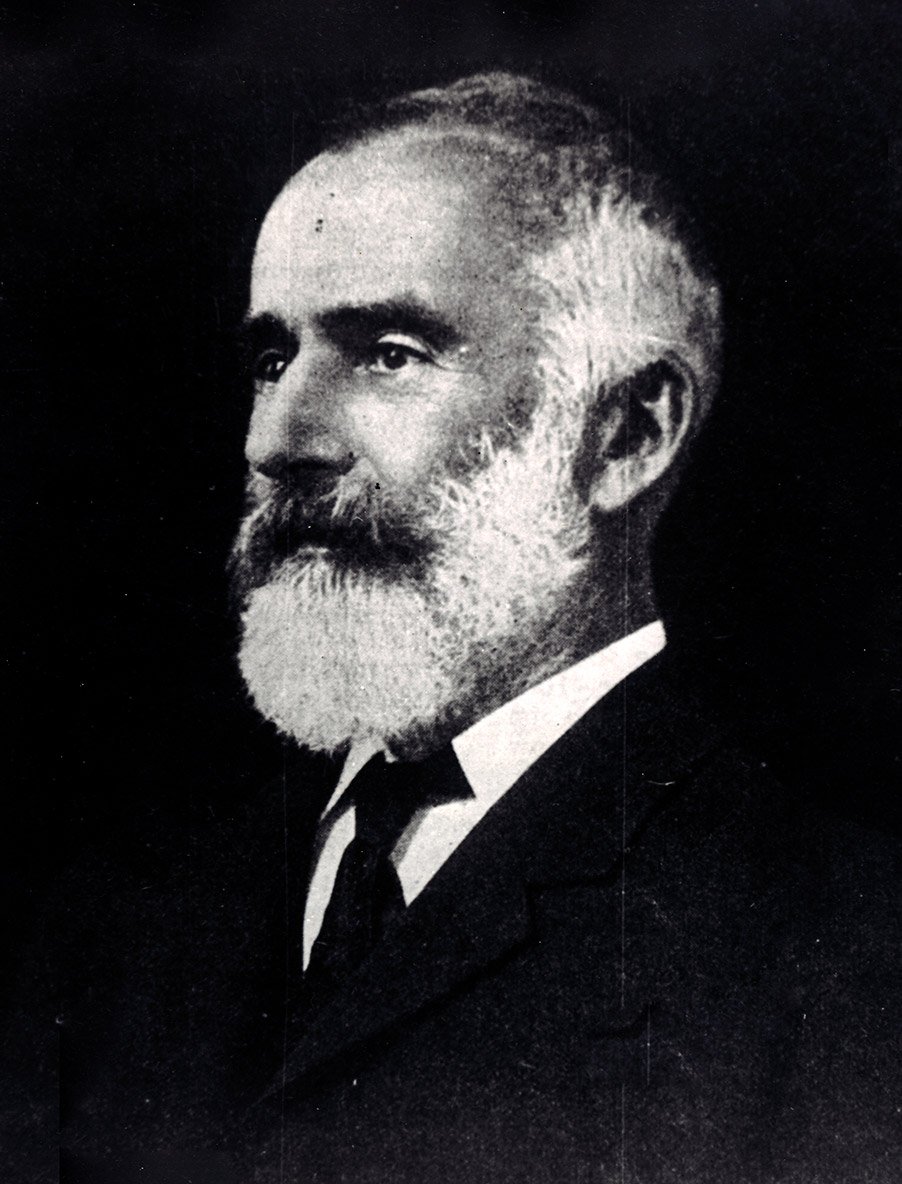
Lawrence Hargrave MRAeS
 Click to enlarge image
© From the National Library of Australia
Readers note: This is an excerpt from the 200 Treasures exhibition catalogue, developed in 2017. This content was written as a brief biography on why this person was included in the exhibition.
1850 - 1915
Lawrence Hargrave was the first Australian to fly. He was a scientist who made important discoveries in aerodynamics and mechanical engineering that changed the course of aviation. He also made significant contributions as an explorer, astronomer and inventor.
Hargrave was born in Greenwich, England, in 1850. When he was six, his father sailed to Australia with his two older brothers. Hargrave stayed to complete his schooling and followed his family to Sydney when he was 15. He was apprenticed in the engineering workshops of the Australasian Steam Navigation Company and through this was invited to travel on a circumnavigation of Australia in 1867.
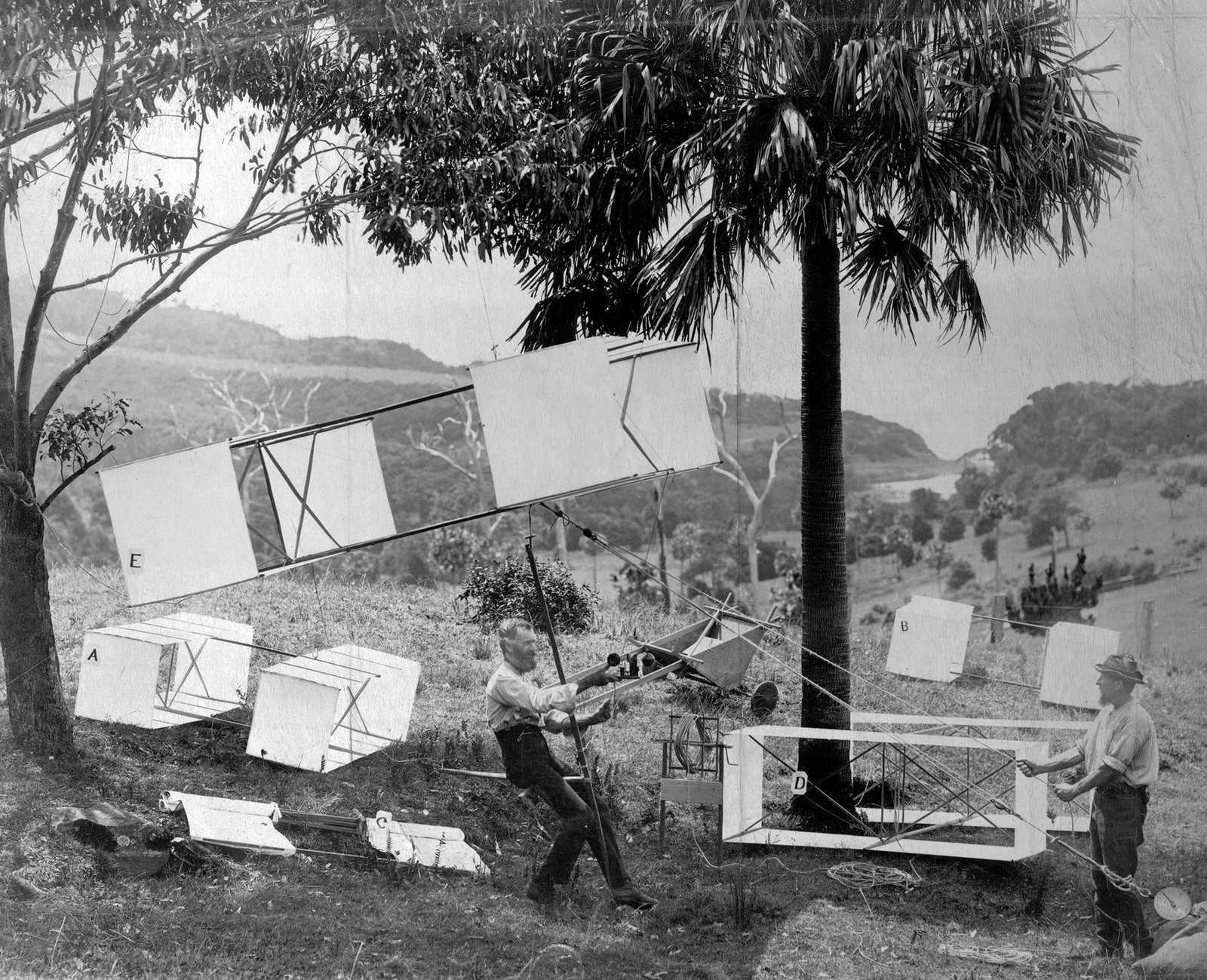
© National Library of Australia
In 1870 he ventured further north into New Guinea. He travelled extensively with gold prospectors, missionaries and the naturalist Luigi D’Albertis and aided in the charting of the major rivers the Fly and Strickland. He then moved into astronomical work at the Sydney Observatory and after the Krakatoa eruption in 1883, proposed the link between volcanic ash and the brilliant sunsets seen afterwards.
Hargrave’s greatest scientific contributions were in the field of aeronautics. Initially he was interested in propulsion and tried to replicate the flapping motion of birds’ wings. Hargrave then invented the box kite and, on 12 November 1894, he lifted himself off a beach at Stanwell Park (south of Sydney) in a construction consisting of four box kites tethered to the ground with piano wire. Further research led to his discovery that a curved wing surface gave twice the lift of a flat one.

Hargrave’s next preoccupation was to find the right engines to lift and propel his flying machines, but without a vibrant scientific community in Sydney and lacking sufficient funding, the breakthrough he had hoped for eluded him. Yet, the layers of knowledge he added to the international quest for flight were to prove invaluable to others, and earned him worldwide recognition.