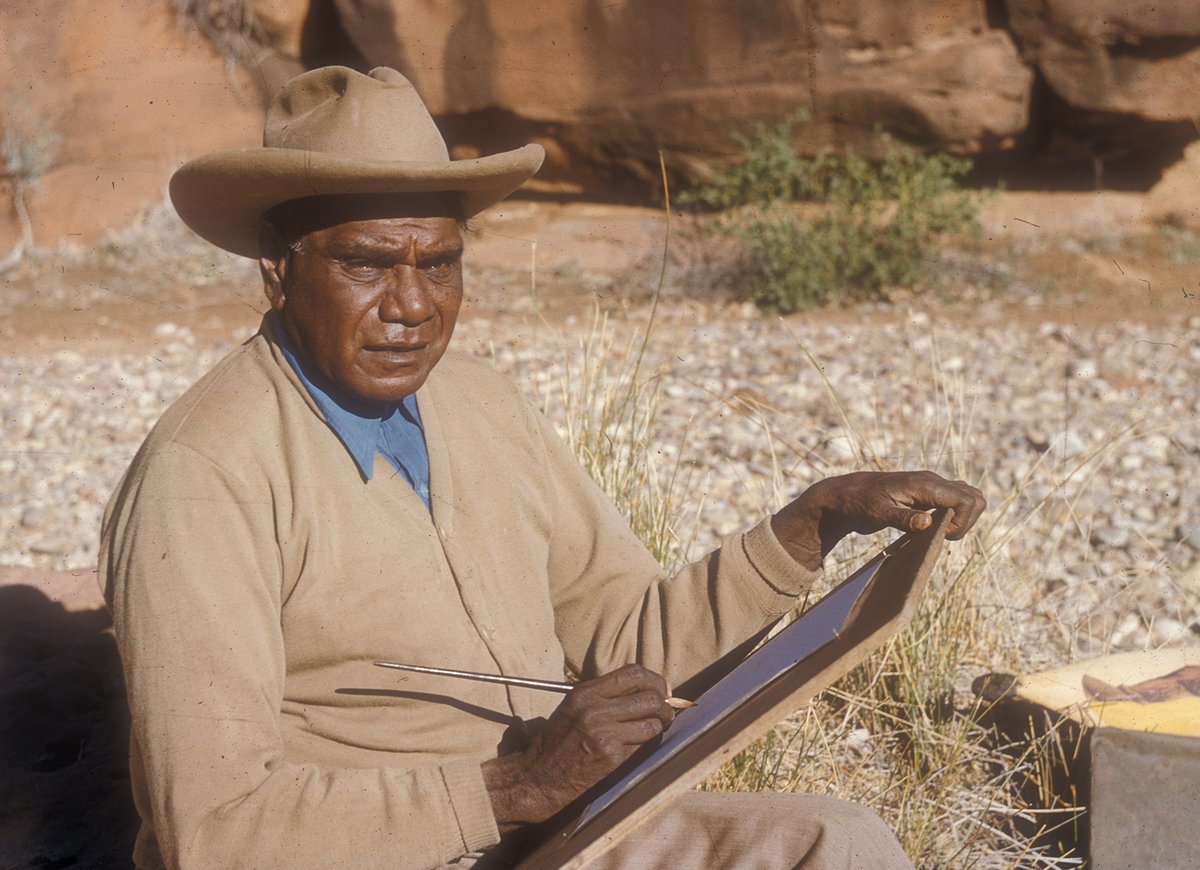
Albert Namatjira
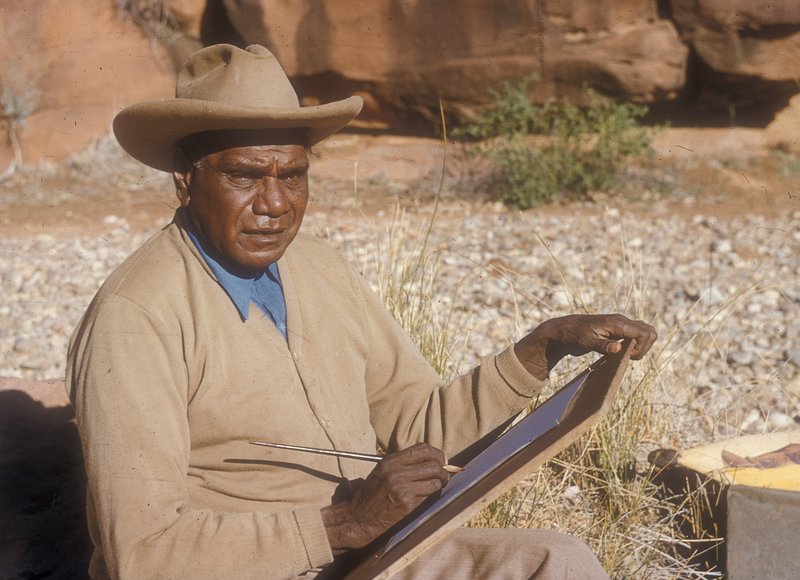 Click to enlarge image
© National Library of Australia
Readers note: This is an excerpt from the 200 Treasures exhibition catalogue, developed in 2017. This content was written as a brief biography on why this person was included in the exhibition.
1902 - 1959
Albert Namatjira was a masterful painter whose life became entangled in virulent racial politics. Namatjira was a Western Arrernte man born on the Hermannsburg Lutheran mission in 1902; his birth name was Elea.
In the 1930s, Namatjira began producing souvenirs (poker-work images on mulga wood) to generate income for the mission. His artistic development was shaped by artists who visited the mission at that time. The most influential was Australian landscape artist Rex Battarbee who, at Namatjira’s request, taught him painting techniques, in particular watercolour, and provided him with necessary materials. Battarbee was ‘astonished ... at Albert’s rapid grasp of the essentials’ of painting. The two men went on extended painting trips, with Battarbee imparting only the basics of Western painting techniques (so as not to ‘hamper originality’) and Namatjira teaching Battarbee about his stunning country.
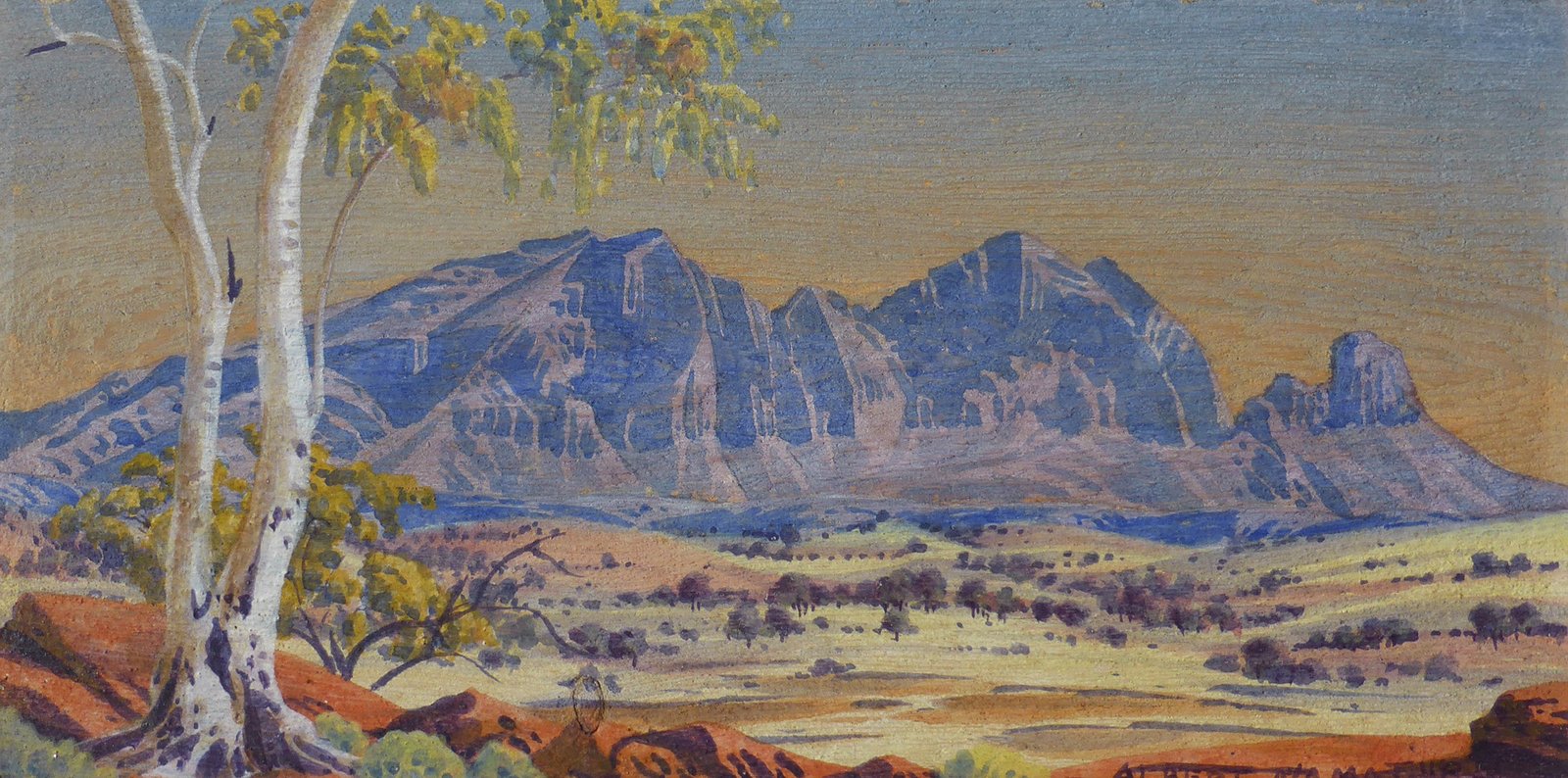
© Legend Press Pty Ltd
In July 1937, Battarbee included some of Namatjira’s works in an exhibition in Adelaide, and word about this new artist began to spread. In 1938, just two years after his first lesson with Battarbee, Namatjira had his first solo show in Melbourne. It sold out in three days. Further sell-out shows followed in Sydney, Adelaide, Perth and Brisbane. The year 1938 marked 150 years of white settlement in Australia, an event predicated on the displacement of Indigenous culture. Many viewed Namatjira as a man who had abandoned his culture for European ways, and his work was read as an emblem of assimilation by the mainstream. Those closer to him, however, recognised the ancient cultural resonances in his work.
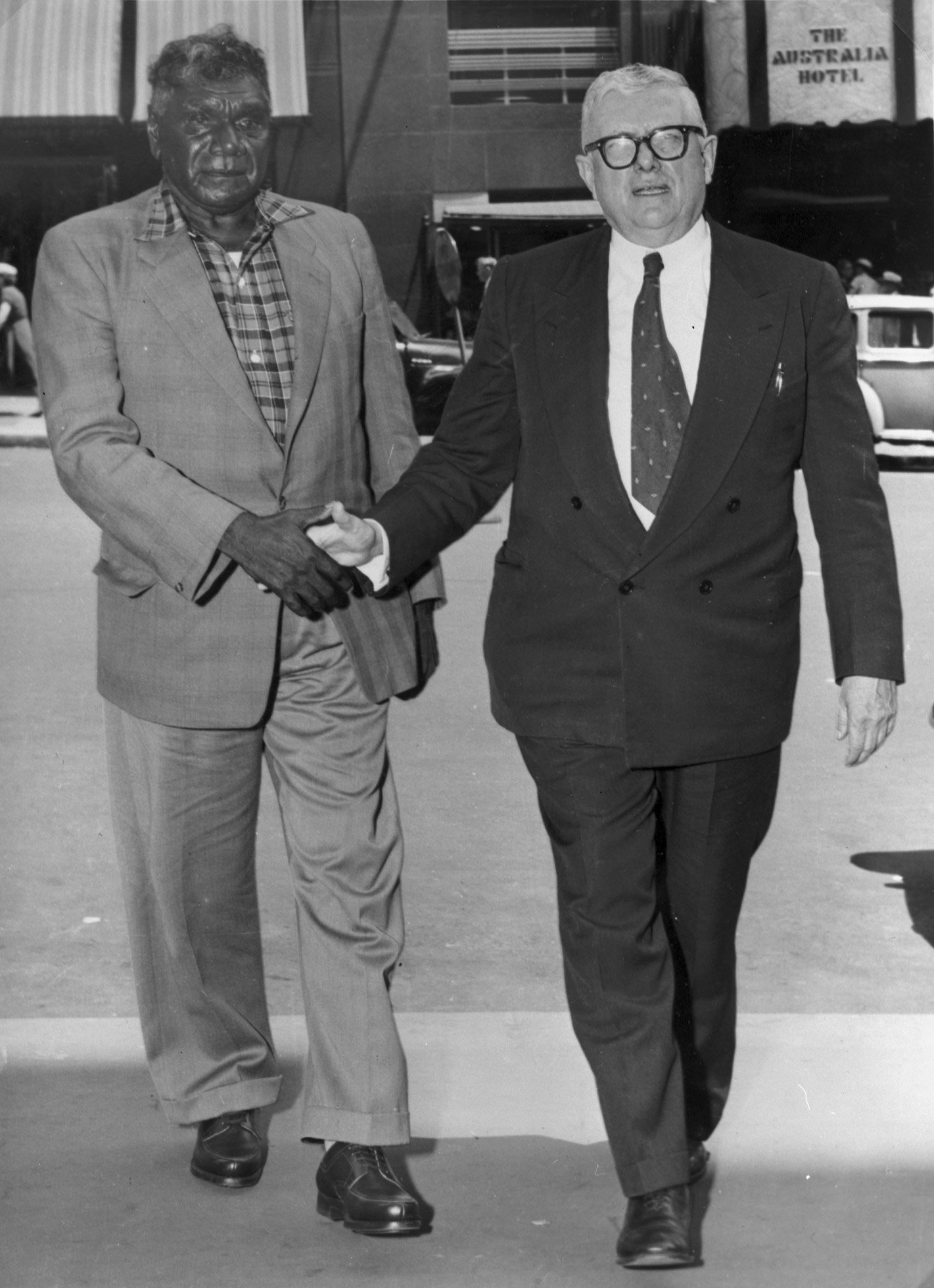
© National Library of Australia

As Namatjira’s fame grew, especially after receiving a Coronation Medal from Queen Elizabeth II in 1954 during her Australian visit, so too did the pressures put upon him. He received citizenship in 1957, but when he was charged with supplying alcohol to another Indigenous man, he was sentenced in 1959 to six months’ imprisonment with hard labour. Although this sentence was reduced, the trauma took its toll: Namatjira died later that year.