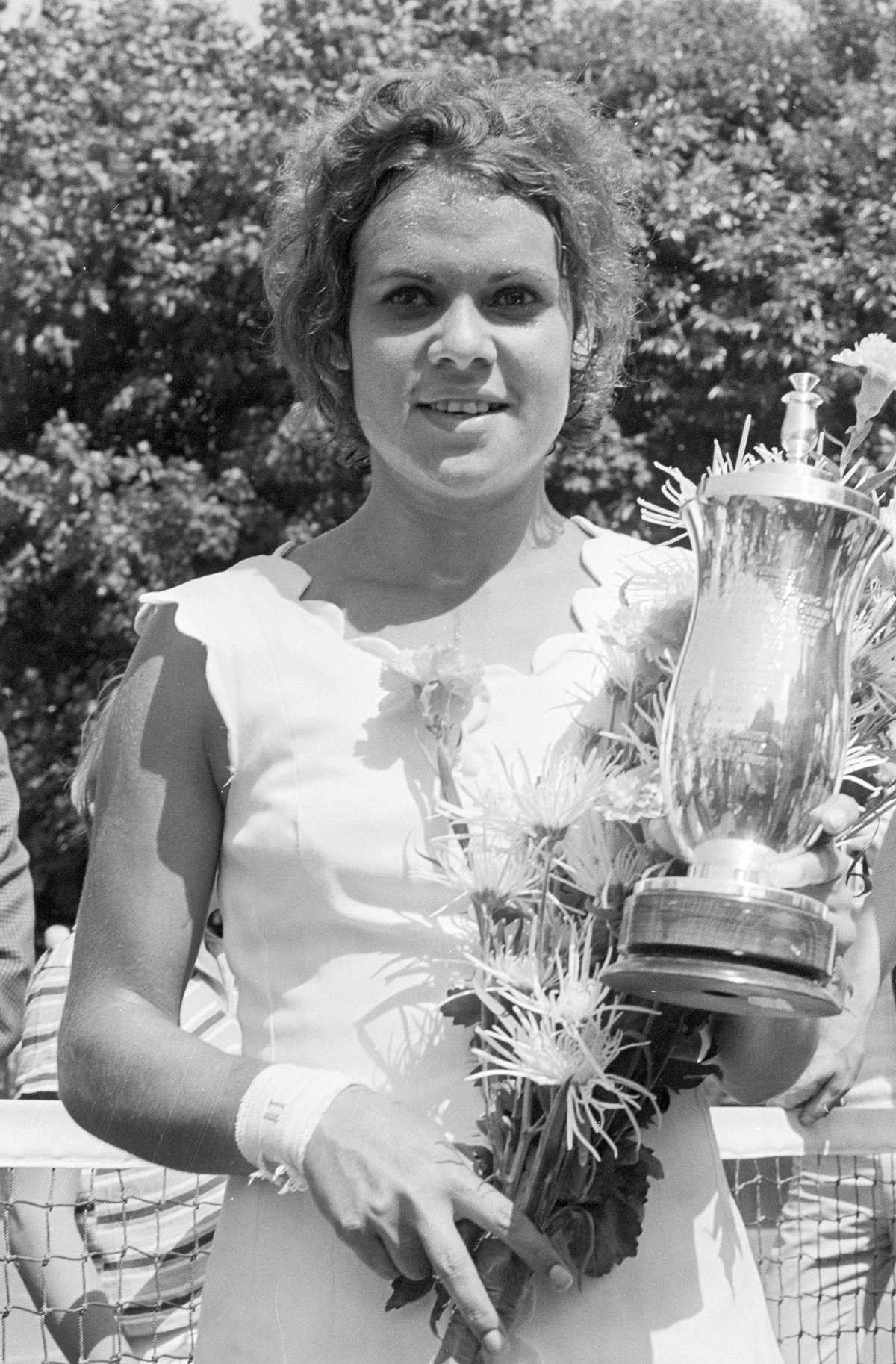
Evonne Goolagong Cawley AO, MBE
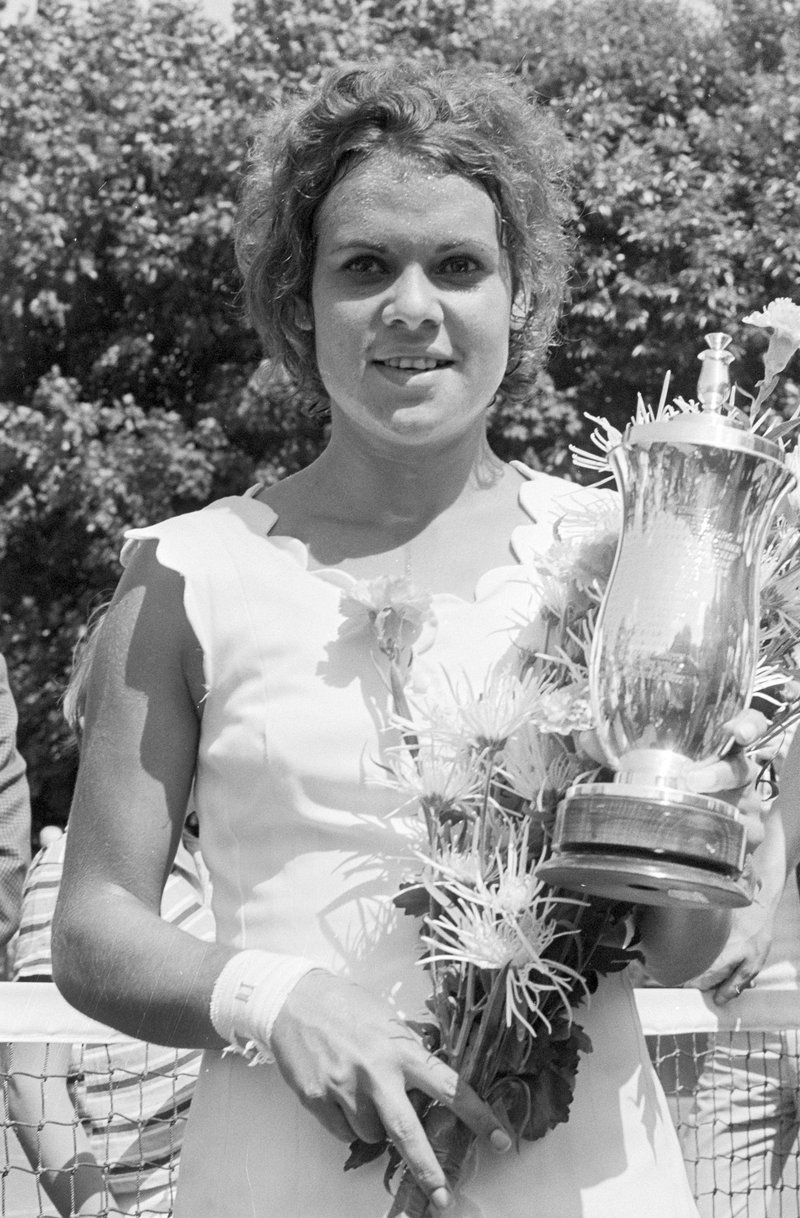 Click to enlarge image
© Public domain
Readers note: This is an excerpt from the 200 Treasures exhibition catalogue, developed in 2017. This content was written as a brief biography on why this person was included in the exhibition.
1951 - present
Evonne Goolagong was born in Wiradjuri country in 1951 and was raised in Barellan, NSW, where hers was the only Indigenous family.
One of five children, Goolagong was introduced to the game of tennis when courts were built across the road from her home. While her two older siblings took up the sport, Goolagong was too young to join the local tennis club and so she spent hours with a borrowed racquet and ball hitting against a practice wall.
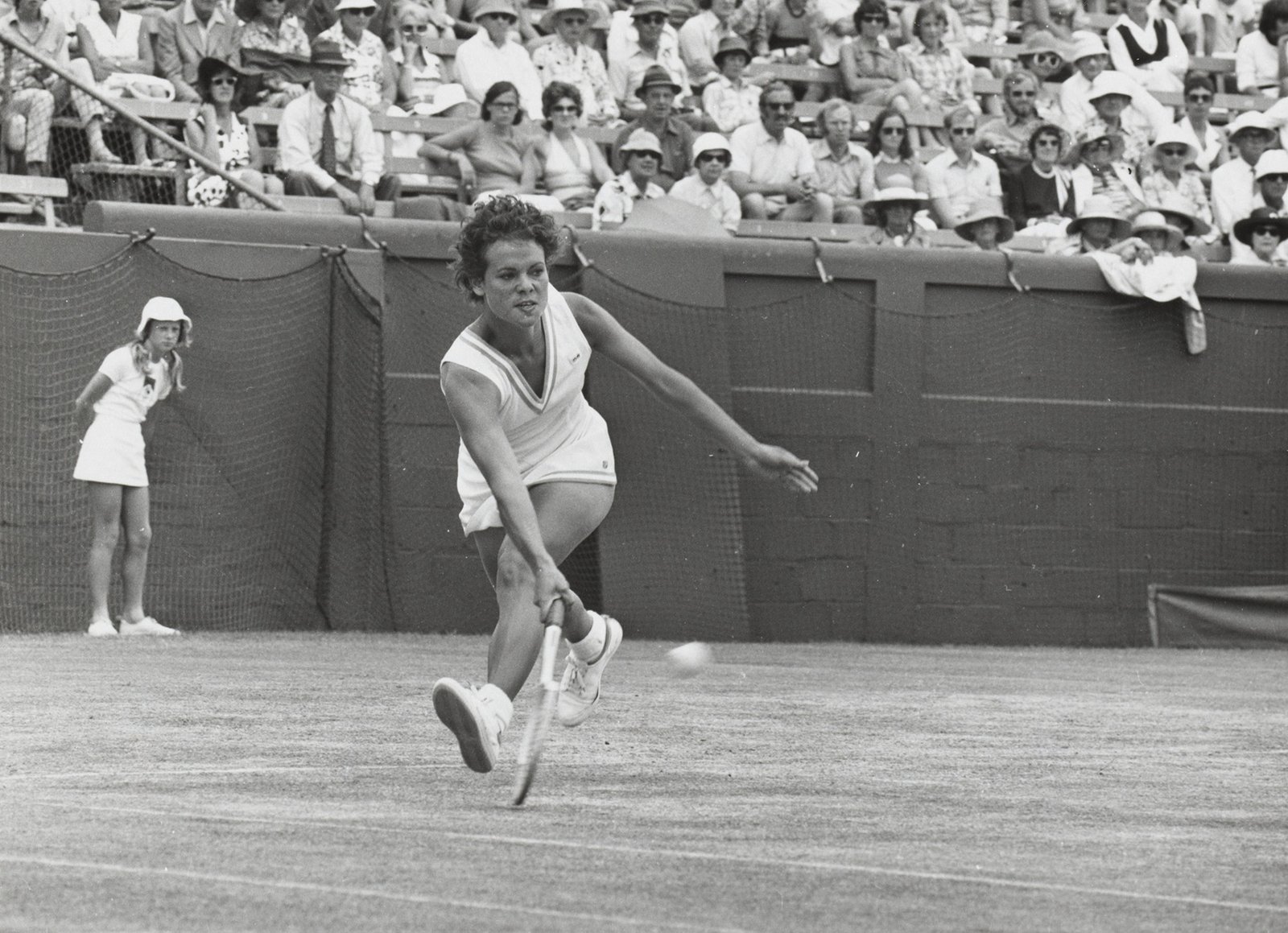
Her talent was quickly noticed and so began Barellan’s support of its favourite daughter’s rise to dominate women’s tennis in the 1970s and early 1980s. She won 92 pro tournaments at a time when women’s tennis was populated with other giants of the game.
When you have a dream you have to work hard to achieve that dream. Your dreams when you are young can be the force that keeps you going. Evonne Goolagong Cawley
Evonne’s career also coincided with seismic political movements – global civil rights movements, the Aboriginal rights movement, apartheid South Africa, the battle of the sexes, feminism, and the shift from amateur to professional status for tennis players – all of which impacted her career greatly.
© National Library of Australia

She was an Indigenous woman succeeding in a very white world, enduring considerable discrimination throughout. Goolagong’s on-court success was her way of detonating pervasive negative stereotypes of Indigenous Australians, though some political activists thought this insufficient and criticised her harshly. Her crowning career achievement was to win Wimbledon twice. In 1971 she was the first Aboriginal Australian to do so. The second time, in 1980, she won as Evonne Cawley and was the first mother to win that crown. In 1991, she returned from the USA to live in Australia with her family and spearheaded sports programs for Indigenous children. She also took a leading role in Australian tennis and in the Indigenous community. Her numerous honours attest to the symbolic place she occupies in Australian life.