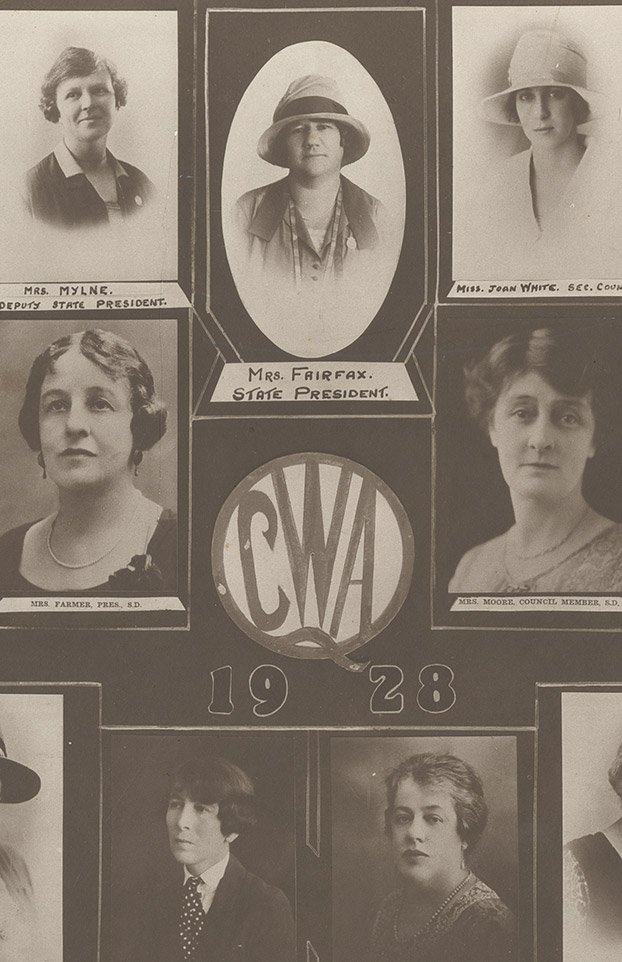
Ruth Fairfax OBE
 Click to enlarge image
© State Library of Queensland
Readers note: This is an excerpt from the 200 Treasures exhibition catalogue, developed in 2017. This content was written as a brief biography on why this person was included in the exhibition.
1878 - 1948
Ruth Fairfax was a leading figure in the 1920s movement to improve conditions for Australia’s rural women and their families.
Fairfax was born Ruth Dowling in Rylstone, NSW, in 1878. She married Hubert Fairfax at age 21, and the couple moved to Queensland. Fairfax became involved in the Country Women’s Association (CWA), which was founded at Sydney’s Royal Agricultural Show in April 1922. Four months later Fairfax became the founding president of the Queensland CWA (QCWA). The CWA was formed to address the multiple hardships caused by distance and isolation faced by the wives of rural men, from graziers to itinerant workers. These conditions were even more extreme for the QCWA, given Queensland’s size and its environmental differences. Fairfax built the QCWA throughout her term as president, which lasted until 1931.
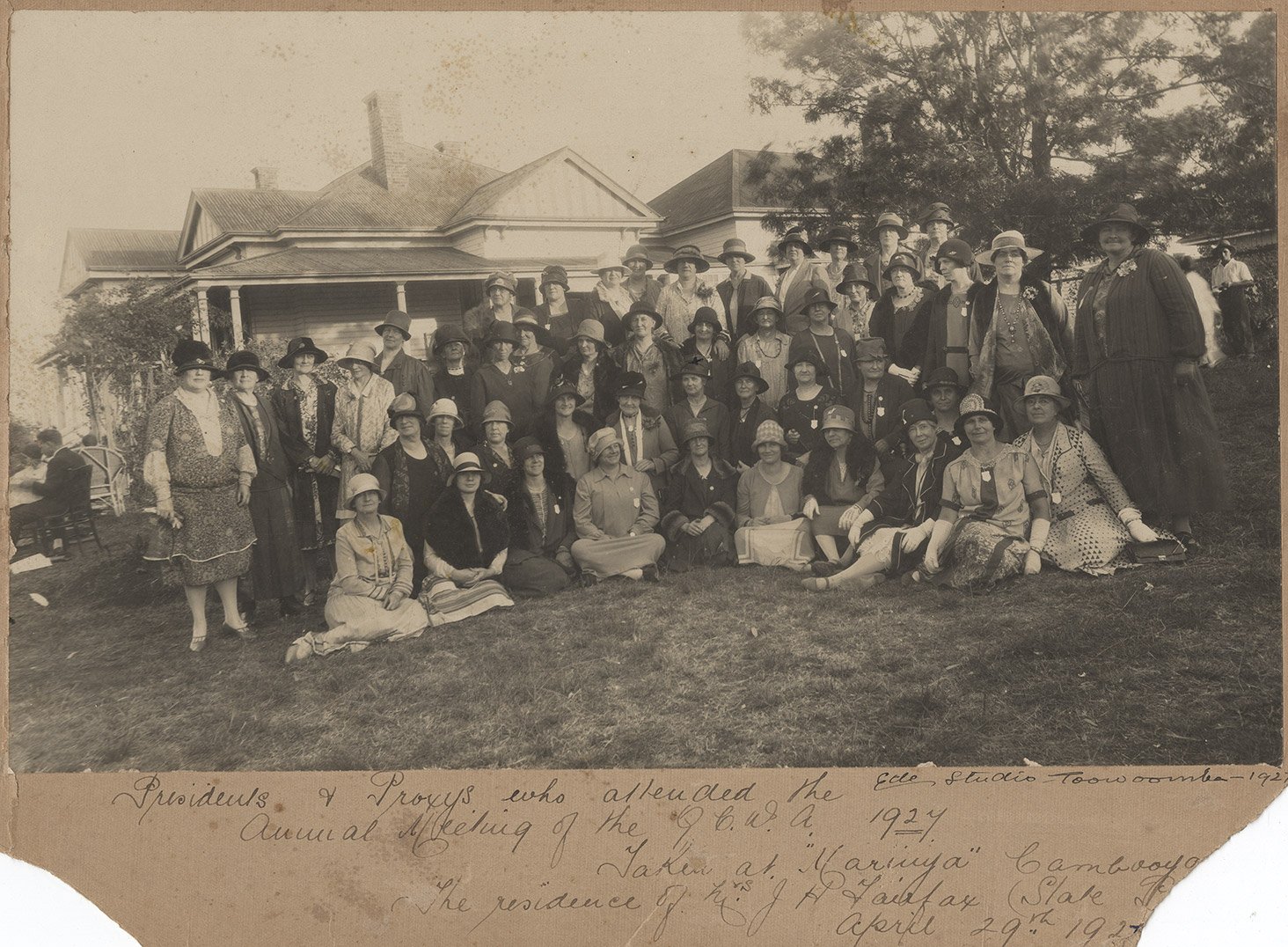
© State Library of Queensland

By 1928, there were 283 branches and more than 13,000 members. Fairfax lobbied for financial help for rural families, such as free railway travel
and cheaper telephone services. She was deeply involved in ensuring rural women had the skills they needed to survive (literally) in the bush. Nursing skills, especially for infant care, were imperative. So too were skills needed to create self-sufficient households, where most women had complete responsibility for growing and cooking food, all the family’s sewing needs, and washing and cleaning without mechanisation. These domestic tasks were often in addition to gruelling farm work.
Schooling was another major concern, as many women were forced to choose between losing their young children to boarding schools, allowing them to travel long distances daily or taking charge of their schooling at home. The QCWA focused from the outset on establishing seaside holiday homes for rural families to grant them some leisure time, and to benefit of their health and wellbeing.
Fairfax and her husband moved to Sydney in 1930, where she then worked as New South Wales State Secretary for the CWA, a position she held until 1946, and volunteered her services to many benevolent enterprises. She was recognised for her work with an OBE in 1935, and the QCWA headquarters in Brisbane is named in her honour.