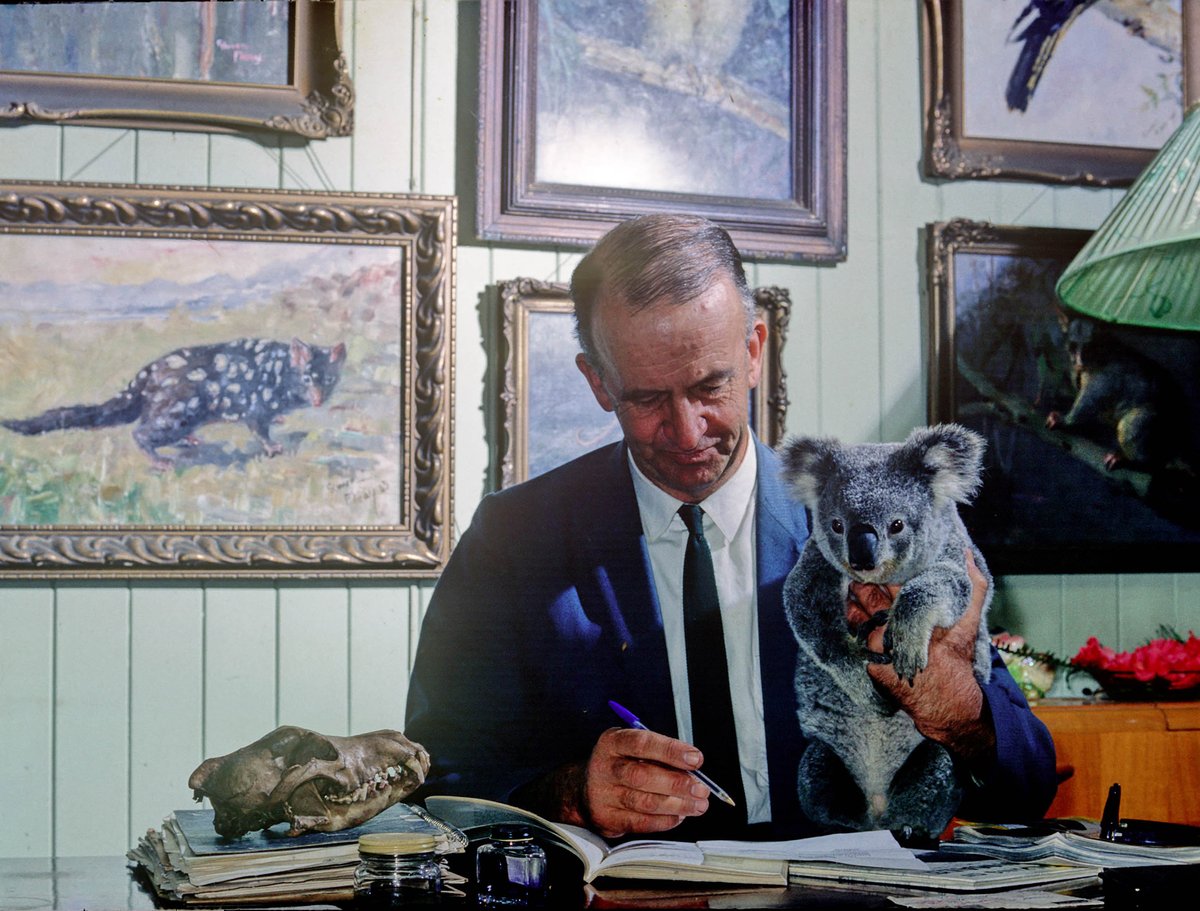
David Fleay AM, MBE
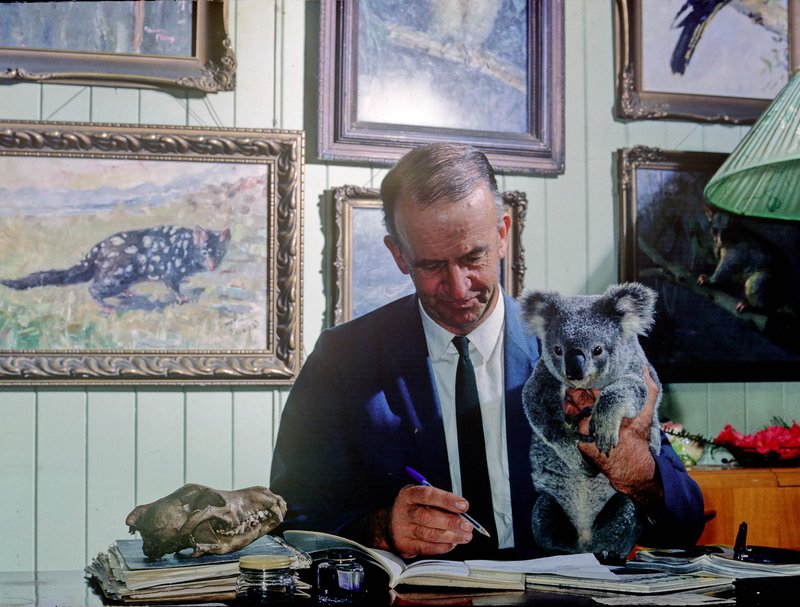 Click to enlarge image
© Kodachrome by Stanley Breeden, digitally restored by Stephen Fleay
Readers note: This is an excerpt from the 200 Treasures exhibition catalogue, developed in 2017. This content was written as a brief biography on why this person was included in the exhibition.
1907 - 1993
David Fleay wrote the book, in fact many books, about the care of Australian fauna that transformed the practice of zoology.
Born in Ballarat, Victoria, Fleay observed animals from when he was a child, bringing many of them to his family home to study at closer range, including snakes he hid in the roof and a powerful owl (named Ferox) that he nursed to health after he brought it home from the Ballarat zoo.
In 1927, he began formal studies for a Bachelor of Science and a Diploma of Education at the University of Melbourne, taking many of his charges with him. These included venomous snakes that he milked to aid in the vital development of anti- venoms.
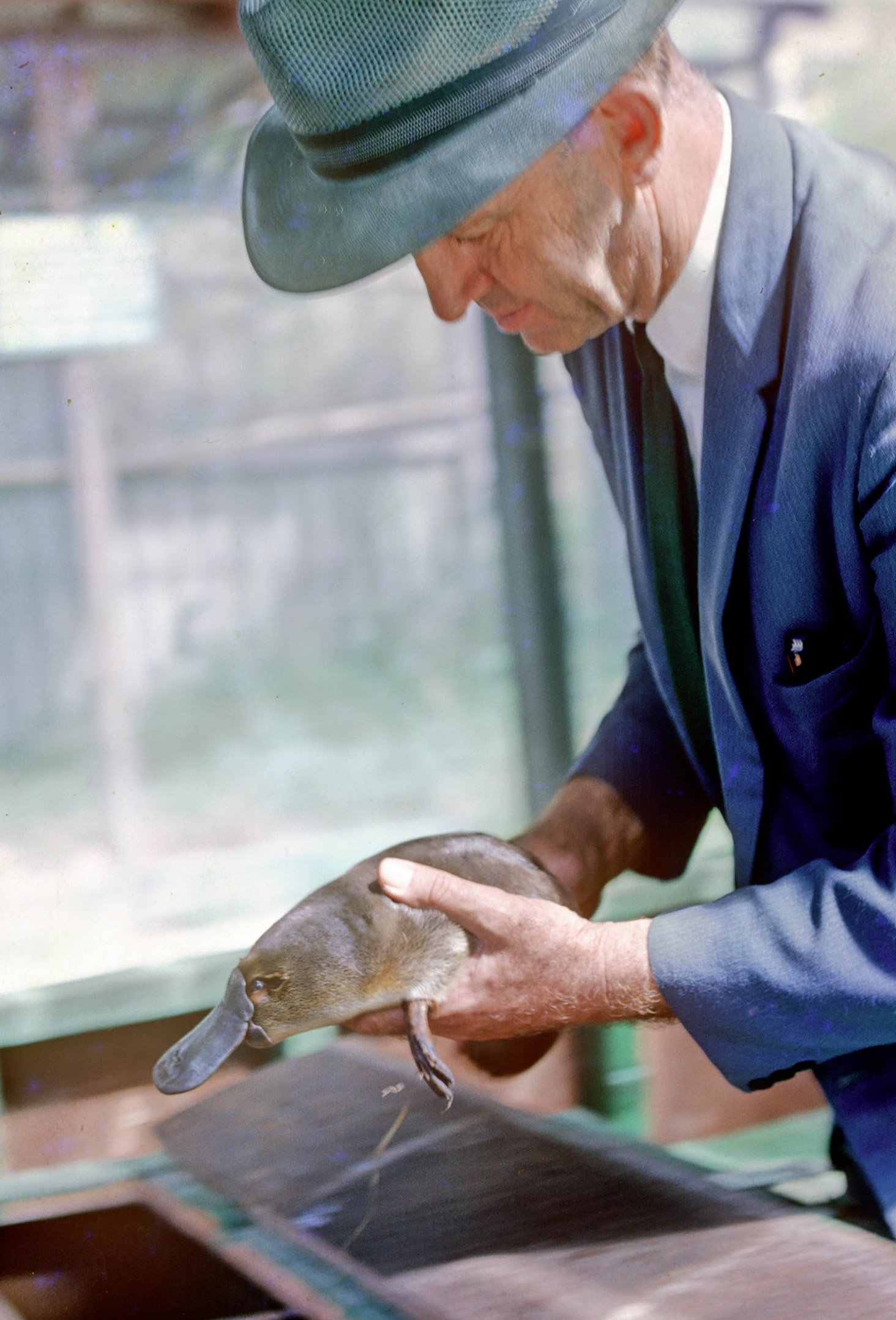
© Kodachrome by Stanley Breeden, digitally restored by Stephen Fleay

After graduation, Fleay joined Melbourne Zoological Gardens where he opened an Australian section in the 1930s. It was a novel concept for the time, and became extremely popular with the public. After a disagreement with the zoo about the care of native fauna, he established the Healesville Sanctuary in 1937, a place devoted to native animals living in conditions that replicated their natural habitats. It, too, became a great tourist attraction. Here, Fleay undertook cutting-edge captive- breeding programs of endangered species, outstanding among which was the first successful breeding of a Platypus, in 1944. The work of the sanctuary included animal rescue, especially following the devastating bushfires of January 1939.
Fleay moved to Queensland in 1952 and established Fleay’s Fauna Reserve where he continued his work in conservation. Over his life Fleay wanted to share his knowledge. He wrote copious articles and books about his findings and gave tours and conducted other public education programs. He was also a very accomplished photographer. He took the widely circulated photograph of the last Tasmanian tiger in 1933, three years before it died in Hobart Zoo.