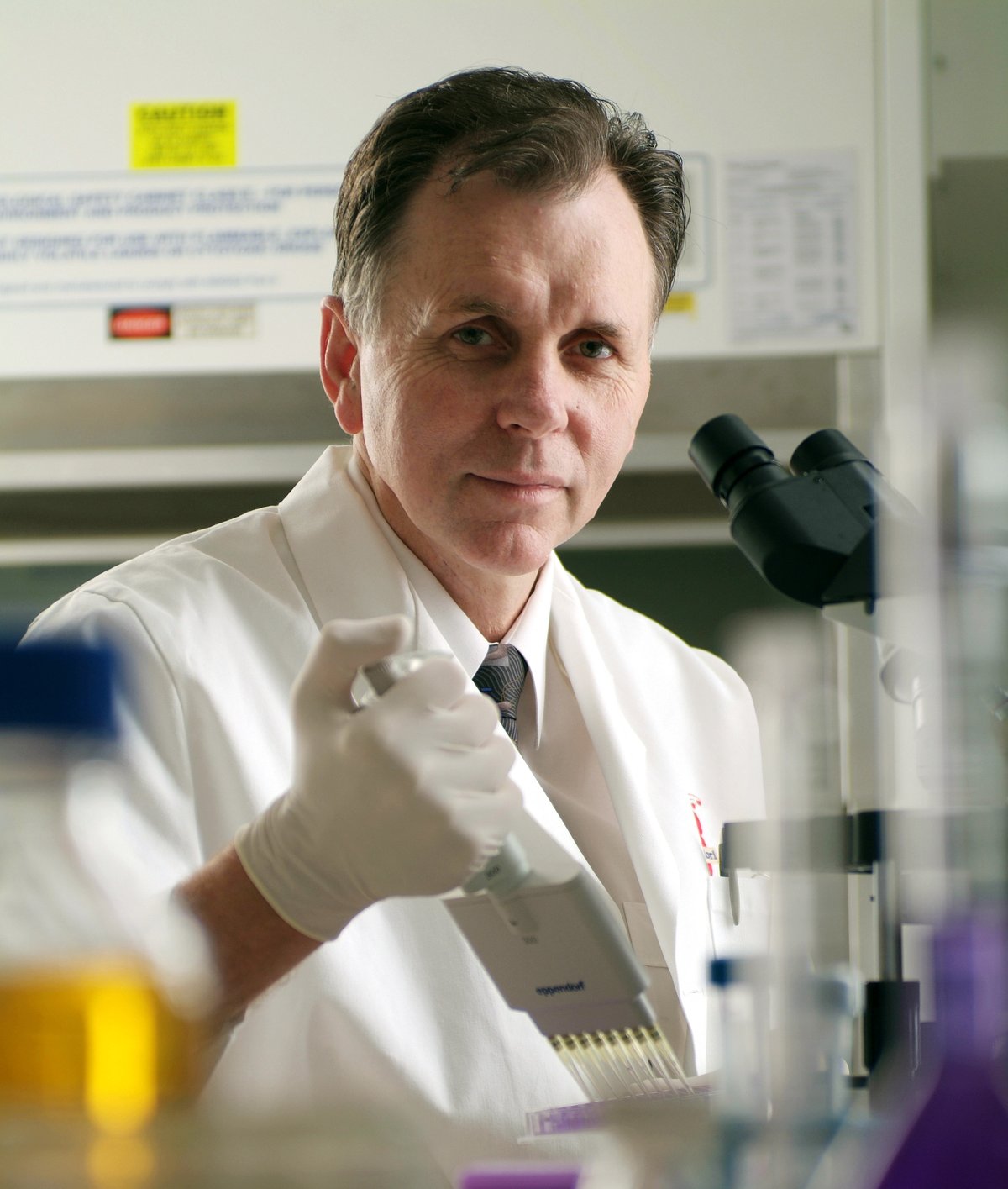
Professor John Robin Warren AC and Professor Barry James Marshall AC, FRACP, FRS, FAA
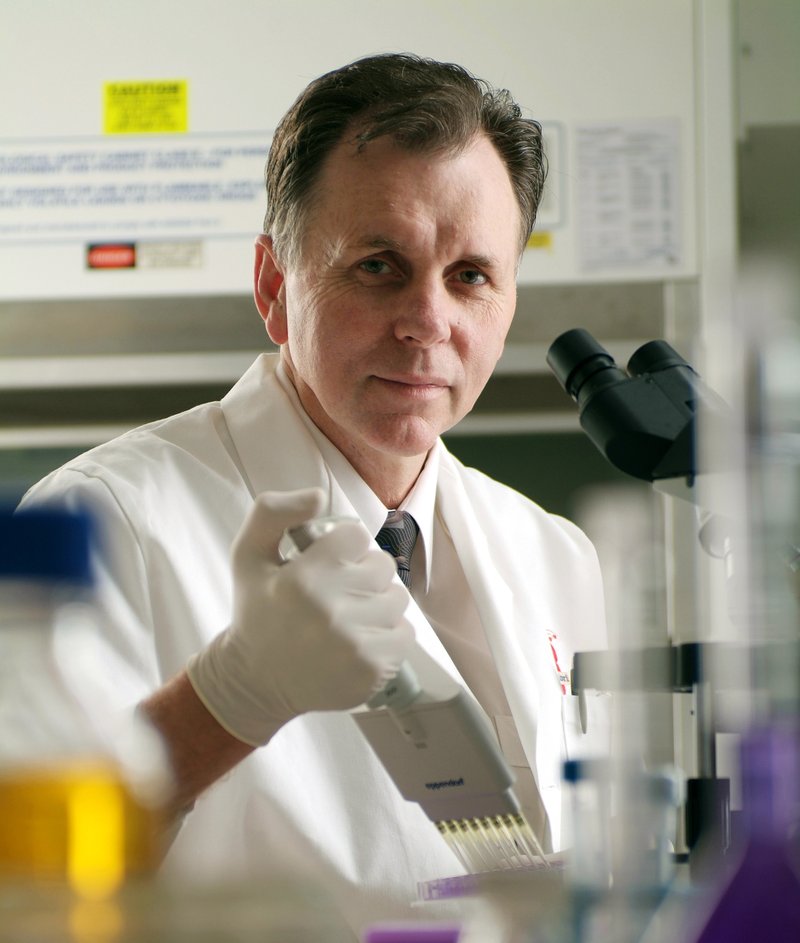 Click to enlarge image
© Frances Andrijich
Readers note: This is an excerpt from the 200 Treasures exhibition catalogue, developed in 2017. This content was written as a brief biography on why this person was included in the exhibition.
1937 - 2024; 1951 - 2024
In 2005, Robin Warren and Barry Marshall were awarded science’s highest honour, the Nobel Prize for Physiology or Medicine. They had solved the puzzle of what causes a very common, and sometimes very serious, affliction: peptic ulcers. Their findings up-ended the conventional belief that these ulcers were the result of lifestyle factors such as stress and eating spicy food.
They thought we were mad. It was against all the medical teaching, but we had the evidence. we just had to keep pushing it and pushing it. Robin Warren
Warren, who was born in Adelaide in 1937 and educated at the University of Adelaide, built his pathology career at the Royal Perth Hospital. In his clinical work, he observed a crucial connection between the presence of a small, curved bacteria in the lower part of the stomach and inflammation of the stomach’s mucous membrane near where the bacteria were located.
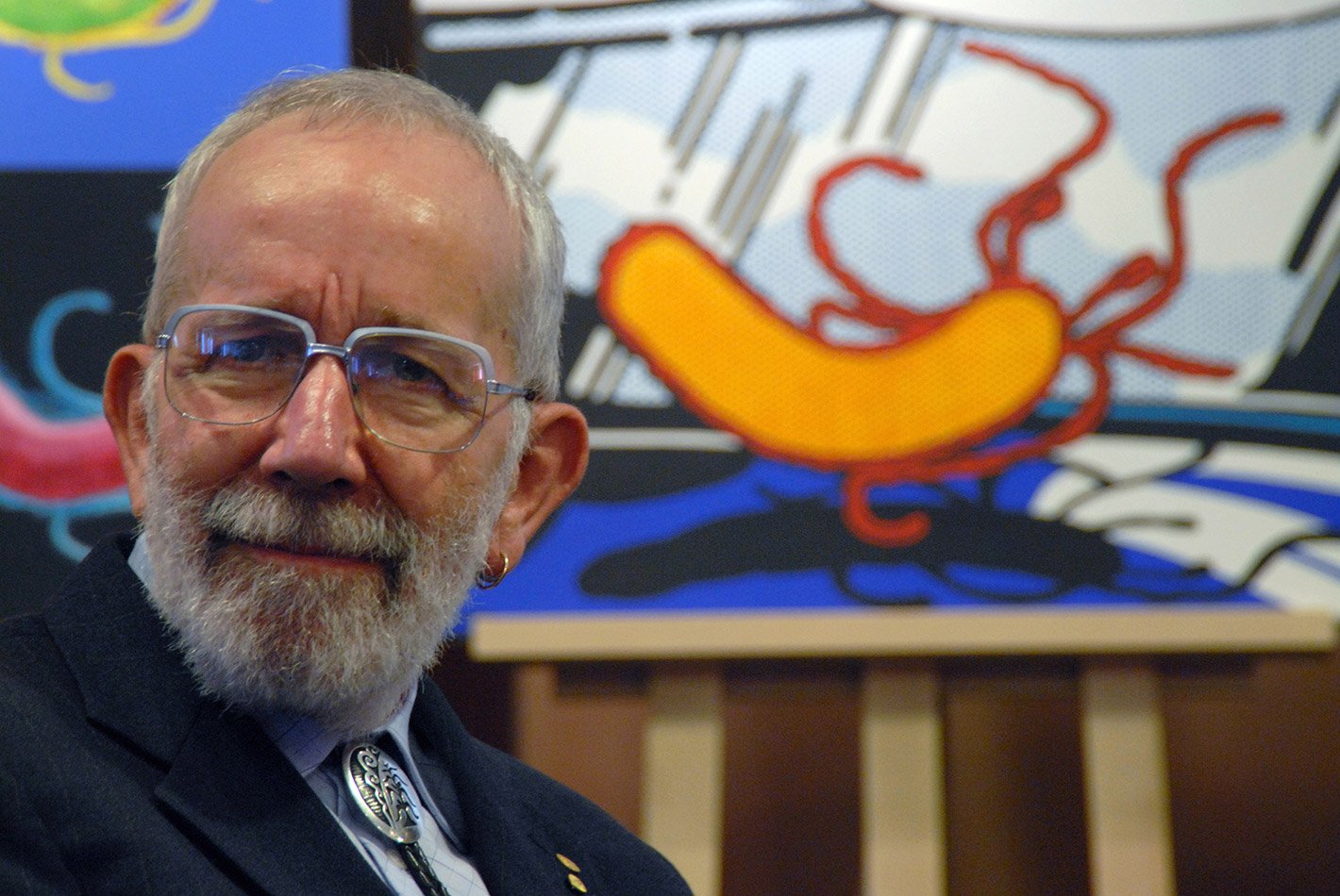
© Photo courtesy of Professor Warren

In 1981, Barry Marshall connected with Warren at Royal Perth Hospital. Marshall was a young Kalgoorlie-born doctor, who had graduated from the University of Western Australia and joined Warren as part of his internal medicine fellowship training. Together they initiated a study of biopsies from 100 patients. Marshall successfully cultivated the unknown bacteria – which became known as Helicobacter pylori – and they found that its presence corresponded with inflammation and/or ulcers in almost every instance. Their findings revolutionised internal medicine. Rather than peptic ulcers being caused by the over-production of acid due to diet and stress, they found that they were an infectious disease. With a course of antibiotics, these ulcers could be cured. Warren and Marshall’s stunning discovery has also expanded medical understanding of the causes of stomach cancer as well as other inflammatory diseases such as Crohn’s disease, ulcerative colitis, rheumatoid arthritis and atherosclerosis.