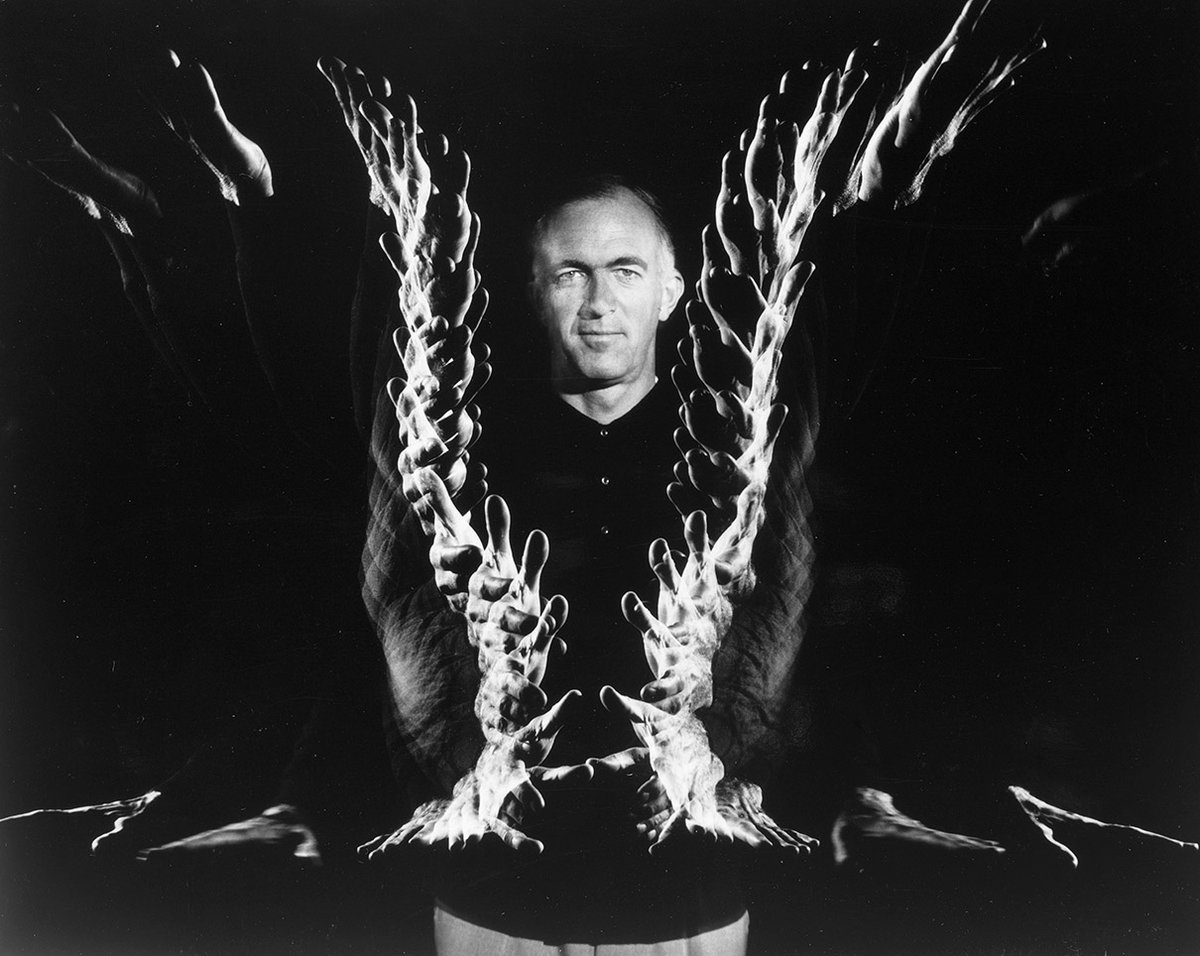
Jørn Utzon AC, HON, FAIA
 Click to enlarge image
© Mitchell Library, State Library of NSW
Readers note: This is an excerpt from the 200 Treasures exhibition catalogue, developed in 2017. This content was written as a brief biography on why this person was included in the exhibition.
1918 - 2008
Jørn Utzon designed an architectural masterpiece of the twentieth century: the Sydney Opera House. This building was the crowning achievement for this Danish architect born in the port city of Alborg, Denmark. Utzon’s early life was shaped by his architect father, his passion for yachting and by his exposure to art, especially sculpture, in which he displayed great talent. He decided, however, on a career in architecture and his exceptional skills won him a place in Copenhagen’s Royal Academy of Fine Arts, from which he graduated in 1942.
© State Library of NSW
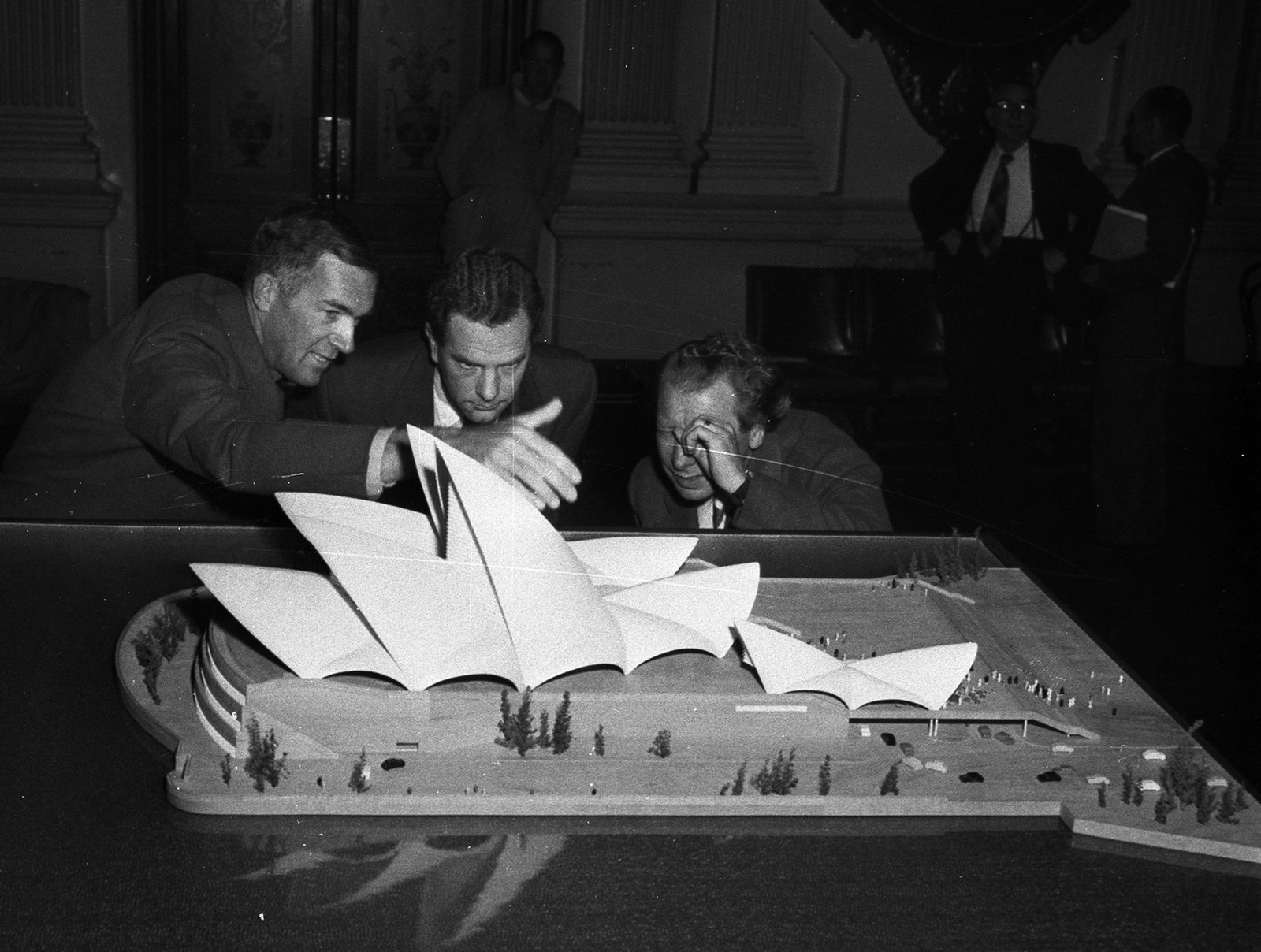
His major architectural influences were Gunnar Asplund, Frank Lloyd Wright and Alvar Aalto, with whom he worked in Finland after the end of World War II. Utzon also took inspiration from visits to Morocco, Mexico, the United States, Japan, China and India. He was particularly taken with the Mayan ability to construct buildings that rose above nature, conquering ‘a new dimension that was a worthy place of their gods’. Utzon’s myriad ideas came together in 1957 when, as a little-known architect, he submitted a design for an arts centre for the spectacular site of Bennelong Point on Sydney Harbour. Of more than 230 entries, his was selected.

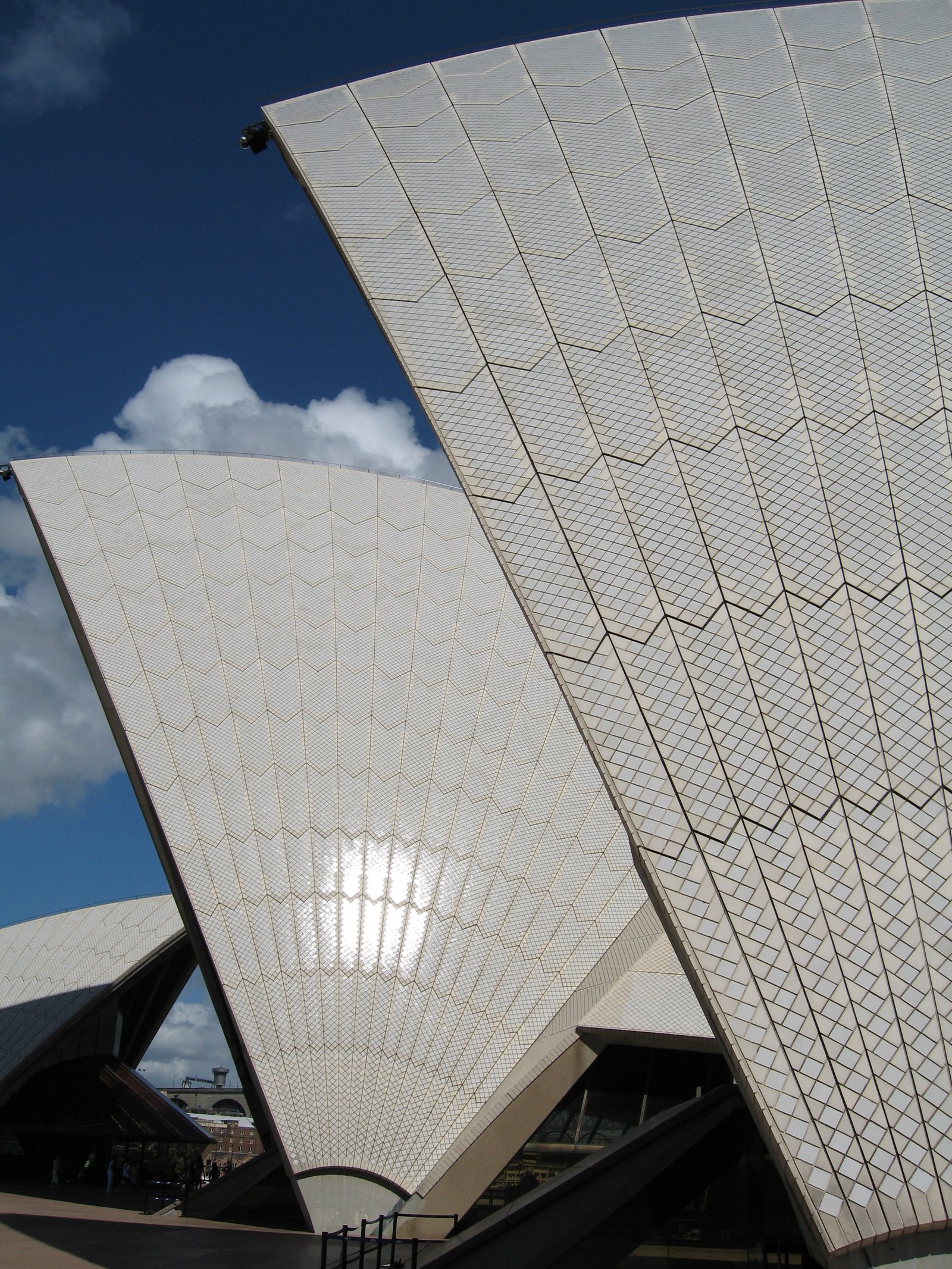
The citation for architecture’s highest honour, the Pritzker Prize, awarded to Utzon in 2003, states that ‘Utzon made a building well ahead of its time, far ahead of available technology’, and highlights the 16-year saga that Utzon endured in trying to turn his vision into reality. The building’s construction is a story of penny-pinching politicians who whittled down Utzon’s grand vision to such an extent that Utzon left Australia before the building’s completion in 1973. He never returned to see his masterwork. The Sydney Opera House is the most famous and most photographed building in the world - ‘a symbol for not only a city, but a whole country and continent’.
© Public domain