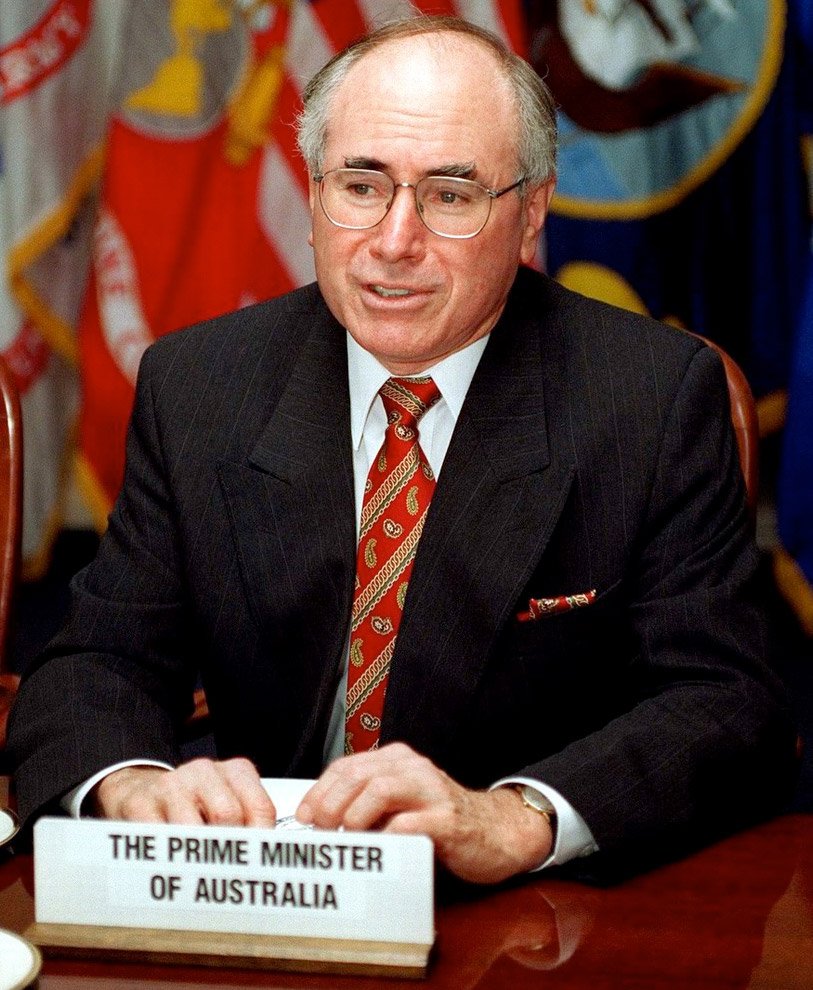
John Howard OM, AC
 Click to enlarge image
© US Department of Defense
Readers note: This is an excerpt from the 200 Treasures exhibition catalogue, developed in 2017. This content was written as a brief biography on why this person was included in the exhibition.
1936 - present
John Winston Howard first came to national prominence as treasurer in Malcolm Fraser’s Liberal government in 1977. He then served terms as leader of the Opposition after 1983, a role he was ousted from twice. Despite this, Howard went on to become one of the most successful politicians in Australian history.
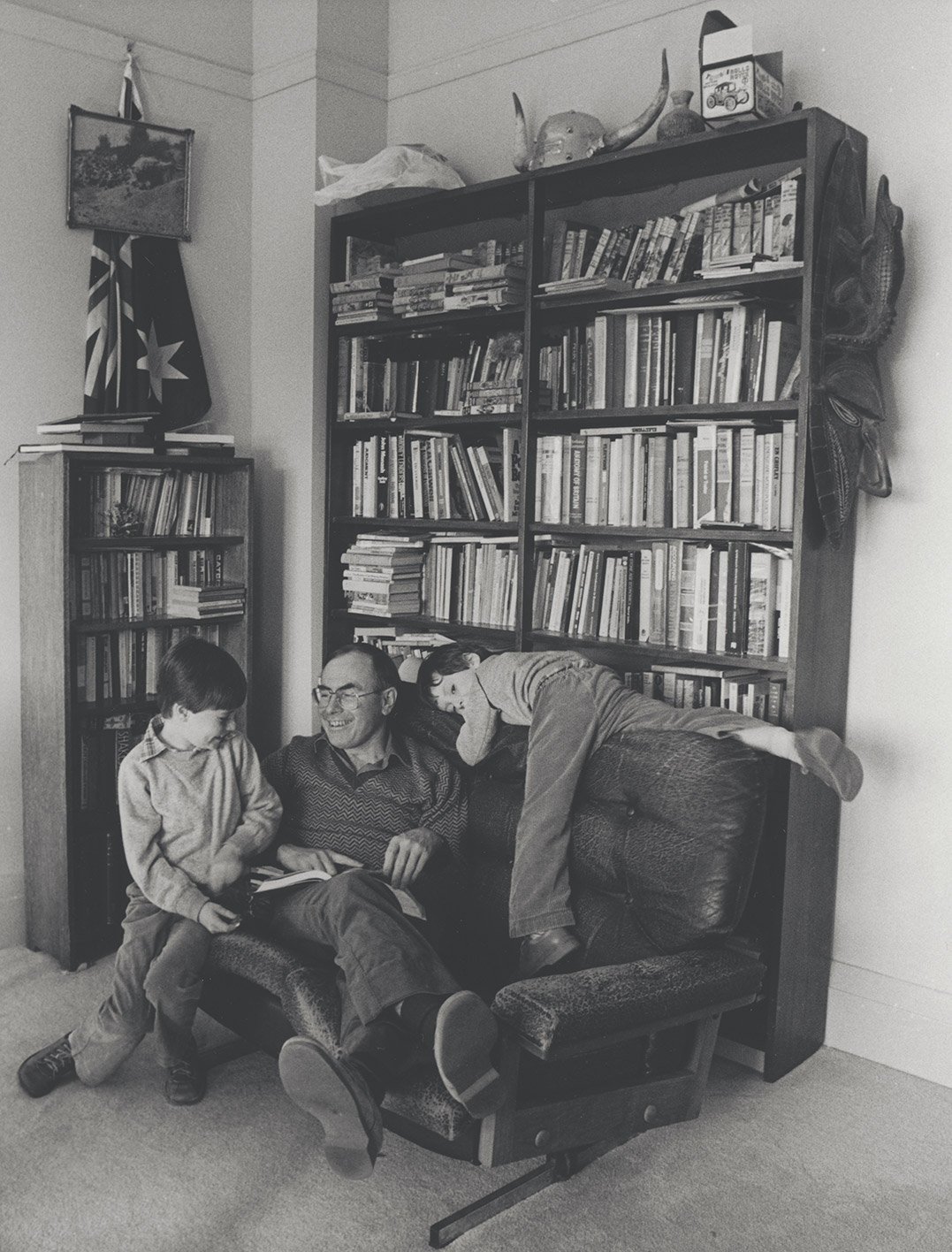
© National Library of Australia
He was born in Earlwood, Sydney, in 1936. His family operated a garage in Dulwich Hill and instilled in him the ethics of hard work and conservatism. Shortly after completing his law degree, he was elected president of the NSW Young Liberals in 1962.
Thirty-four years later, he was elected Australia’s twenty- fifth prime minister, an office he held until 2007, making him Australia’s second-longest-serving prime minister after Sir Robert Menzies. During his years at the helm, Howard encountered numerous challenges, his responses to which won him both great praise and intense criticism. Within a month of assuming office, the Port Arthur massacre in Tasmania occurred, and Howard’s introduction of new gun laws presented a complex test. The subsequent rise of the One Nation Party presented another (Howard succeeded in defusing this political threat by 1998).
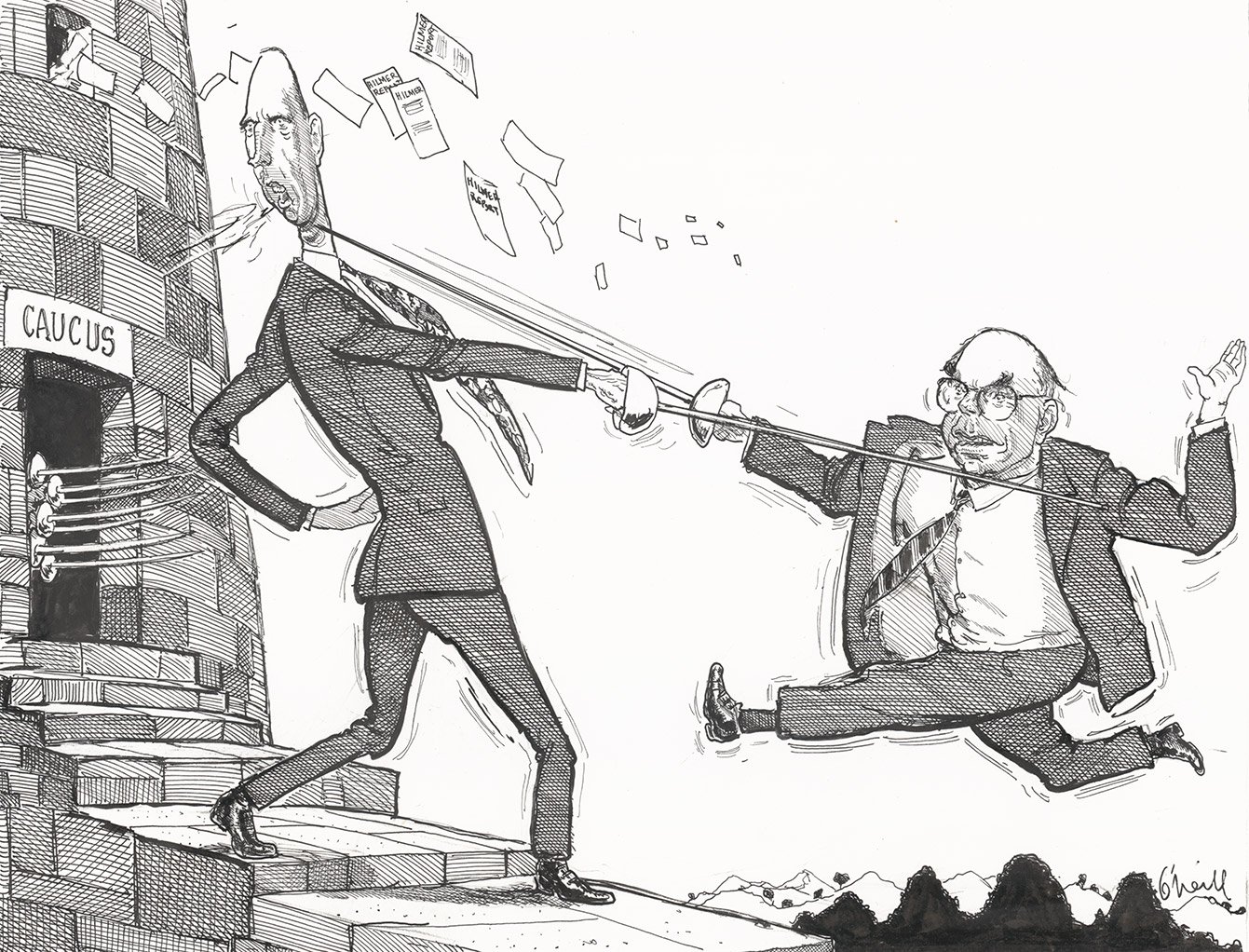
© National Library of Australia.

In addition, the refugee crisis, Indigenous reconciliation, involvement in East Timorese independence, the September 11, 2001, attacks in the United States (Howard was in Washington, D.C., at the time) and Australia’s steadfast allegiance to President George W. Bush’s responses to the attacks all defined Howard’s prime ministership.
Its other key characteristic, its longevity, holds considerable significance in light of the fate of his four immediate successors. Howard attributed a great deal of his success to his wife, Janette, who acted as an astute advisor. He was a masterful politician and is revered internationally figure of conservatism.