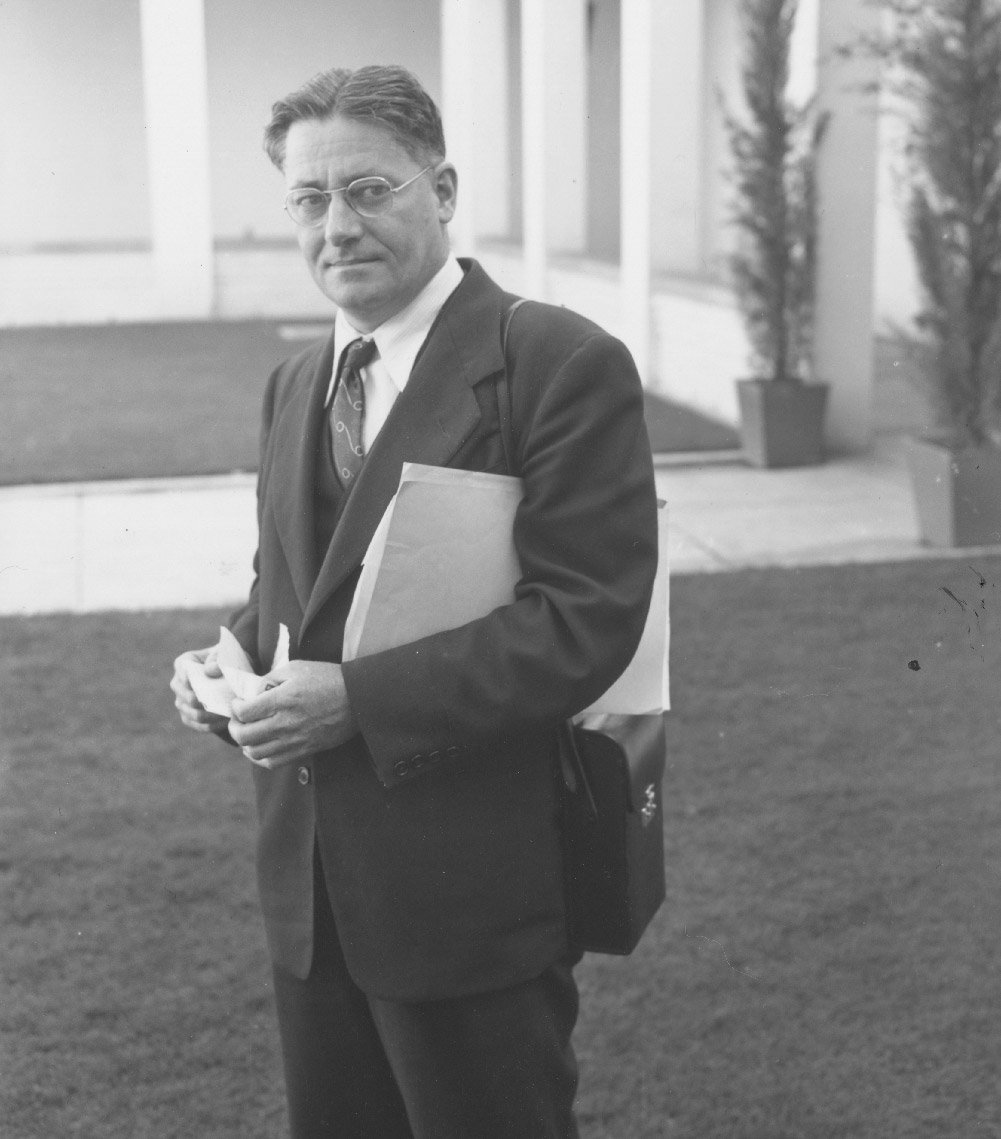
Lord Howard Florey OM, FRS, FRCP
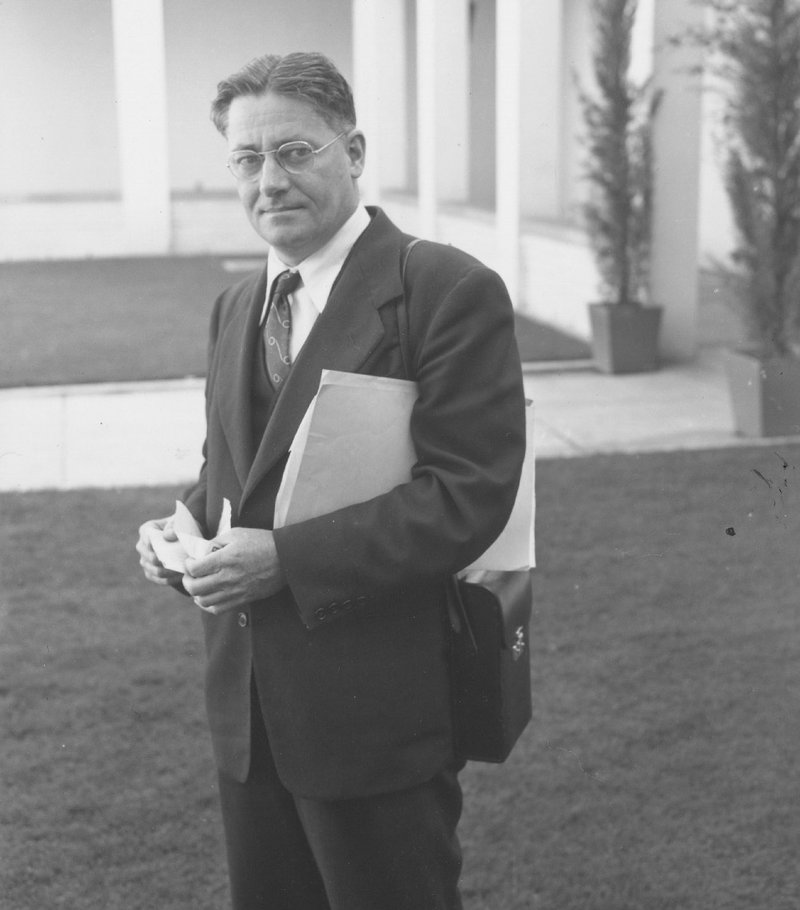 Click to enlarge image
© National Library of Australia
Readers note: This is an excerpt from the 200 Treasures exhibition catalogue, developed in 2017. This content was written as a brief biography on why this person was included in the exhibition.
1898 - 1968
When a young Howard Florey told his sister Hilda (who was the only woman in her medical class of 1906) that he had no desire to become a bootmaker like their father, but a research scientist, she asked, ‘You mean you’d like to be another Pasteur?’ Florey was confused by his sister’s remark, but it turned out to be prescient, as he would go on to change the course of human history with his work unravelling the properties of penicillin.
Florey followed his brilliant sister to medical school at the University of Adelaide in 1916. Upon graduating in 1922, he was awarded a Rhodes Scholarship to study at Oxford University. After his time there, and a number of research appointments elsewhere, in 1935 he became Chair of Pathology at the Sir William Dunn School of Pathology at Oxford University. It was here that Florey led the team that built on the work of Alexander Fleming.
In the 1920s, Fleming had identified the properties of a mould he named penicillin, which inhibited the growth of certain species of bacteria. But Fleming’s research stalled in 1932, and it was at this point that Florey’s Oxford team took up the challenge.
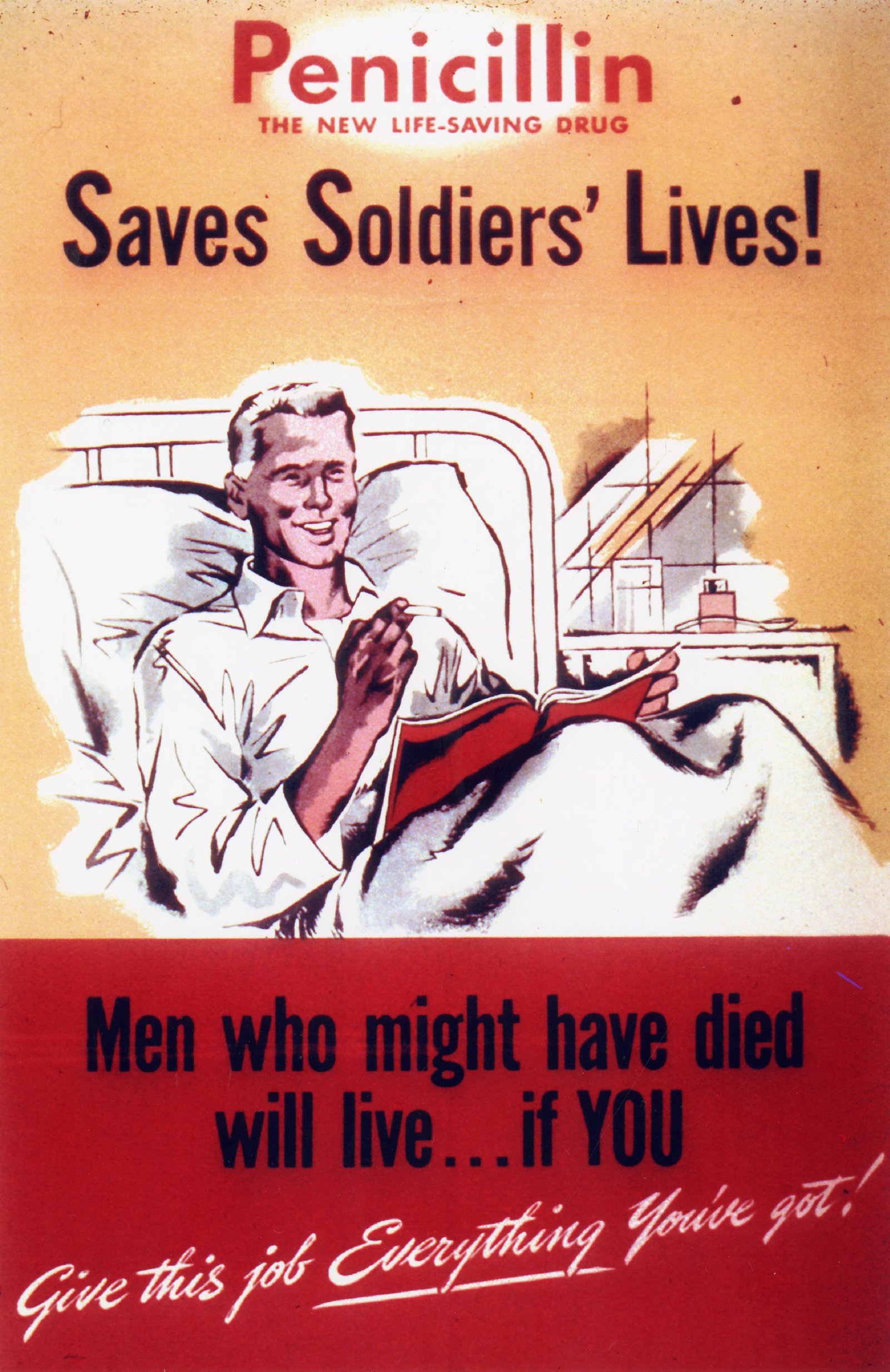
© The Chemical Heritage Foundation
From 1939, they extracted active cultures of penicillin, determined which diseases were susceptible to it, and worked out how to go about its large-scale production. There was urgent need for this work, which coincided with the start of World War II.

In 1941, Florey’s team undertook the first test on humans, with mixed results. The following year, Fleming, alerted to Florey’s work, began using penicillin clinically, and popular credit for this ‘miracle’ medical cure went to him. The scientific community, however, showered Florey and his team with honours. These included the Nobel Prize in Physiology or Medicine in 1945 (which he shared with Fleming and one other). Florey was instrumental in the founding of the Australian National University (ANU) and its John Curtin School of Medicine, and served as ANU’s third chancellor.
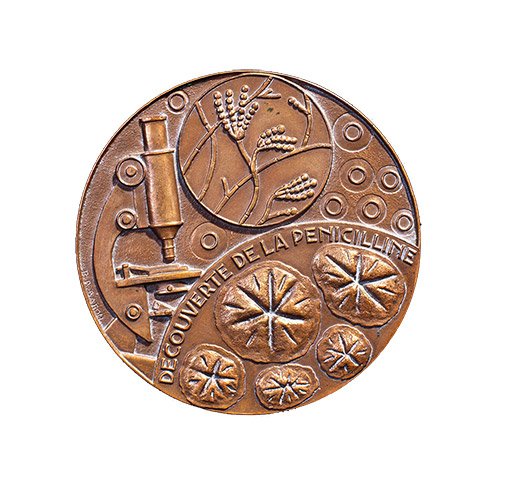
© TBC