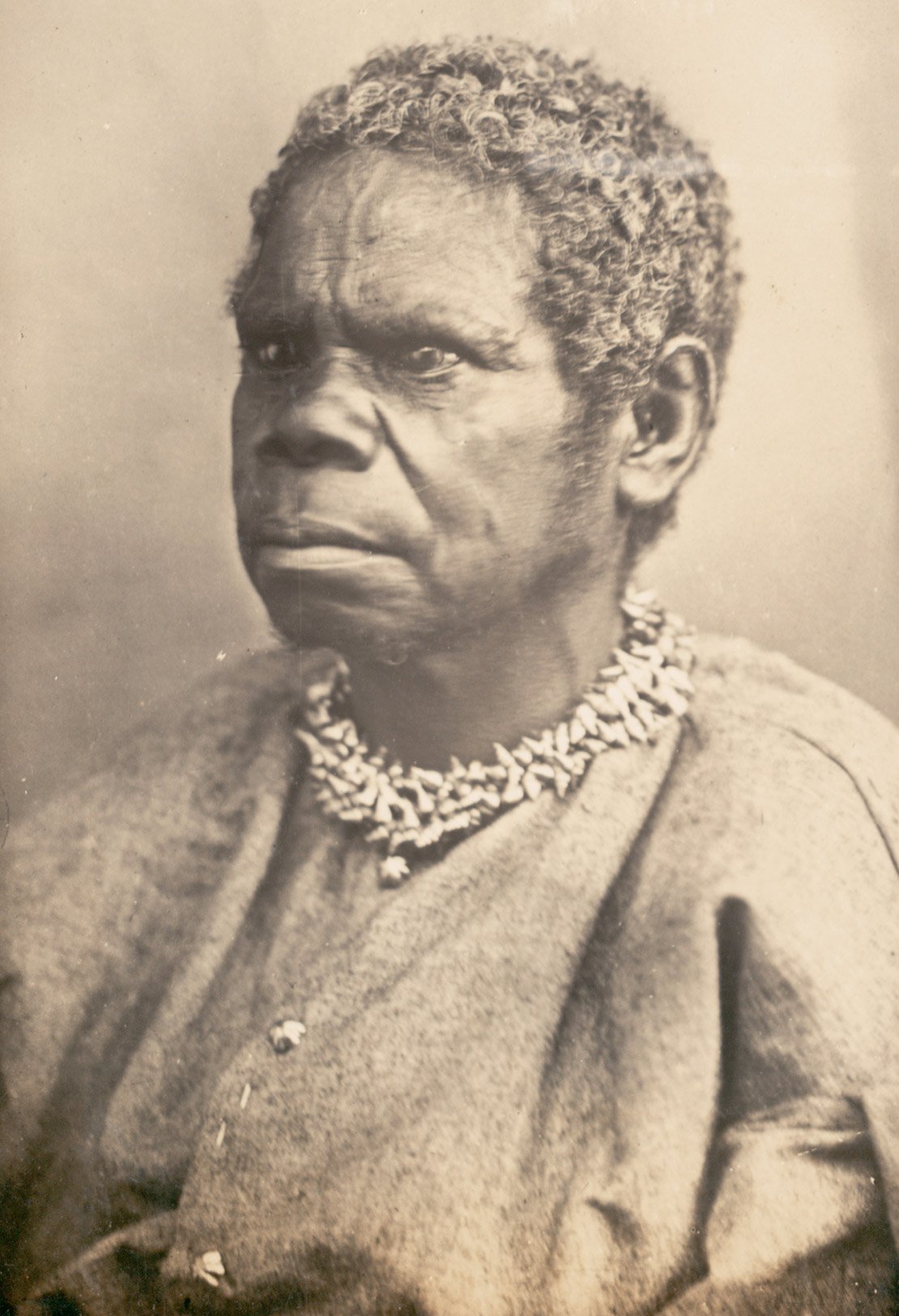
Truganini
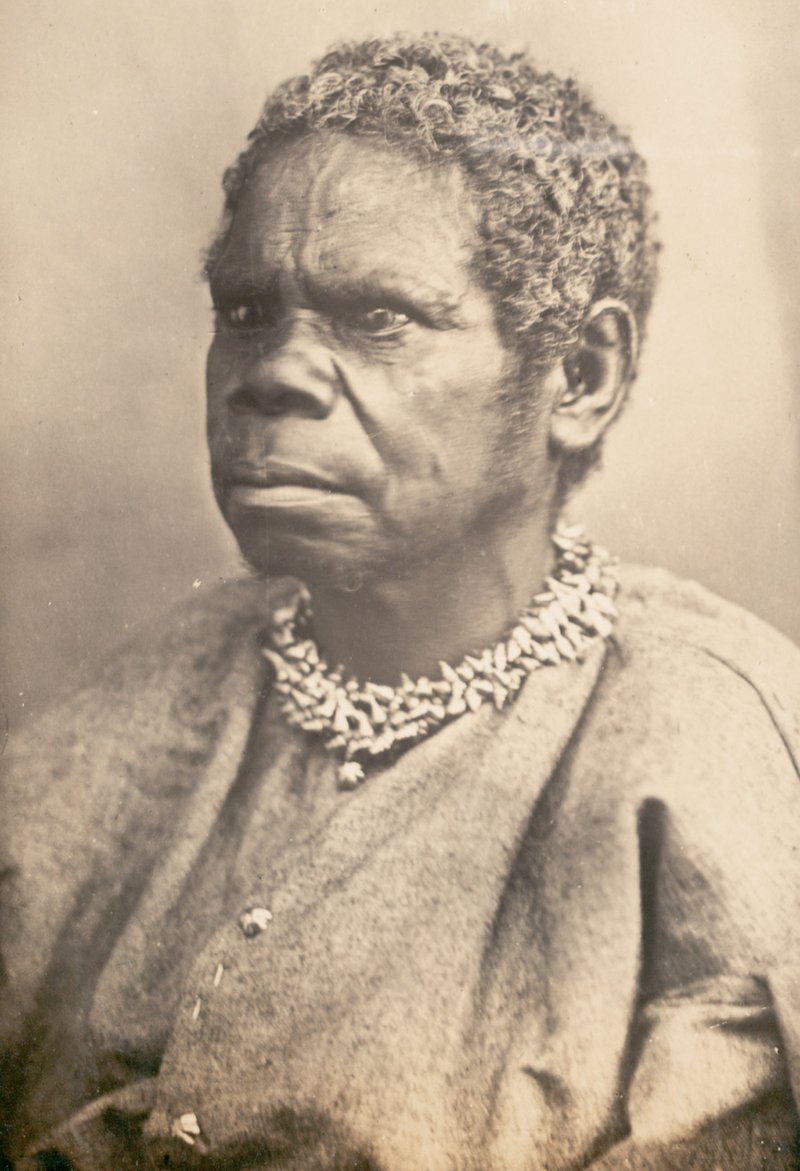 Click to enlarge image
© National Library of Australia
Readers note: This is an excerpt from the 200 Treasures exhibition catalogue, developed in 2017. This content was written as a brief biography on why this person was included in the exhibition.
1812? - 1876
Truganini’s life mapped the traumas of colonialism experienced by Tasmanian Aboriginal (Palawa) people. In her extraordinary life, and in her death, she symbolised many things to different people, from a colonial trophy erroneously labelled the last of her people, to a woman admired for her remarkable tenacity to survive in the face of overwhelming odds.
Truganini was born on Bruny Island in about 1812, nine years after British settlement was established close to what is now Hobart. As a girl, Truganini experienced the first brutal changes of colonisation, when sealers, whalers and woodcutters intruded into her community, the Nuenonne, raping, abducting and killing. By the age of 17, Truganini had lost many kin.
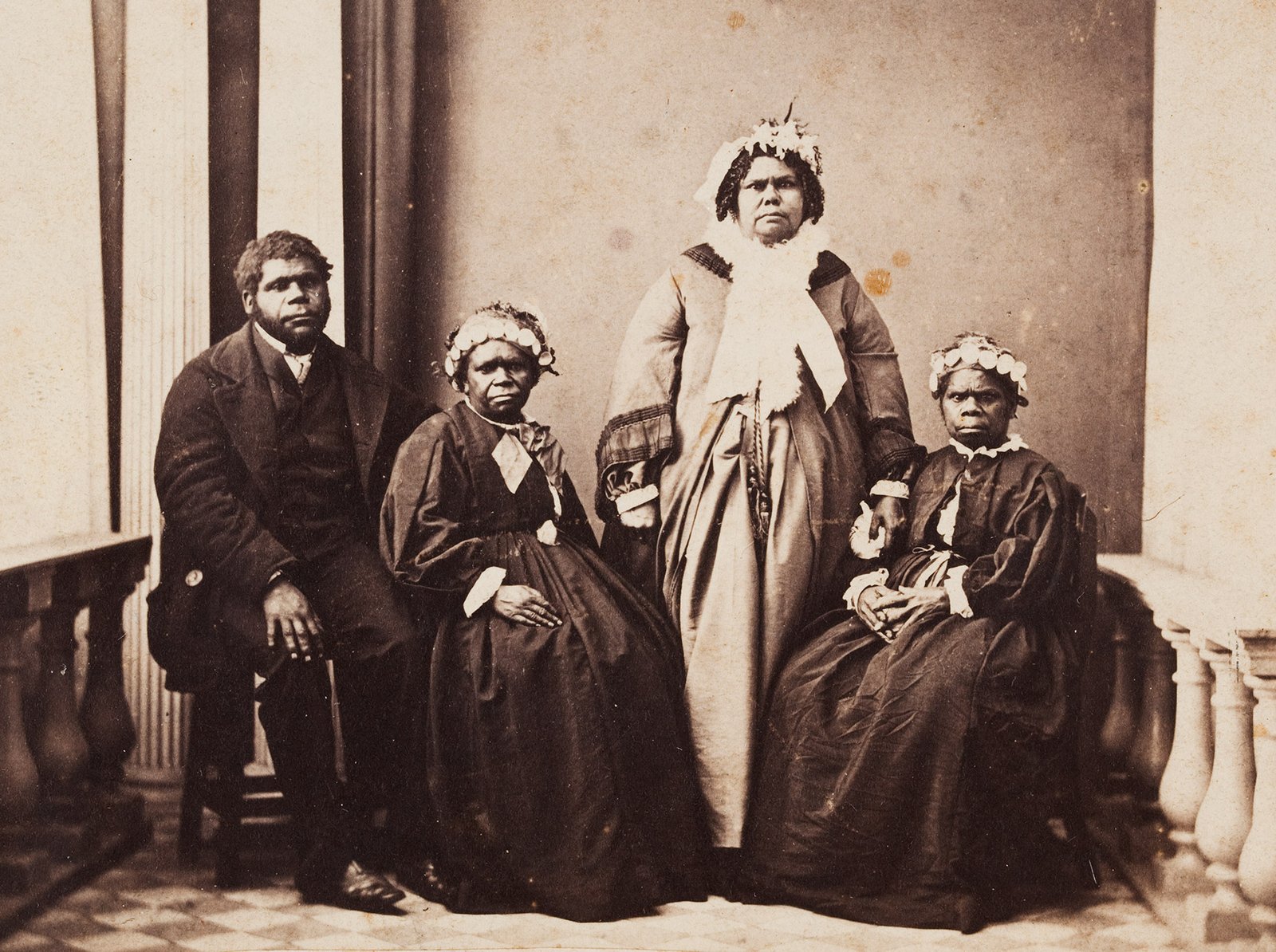
© Mitchell Library, State Library of NSW.
In 1829, when the Black War between British forces and resistant tribes was raging, Truganini was imprisoned but released into the custody of missionary George Augustus Robinson. Robinson had devised a plan to save the last of Van Diemen’s Land’s Indigenous people through a ‘friendly mission’, where he would convince them to lay down arms in exchange for protection from pastoralists. Truganini was instrumental in this scheme and her association with Robinson made her a famous figure depicted in print and art. The scheme saw the surviving Palawa peoples removed to Flinders Island in Bass Strait (Truganini was one of them) where most perished at an alarming rate. But Truganini survived to be relocated to Oyster Bay in 1847. Here she reconnected with her country on Bruny Island.

Truganini’s survival piqued the interest of scientists eager to study a people supposedly ‘dying out’ according to Darwinian theories. She and other Palawa peoples were studied and when they died their bodies became scientific specimens. Truganini tried to avoid this fate, but when she died in Hobart in 1876, her bones were put on display at the Tasmanian Museum until 1947.
One hundred years after her death, Truganini was finally put to rest when her ashes were scattered in the waters around Bruny Island.