Entanglements in the Anthropocene
What makes an object a treasure? Curator Dr Peter Emmett selected 100 objects from the Australian Museum's vast collections: scientific, cultural, curious and extraordinary, each revealing how we are entangled with people, places, animals and things across time.
The curator's brief
Dr Peter Emmett
What a remarkable and daunting brief: to select 100 treasures from the vast collections of the Australian Museum. To enter the collection stores is to encounter another realm and to experience an overwhelming sense of the world in ‘all-at-once-ness’. Big things loom: a giant skeleton, a canoe prow; now a tiny splash of red dye or a flash of azure feathers. Rows upon rows of human masks, animal skins, and species in spirit. So many lives lived, so much knowledge gained, such abundance and diversity.
As a curator, I hold and meld three seemingly contradictory roles: explorer, scholar, and catalyst. The explorer brings curiosity based on observation and enchantment, like the explorer naturalists who founded this Museum. The scholar brings research into provenance and interpretation of significance and values. The catalyst taps into the flow of museum knowledge held by the scientists and collection managers who have generously shared it.
How, when, and why each object came into the Australian Museum’s collection starts to unravel an ocean of stories about the Museum’s ongoing links to many special places and people in our region and around the world.
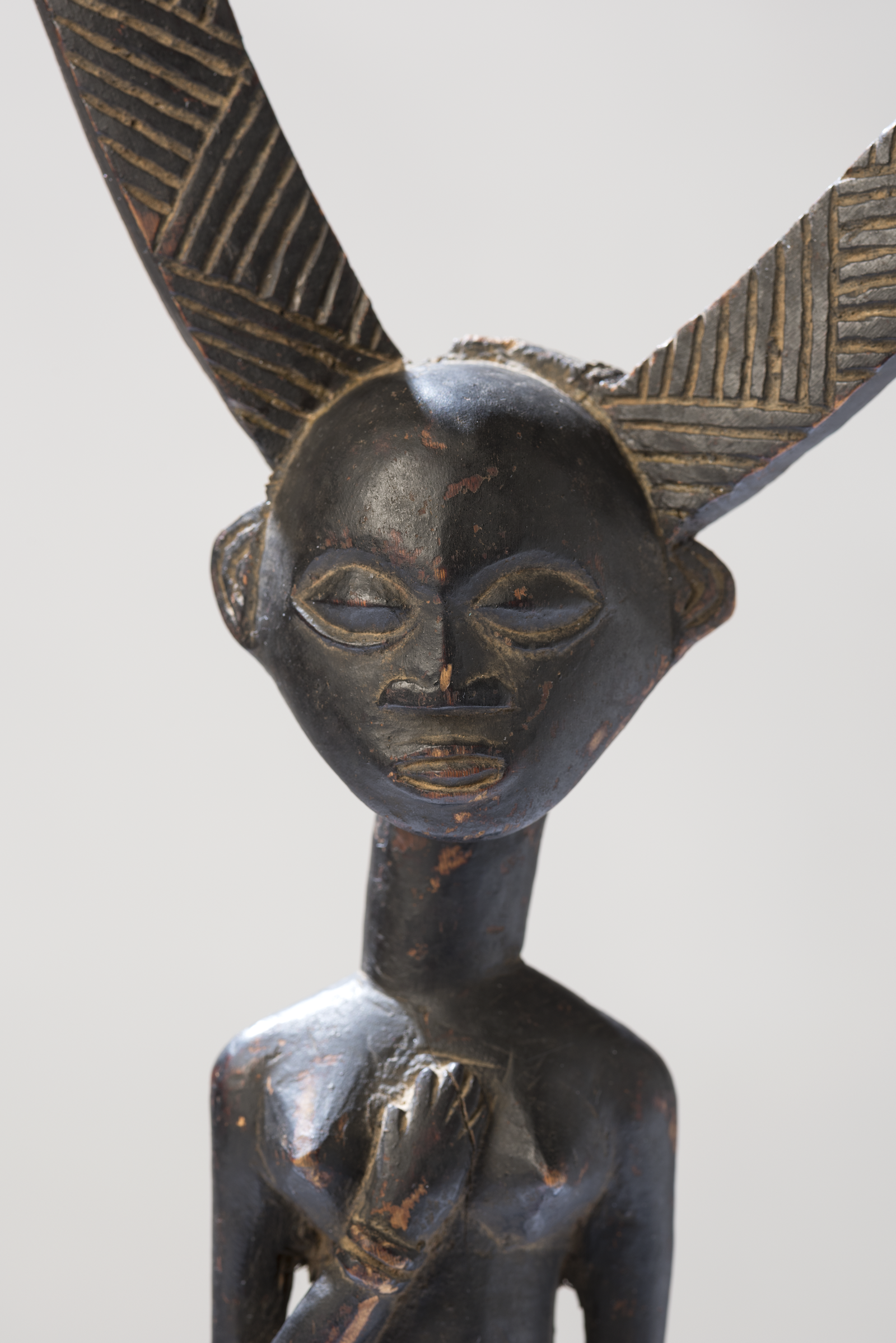
Bow stand with female figure. Carved wood, twine. 55 (high) x 23 (wide) cm (plus 10-cm base). Luba people, Katanga, Democratic Republic of Congo. Purchased from G.G.P. Lyons, 1912, AM African Collection. E019552.
Image: Stuart Humphreys © Australian MuseumTo say ‘treasure’ begs the question: What is a treasure? And then, why is it part of this museum of science and learning? Why has it been chosen for this special gallery? An ‘icon’ has a fixed meaning for people but a ‘treasure’ has relative values. There are many reasons why we value things. They may have scientific value, such as holotypes or extinct species; historic value, such as Krefft’s chair or Mawson’s instruments; or cultural value, such as the stone pestle from the origins of agriculture.
An object may be unique, like the Thylacine pup or Eric the pliosaur; rare like Kalani‘ōpu‘u’s feathered cape; beautiful like a bird of paradise; strange like a malagan figure. Or, it may be curious like the Tasmanian Cave Spider; elusive like the Night Parrot; ingenious like lyrebird mimicry; lovable like the Koala, or feared like the funnel-web spider. The value may be a place such as Sydney Harbour or a person such as Truganini. It may be something lost, such as the Tasmanian Tiger, something found, like a Theban mummy or something that was lost and has been found again – a Lord Howe Island Stick Insect, for example. Sometimes value is not in the object but in its subject, like a Frank Hurley photograph of Papuans. Sometimes it is intangible, like a birdsong.
On occasion, the value lies not in a single object but in a collection – Mel Ward’s crabs, say, or Mary Bundock’s dilly bags. It may lie in multiple objects: bark belts, fish hooks or box crabs. The value may be in the skill of the taxidermist such as that displayed in the superb Paradise Parrot mount, or in the craft of the conservator, as demonstrated in the beaded Tetale bird figure. The ‘object’ may be a representation, such as the Scott sisters’ exquisite paintings of butterflies, or the Museum’s own electron micrographs.
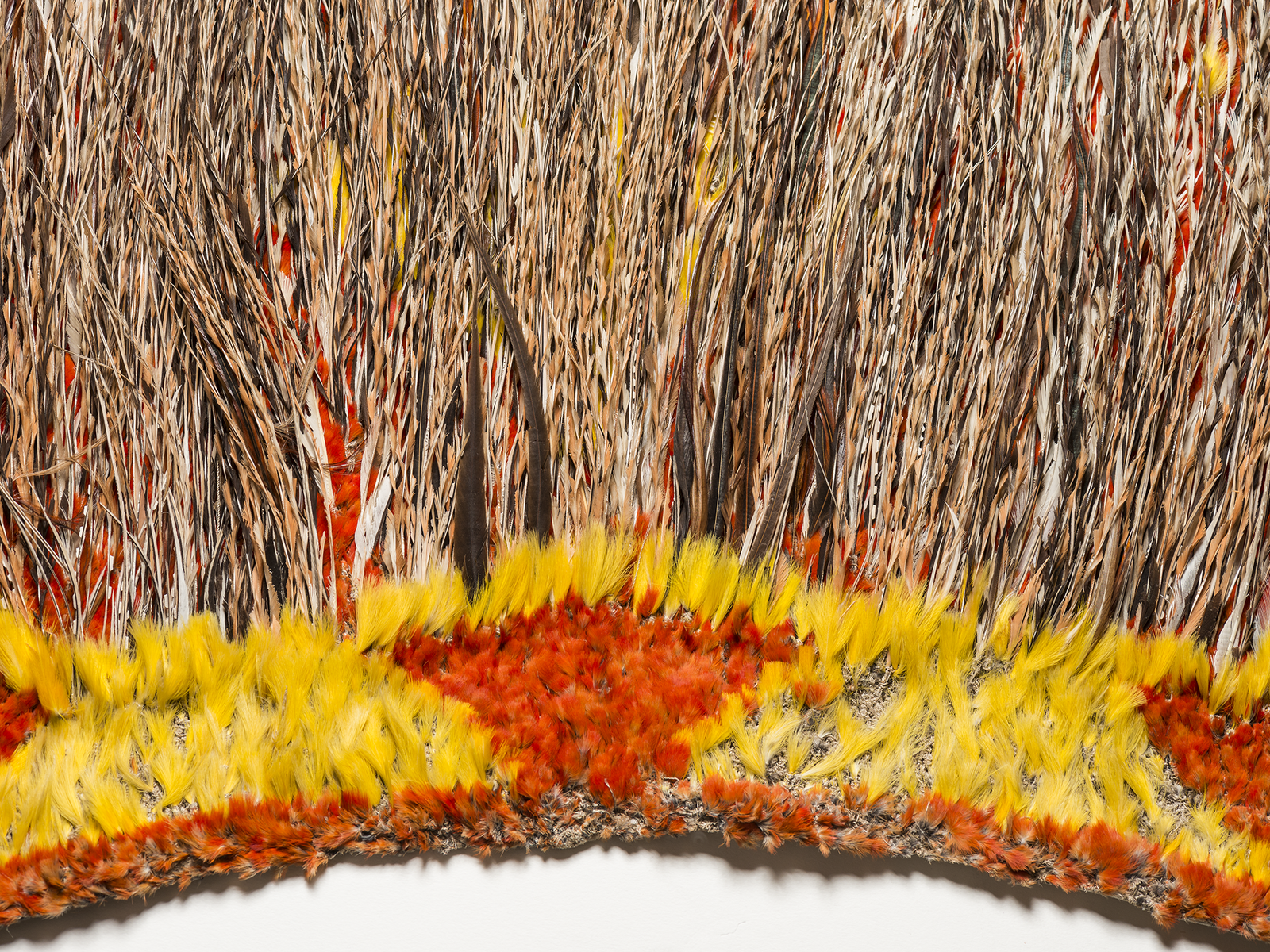
There are treasures collected by Australian Museum scientists, from Gerard Krefft’s lungfish to Tim Flannery’s tree-kangaroos. Other treasures have come from sea captains, missionaries, schoolchildren, international exhibitions, battlefields, and backyards. There are objects that are as much part of the heritage of the Australian Museum as the Long Gallery itself – the Lord Howe Island diorama, early mounts of an aardvark, the crown crane, Reverend Brown’s bird cabinet, or Francis Day’s Indian fishes. Famous expeditions such as those to Funafuti and Antarctica contribute yet more treasures. Many objects celebrate Australian Indigenous cultures and those of our neighbours in Vanuatu or Bali. And, further afield, objects celebrate our connections with the world through science, trade, missions or warfare. Others even come from sites of the imagination such as ‘Ancient Egypt’, the ‘American Wild West’ or a ‘Pacific Paradise’.
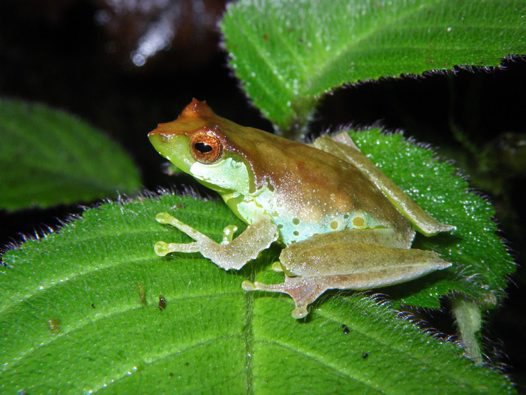
Frogs of the Greater Mekong. Mekong River. Quang’s Tree Frog (Gracixalus quangi), Nghe An Province, Vietnam.
Image: Jodi Rowley © Australian MuseumHow, when and why each object came into the Australian Museum’s collection starts to unravel an ocean of stories about the Museum’s ongoing links to many special places and people in our region and around the world. We become entangled with them through our collections. This is an Australian story. Not the foundational narrative of firsts and greats, but a unique and distinctive story of our entanglement with people, places, animals, and things.
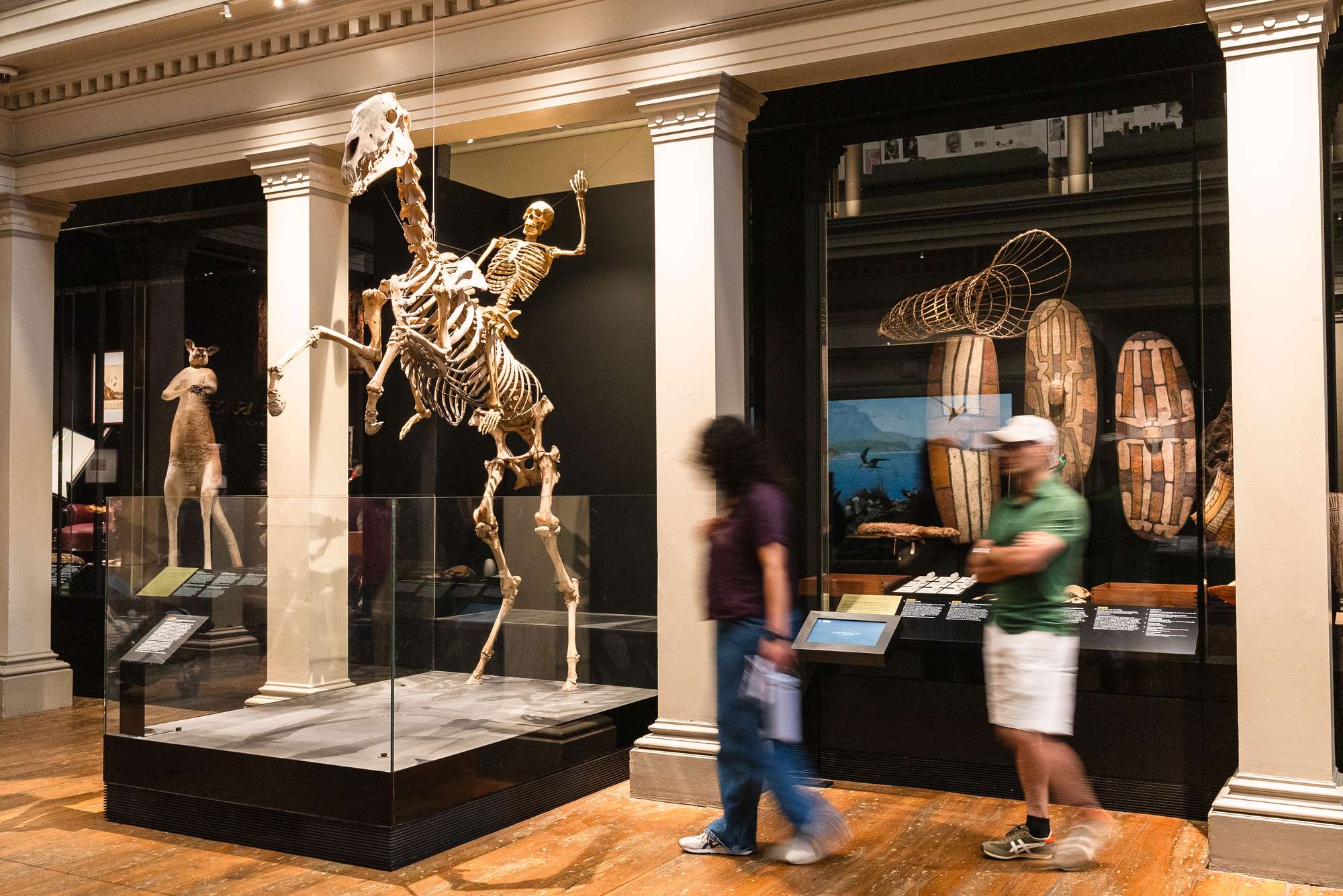
Entanglement is an ideal concept for the refurbished Long Gallery, as both a celebration and an interrogation of museum collections and knowledge in the twenty-first century. This is the new age of the Anthropocene, the recognition that we are entangled with all living things in one dynamic and fragile planet. While it has not been the convention to mix nature and culture specimens in museums, here each ‘nature’ object is matched with a ‘culture’ one: Mekong frogs with an ancient bronze drum; Zulu shields with Nguni cattle; upe hats with monkey-faced bats.
Like the Long Gallery itself, all knowledge is new again. Not since the time of Darwin and Krefft, when this gallery was first formed, has there been such an exciting and challenging time for knowledge explosion and science innovation, with cross-fertilisation between all types of scientific and cultural knowledge. This is a fine enterprise for a museum of the twenty-first century: to bring objects from historic collections into this historic gallery, liberated from the storerooms, so that we can rethink their past, present and future entanglements.
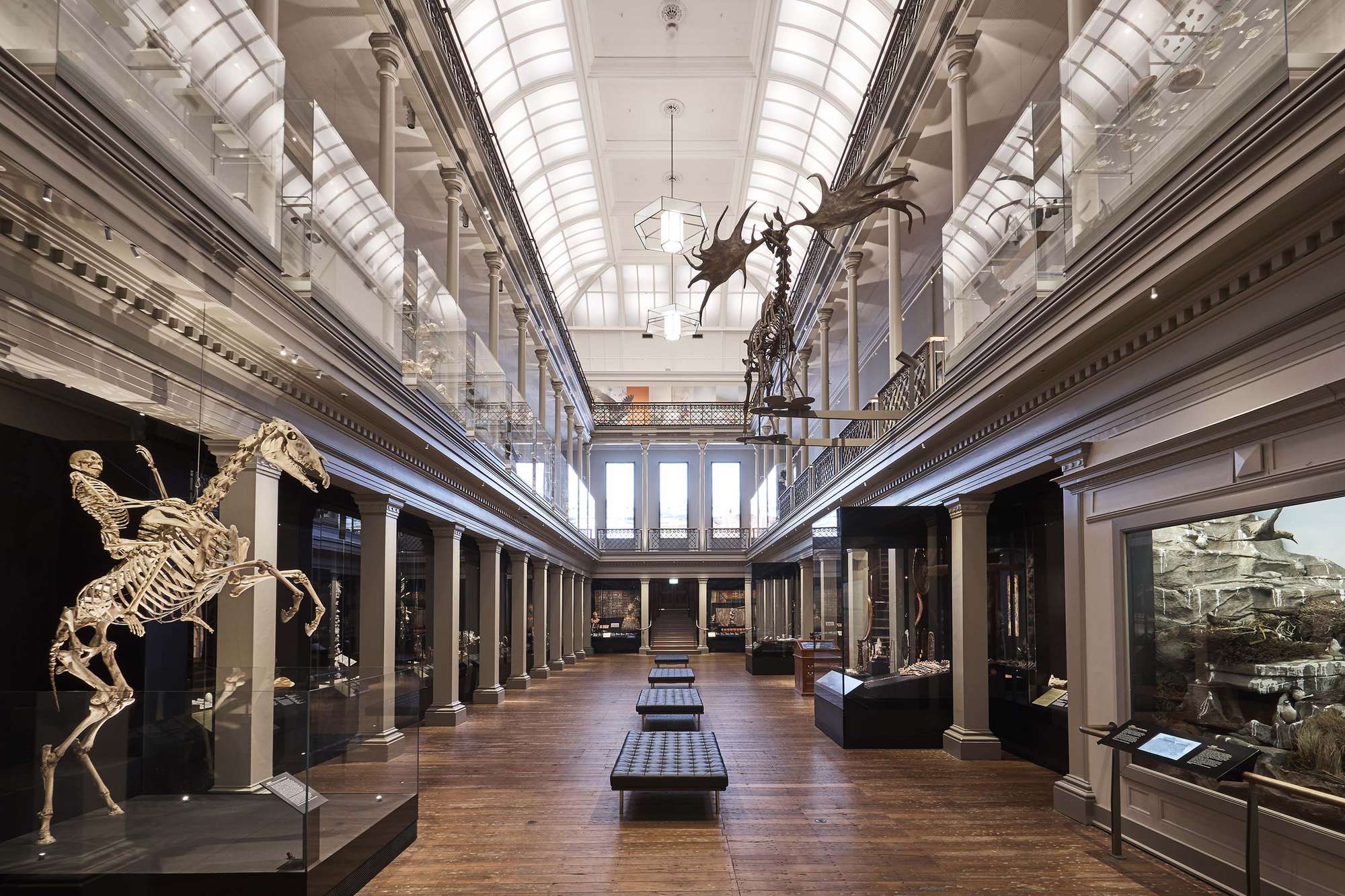
Perhaps the most unique treasure is the Long Gallery itself – an amazing nineteenth-century theatre of display, an architectural gem of wonder and delight now revitalised as a twenty-first century showcase of the Museum collections. The 100 treasures are grouped in its alcove-like spaces to create a series of ‘entanglement tableaux’. Each tableau is a microcosm of the diversity and interconnectedness of the Museum’s collections. Start with a treasure. Its story unfolds, its juxtaposition with other objects is observed, an entanglement is revealed and unravelled: Krefft’s chair and the transition from armchair naturalist to museum scientist; the Platypus rug and Australian human–animal entanglements; the Morning Star Pole revealing a constellation of stars and creation, and Kiribati armour taking us on a journey with ocean navigators.
These entanglement tableaux are also celebrations of the museum medium – the choreography of people through space in a sensory engagement with objects and with others. Here, a conversation unfolds across time and place about all manner of things, thoughts and feelings. I hope that these objects speak to you in conversations across time and place about our entanglements with these remarkable Museum collections, and the living world they represent.
Dr Peter Emmett, Guest Curator 100 Objects and Historian
Stand alone objects
The following objects are displayed independently in the Westpac Long Gallery.
Audio story
Listen to the audio guide about Australia's first bank note and the Maitland bar gold nugget.
Audio Transcript
During the first decades of European settlement in New South Wales, money was in short supply. Ships brought in a variety of coins from around the world, but exchange rates were haphazard and the coins tended to leave as quickly as they arrived. A barter economy prevailed, with rum being the most popular medium of exchange.
In 1812 Governor Lachlan Macquarie took the first steps to establish a local currency when he had holes punched in a shipload of Spanish dollars to discourage them from being taken out of the colony, creating the ‘holey dollar’.
Real financial security came only when Macquarie established the colony’s first bank, the Bank of New South Wales. Our first treasure is one of colony’s first banknotes, issued on 8 April 1817, the first day of the bank’s operation. A rare example of the first paper currency issued in New South Wales, the banknote is a symbol of the establishment of economic order in the fledgling colony.
Beside the banknote is another, more lustrous symbol of the colony’s growing prosperity. The Maitland Bar Gold Nugget was found in 1887, towards the end of the Gold Rush that brought a great deal of wealth to New South Wales. Weighing in at 10.7 kg, it is one of the purest gold nuggets in the world and the only remaining example of a large gold nugget from the New South Wales Gold Rush.
The Maitland Bar was discovered by three miners in the bottom of a disused mineshaft at Meroo Creek near Gulgong. It was bought by the colonial government and displayed in national and international expositions in a demonstration of the colony’s wealth and a bid to bring settlers to the country. It disappeared in the 1930s, only to resurface in a box that Treasury officers had unwittingly used as a set of makeshift cricket stumps.
Australia’s first Bank Note
The issuing of paper currency – guaranteed legal tender – was integral to establishing the foundations of the Australian economy. Until the Bank of New South Wales (now Westpac) was established in 1817, there were no local bank notes in circulation in the colony.
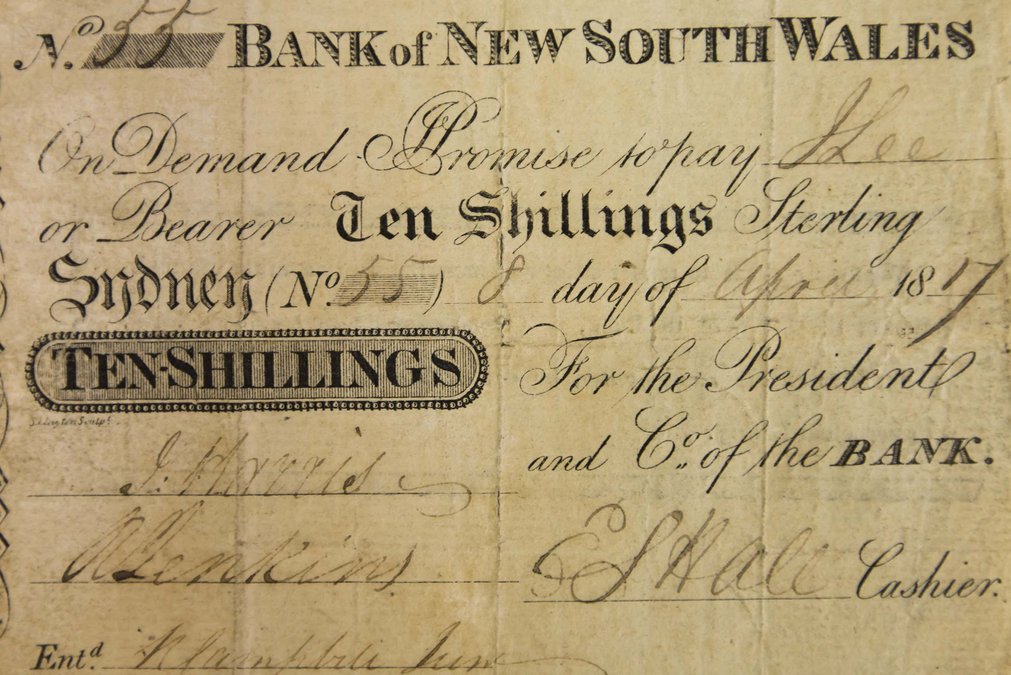
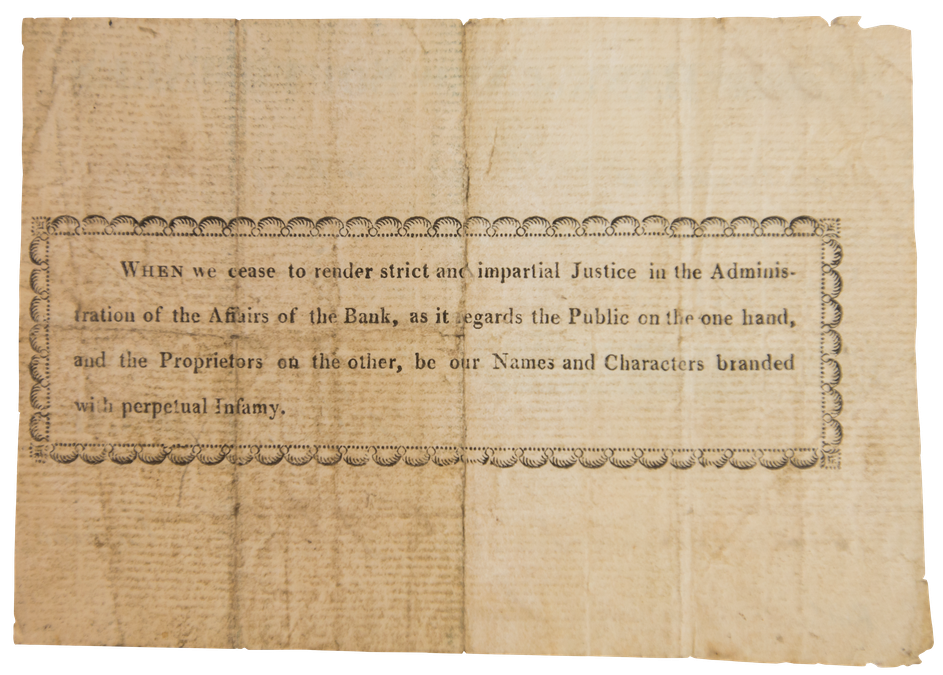
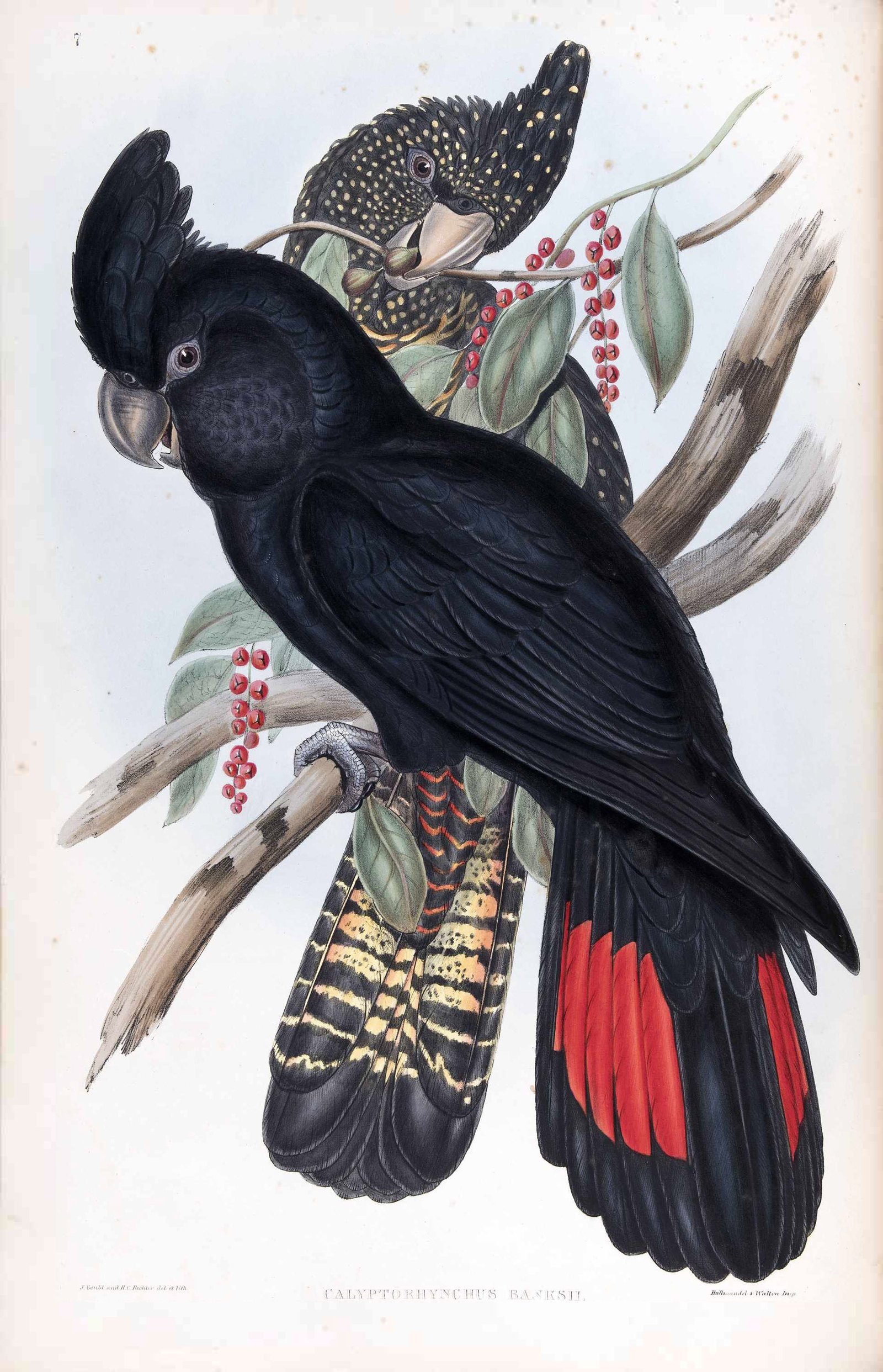
This note, hand-numbered no. 55, was a reliable medium by which to exchange value in trade, and represents stability, uniformity and trust. It was issued on 8 April 1817, the day the Bank began operating. Lachlan Macquarie looked back upon the establishment of the Bank of New South Wales as his ‘favourite measure’; within a few years it was known as ‘the people’s bank’, used by ‘the farmers, merchants, shop keepers, mariners, soap boilers, tanners, butchers, bakers, gardeners, cedar-gatherers, and craft-builders, of the Colony’. The Sydney Monitor, 3 January, 1829.
Maitland Bar Gold Nugget
The Maitland Bar gold nugget has a value far beyond that of its gold content. It is the only remaining documented example of a large gold nugget – one of the most pure in the world – discovered during the early gold-rush years of New South Wales. An alluvial nugget (deposited by the movement of water), it was found by Jonathan Thorpe, Isaac Holmes and Frederick Leader, at a depth of 3.4 metres in an abandoned shaft adjacent to Meroo Creek, NSW. Discovered in 1887, the year of Queen Victoria’s Golden Jubilee, it is also known as the Jubilee nugget. The Maitland Bar was purchased by the NSW Colonial Government for 1236 pounds, 14 shillings and 1 penny, and was initially displayed at national and international exhibitions as an example of the fledgling colony’s wealth.

Lord Howe Island Diorama
In 1921, in one of the first expeditions of its kind undertaken anywhere in the world, the trustees of the Australian Museum dispatched a team to Lord Howe Island, NSW (a location long studied by scientists from the Museum), to collect materials, specimens, photographs and other information for three new dioramas. The dioramas went on display to the public in 1923. Only one remains and it is the oldest surviving natural history diorama in Australia. A masterpiece of its time, it still resides in its original position at the entrance to the Westpac Long Gallery. Recent extensive conservation work has restored this gem, and visitors can continue to imagine themselves standing on a rocky outcrop, nesting birds at their feet, with the distant peaks of Lord Howe Island outlined against the sky.
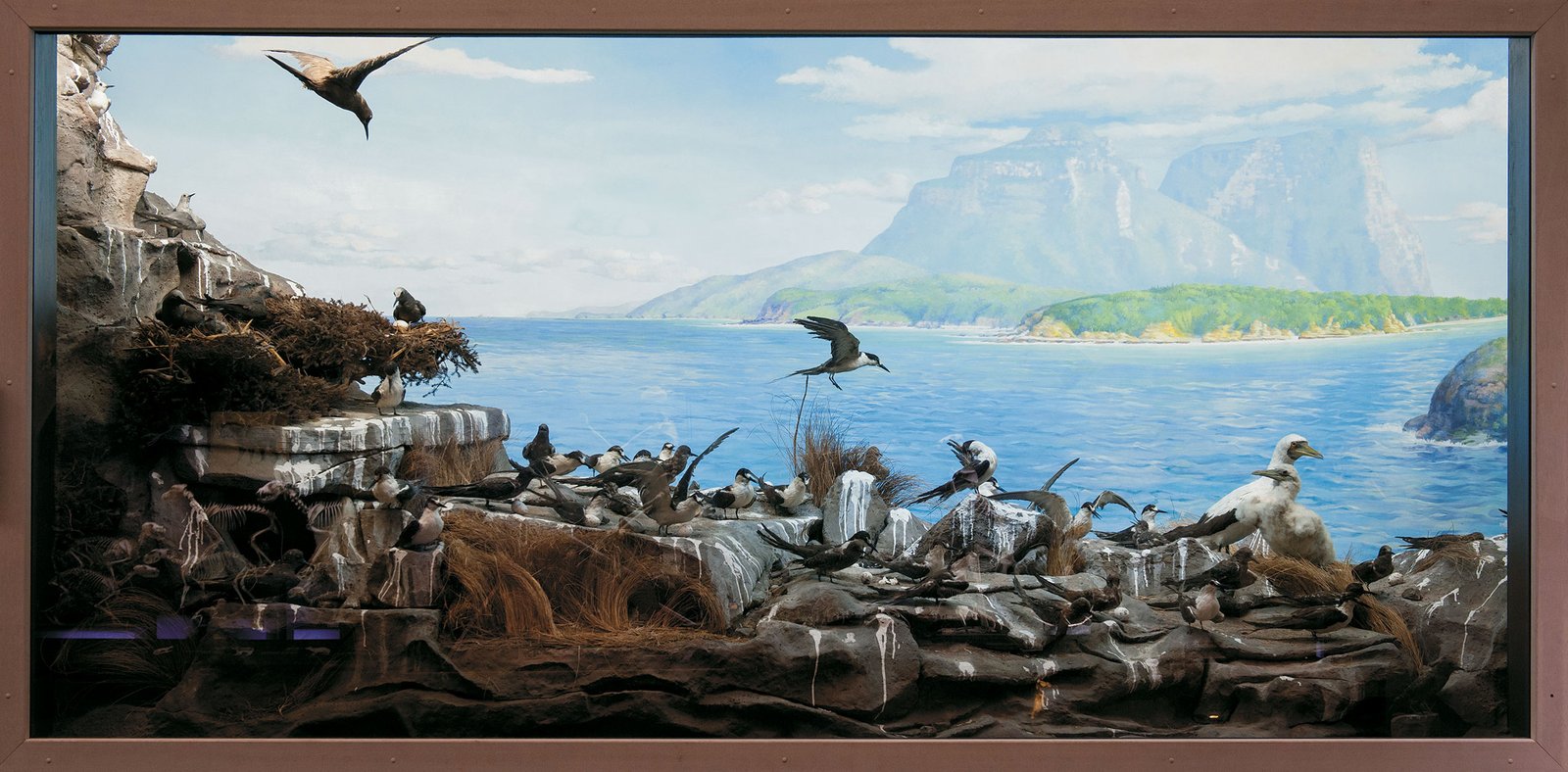
Lord Howe Island diorama. Bird mounts and eggs. Displayed from 1923. Australian Museum Collection. MA627.
Image: Stuart Humphreys © Australian MuseumAM Treasure Circle
This Treasure is supported by The John and Frances Ingham Foundation.
Type Specimens
This multimedia interactive touchscreen located within the Westpac Gallery explores the specimens that give scientific names their meaning - Type Specimens - and why they're vital to research worldwide.
Type specimens are the name-bearing specimens upon which scientific names are based. When a taxonomist describes a new species in a scientific paper, the specimens and the defining characteristics of the species are stated. Each type specimen is unique and irreplaceable. Type specimens are the gold standard – like the standard weights and measures used by countries to check all measurement equipment – and all research on species in the world depends on them. As the oldest museum in Australia, the Australian Museum collections house many thousands of type specimens; from worms, spiders and crabs through to fishes, birds, mammals and more. These specimens are the most important part of the Australian Museum’s biological collections and are an irreplaceable record of life on earth.
Type definitions
- Holotype: This is a single type specimen upon which the name of a new species is based.
- Paratype: A specimen that is cited with the holotype in the original species description.
- Neotype: This specimen replaces the holotype (if it has been lost or destroyed).
- Cotypes/Syntypes: This is an additional type specimen from the same group as the holotype, but is also used to describe the new species. In mineralogy, there can be a holotype and also more than one cotype.
- Hypotype: A specimen of a species that is not of the original type series but is known by published description, figure or citation.
Arachnology
Jamberoo johnnoblei, Gray & Smith, 2008. Holotype. Mount Keira, near Wollongong, NSW. KS.84009. A small sheet web–weaving spider species named after John Noble, who collected more than 3000 spider specimens for the Australian Museum.
Entomology
Buburra jeanae, Reid & Beatson, 2013. Holotype. Mount Buffalo, Victoria. K.363091. This seed beetle caused a sensation when scientists described it, as it appears to be a ‘missing link’ between the palm-feeding seed beetles of South America and the acacia-feeding beetles of the Australian tropics.
Herpetology
Pseudophryne corroboree, Moore, 1953. Holotype. Round Mountain, Australian Alps, NSW. R.13103 This iconic Australian frog is under threat from a disease caused by a fungal pathogen. It is now considered critically endangered.
Ichthyology
Lates lakdiva, Pethiyagoda & Gill, 2012. Holotype. Colombo fish market, Sri Lanka. I.37516-001. This Sri Lankan Sea Bass is related to the Barramundi, a well-known sport fish in Australia.
Malacology
Austrorossia australis, Berry, 1918. Holotype. South of Eucla, Great Australian Bight, SA. C.148246. A trawler dragged up this bottletail squid from a depth of about 500 metres. A soft-bodied animal, this example was damaged by the time it reached the surface.
Mammalogy
Hypsiprymnodon moschatus, Ramsay, 1875. Syntype. Rockingham Bay, Cardwell District, QLD. PA.1135. Named after its pleasant body odour (moschatus means musky), this is the smallest and most unusual member of the kangaroo family, and does not hop.
Marine Invertebrates
Euastacus vesper, McCormack & Ahyong, 2017. Holotype. Cudgegong River, NSW. P.99506. This new species of Giant Spiny Crayfish grows to about 20 cm in length (including claws). The body of the adult is covered in sharp spines to protect it from predators.
Mineralogy
Kambaldaite. Cotype. 1985. Kambalda, WA. D.48054. A bright grass-green to emerald-green nickel mineral, Kambaldaite occurs as individual crystals and also radiating, needle-like crystals. It can also be chalky.
Ornithology
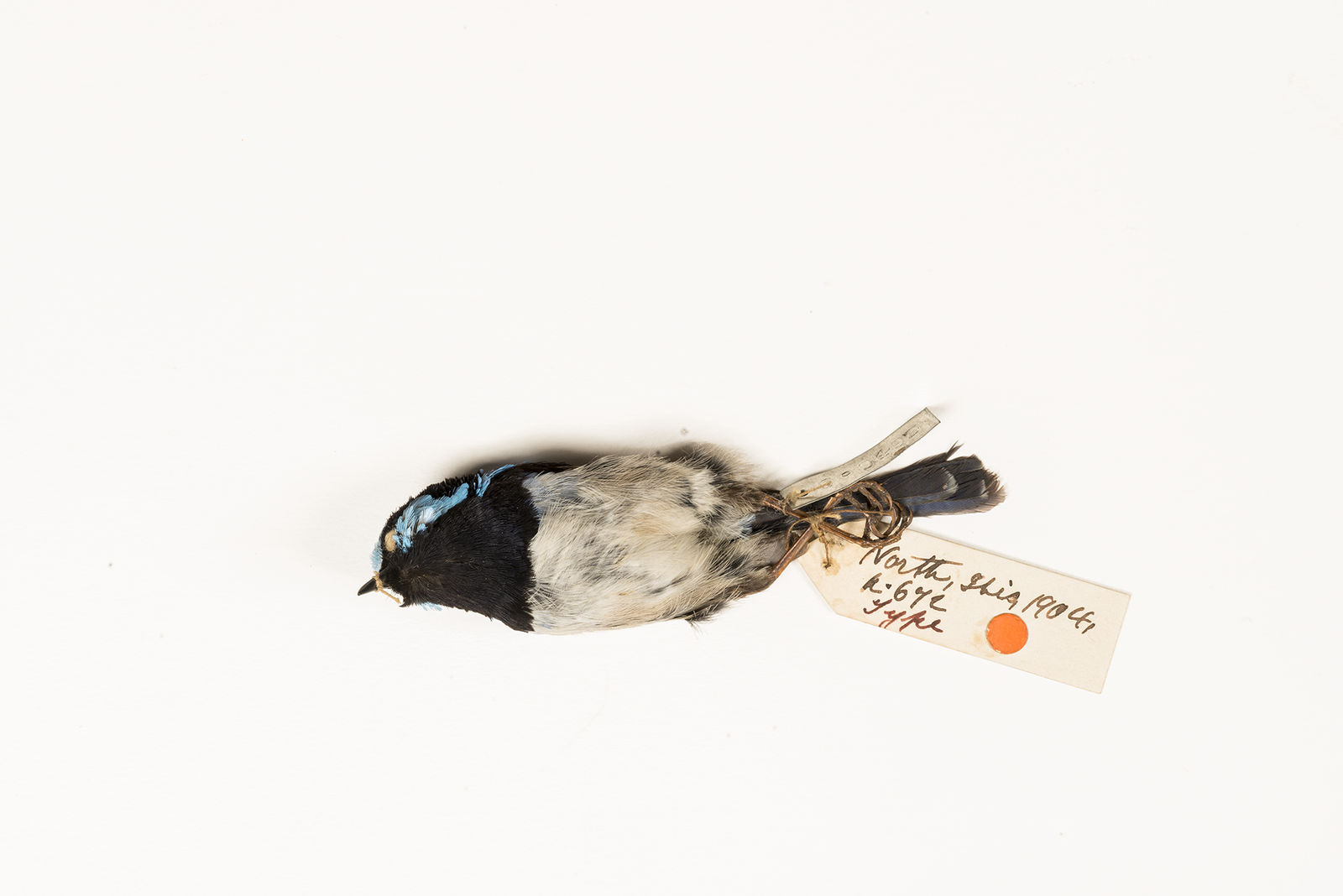
Malurus cyaneus cyanochlamys (Malurus australis), North, 1904. Holotype. Meadowbank, NSW. O.9492. This sprightly little bird is a quintessential part of the Australian bush, with its bright plumage and distinctive tail, which it holds almost upright.
Palaeontology
Steropodon galmani, Archer et al., 1985. Holotype. Lightning Ridge, NSW. F.66763. Steropodon was the first Mesozoic mammal discovered in Australia. This platypus-like animal is one of the most primitive monotremes (egg-laying mammals).
Scientific Imaging
The Scientific Imaging multimedia interactive in the Westpac Long Gallery examines the technologies that let scientists see the natural world in extraordinary new ways.
The ability to record the natural world has been an essential part of the evolution of science. In the earliest times, scientists were dependent on their own eyes and hands to observe and record. Today, they have access to an increasing array of vital technologies that allow them – and us – to look at nature in entirely new ways. This remarkable technology makes the Australian Museum’s collections, and others around the world, ever more valuable for research. The digital media exhibit of scientific imaging in the Westpac Long Gallery includes examples of Light Microscope images; Scanning Electron Microscope (SEM) images; X-ray images, and Micro computer tomography or ‘micro-CT’ scan images.
Light microscope imaging
High-resolution light microscope images are an essential tool in all branches of the natural sciences, from rock identification in geology to bird feather identification in ornithology. Light microscopes allow scientists to examine the features of specimens at high magnification. Modifying the way in which light shines on the specimens can result in some spectacular images.
Example: The image shows a thin slice taken from a stony meteorite (chondrite). The image was taken through a polarising microscope at 100 X magnification and shows the minerals and structures that make up this meteorite. The false colours in the image are related to the optical properties of the minerals and help geologists to identify which minerals they are. The round structures with internal radiating crystals are called chondrules. They condensed from the original dust and gas cloud that formed the solar system, so they are ‘fossilised’ remnants of that very ancient event. The minerals with pale yellow to grey-blue polarisation colours are hypersthene, a magnesium iron silicate, and the minerals with brighter colours are olivine, another magnesium iron silicate. Meteorite researchers use a polarising microscope to identify the minerals and their textures, to place the meteorite within its classification scheme – in this case, the meteorite is an L4 Chondrite.

Scales of a White Shark (Carcharodon carcharias). Scanning electron micrograph of the overlapping placoid scales of a White Shark.
Image: Sue Linday © Australian MuseumScanning Electron Microscope (SEM) imaging
The advent of widespread Scanning Electron Microscope (SEM) use in the 1960s revolutionised many fields of science. The SEM works by projecting a beam of electrons at a sample, and the image is produced as a result of the different way in which electrons react with the surface of the specimen, producing a very high resolution image, many times more powerful than a light microscope. Because electrons need to ‘react’ with the specimen, many samples, including most biological samples, are splutter-coated with gold before being placed in the SEM. Example: The dermal denticles (scales) of sharks come in many different shapes and sizes. It would be natural to assume that fast-swimming sharks have smooth denticles to make them more streamlined in the water, but this is not the case. The denticles of many species of pelagic sharks have longitudinal ridges and are arranged in an overlapping pattern. This is believed to create regions of low pressure as the denticles move through the water, thus reducing drag and increasing the swimming efficiency of the fish. Unlike the scales of bony fishes, the denticles of sharks and rays do not increase in size as the fish grows. Instead, new scales are added between older scales. The image of a Tiger Shark (Galeocerdo cuvier), was taken on the scanning electron microscope at the Australian Museum.
X-Ray images
X-rays are widely used by scientists at the Australian Museum and those making use of its collections, in everything from the identification of crystals in minerals and investigating the use of stone tools, through to examining the internal structures of animals. The Museum uses digital X-rays as well as X-ray powder diffraction (XRD) and X-ray fluorescence (XRF). Example: Malthopsis is a genus of batfish with a global distribution. X-rays can be used to investigate the internal skeletons, which scientists can then use to identify species and describe new species. Here, multiple specimens of Malthopsis are shown, with variations in internal structure.
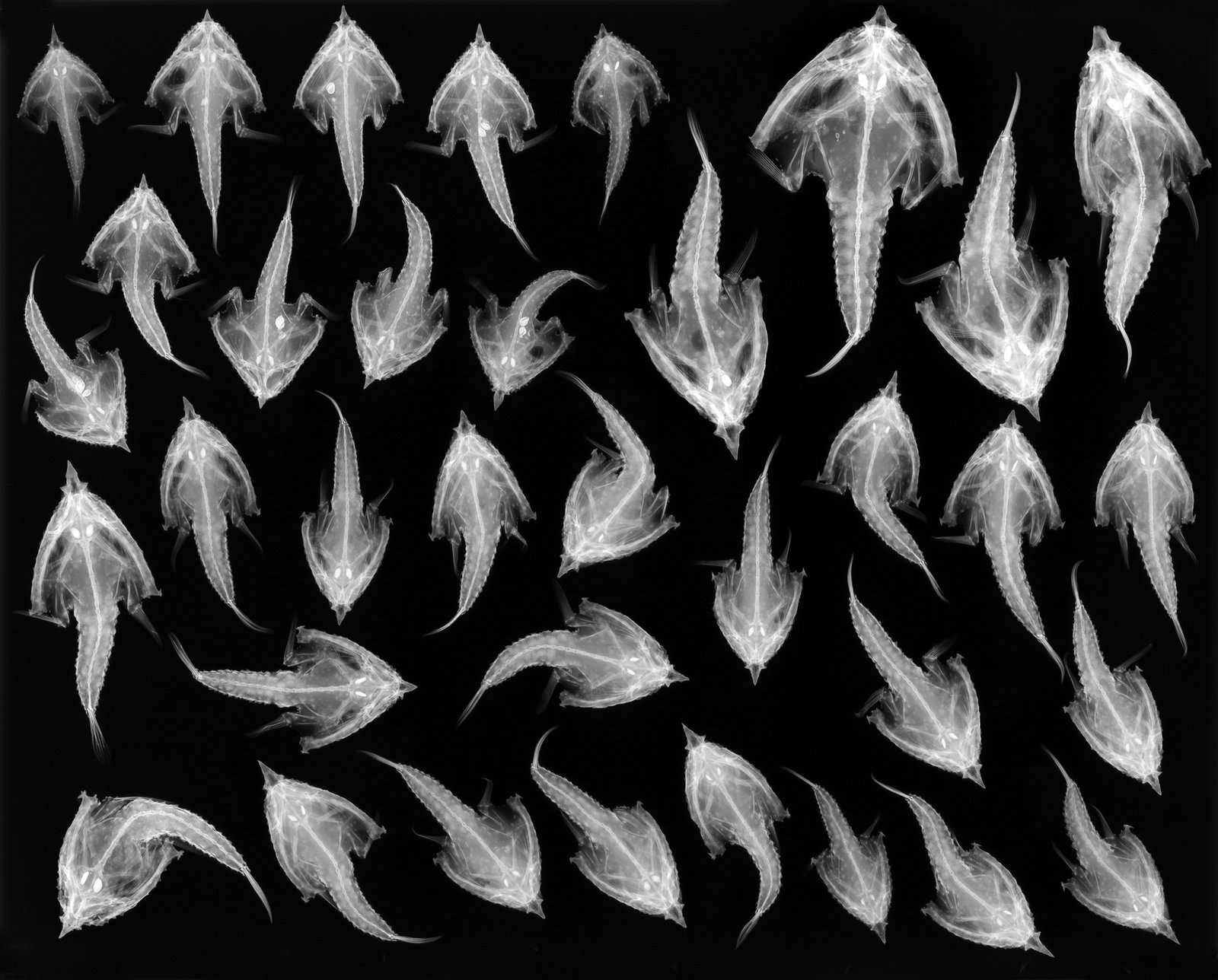
X-ray 935 of Malthopsis. I.20917-003 Malthopsis tiarella I.25800-038 + -054 Ogcocephalidae: Malthopsis sp q2 I.25803-008 - Ogcocephalidae: Malthopsis sp q2 I.44576-005 below NMV A.20804 QM I.18798 Malthopsis annulifera QM I.20010 Malthopsis annulifera QM I.34431 Malthopsis annulifera.
Image: James King © Australian MuseumMicro-CT scan images
Micro-CT scans are X-ray imaging in three dimensions, using the same method as hospital CAT scans except at a massively finer scale. Micro-CT scans enable scientists to look at internal structures in three dimensions, without dissecting specimens. This is an emerging area for scientists, and is currently being used to discover new species. Example: This sea slug is a probable new species found in Asia. Traditionally, it would have to be dissected to look at the internal shell and stomach to identify the specimen or scientifically describe it as a new species. Thanks to micro-CT scanning, it is possible to view not only the internal shell, but to see the animal’s entire digestive tract, including its last meal of micro-snails (small species of marine snails a few millimetres or less in length).
Irish Elk skeleton
Megaloceros giganteus
Megaloceros giganteus, also known as the Irish Elk, was one of the most impressive members of the Pleistocene Eurasian megafauna. Well-preserved remains have been found in peat bog deposits in Ireland and, despite its popular name, also throughout Europe, Asia and North Africa. It is not a true elk, but a deer species. At about 2 metres high at the shoulder and with enormous antlers – perhaps used for social display – spanning more than 3 metres, this animal is one of the largest-known deer, and is possibly closely related to the living fallow deer. The fossil record of Megaloceros giganteus extends from approximately 400,000 years ago to its extinction about 8,000 years ago. This spectacular skeleton was acquired by the Australian Museum in 1886. The darkness of the bones is thought to be due to their preservation in a peat bog.
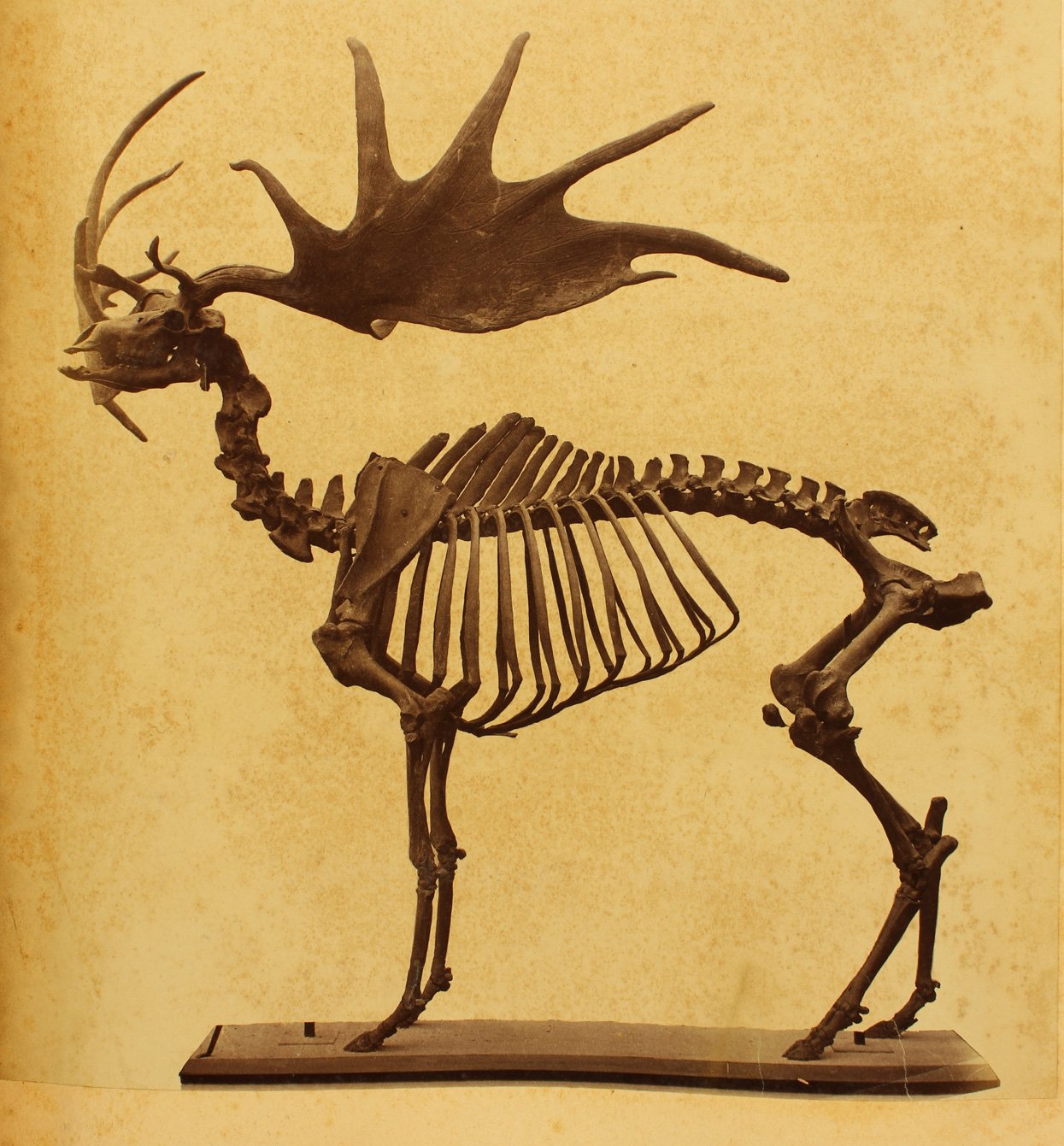
Irish Elk skeleton (Megaloceros giganteus). Whole beast 350 (high) cm; antlers 310 (wide) cm; torso, neck and legs 185 (high) x 230 (long) x 54 cm (wide). Ireland. Registered 1886. AM Palaeontology Collections. F.141678.
Image: unknown © Australian MuseumAM Treasure Circle
This Treasure is supported by The Paradice Family Foundation.