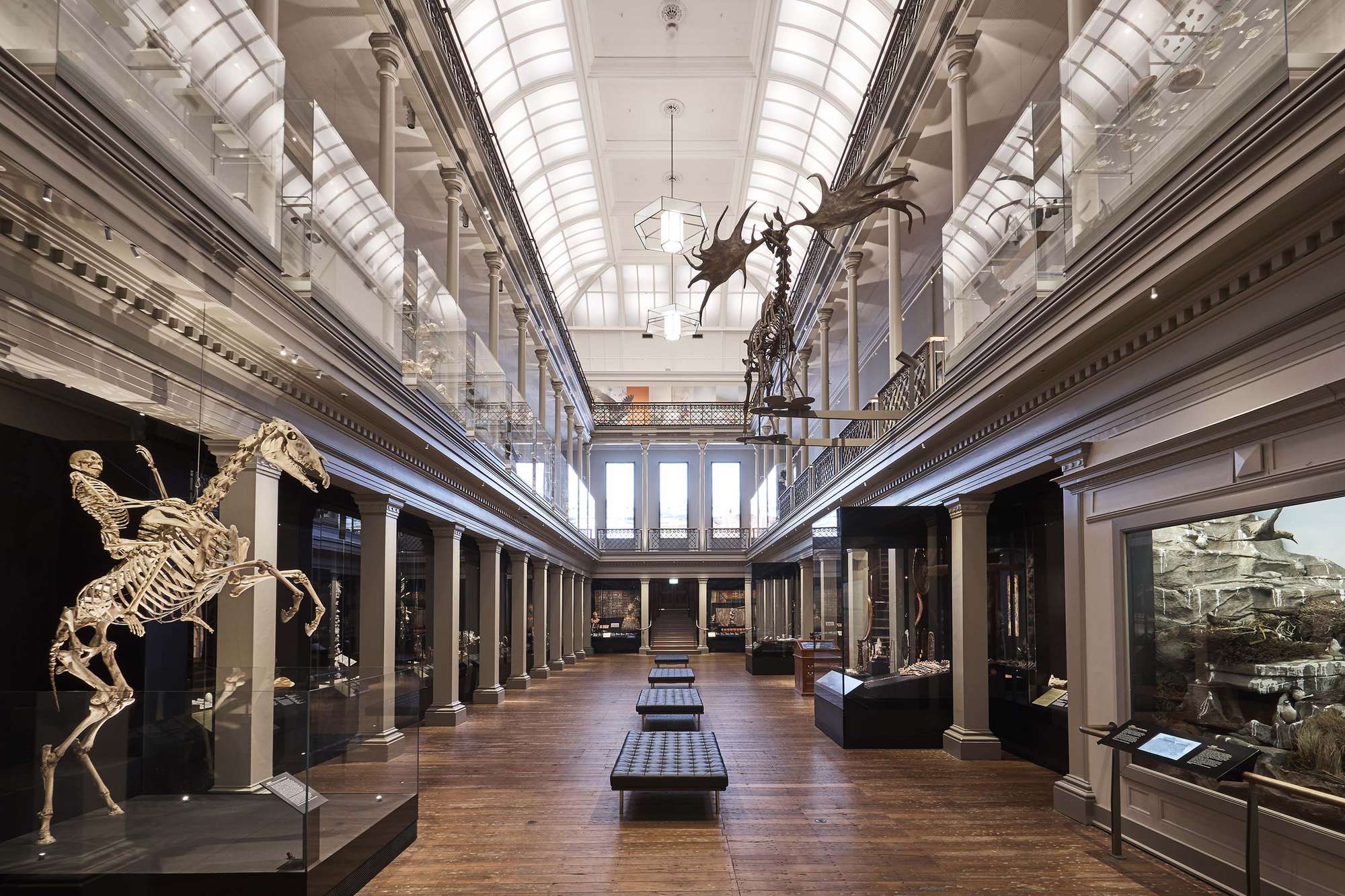
Zulu Shields case
Explore the diversity of African cultures and natural history, from Zulu shields used during a major war of resistance and a finely carved Luba bow-stand to one of Africa's most unusual mammals.
Story of the case
Listen to the audio guide of the Zulu Shields case.
Audio Transcript
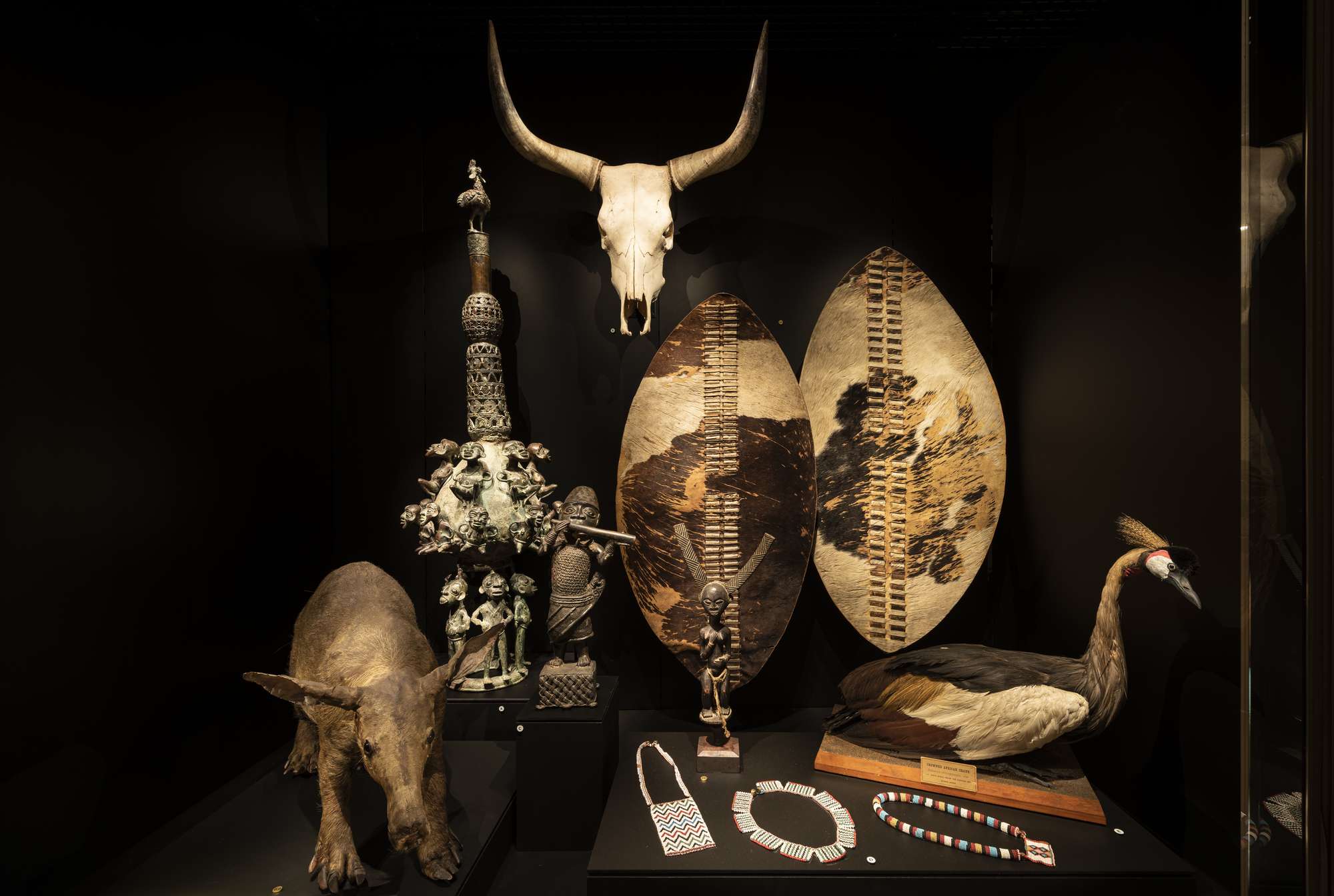
Made from the distinctive patterned hides of native Nguni cattle, these impressive Zulu shields were acquired by the Museum in 1884.
The Zulu assembled one of the most organised and disciplined indigenous armies in Africa, and fought famously brutal battles against neighbouring tribes and colonial forces. The shields were collected during the Anglo–Zulu Wars of the late 1870s which led to the British annexation of the Zulu kingdom.
The shields are powerful reminders of Africa’s bloody colonial history, but also reflect the importance of the Nguni cattle for the Zulu. The king’s cattle herd was selected and bred especially to produce shields with particular colour patterns. Large shields were used for combat, while smaller shields served ceremonial purposes.
No less impressive are the delicate bead necklaces made by Zulu women. For over 200 years, South African women and girls have been making glass bead ornaments which figure prominently during courtship. Each colour carries a meaning and the different patterns signify the wearer’s marital status.
In the centre, the striking wooden bow-stand belonged to a high chief of the Luba people of Katanga, now the Democratic Republic of Congo. The carved female figure, which featured on the possessions of only the highest chiefs, symbolised the role of woman as the creator of the world. The Luba were united into a kingdom some 500 years ago, gradually expanding into a large empire. They resisted the incursions of slave and ivory traders before finally succumbing to Belgian colonial forces in 1917 after several uprisings.
On the left is an intriguing animal with no living relatives. Found throughout sub-Saharan Africa, the Aardvark is the only remaining species in the order Tubulidentata and alone embodies nearly 90 million years of evolutionary heritage. It is in no danger of extinction, but due to its evolutionary distinctiveness is considered a ‘bright spot’ on the tree of life. This specimen died in captivity in London Zoo and was acquired in 1884. It is making a welcome return to the Long Gallery, as it was displayed here about 100 years ago.
Zulu shields
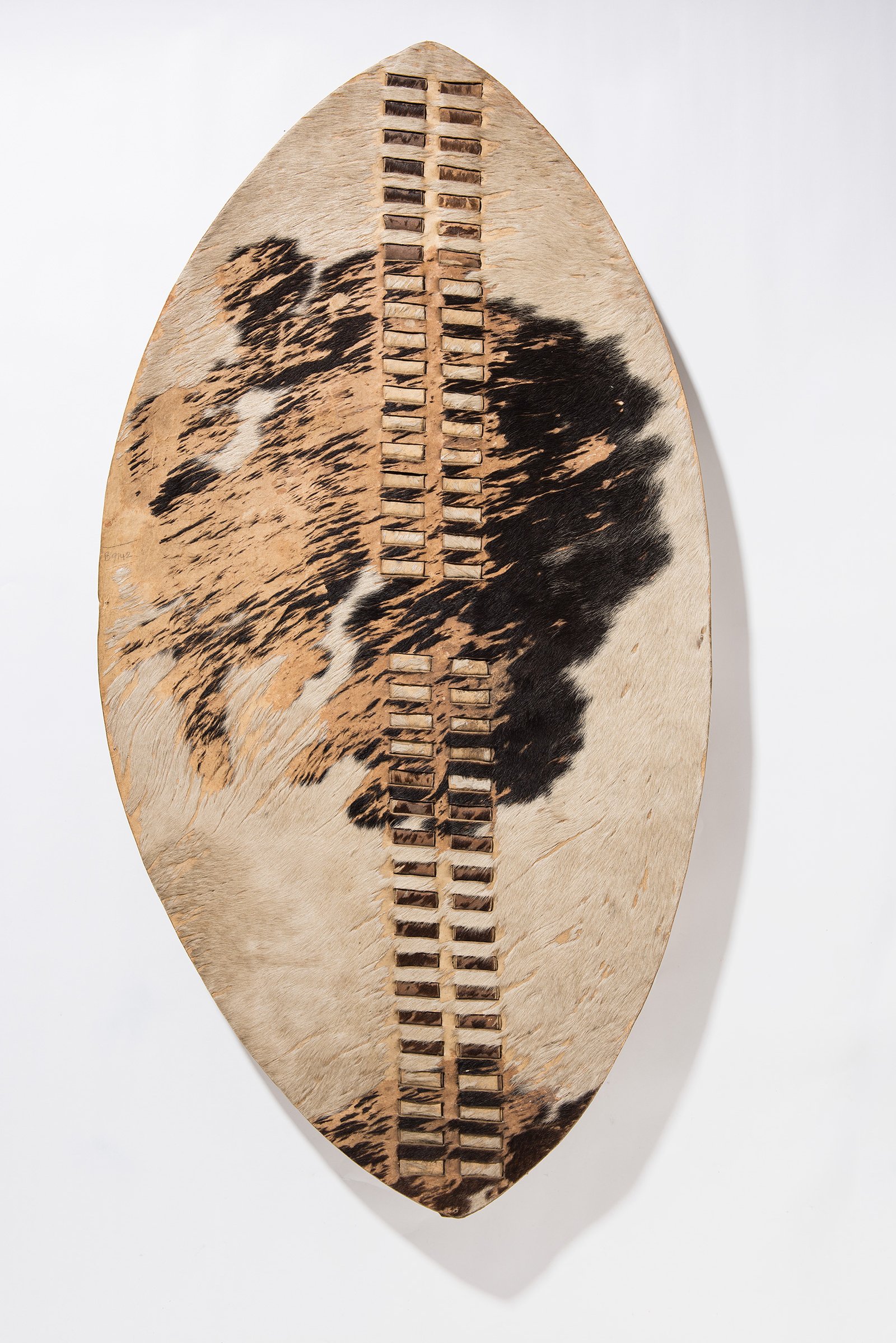
Zulu shield. Cattle hide, wood, twine. 152 (high) x 71 (wide) cm. Zulu Nation, South Africa. Collected by Sir Edward Strickland, c1880. Purchased from Sir Edward Strickland, 1884. AM African Collection. B004192.
Image: Stuart Humphreys © Australian MuseumThese shields are lightweight and made from a single ox hide supported by a wooden spine. Their distinctive patterns are symbolic of the Zulus’ close affinity with the valued Nguni cattle, which have beautiful, multi-coloured skin. The shields were collected during the protracted period of the Anglo–Zulu War, a war of resistance between the Zulu people of what is now South Africa and colonial forces of the British Empire in the final decades of the nineteenth century. They are powerful symbols and relics of Zulu resistance to the colonisation of southern Africa. The Zulu are the largest ethnic group in South Africa, and they assembled one of the most organised and disciplined indigenous armies in Africa, which engaged in famously bloody and brutal battles. Sir Edward Strickland, who collected these shields alongside almost 100 other Zulu cultural objects, served in the British Army during this war before retiring to Sydney in 1881.
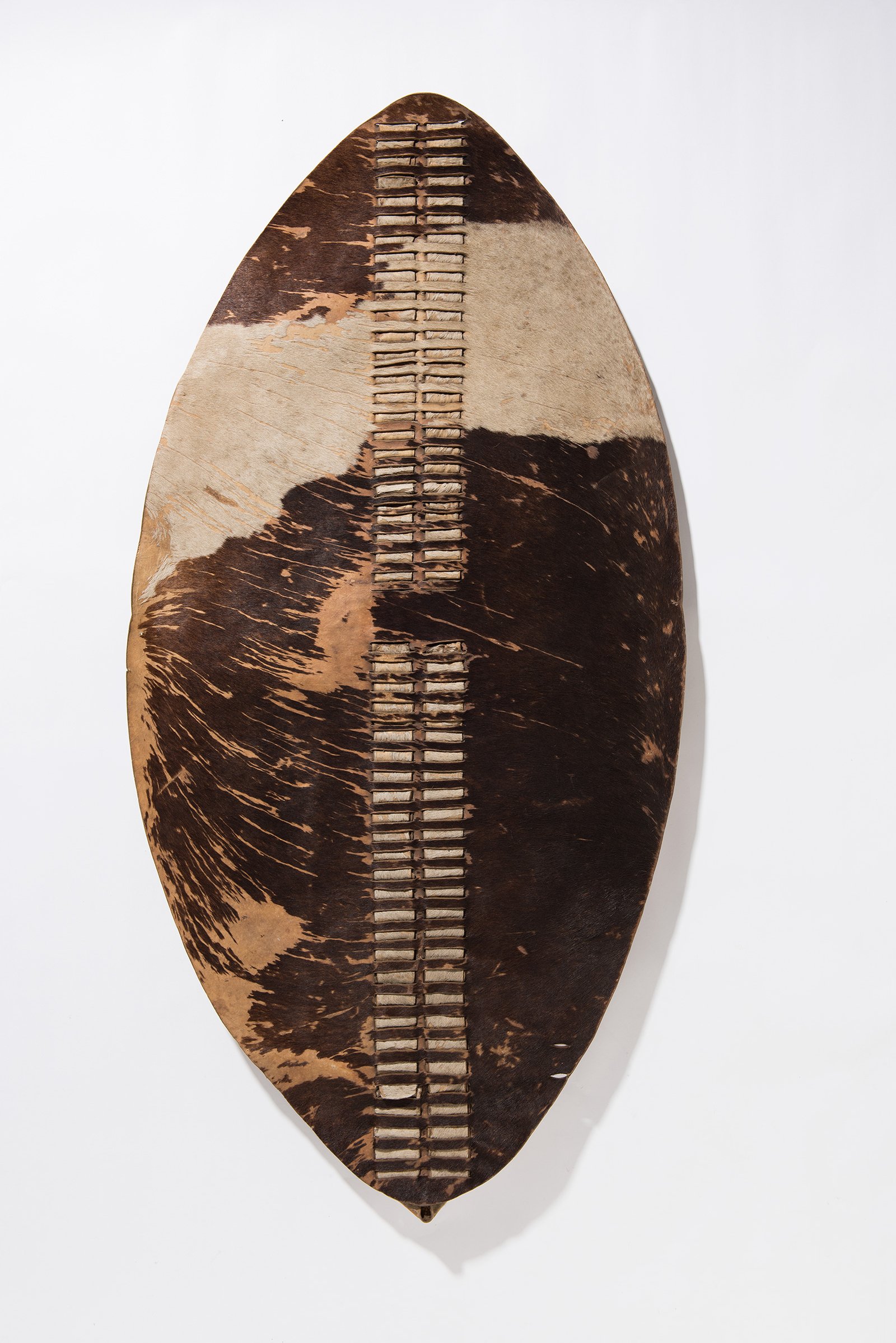
Zulu shield. Cattle hide, wood, twine. 132 (high) x 65 (wide) cm. Zulu Nation, South Africa Collected by Sir Edward Strickland, c1880. Purchased from Sir Edward Strickland, 1884. AM African Collection. B004191.
Image: Stuart Humphreys © Australian MuseumAM Treasure Circle
Treasure supported by Catherine Livingstone AO and Michael Satterthwaite.
Aardvark
Orycteropus afer
The Aardvark is an intriguing animal because it has no living relatives – it is the only representative of its taxonomical order. Its name, which comes from Afrikaans, means ‘earth pig’. It is so called because of its long, pig-like snout, and its ability to dig extremely quickly with its flat, shovel-like front claws. The Aardvark is nocturnal, and feeds on ants and termites, as well as a kind of cucumber, known as the Aardvark Cucumber, with which it has an almost symbiotic (inter-dependent) relationship. This specimen comes from South Africa, but died in captivity in the London Zoo, UK. It was acquired by the Australian Museum in 1884, making it a very old specimen, indeed. It is making a return to the Westpac Long Gallery, where it was displayed about 100 years ago.
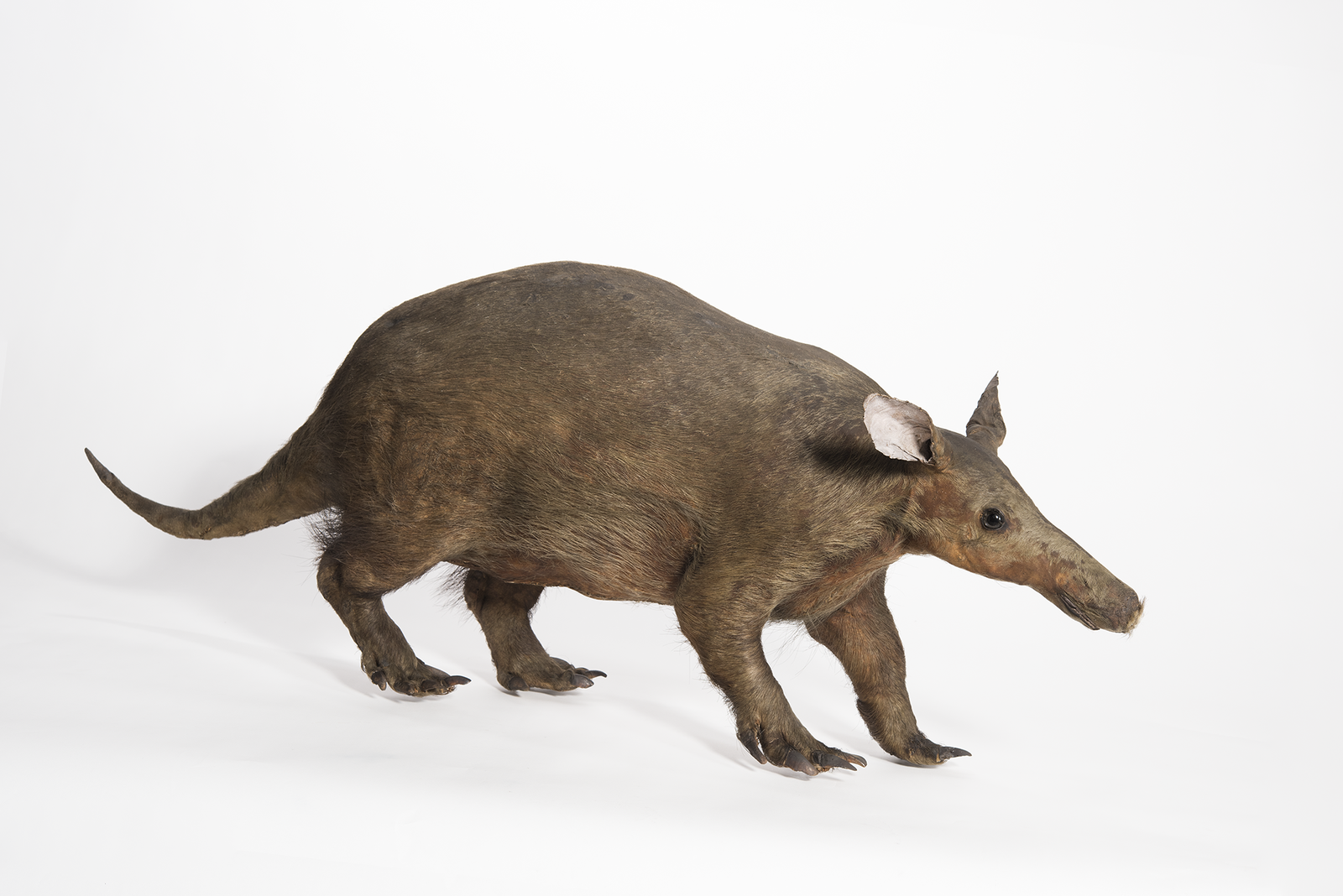
Aardvark, Orycteropus afer. 141 (long) x 43 (wide) x 57 (deep) cm. Cape of Good Hope, South Africa. Registered 1884. AM Mammalogy Collection. B.3517.
Image: Stuart Humphreys © Australian MuseumAM Treasure Circle
Treasure supported by Dr Janice Hirshorn & Dr George Jacobs.
Bow-stand with female figure
This striking, carved wooden bow-stand would have belonged to a high chief of the Luba people of Katanga.
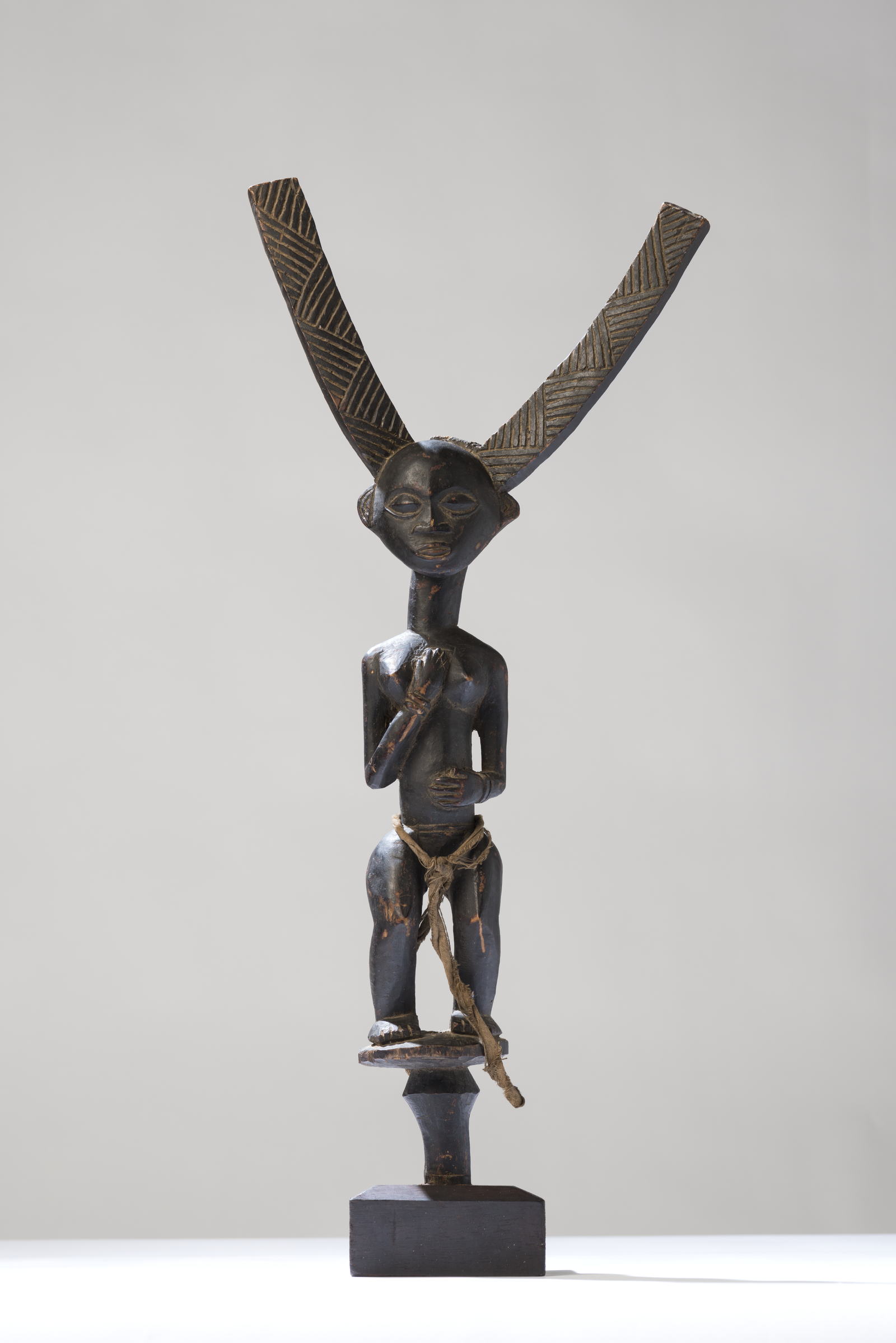
Bow-stand with female figure. Carved wood, twine. 55 (high) x 23 (wide) cm (plus 10-cm base). Luba people, Katanga, Democratic Republic of Congo. Purchased from G.G.P. Lyons, 1912. AM African Collection. E019552.
Image: Stuart Humphreys © Australian MuseumOnly the highest chiefs were permitted to have representations of the female form on bow-stands, alluding to ancient beliefs and symbols of political hierarchy. The Luba people of the Katanga region, now in the Democratic Republic of Congo, were part of a powerful kingdom formed in Central Africa some 500 years ago. Rich in palm oil, copper and fishing, they resisted European colonisation until 1917, when the kingdom succumbed to invaders. The Luba people were famous as wood carvers and artisans, crafts that endured into the early twentieth century. This bow-stand is an excellent example of their artistry and illustrates complex social arrangements. The carved figure of a woman, which supports the stand, symbolises the role of woman as the creator of the world.
AM Treasure Circle
Interested in supporting this Treasure? Contact the Australian Museum Foundation to discover how.