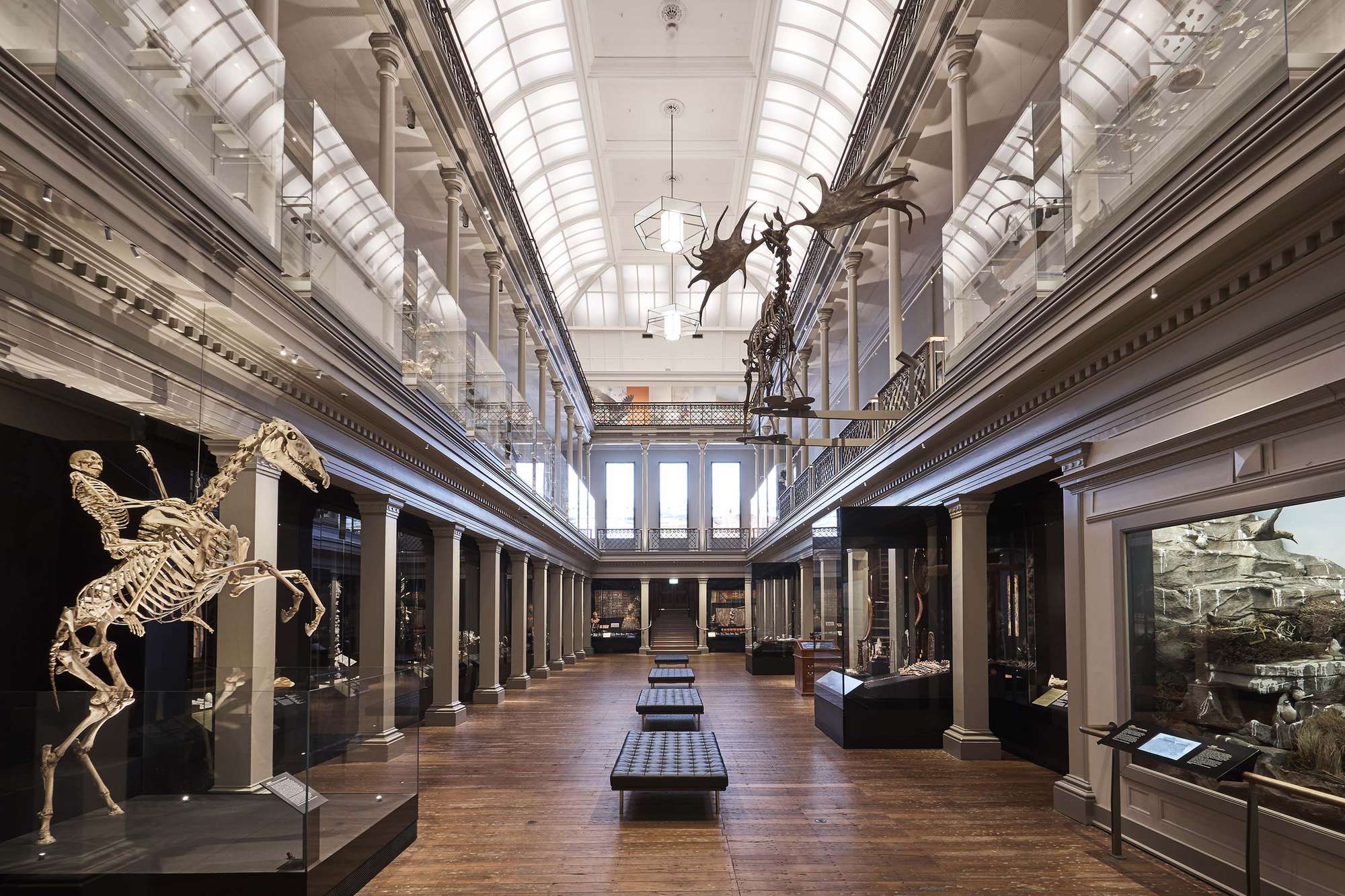
Platypus Rug case
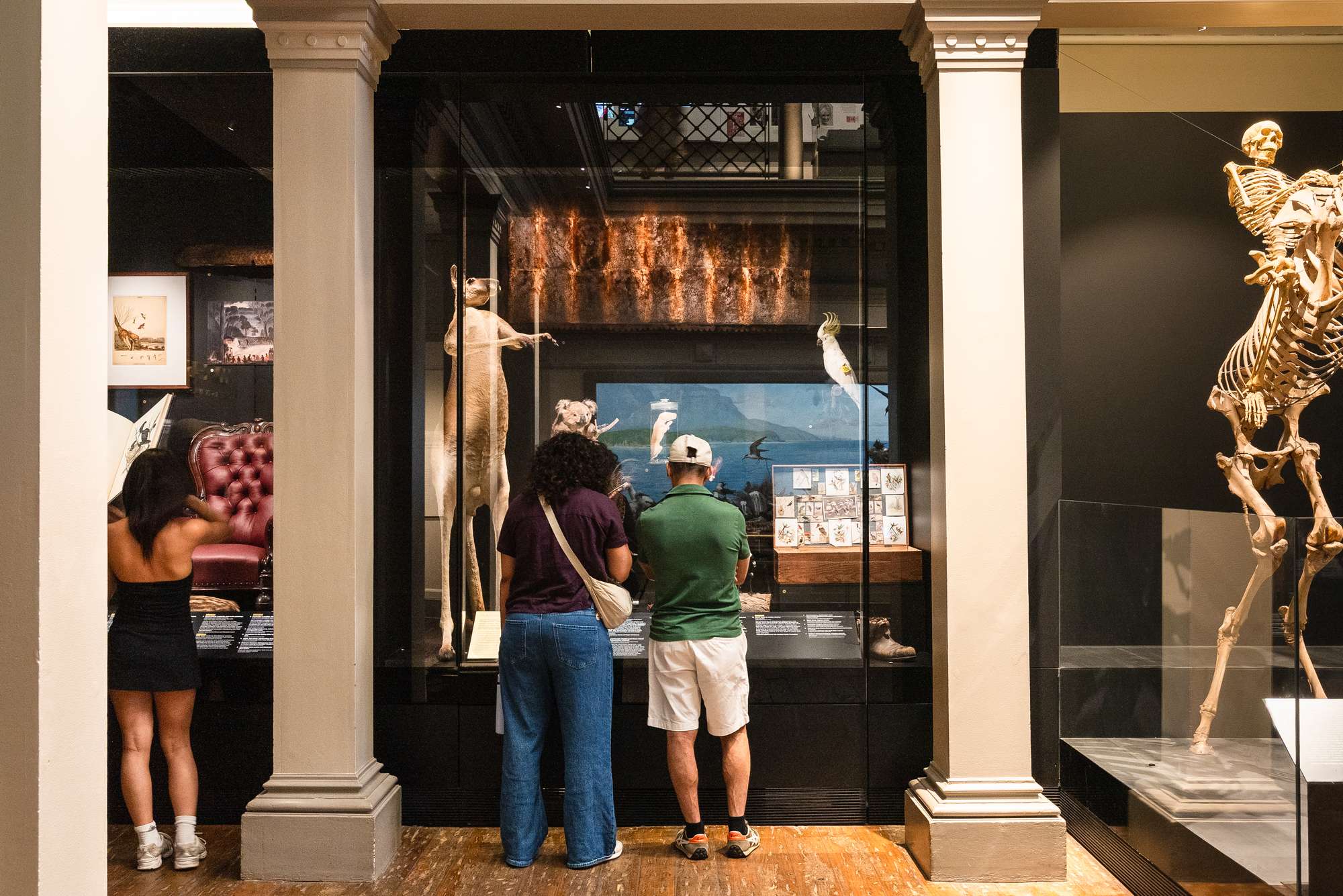
A rug made from 75 platypus skins, a preserved Tasmanian Tiger pup and a lyrebird that mimics chainsaws. The Platypus Rug case brings together some of Australia's most remarkable, loved and lost native species in one compelling display.
Story of the case
Listen to the audio guide of the Platypus Rug case.
Audio Transcript
The strangeness of Australia’s native animals was the source of much European curiosity in the 18th and 19th centuries. But for those here in the colony, they were more than curiosities: our native animals were trapped, killed, eaten, and feared well before they became the beloved icons of our country.
No object captures our changing treatment of Australia’s native animals than the beautiful rug which hangs at the rear of this showcase. It is made from the skins of 75 Platypuses, a creature which so astonished scientists when the first specimen arrived in Europe that many believed it to be an elaborate hoax, created by an unscrupulous prankster stitching a duck’s beak onto the body of a mole. Platypuses were often considered pests by farmers and were hunted for their fur until the practice was outlawed in 1905.
Below the Thylacine, two Lord Howe Phasmids tell a more hopeful story. Once so abundant on Lord Howe Island that they were used as fishing bait, these insects were ravaged after rats made it ashore in 1918. Despite being declared extinct in 1935, the occasional dead phasmid was seen by walkers on the nearby islet of Ball’s Pyramid, and in 2001, live specimens were found. The species is now being bred for reintroduction to Lord Howe.
Many of Australia’s native animals have a reputation for being dangerous. Next to the phasmids is one of the most feared, the Sydney Funnel-web Spider. Thirteen people have died from its bite, and the spider has become an icon of Australian folklore. This male specimen was responsible for the first recorded death by this species in 1927, when a toddler was bitten on the finger.
Rug made from 75 platypus skins
Ornithorhynchus anatinus
This beautiful and soft rug, composed of 75 Platypus skins, was made at a time when the animals were far greater in number than they are today, and there were no conservation laws to protect them. It is possible that the rug was made by the famous Tost and Rohu taxidermists, a mother-and-daughter team who operated what they termed ‘the Queerest Shop in Sydney’, selling stuffed and mounted animals, skins and furs, and ‘island curios’. Jane Tost also worked at the Museum from 1864 to 1869. The Platypus confounded European scientists, who, confronted with the first specimens in 1798, believed the animal to be a hoax, created by stitching a duck’s beak onto a beaver-like animal. The Platypus was hunted extensively for its fur, a practice prohibited throughout Australia from 1905.
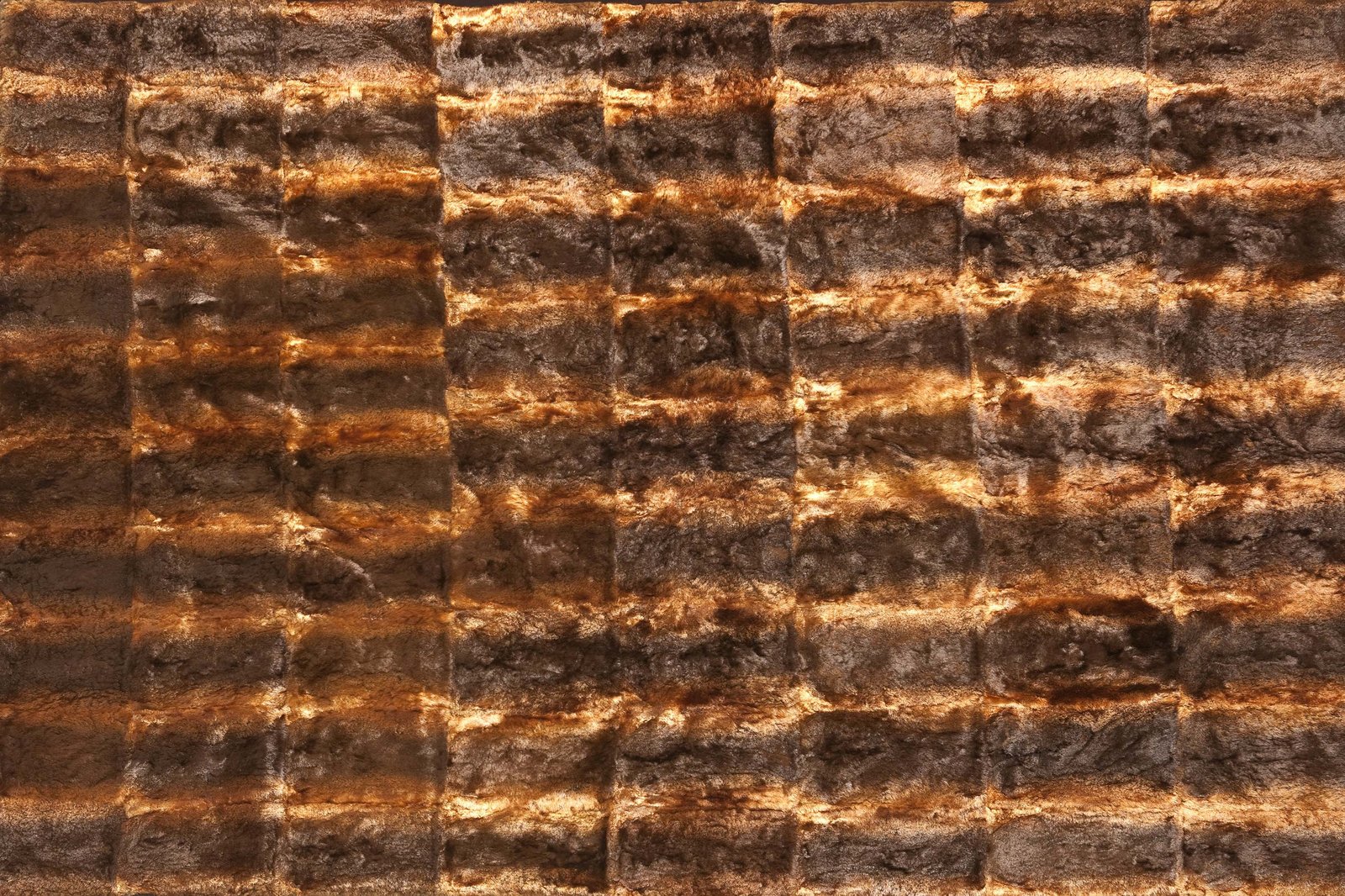
Rug made from 75 platypus skins. 188cm long x 163cm wide. Made for WL Hill MLC, which his daughter E Hill then donated to the Museum. Registered 3 December 1947.
Image: Stuart Humphreys © Australian MuseumAM Treasure Circle
This Treasure is supported by The Paradice Family Foundation.
Superb Lyrebird
Menura novaehollandiae
The Superb Lyrebird is famous for its ability to mimic any sounds from its immediate environment, including car engines, dog barks and the calls of other native birds. About 80 per cent of its song comprises copied sounds, strung together into a rousing medley that, along with a spectacular display of dancing and tail-shaking, is used during courtship rituals. The lyrebird resembles a large pheasant. Males have an ornate, lyre-shaped tail with long, curved feathers that grow up to 1 metre in length. The lyrebird family is an ancient lineage of songbirds. In 1995, Australian Museum scientist Dr Walter Boles named a fossil lyrebird from Riversleigh, Queensland, which lived about 16–23 million years ago.
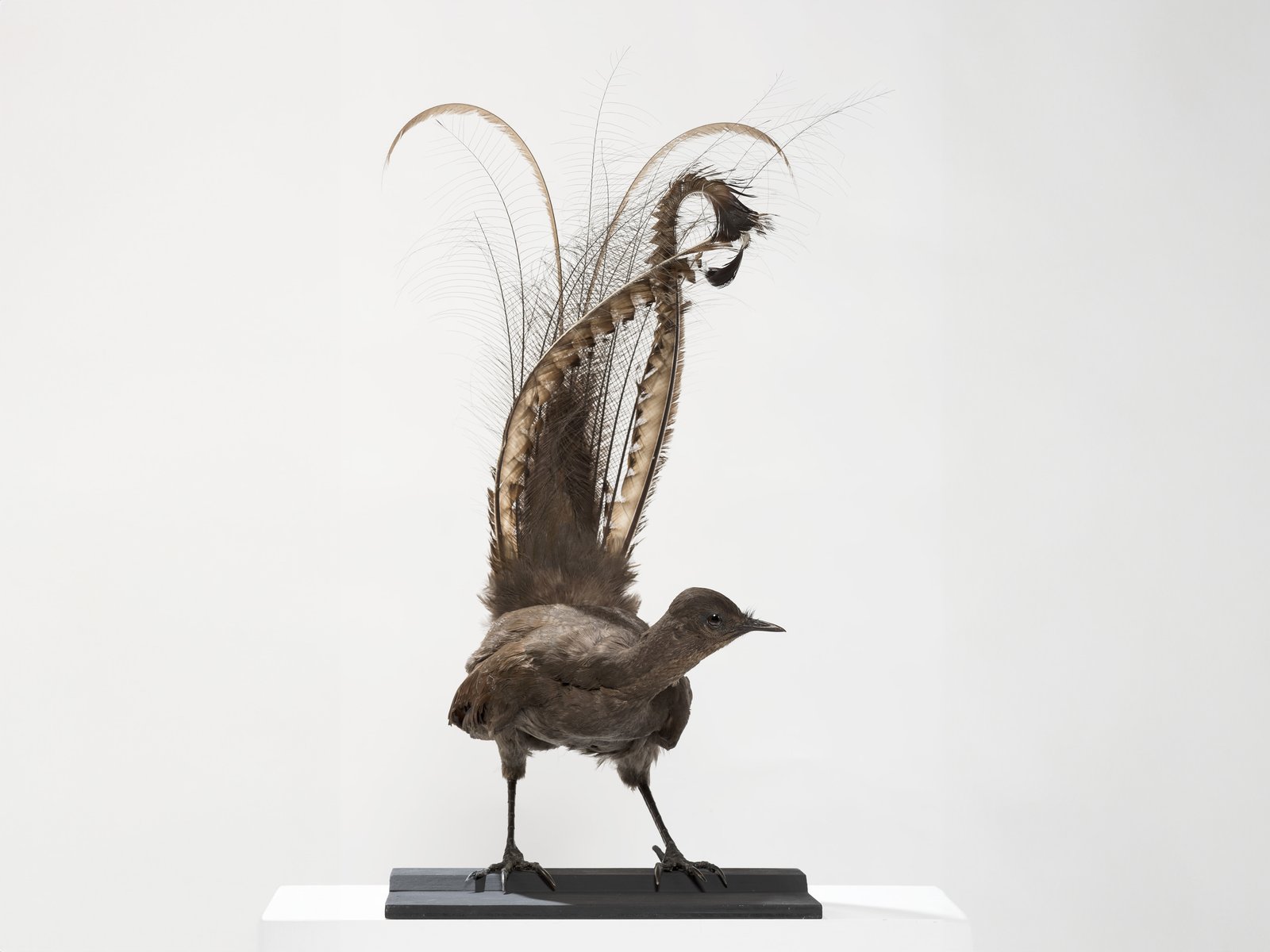
Superb Lyrebird (Menura novaehollandiae). 70 (high) x 44 (wide) x 38 (deep) cm. AM Ornithology Collection. O76646.
Image: Stuart Humphreys © Australian MuseumAM Treasure Circle
This Treasure supported by Billie Rose and Warwick Evans.
Koala
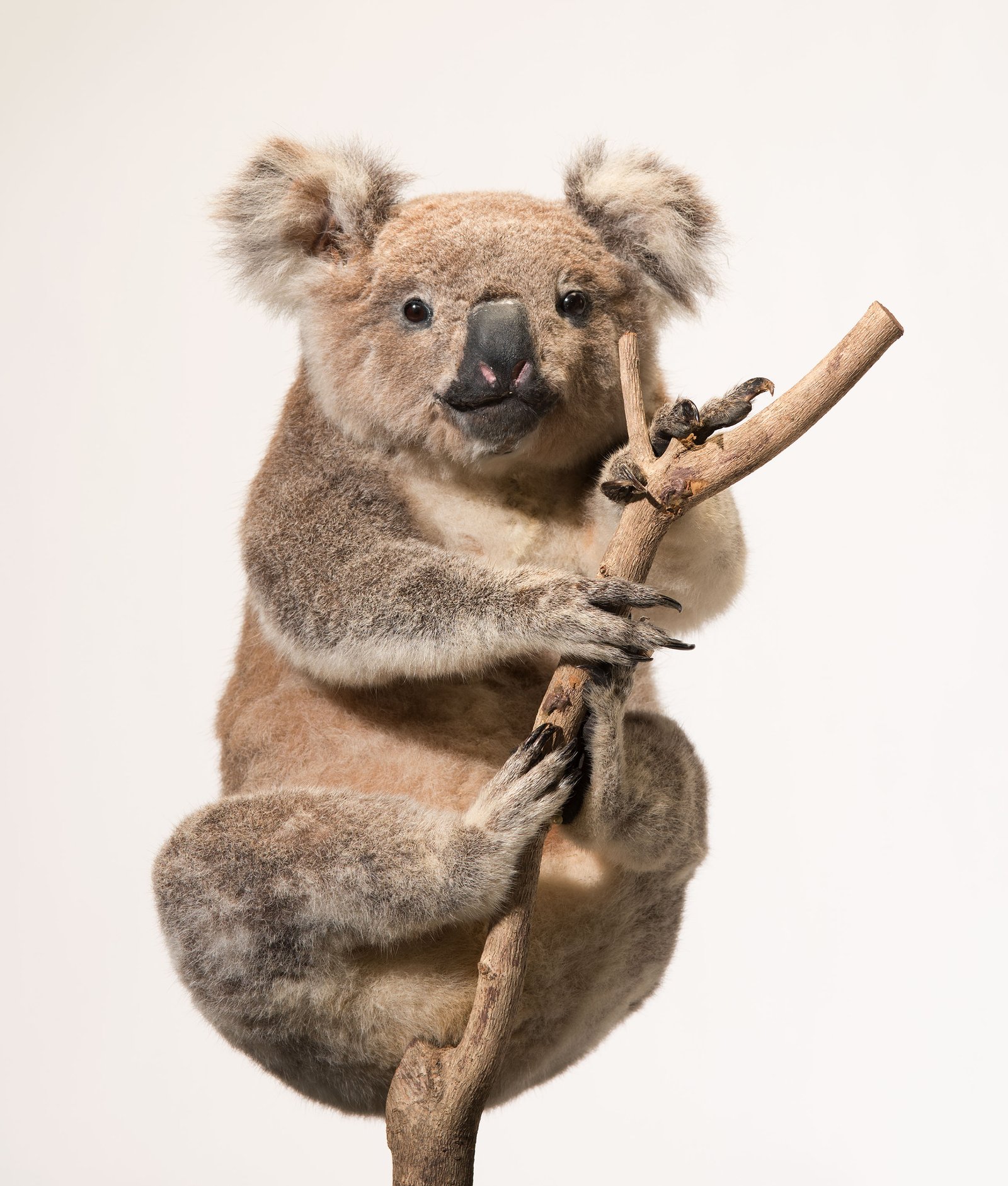
Koala, Phascolarctos cinereus. 47 (high) x 35 (wide) x 30 (deep) cm. Collected Evans Head Road, Woodburn, NSW, August 1993. Registered 2001. AM Mammalogy Collection. M33805.
Image: Stuart Humphreys © Australian MuseumPhascolarctos cinereus
The Koala – a treasured and quintessentially Australian species – is under threat from habitat loss, dog attacks, vehicle strikes and disease. There are concerns that its genetic diversity is decreasing and its health and, therefore, population numbers are in danger. Researchers at the Australian Museum, led by Dr Rebecca Johnson, in collaboration with many Australian and international universities, worked with Koala specimens, such as the one shown here, to sequence the animal’s approximately 20,000 genes. Assembling the Koala genome has provided information about how the species evolved, and indicates how best to conserve it. It also allows scientists to look at disease resistance and susceptibility, and to compare current genetic diversity to that of Koalas collected in the past.
AM Treasure Circle
This Treasure is supported by David and Megan Armstrong. Learn more about this Treasure.
Lord Howe Island Phasmid
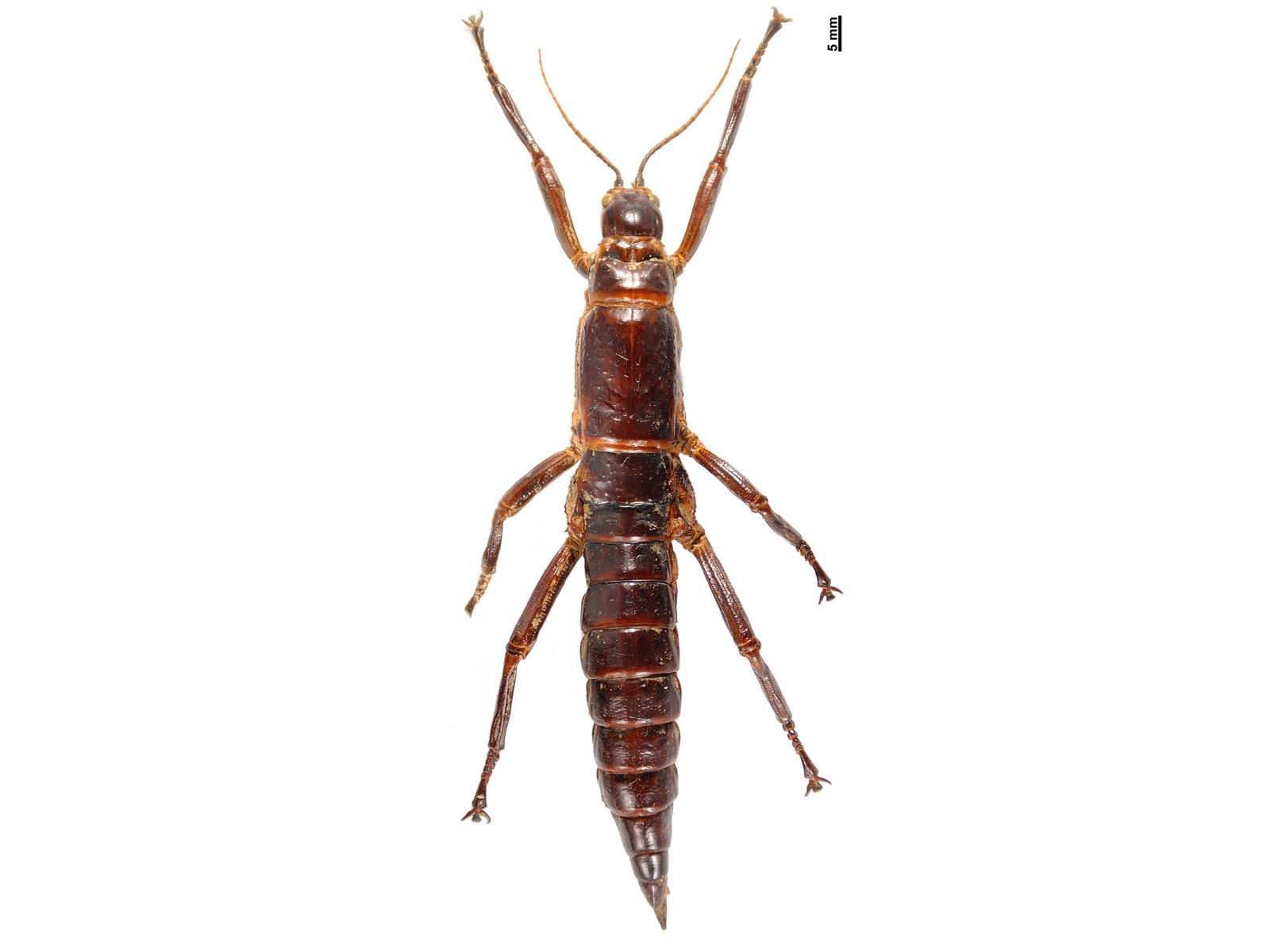
Female Lord Howe Island Stick-insect. 13 (long) x 5.5 (wide) cm. Lord Howe Island, NSW. Registered 1908. AM Entomology Collection. K.38459.
Image: Matthew Bulbert © Australian MuseumDryococelus australis
The Lord Howe Island Phasmid ((Dryococelus australis) is a species of stick insect in the subfamily Eurycanthinae, with several related species in Papua New Guinea and Cape York. When discovered on Lord Howe Island, it was abundant in number. A nocturnal animal usually found in cavities in trees, it was given the name ‘tree lobster’ and used as fishing bait. Numbers declined dramatically after a shipwreck in 1918 introduced rats to the island and by 1920, it was assumed to have become extinct.
In 2001, a team including scientists from the Australian Museum went in search of living stick insects, eventually climbing the narrow ledges of Balls Pyramid by night and discovering three living specimens. A captive breeding program is underway to bolster the numbers of Lord Howe Island Stick Insects, and eventually reintroduce them to their island home. In 2017, the Museum revisited Balls Pyramid to collect an additional Stick Insect to increase genetic diversity in the captive population.
AM Treasure Circle
Interested in supporting this Treasure? Contact the Australian Museum Foundation to discover how.
Sydney Funnel-web Spider
Atrax robustus
This specimen of the notorious Sydney Funnel-web Spider (Atrax robustus) was responsible for the first recorded human death by this species. On 5 February 1927, a toddler sitting on the laundry steps of a house in Thornleigh was bitten on the little finger. It is suspected that the child tried to crush the spider in his hand, which is why the specimen is somewhat squashed. Funnel-web spiders grow up to 3.5 cm in length.
They live in cool and humid burrows beneath logs and rocks, across which they spin silken trip lines to alert them to the presence of prey. Although they are one of the most venomous species of spider in the world, there have been no fatalities from Sydney Funnel-web Spider bites since the introduction of antivenom.
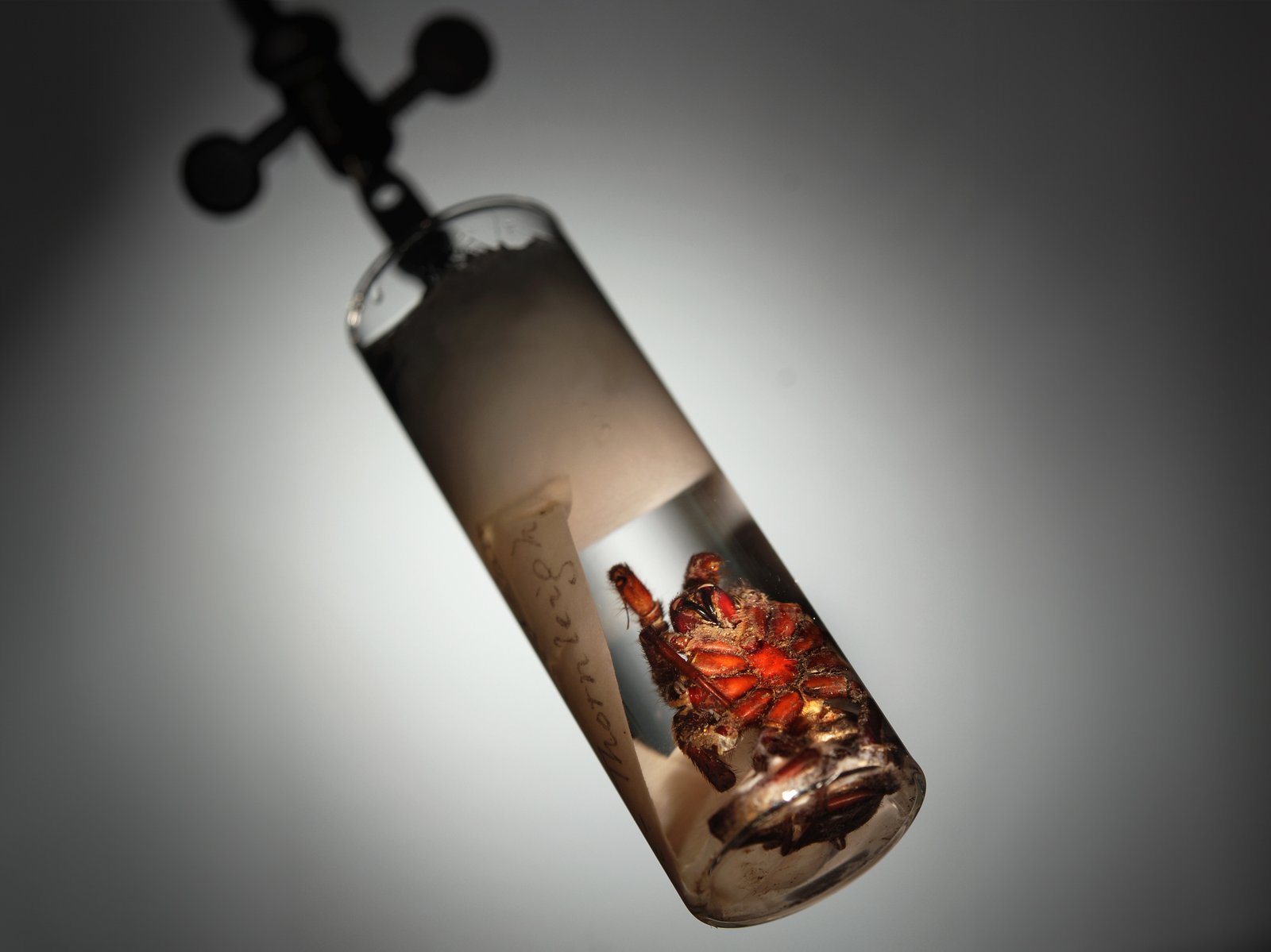
Sydney Funnel-web Spider (Atrax robustus). 13 (high) x 7 (diameter) cm glass specimen tube inside a honey jar. Collected by A. Stow, Cliord Avenue, Thornleigh, NSW, 1927. Registered 1979. AM Arachnology Collection. KS4013.
Image: Carl Bento © Australian MuseumAM Treasure Circle
Interested in supporting this Treasure? Contact the Australian Museum Foundation to discover how.
Tasmanian Tiger pup
Thylacinus cynocephalus
This complete body of a Tasmanian Tiger pup (Thylacinus cynocephalus) was sent to the Australian Museum in 1866 – 70 years before the last-known Thylacine died in Hobart Zoo in 1936. The animal is beautifully preserved and stands as a poignant reminder of the importance of conserving our natural history. The clearly visible body stripes are a distinctive characteristic of this species.
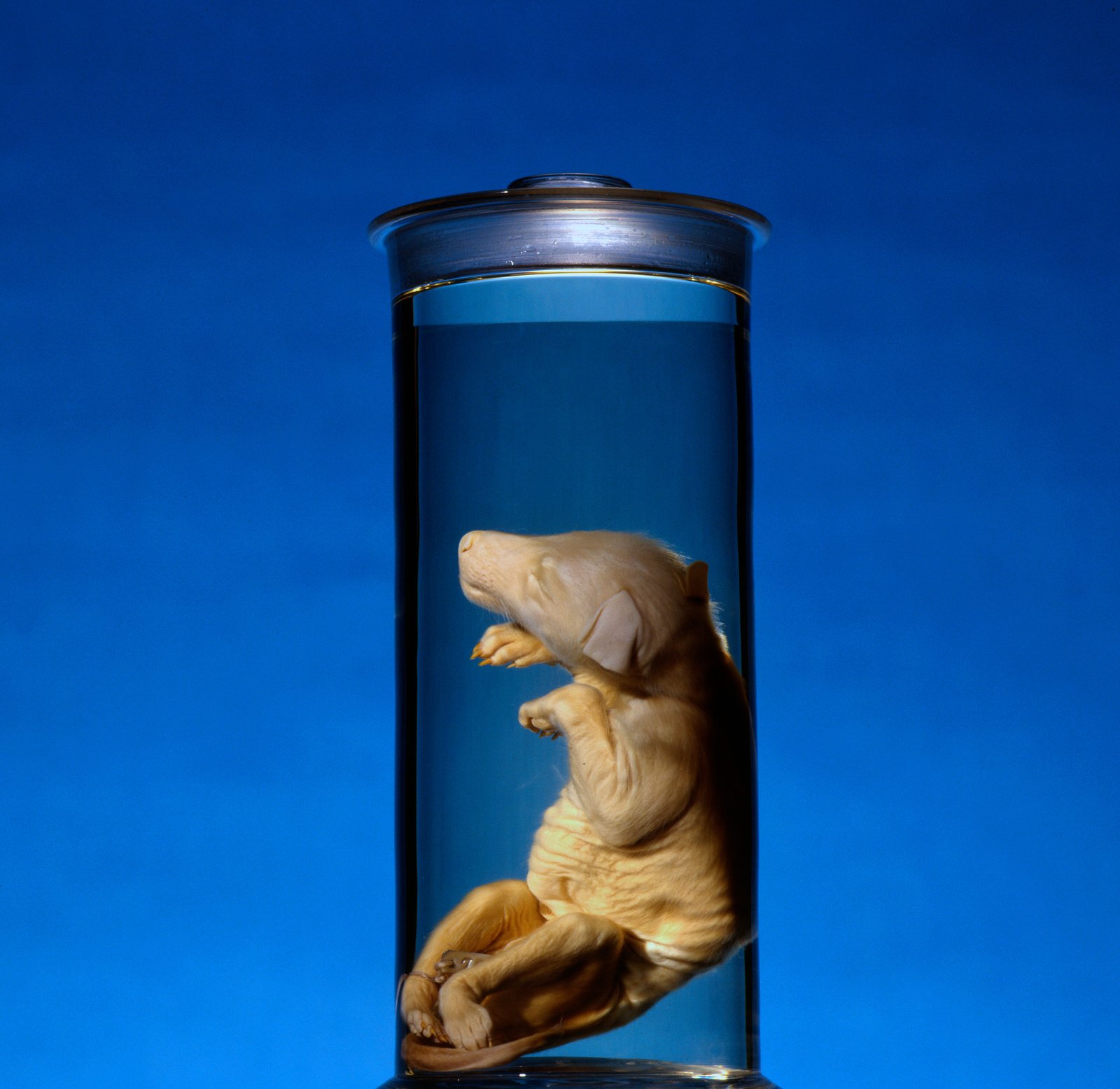
Tasmanian Tiger pup (Thylacinus cynocephalus). 42.5 (high) x 14 (diameter) cm glass specimen jar. Collected by George Masters, 1866 Shipped from Hobart, Tasmania to the Australian Museum on 27 December 1866. AM Mammalogy Collection. PA.762.
Image: Stuart Humphreys © Australian Museum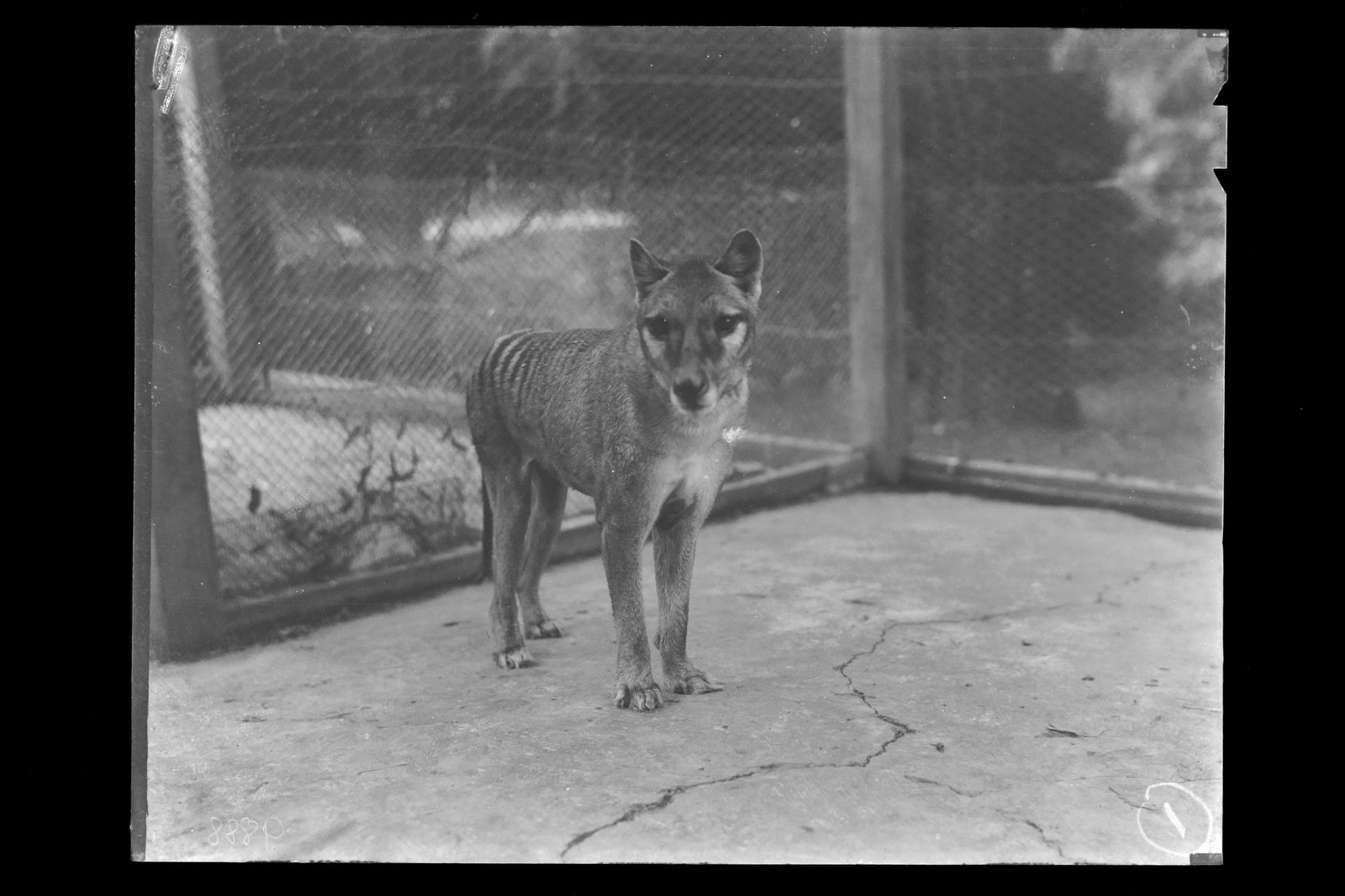
Once widespread across the Australian mainland, by the time of European settlement, the Thylacine had died out everywhere except Tasmania, where populations continued to decrease under threats from human hunters. Scans of the pup taken in May 2017 may enable its exact age to be calculated.
AM Treasure Circle
This Treasure is supported by The Paradice Family Foundation.
Birds’ eggs in hobby display
The official term for the branch of science that studies birds’ eggs is oology. It is derived from oion, the Greek word for ‘egg’. Oology (and the collection of wild bird eggs in particular) was very popular during the 1800s in Great Britain and the United States, and avid amateur oologists were also working in Australia at that time. This collection is unusual in that it contains only the eggs of Australian birds, including the Kookaburra, Magpie, Galah, Rainbow Lorikeet and Lyrebird. Some of the major bird groups, notably the songbirds, have their origins in Australia, and the varying sizes, colours and shapes of the eggs in this collection reflect their diversity. Colour postcards of Australian birds accompany the eggs, which have been lovingly and skilfully arranged by this dedicated – but unknown – amateur scientist.

AM Treasure Circle
This Treasure is supported by The Paradice Family Foundation.
Skeleton of Sir Hercules and a rider
This horse skeleton and rider, affectionately dubbed, ‘the Bone Ranger’ by Australian Museum staff and visitors, is a symbol of the importance of horses and horsemanship to Australian history. Horses were indispensable to farming, industry and travel in colonial Australia, and played a significant part in stories about our national identity – from horse-breakers and bushrangers, to breeders and racers. Sir Hercules, whose skeleton this is, was one of the great foundation stallions in the thoroughbred industry. He was bred in 1843, at Clifton Stud on the Hawkesbury River, NSW. Although he never raced, he sired 18 big-race winners including The Barb, winner of the Melbourne Cup in 1866, and Yattendon, winner of the first Sydney Cup, also in 1866. His descendants include the top racehorses and stallions Chester, Grand Flaneur and Abercorn. Sir Hercules died at a stud near Bathurst, NSW, in 1865. His remains were later exhumed, and his skeleton was presented to the Australian Museum in 1870 and put on display in 1873. The figure of a rider joined Sir Hercules in 1983.
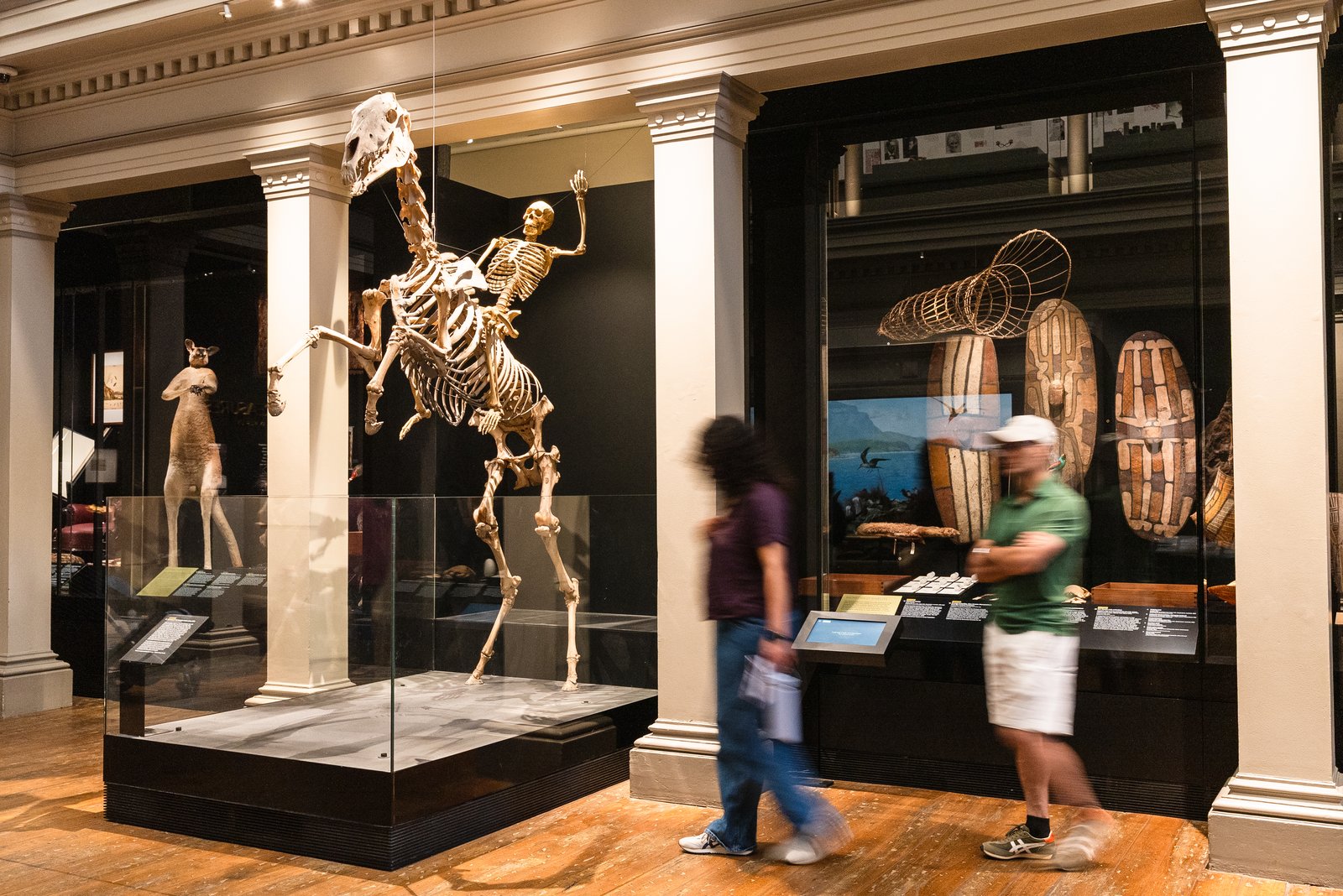
Skeleton of Sir Hercules and a rider. 320 (height to top of rider’s hand) x 195 (nose to tail) x 100 (wide) cm. Cliftonville, Hawkesbury River, NSW. Acquired 1870 Registered 1913. AM Mammalogy Collection. S1325.
Image: Louise Reily © Australian MuseumAM Treasure circle
This Treasure is supported by the Hartzer / Trevor-Jones Family.