Opalised Pliosaur case
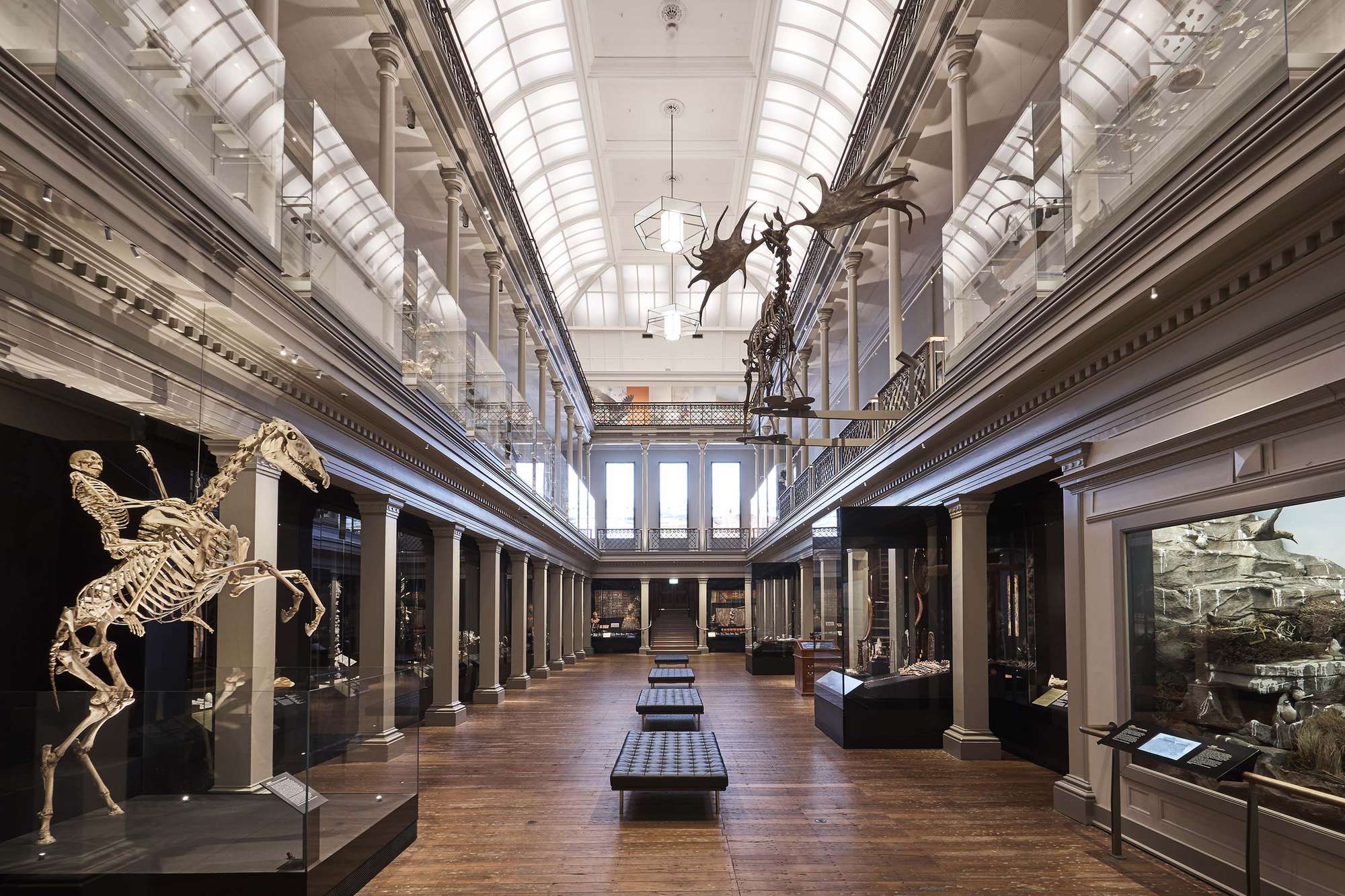
From a 120-million-year-old opalised pliosaur discovered in a Coober Pedy mine, to the world's finest cerussite crystal and the earliest works of the Papunya art movement, this case brings together some of Australia's most extraordinary natural, geological and cultural treasures.
Story of the case
Listen to the audio guide of the Opalised Pliosaur case.
Audio Transcript
The idea of the inland sea has a profound place in Australia’s imagination. Aboriginal water Dreamings revolve around its rising and falling. And a succession of colonial explorers laboured along rivers in search of it, eventually conceding it did not exist. Yet it once did.
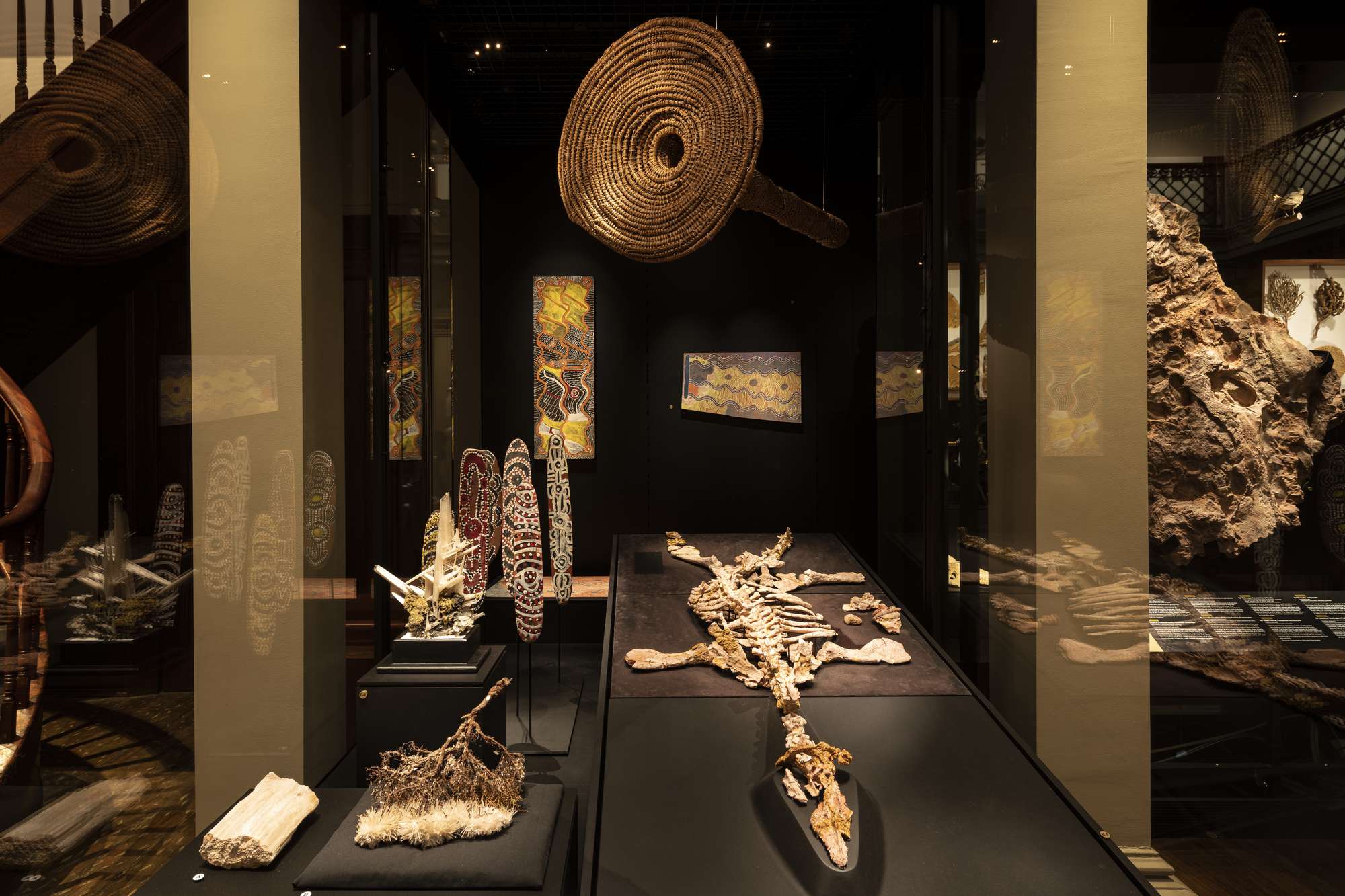
This fossilised pliosaur, known affectionately as Eric after a song by British comedy team Monty Python, swam in a vast inland sea during the Cretaceous Period, about 120–100 million years ago. As the sea retreated, perfect conditions were created for Australia’s national gemstone – opal – to form. Eric’s bones – and the fish bones in his stomach – gradually turned to opal. Australia is the only place on Earth where opalised animal fossils have been found.
Eric was discovered in 1987 by opal miner Joe Vida. Hundreds of blocks containing fragments of fossilised bones were sent to the Museum, where they were painstakingly reconstructed in a process that took over 450 hours.
In 1992, Eric went on sale when the company belonging to Eric’s owners went into liquidation. A ‘Save Eric’ appeal resulted in many generous donations, giving Eric a permanent home at the Museum.
Eric is not the only treasure of natural history discovered in Australia’s mines. On the left, this cerussite specimen is considered by many to be the finest in existence. Found at Broken Hill prior to 1930, its bladed crystals are up to 28.7 cm long – the longest of any in the world. Cerrusite’s high lead content gives a brilliant sparkle to the dense crystals.
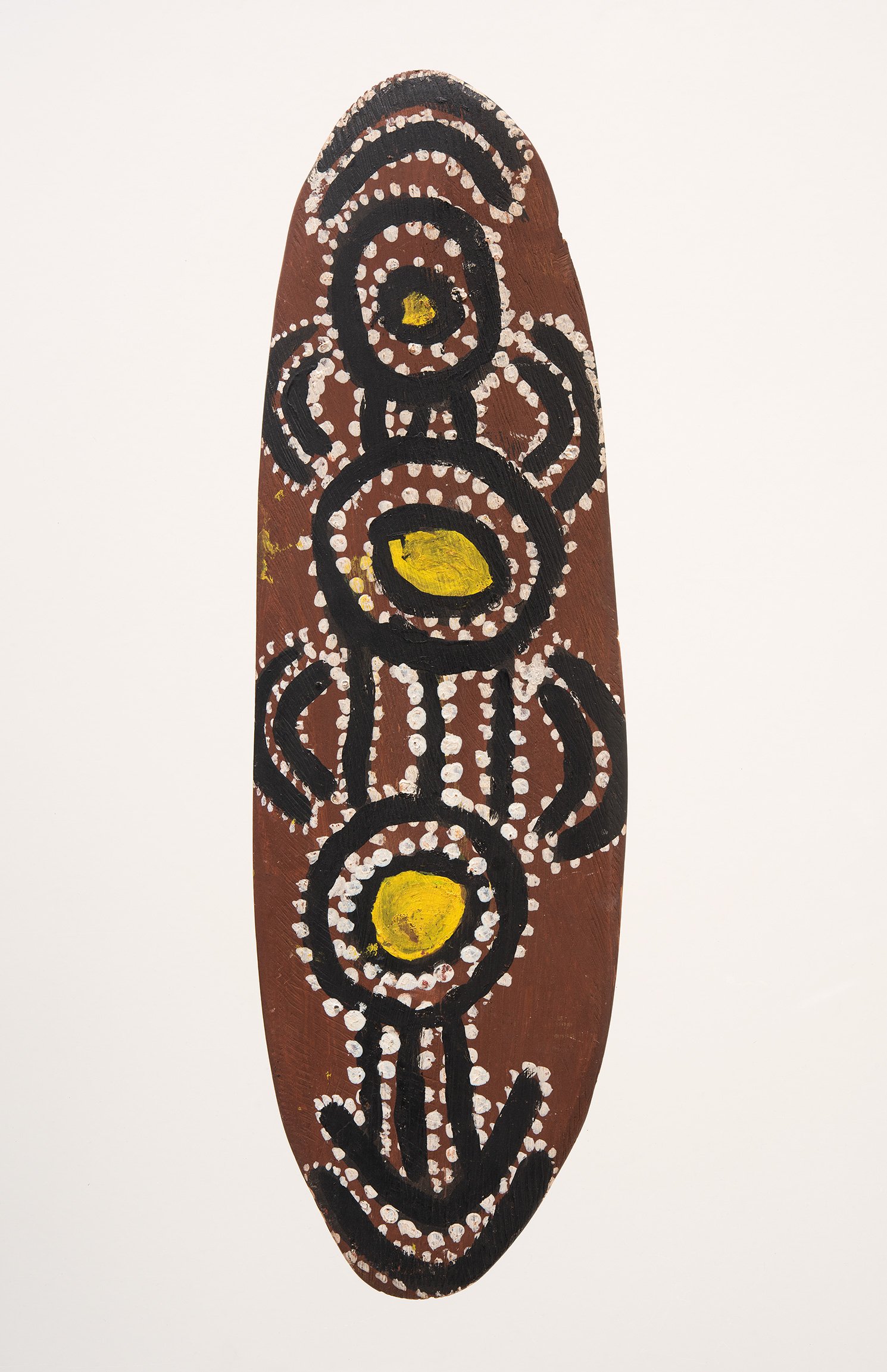
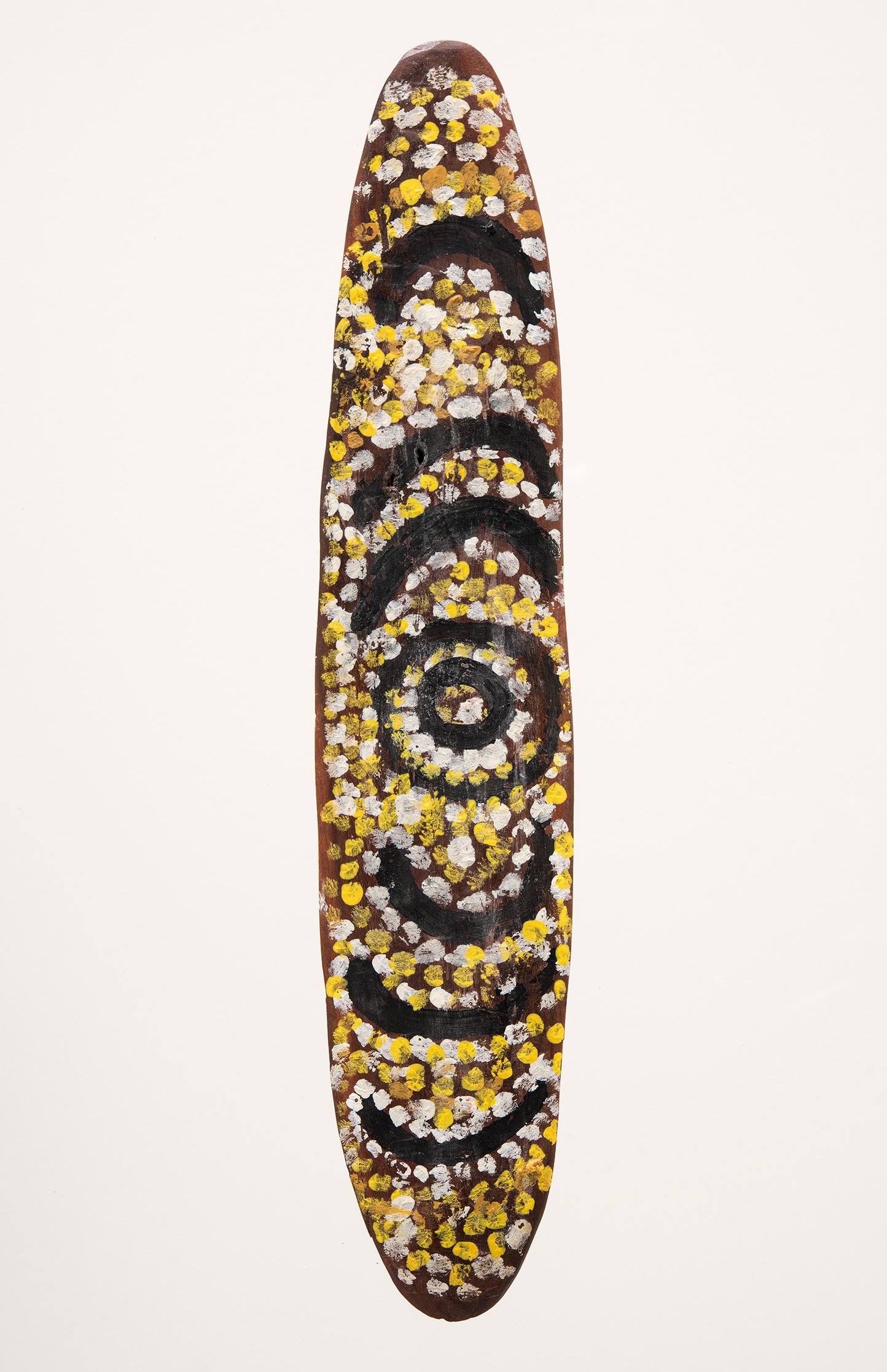
Behind the cerussite, these dance boards were made for a special performance at the Museum in 1982, and were the first pieces of Indigenous women’s art to be recognised as art by an Australian cultural institution. Made by members of the Papunya Tula Art Movement, the boards were carved by men before women painted them with important symbols. Dance boards are used by Warlpiri women in ceremonies related to women’s Dreaming. The women sing and dance with boards in both hands.
Opalised pliosaur
Umoonasaurus demoscyllus
‘Eric’ the pliosaur was a short-necked, carnivorous reptile that lived in the inland seas of South Australia in the Cretaceous, about 120–100 million years ago. The pliosaur bones, as well as the tiny fish bones found inside its stomach, became opalised during the fossilisation process. These bones were discovered in 1987 by opal miner Joe Vida in the walls of his mine. In 1988, hundreds of blocks containing the bone fragments were sent to the Australian Museum. Reconstructing Eric was a difficult and painstaking task, which took PhD student Paul Willis over 450 hours.
In 1992, Eric went on sale when the company belonging to Eric’s owners went into liquidation. A ‘Save Eric’ appeal was launched to keep him in Australia. Thousands of people made donations (Australian company Akubra Hats made a generous contribution) so that the Australian Museum could buy the skeleton and keep it in the public domain.

Opalised Pliosaur. 80 (high) x 180 (long) x 20 (deep) cm, in 3 sections. Early Cretaceous, 120–100 million years ago. Zorba Extensions opal Field, Coober Pedy, South Australia. Found by Joe Vida, 1987. Purchased by public appeal from Comrealty, 1993. AM Palaeontology Collections. F99374.
AM Treasure Circle
Treasure supported by The Nelson Family.
Cerussite from Broken Hill
This cerussite specimen is considered by many to be the finest of its type in existence. Its bladed crystals, which form a striking lattice pattern known as ‘reticulation,’ are up to 28.7 centimetres long – the longest of any specimen in the world. In 1983 it was chosen by Australia Post to feature on a pre-stamped envelope celebrating the centenary of the Broken Hill mineral discoveries. Cerrusite is composed of lead, carbon and oxygen, its high lead content giving the crystals a brilliant sparkle and a high density. This specimen is part of a collection assembled by managers of the Proprietary Block 14 Mine after its closure, and transported to Sydney by rail in wooden boxes. Despite the long journey, and the fragility of the crystals, none of the specimens was damaged during transit.
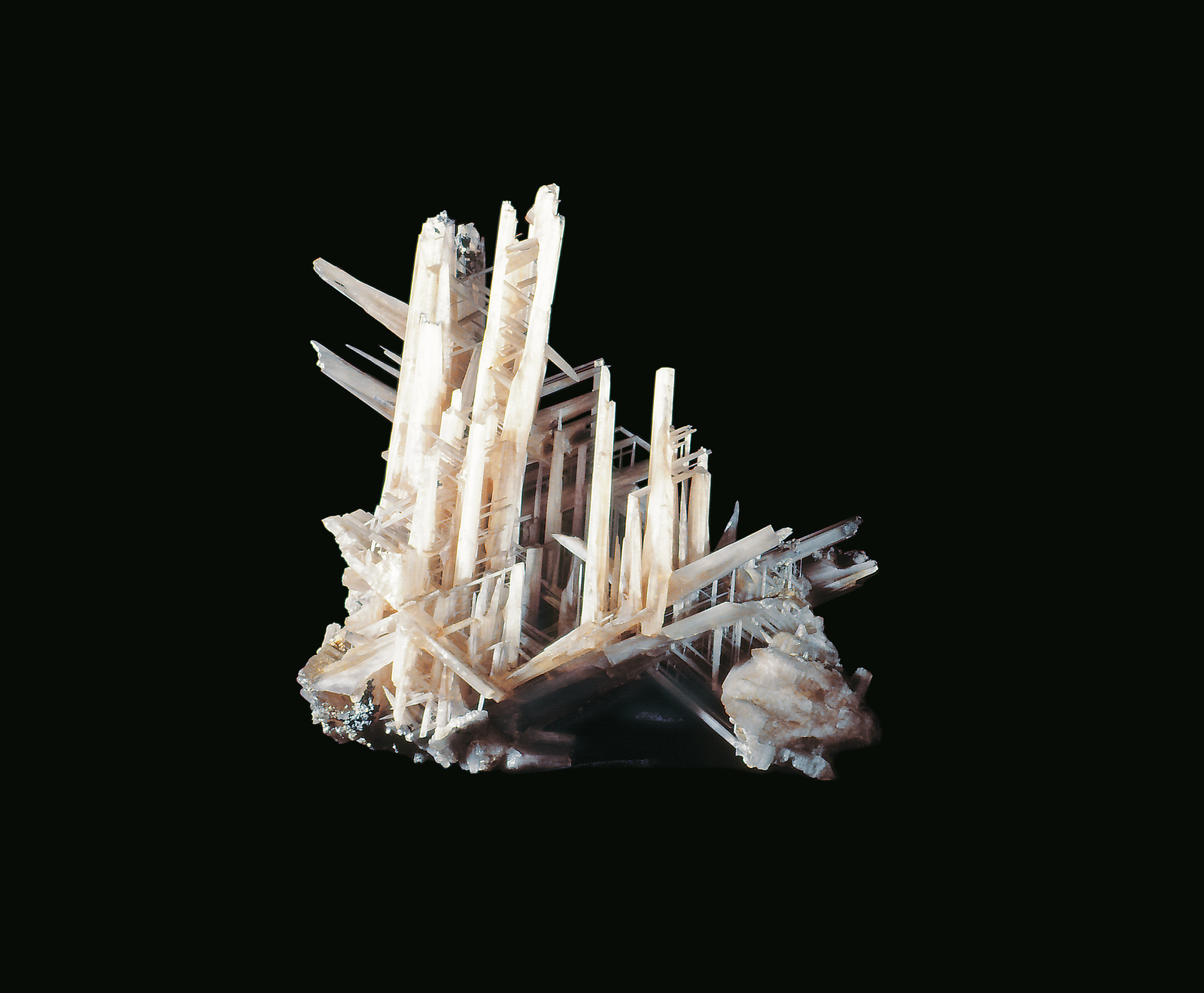
Cerussite. Broken Hill, NSW. D. 50674.
Image: Carl Bento © Australian MuseumAM Treasure Circle
Treasure supported by Robert Albert AO.
Dance boards from Yuendumu
Dance boards are used by Warlpiri women in ceremonies related to women’s Dreaming. Made by men, the boards are covered with oil and then painted by the women with important symbols. The women sing and dance with the boards in both hands. These boards were made for a special performance at the Australian Museum in 1982, and were the first pieces of Indigenous women’s art to be recognised as art by an Australian cultural institution.
These boards were painted by various women, all members of the Papunya Tula art cooperative, which began in 1972 and uses symbols employed in traditional body and sand painting, but often replacing traditional ochre paints with acrylics.
AM Treasure Circle
Interested in supporting this treasure? Contact the AM Development Team to discover how.
Papunya paintings
In 1971, Geoff Bardon took a post as art teacher at Papunya, an Aboriginal settlement about 240 kilometres north-west of Alice Springs. In a remarkably short time, Bardon worked with traditional artists from the community there – from the Warlpiri, Pintubi, Anmatyerre, Arrernte and Luritja people of central Australia – to produce a new and distinctive art form known as ‘Western Desert art’. These works, attributed to Walter Tjampitjinpa, are painted in acrylics on masonite board. They depict several Rain and Water Dreamings of Central Australia, and mark out waterholes, layers of clouds and the paths of thunderstorms, as well as the old men who are the custodians of these Dreamings. The works date from the early days of the Papunya art movement, and are an important record of its development and also traditional knowledge systems.
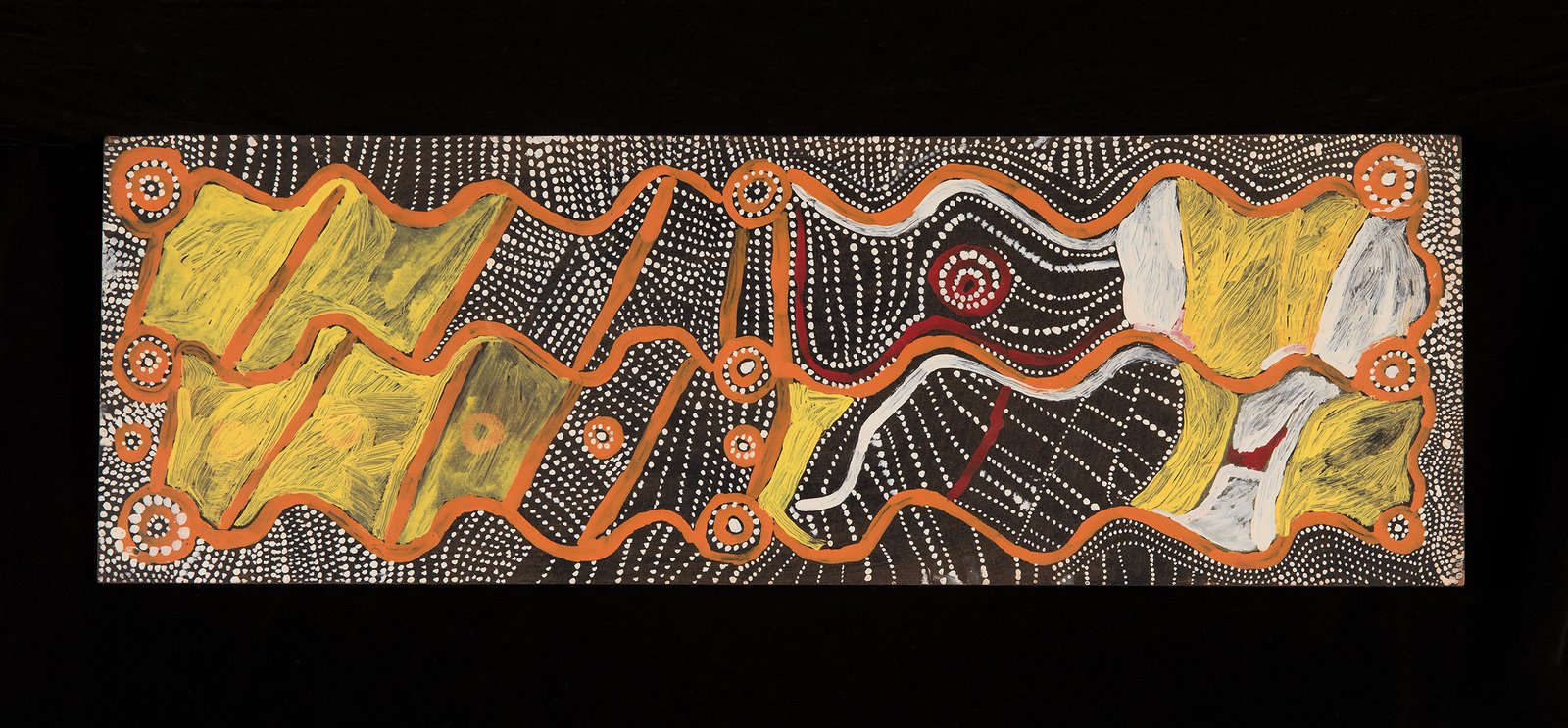
Rain Dreaming, attributed to Walter Tjampitjinpa, acrylic on masonite board, 31.5 x 91.5 cm. Papunya, Northern Territory, c.1971–72. Purchased from Papunya Tula Artists, 1983. AM Aboriginal & Torres Strait Islander Cultural Collection, E079153.
Image: Stuart Humphreys © Australian MuseumAM Treasure Circle
Treasure supported by The Purcell Family Endowment Fund in honour of Mrs Lorna McClelland.