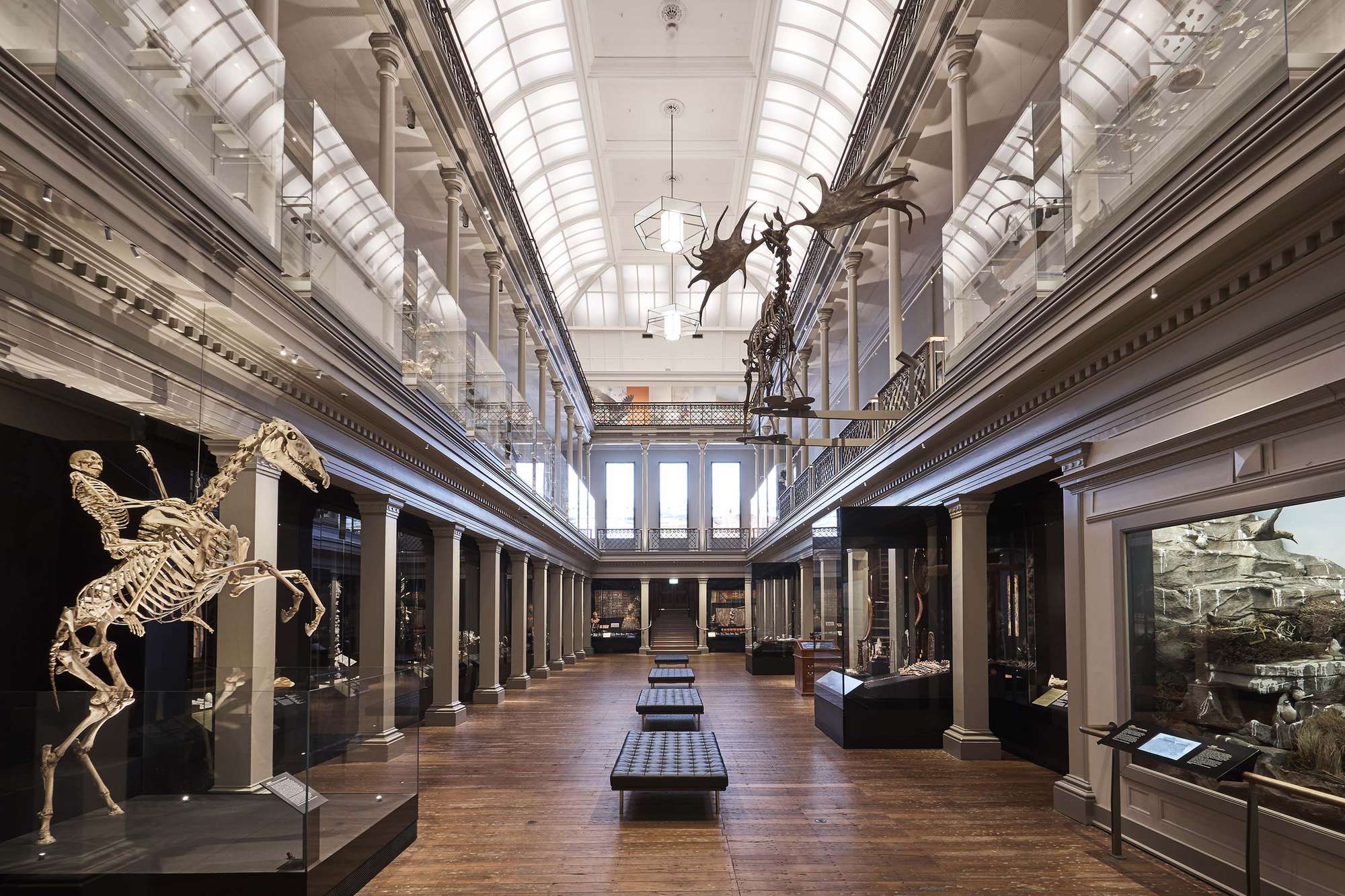
Mawson’s Sledge case
Sir Douglas Mawson's Australasian Antarctic Expedition of 1911–14 was one of the most extraordinary journeys in exploration history. From a sun compass strapped to a sledge, to Antarctica's first meteorite, discover the objects that tell the fascinating story.
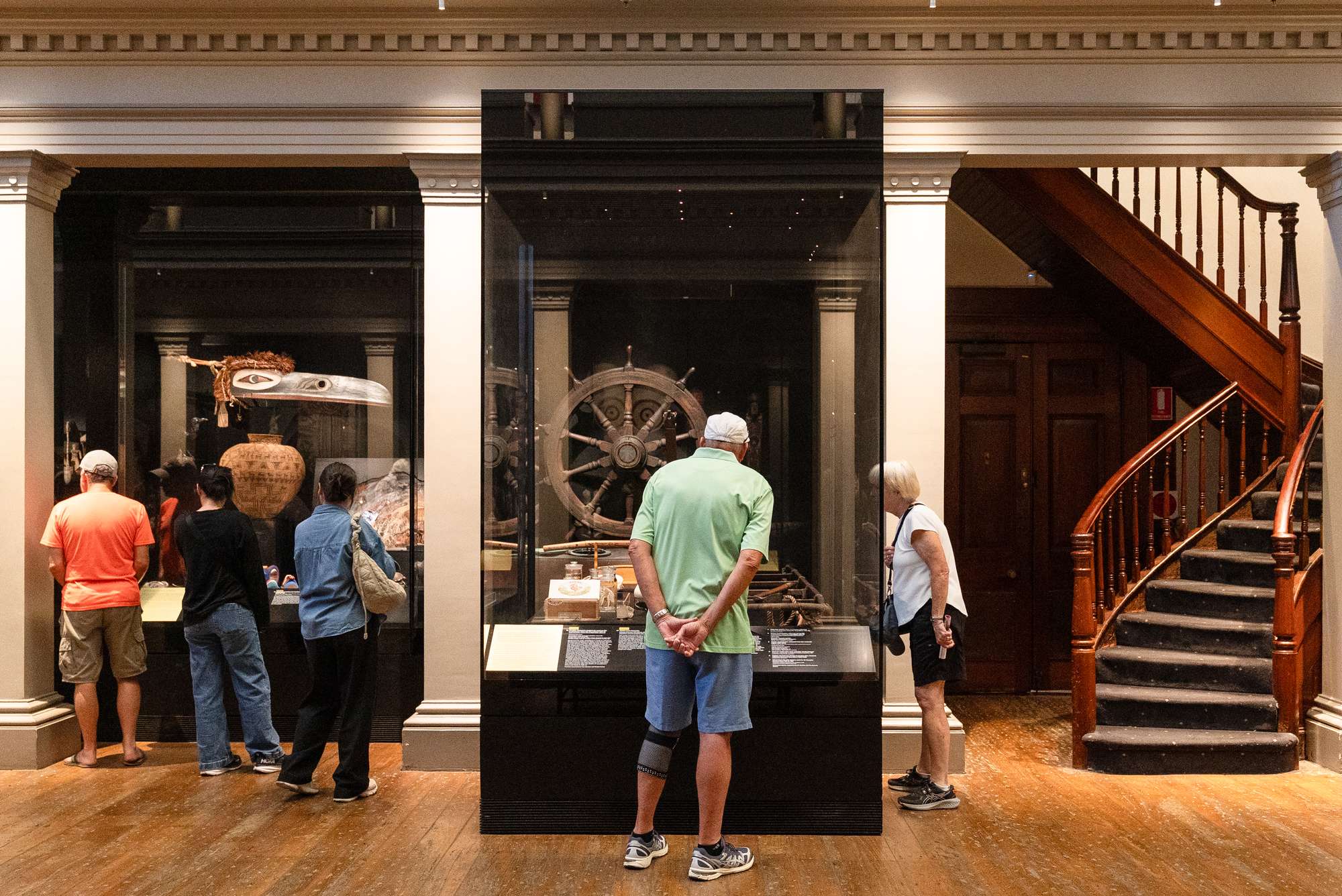
Story of the case
Listen to the audio guide of the Mawson’s Sledge case.
Audio Transcript
The heroic age of polar exploration was marked by feats of personal endurance. Survival in this harsh and unpredictable environment required as much ingenuity and good fortune as it did preparation and physical prowess.
This wooden sledge is one of over 30 that Douglas Mawson and his team hauled across Antarctica’s icy surface, laden with food, equipment and scientific specimens. Lasting from 1911 to 1914, the Australasian Antarctic Expedition resulted in Australia’s claim to a large part of Antarctica. But Mawson’s focus was also scientific. His team of thirty scientists explored over 3000 kilometres of coastline and collected thousands of specimens.
Explorers often need to adapt to extreme circumstances. Magnetic compasses have limited value at the poles, so Mawson’s team made and attached sun compasses to their sledges to help them navigate across the ice. Sledgemeters – wheels connected to brass dials and gears – counted the distance travelled and were crucial for mapping and tracking progress.
To the left, a non-descript hunk of rock is in fact the first meteorite found in Antarctica. It was found in 1912 by Francis Howard Bickerton, leader of a team mapping areas west of the main base. The team reported it as ‘a highlight in an otherwise difficult outward journey’. The meteorite was later analysed and described. Because it was sliced, we can see its interior, speckled with small flecks of nickel-iron metal.
At the rear of the showcase, is a katana, or samurai sword. It was presented by Lieutenant Nobu Shirase, leader of the Japanese Antarctic expedition from 1910 to 1912, to Welsh-Australian geologist and explorer Sir Tannatt Edgeworth David. David had helped the Japanese acquire funding and supplies for their expedition, despite public opposition, while they were in Sydney making preparations.
The blade was made by Mutsu no Kami Kaneyasu, one of the highest-ranking swordsmiths of the 17th century. Shirase’s gift is incredibly valuable and a mark of the very high esteem in which he held Edgeworth David.
Douglas Mawson’s equipment
These pieces of equipment are from the Australasian Antarctic Expedition, led by geologist Sir Douglas Mawson in 1911–14. This historic venture resulted in Australia’s claim to a large part of the Antarctic continent. Mawson had more than 30 sledges made for the trip. They were hauled by dogs or men and carried food supplies, camping and scientific equipment.
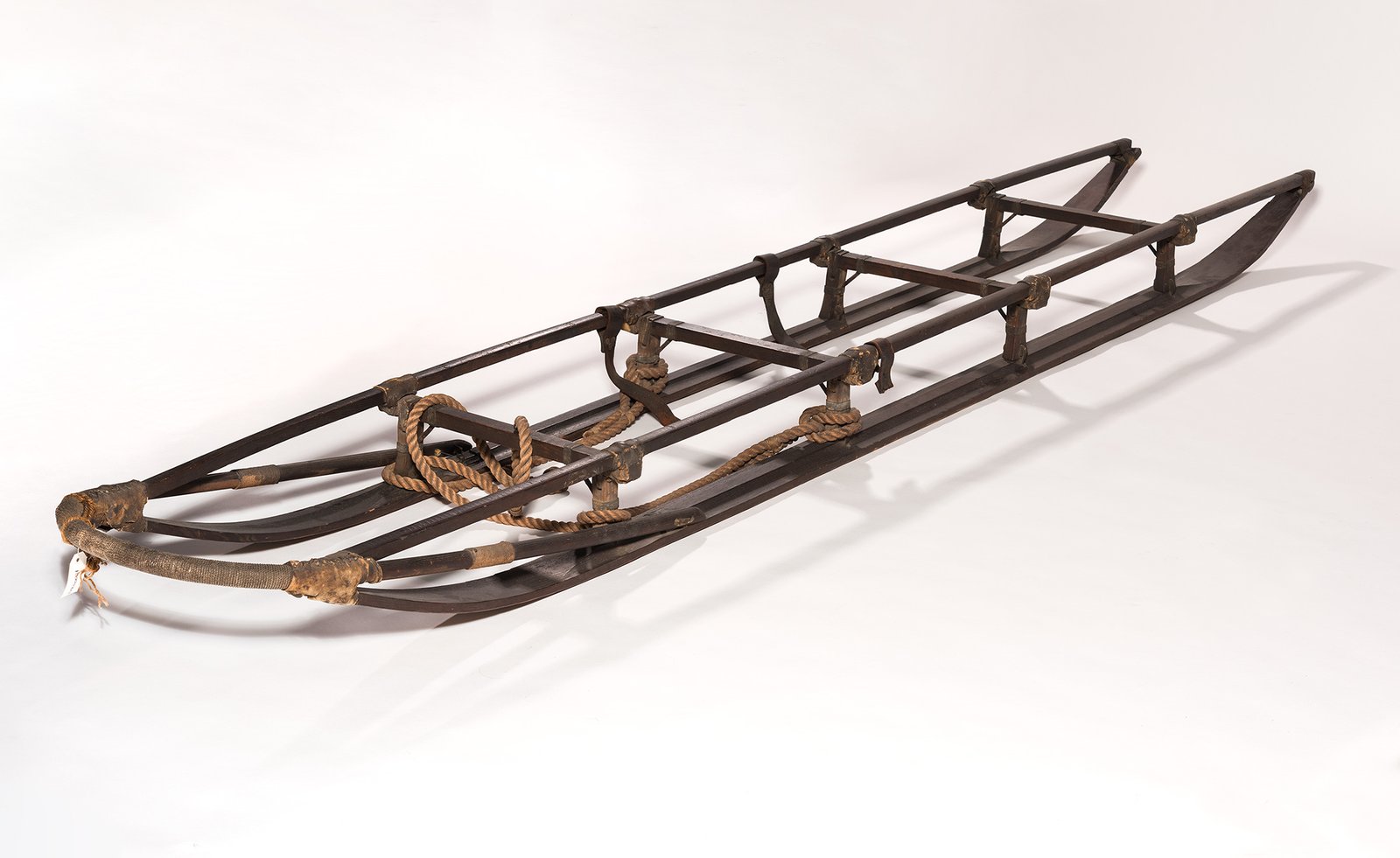
Sledge used by Sir Douglas Mawson during the Australasian Antarctic Expedition 1911-1914. World Cultures Collection. AM, Materials Conservation Department. UR00001.
Image: Stuart Humphreys © Australian Museum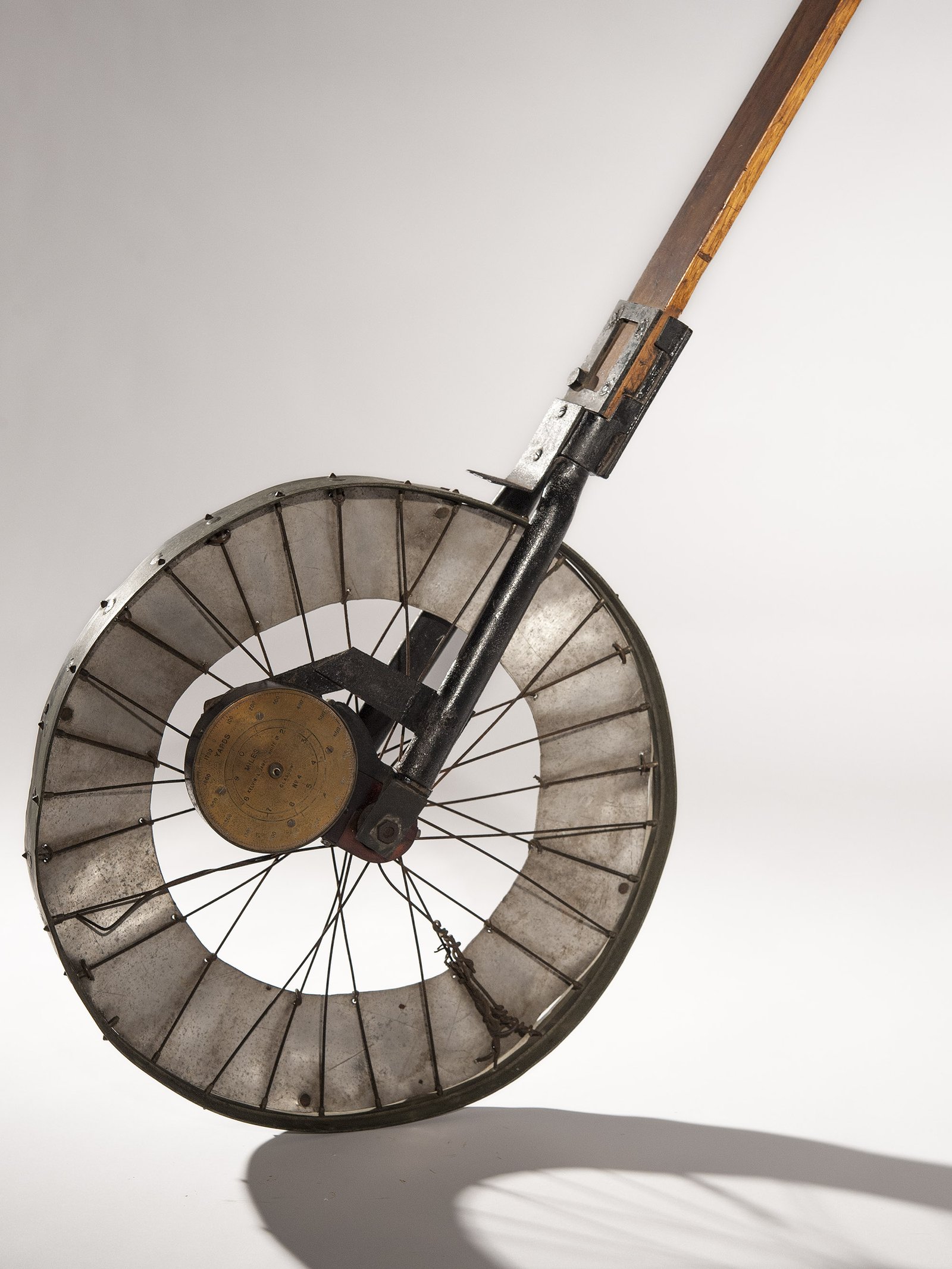
Mawson's Sledgemeter, metal, brass and wood, 152 x 44 cm (wheel diameter). Made c.1910. Australasian Antarctic Expedition, 1911–14. AM Collection, uR.00004.
Image: Stuart Humphreys © Australian MuseumThe sledgemeter is a wheel connected to brass dials and gears that counted the miles travelled. This information was important for a trip’s logistics and for planning the return journey. The homemade sun compass was effectively a portable sundial that was fitted to every sledge for navigational purposes. This was necessary because the magnetic compass has limited application in polar regions due to the position and closeness of the magnetic pole. Mawson used his ice pick (his name is inscribed on its head) to haul his way out of the crevasses that would often appear beneath the thin ice.
AM Treasure Circle
Treasure supported by Ben Barham and Gretel Packer.
Adelie Land meteorite
This small meteorite (originally weighing 1 kilogram) was the first discovered in Antarctica and was found by Francis Bickerton in 1912 during Sir Douglas Mawson’s Australasian Antarctic Expedition of 1911–14. Bickerton was the leader of a team mapping areas west of the party’s main base while Mawson was leading a separate eastern team. Although its dark colour would have contrasted with the white landscape, it is remarkable that such a small object was found in the vast wilderness. The team reported it as ‘a highlight in an otherwise difficult outward journey’. The meteorite was later analysed and described, with the results published in the expedition scientific reports in 1923. It belongs to a group of stony meteorites called chondrites, which represent the outer granular layer of an asteroid. Because it was sliced for study, we can see its mottled interior, speckled with small bright flecks of nickel-iron metal.
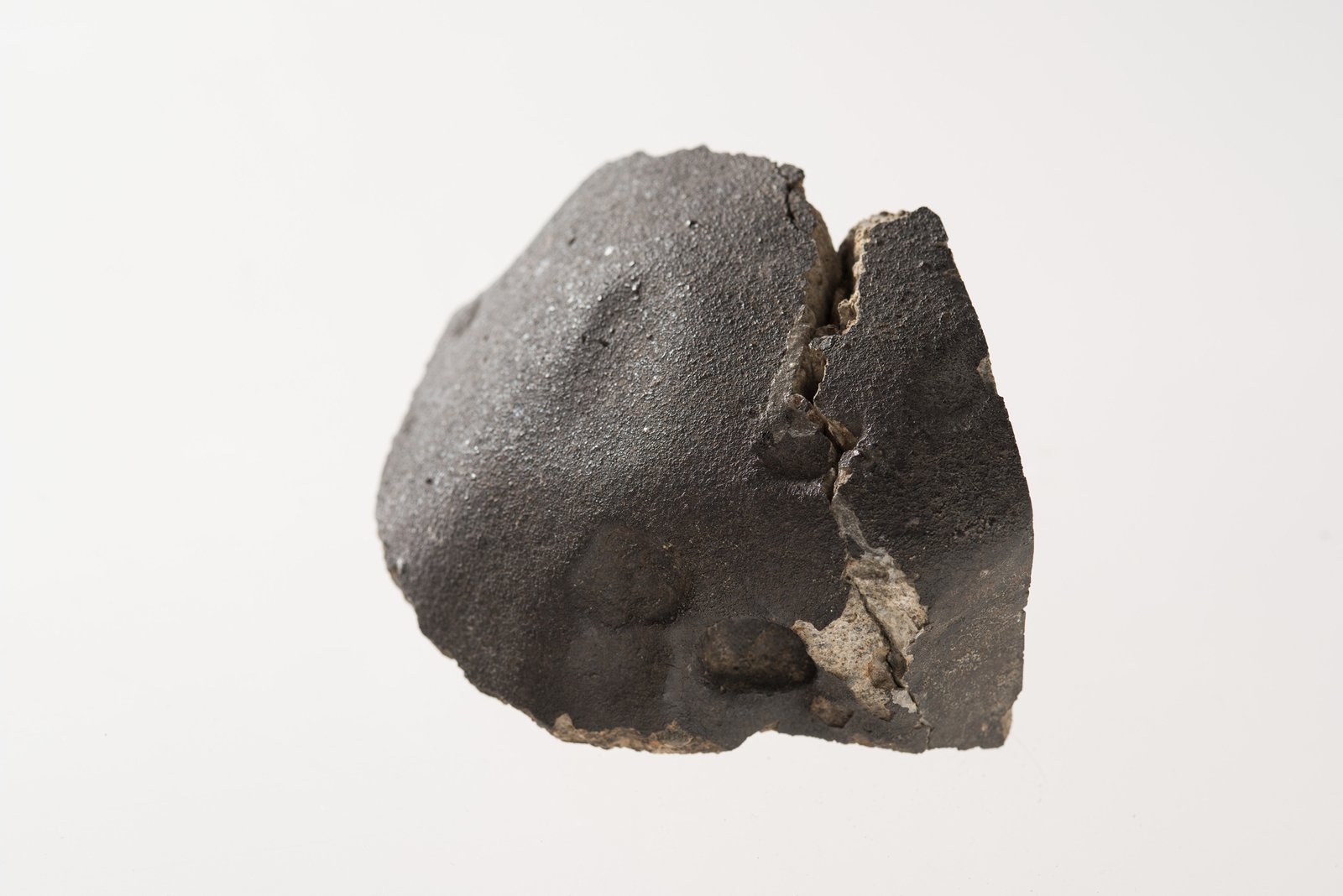
Adelie Land meteorite. 9 (high) x 11 (wide) x 10 (deep) cm. Collected on the Australasian Antarctic Expedition 1911–14, 32 km west of Cape Denison, Adelie Land, Antarctica, 1912. Donated 1924. Registered as D25013 1 February 1924 and DR7013 11 September 1950. AM Petrology Collection.
Image: Stuart Humphreys © Australian MuseumAM Treasure Circle
Interested in supporting this treasure? Contact the Australian Museum Foundation to discover how.
King Penguin
Aptenodytes patagonicus
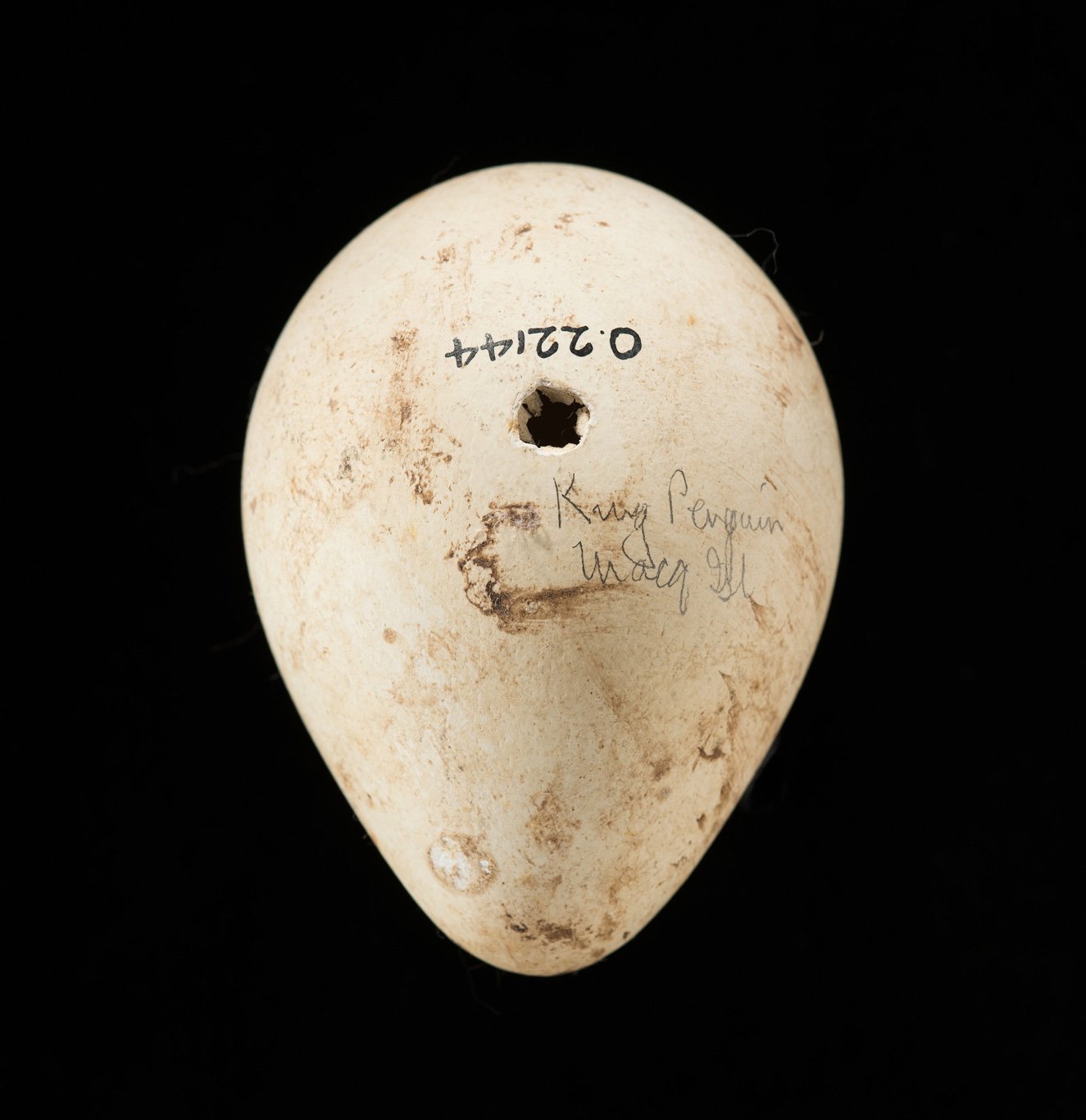
King Penguin egg (Aptenodytes patagonicus). 9.3 (high) x 7 (diameter) cm. Macquarie Island. Collected on the Australasian. Antarctic Expedition 1911–14. Registered 1914. AM Ornithology Collection. O22144.
Image: Stuart Humphreys © Australian MuseumThis King Penguin and egg were collected by Sir Douglas Mawson, as part of his Australasian Antarctic Expedition of 1911–14. These biological specimens are scientifically invaluable as they are some of the earliest from the region and provide comparisons to current populations. The penguin was found on Macquarie Island, a subantarctic island located between Australia and Antarctica, and is one of more than 700 specimens of birds and eggs that Mawson and his team collected during their research trip. The King Penguin is the second-largest of all penguin species, standing at 70–100 centimetres tall, and weighing up to 16 kilograms. It has an unusually long breeding cycle and lays one egg each year, which is incubated by both parents in shifts that last for several days.
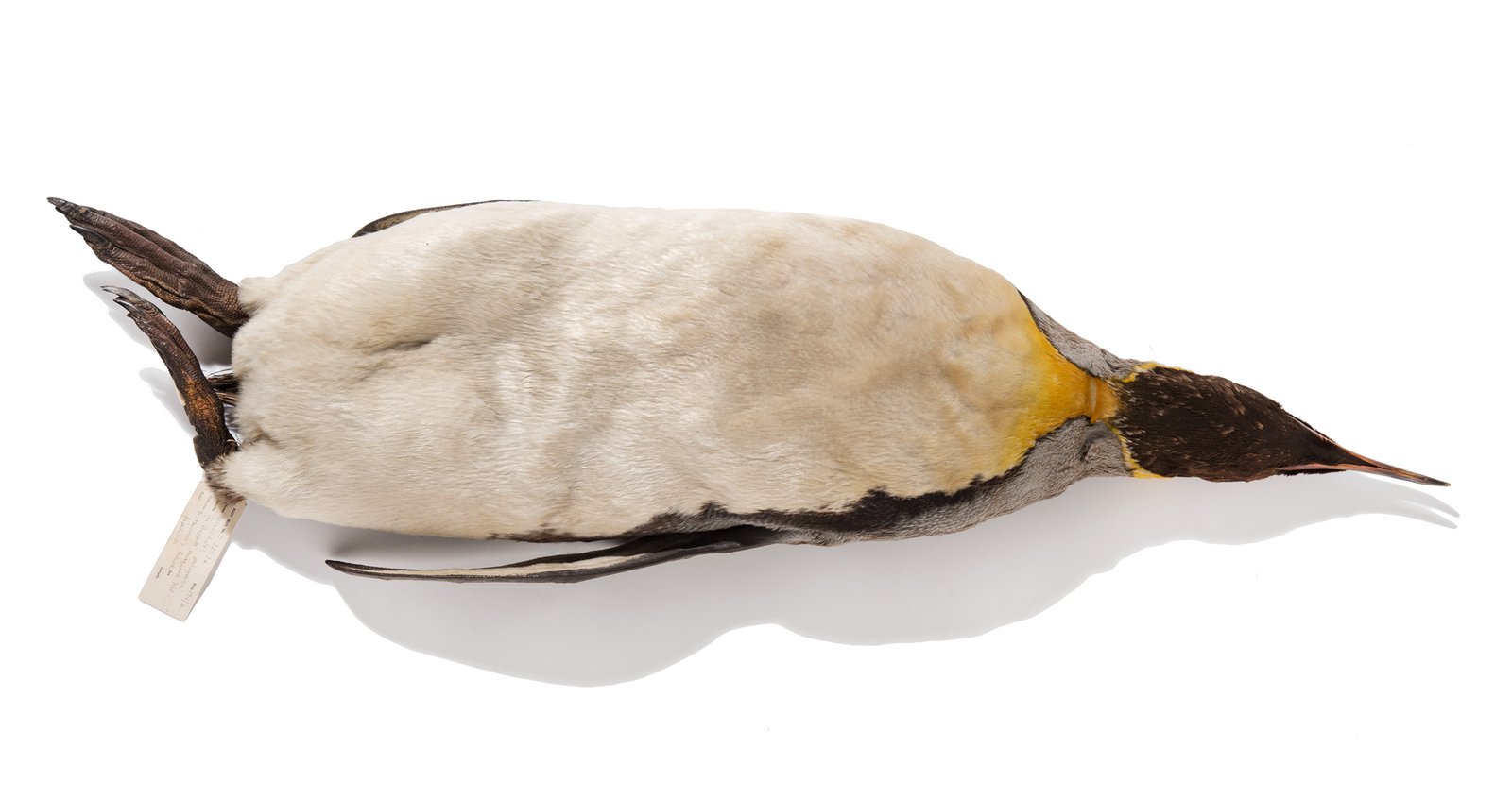
King Penguin (Aptenodytes patagonicus). 96 (long) x 25 (wide) x 13 (deep) cm. Macquarie Island. Collected on the Australasian Antarctic Expedition, 1911–14. Registered 1914. AM Ornithology Collection. O22034.
Image: Stuart Humphreys © Australian MuseumAM Treasure Circle
Treasure supported by Lindblad Expeditions.
Shirase' Sword or Katana
This ‘short’ samurai sword, or katana, was made in 1644 –48 by Mutsu no Kami Kaneyasu, one of the highest-ranking and most-respected swordsmiths of the seventeenth century: he engraved his signature as a mirror image on the base of the handle. This era is considered the pinnacle of katana sword-making in Japan. The sword was presented by Lieutenant Nobu Shirase, the leader of the Japanese Antarctic Expedition, to geologist Sir Tannatt William Edgeworth David in gratitude for his assistance to Shirase’s mission. Shirase’s gift is a mark of the high esteem in which Shirase held David. However, it is not widely known that Lieutenant Shirase was given this sword only one year earlier by one of the expedition’s sponsors, whose dedication is inscribed on the original scabbard: ‘By Tasaburo Fukuda in admiration of the expedition’s courage.’ Unlike the katana blade, which is more than 300 years old, Fukuda’s scabbard and handle were made in the early twentieth century.

Shirase' Sword or Katana. Blade: 89 (long) x 2.5 (wide) cm. Scabbard: 96 (long) x 3.8 (wide) cm. Blade made by Mutsu no Kami Kaneyasu, 1644–48. Scabbard early twentieth century, Japan. Donated by Mary David, 1979. AM Asian Collection. E076356.
Image: Carl Bento © Australian MuseumAM Treasure Circle
Treasure supported by Warwick and Ann Johnson.