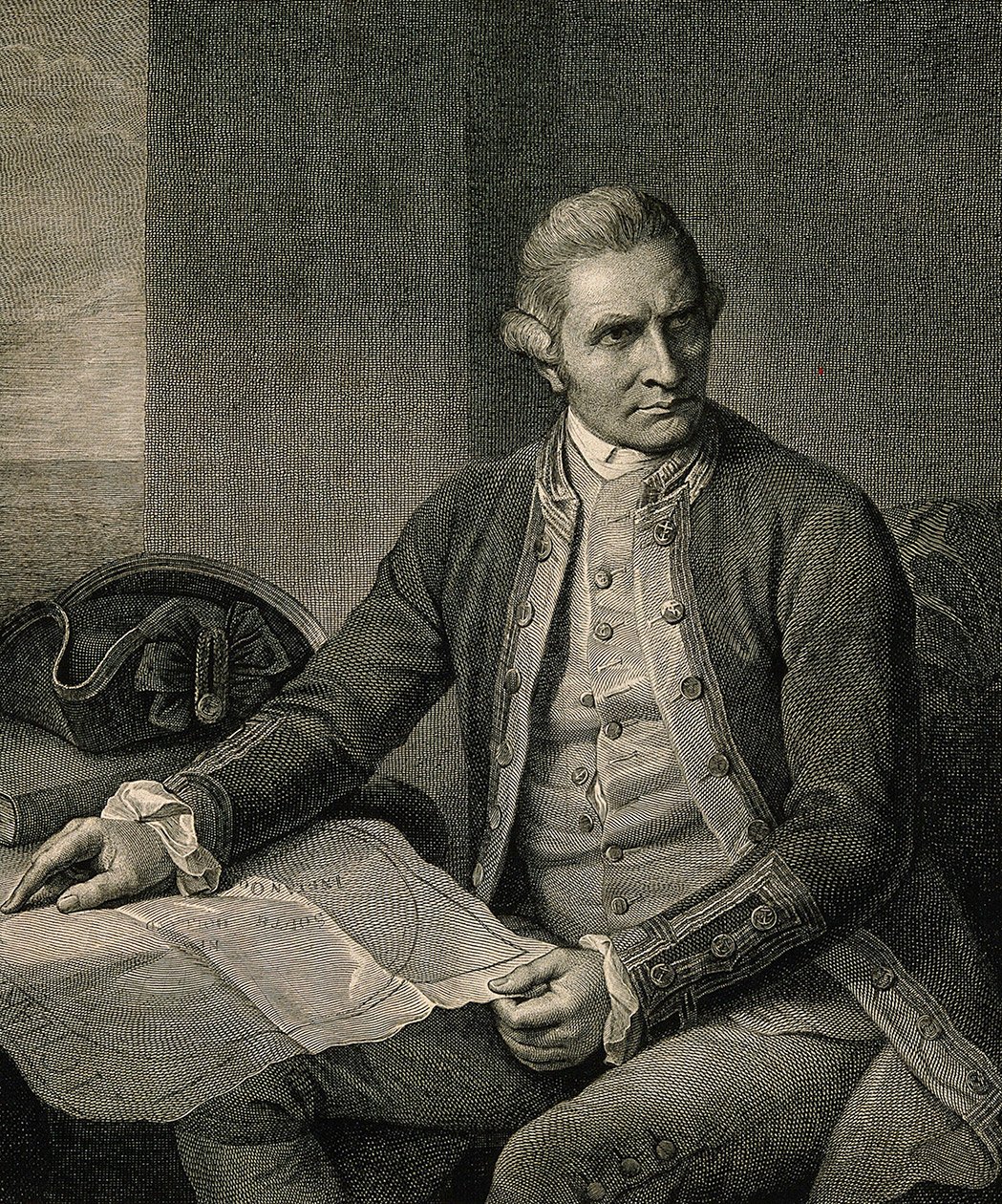
Captain James Cook FRS, RN
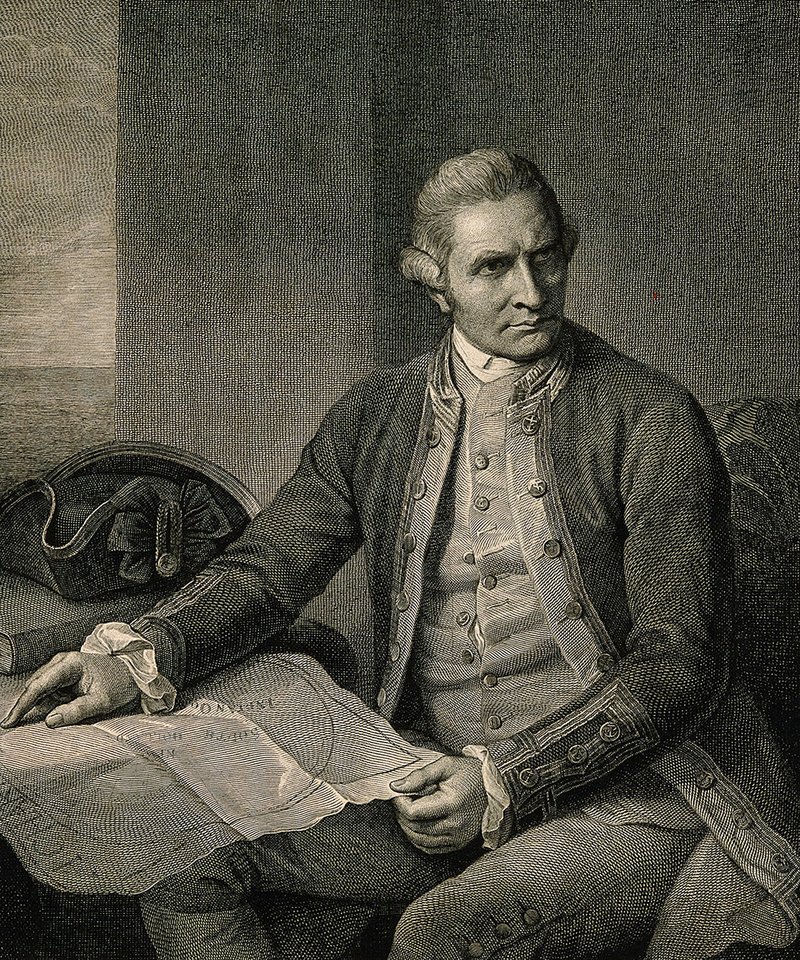 Click to enlarge image
© Public domain
Readers note: This is an excerpt from the 200 Treasures exhibition catalogue, developed in 2017. This content was written as a brief biography on why this person was included in the exhibition.
1728 - 1779
James Cook transformed the map of the world. He captained three voyages in the Pacific Ocean from 1768 to 1779 that vastly expanded knowledge of navigation, cartography, human geography, zoology and botany.
Cook was born to Yorkshire labourers in 1728, and left school at the age of 16. He became an apprentice sailor at 18, joined the navy nine years later and rose through British naval ranks through merit, not patronage. His cartographic skills first came to the attention of naval powers when charting the coastline of what is today eastern Canada. In 1768, Cook was chosen to lead an expedition on HMS Endeavour to the Pacific. This expedition had two purposes: first to record an astronomical event, the transit of Venus, from Tahiti; the other - a secret undertaking - to sail west and explore the lands encountered by Dutch explorer Abel Tasman, New Zealand and the ‘unknown southern land’ to its west. He was instructed to, ‘with the consent of the natives’, take possession of these lands for George III.
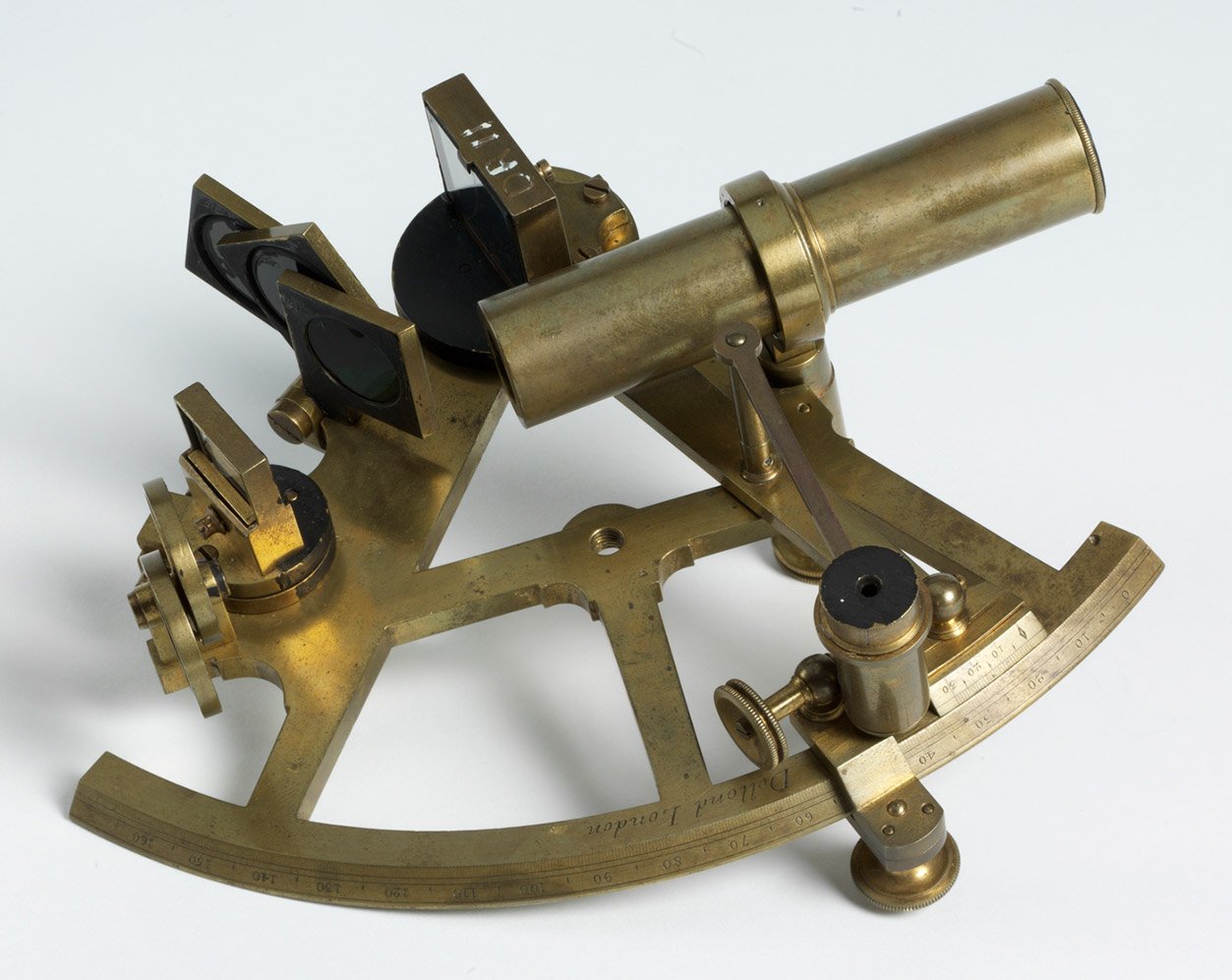
© State Library of NSW

After a legendary sojourn on Tahiti, the Endeavour sailed on to New Zealand, and Cook circumnavigated the islands, mapping them extensively. He clashed with Māori throughout. He then sailed west, reaching the coast of Australia in April 1770. Stopping briefly in Botany Bay, he then sailed north until the ship struck the Great Barrier Reef at Cooktown, nearly wrecking the Endeavour. The month ashore repairing the vessel allowed for the longest encounter with Aboriginal people, yet this was still conducted at a distance. On Possession Island, Cook claimed the eastern part of the continent for Great Britain. His next voyage explored Antarctica as well as many other islands.
On his third voyage, his mission was to find the fabled North-West Passage connecting the Pacific with the Atlantic Ocean. On this voyage he encountered the islands of Hawaii. There he was killed in February 1779 in circumstances that are still hotly debated. To some, Cook was the greatest explorer of the British Empire, but to the Pacific’s Indigenous peoples, he was the harbinger of traumatic change.