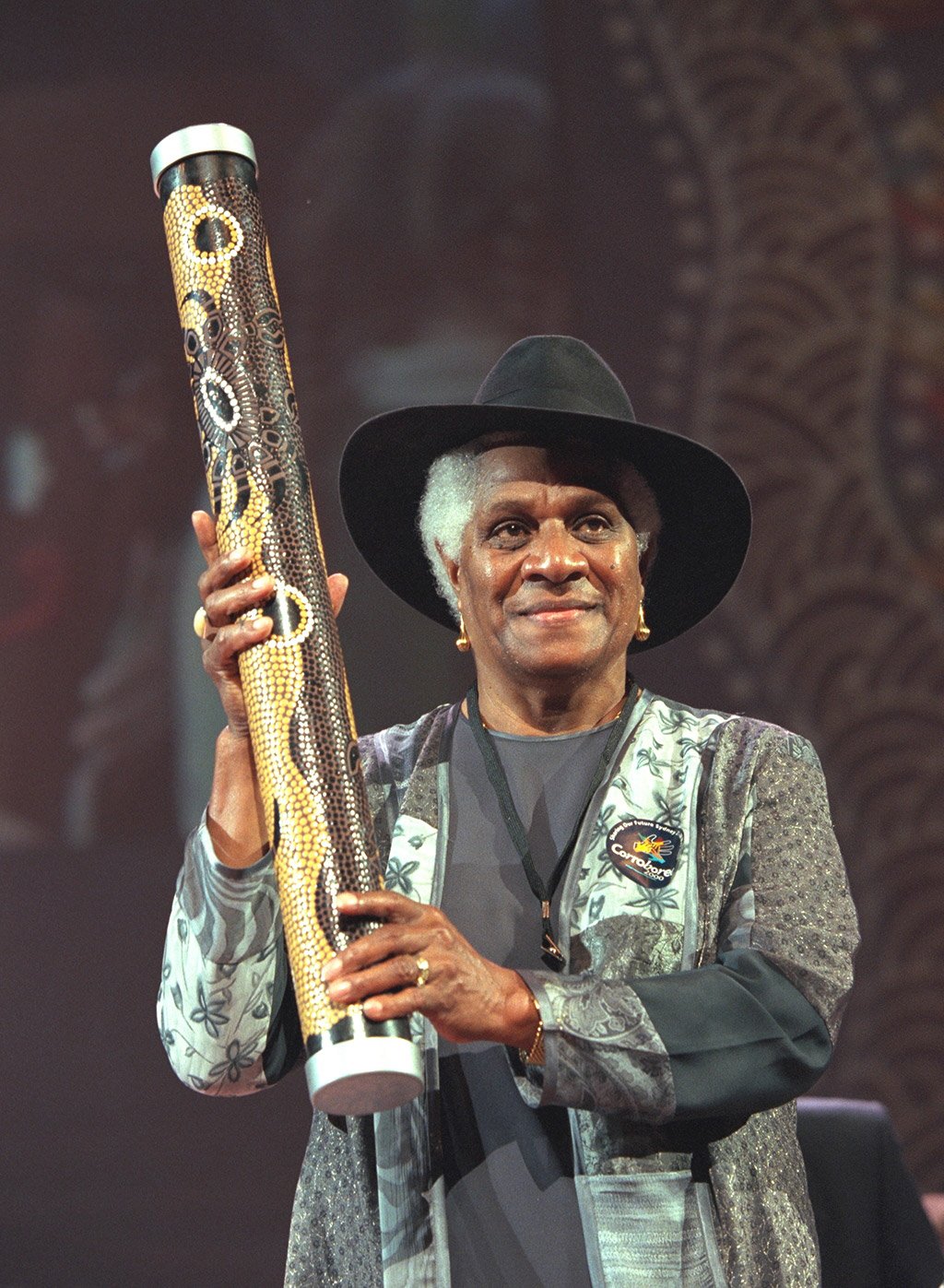
Evelyn Scott AO
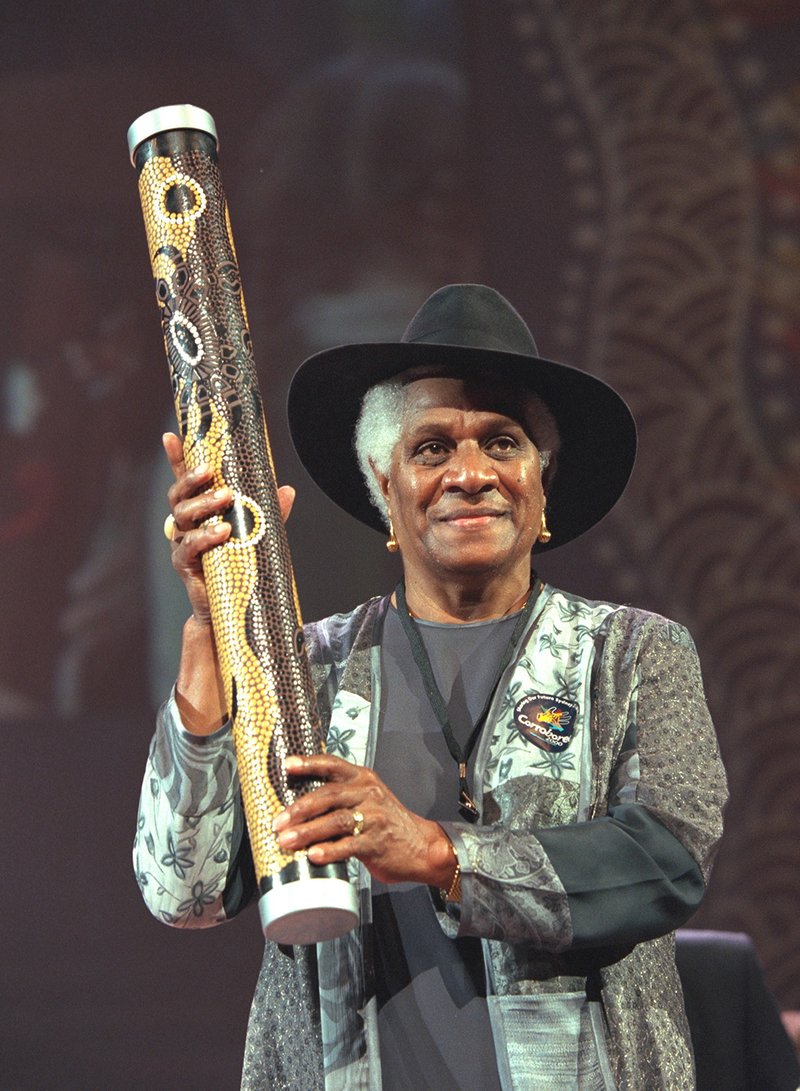 Click to enlarge image
© Corbis
Readers note: This is an excerpt from the 200 Treasures exhibition catalogue, developed in 2017. This content was written as a brief biography on why this person was included in the exhibition.
1936 - 2017
Evelyn Scott is a veteran Indigenous rights activist.
She was born in sugarcane country in Ingham, Far North Queensland, in 1936. Her paternal grandfather had been ‘blackbirded’ (kidnapped) from Vanuatu to work on the Queensland sugar plantations, so Scott is of Aboriginal and South Sea Islander descent.
Scott became politically active in the 1960s. She recalls going to buy her wedding dress but was not allowed to try it on because it was against store policy for Aboriginals to be allowed to do so. But, in 1999, when she held the position of Chair of the Council for Aboriginal Reconciliation, things took a different turn. When a taxi driver subjected her to racial abuse and refused to take her in his cab, Scott took him to the Anti- Discrimination Commission and the driver lost his job. This vastly different outcome, 36 years later, was due to the Aboriginal rights movement in which Scott played a leading role.
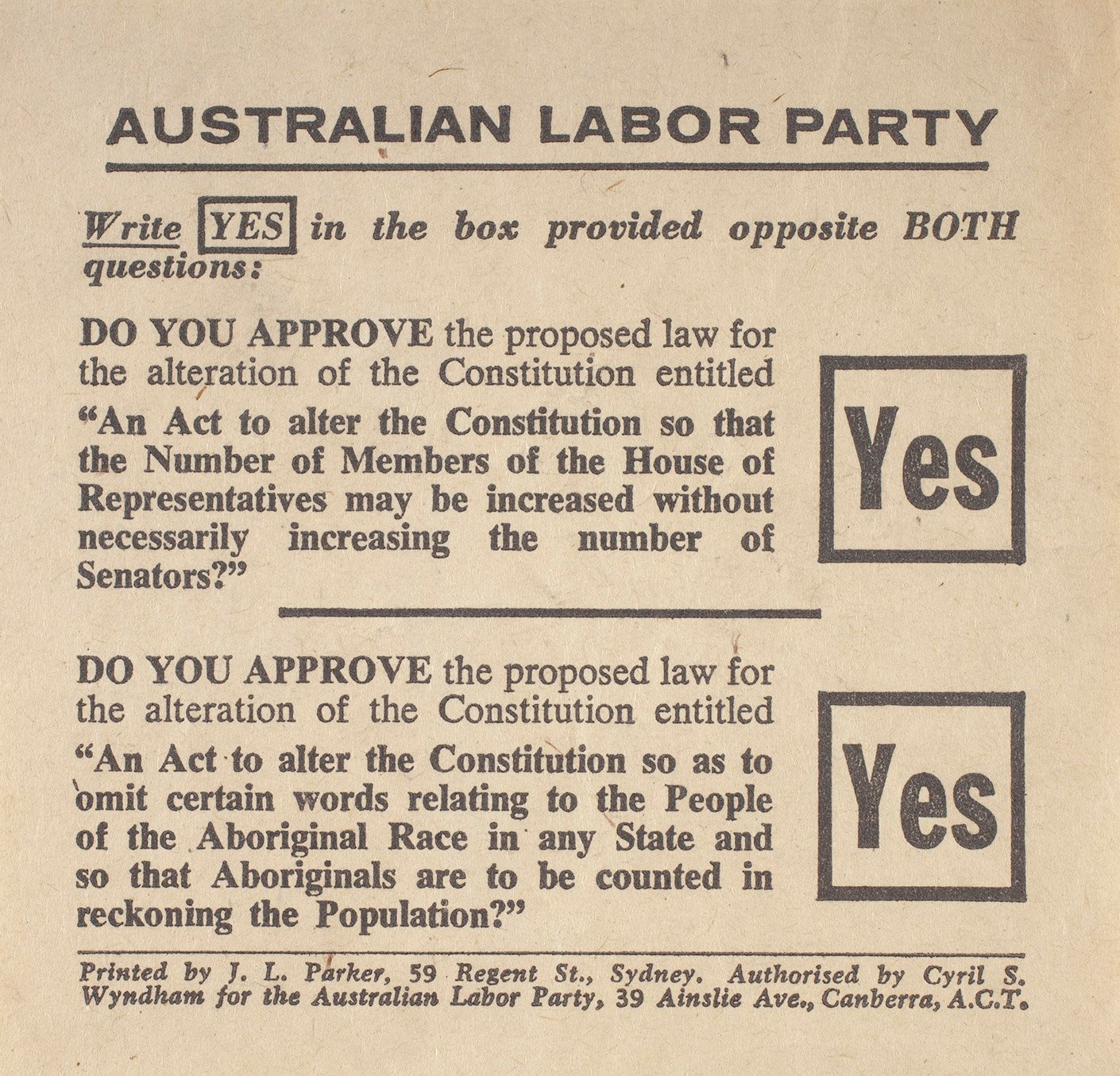
© Public domain
She began her activism through the Townsville Aboriginal and Torres Strait Islanders Advancement League in the 1960s, and worked for the ‘yes’ campaign for the 1967 referendum, which resoundingly approved (by 90.77%) the transfer of Indigenous affairs to the federal government and the inclusion of Indigenous peoples in the census. She then applied pressure in Canberra to implement other much-needed changes. She joined the Federal Council for the Advancement of Aborigines and Torres Strait Islanders (FCAATSI) as vice president in 1971, and was central to the formation and achievements of the National Aboriginal and Islander Council that first met in 1972, its objective being the empowerment of Indigenous women.

Scott’s activist career culminated in her appointment as Chair of the Council for Aboriginal Reconciliation. The council went through challenging times after the 1996 election of Prime Minister John Howard, who took a hostile approach to the reconciliation movement. Scott navigated these turbulent waters, and her efforts can be measured by the Reconciliation Council’s culminating event: the walk across Sydney Harbour Bridge in May 2000. Scott led the immense crowd that gathered for that historic occasion.