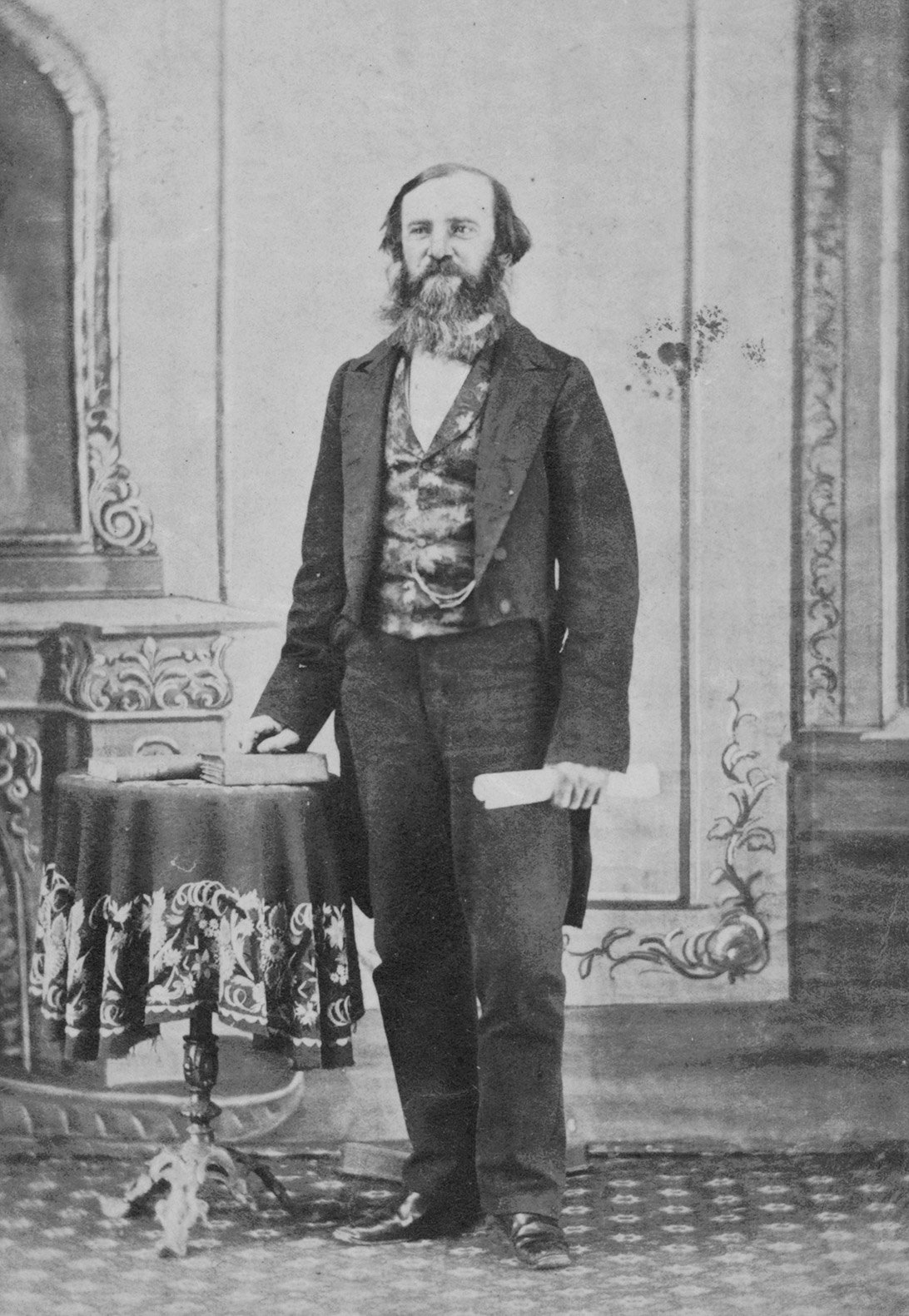
John McDouall Stuart
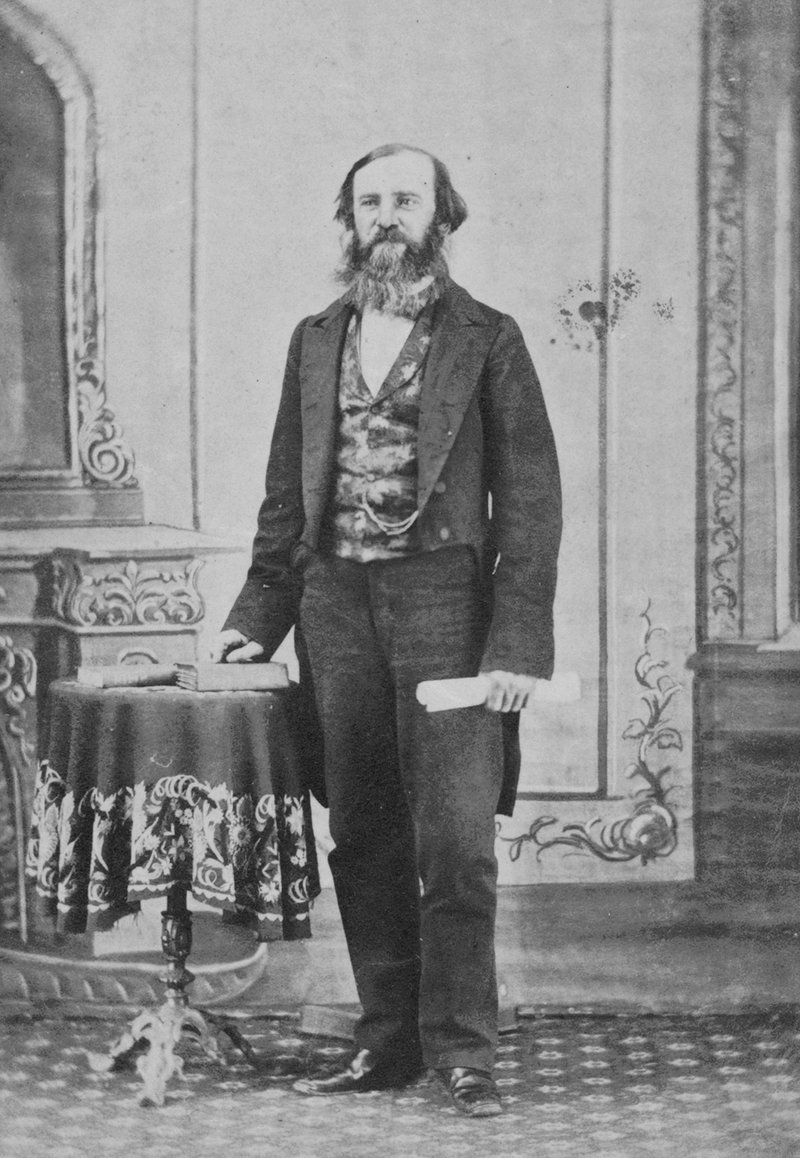 Click to enlarge image
© National Library of Australia
Readers note: This is an excerpt from the 200 Treasures exhibition catalogue, developed in 2017. This content was written as a brief biography on why this person was included in the exhibition.
1815 - 1866
John McDouall Stuart was the first known European explorer to successfully cross the continent from south to north and back. The man who would accomplish this great imperial feat was born in Fife, Scotland, in 1815, and emigrated to South Australia in 1839, where he joined the government surveying department.
In 1844, he accompanied Charles Sturt on his 17-month expedition to the centre of the continent, gathering vital information about the waterless land and its Indigenous inhabitants, and mapping the country in numerous ways. Stuart was South Australia’s hope to win the intercolonial race to the north and back, the prize for which included the right to the vast lands known today as the Northern Territory. The rival expedition from Victoria was led by Robert O’Hara Burke and William John Wills in 1860–61. Stuart pushed north in 1858, exploring all the way to Tennant Creek, but he grossly underestimated the provisions, and his party was fortunate to make it back with lame horses and almost no water. In 1859, he twice set out into the interior, discovering springs and large plains covered in grass and saltbush, and continuing to find a suitable route north.
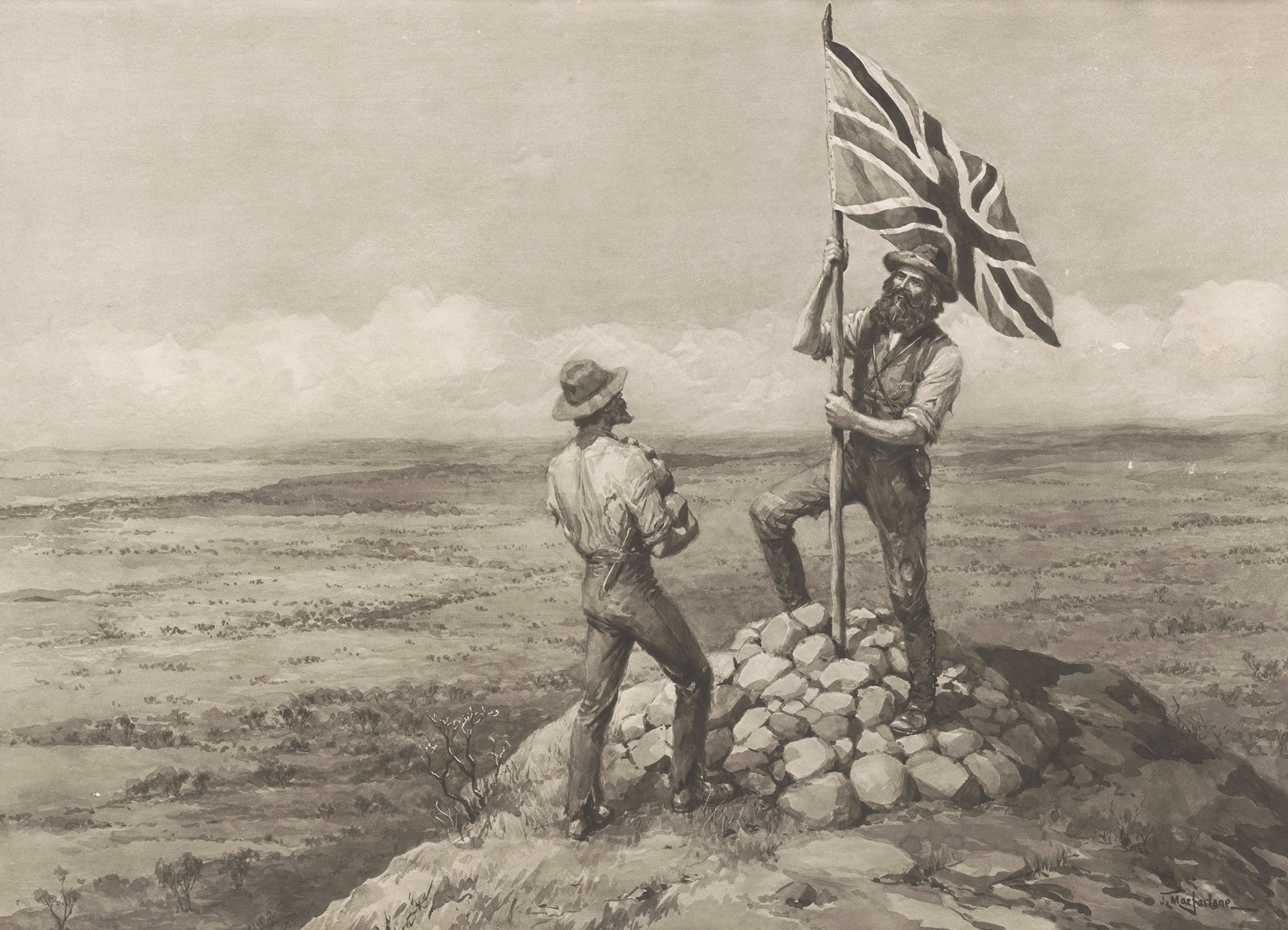
© National Library of Australia

In 1860, he made his most serious attempt to cross the continent, but by the time he reached the Finke River, the party was suffering from scurvy and Stuart had lost the sight of his right eye. Another attempt in January 1861 was thwarted by thick scrub and a shortage of rations, but in October his party set out yet again. They eventually reached the north coast on 24 July 1862. By then, the men were sick with scurvy, their horses so weak they were abandoned and Stuart had to be carried on a stretcher. Arriving back in Adelaide in December, he was acclaimed a hero. Burke and Wills had beaten him to the north but their entire 19-man party perished on the return, except one.