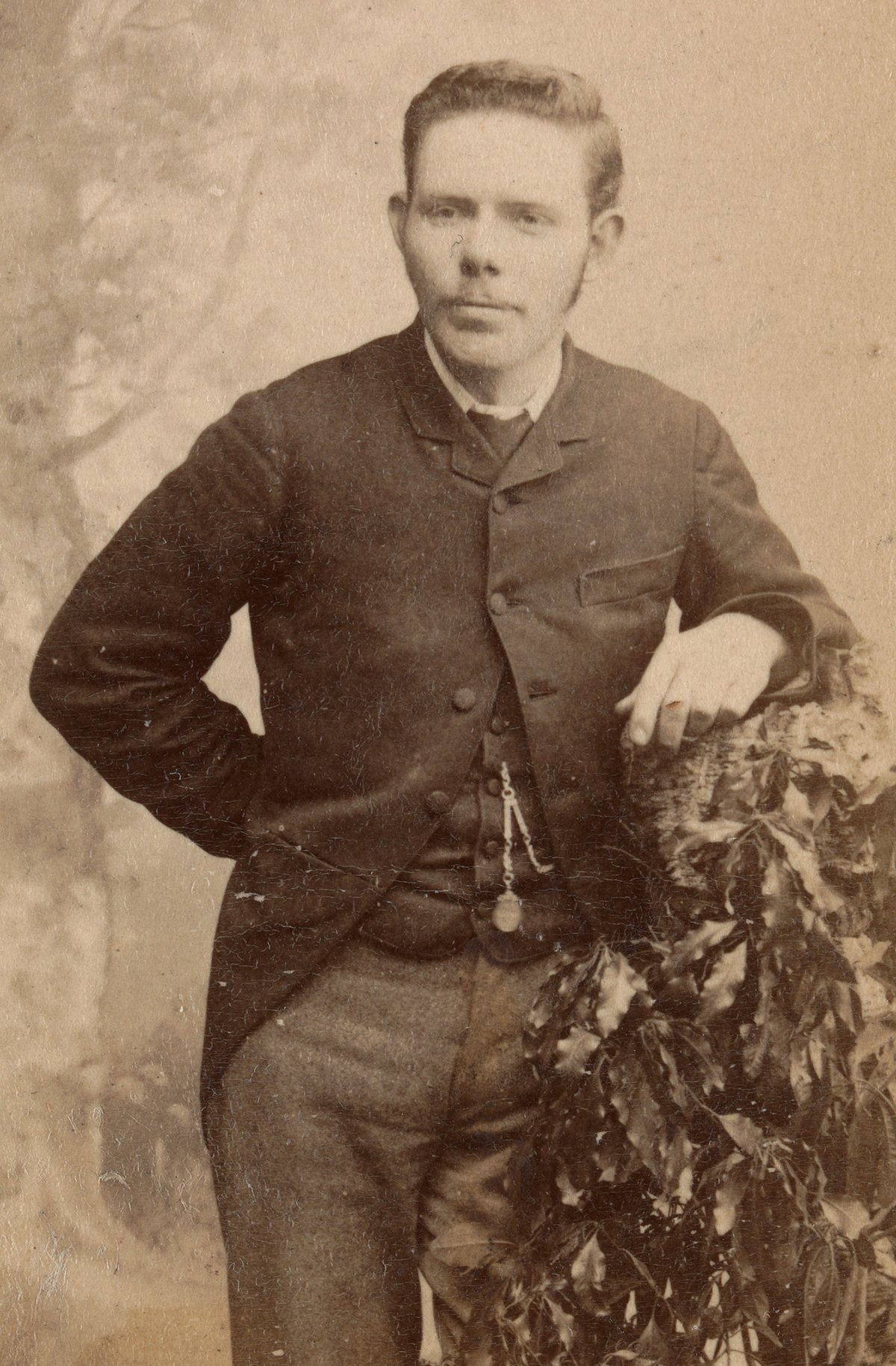
Hugh Victor Mckay CBE
 Click to enlarge image
© From the State Library of Victoria
Readers note: This is an excerpt from the 200 Treasures exhibition catalogue, developed in 2017. This content was written as a brief biography on why this person was included in the exhibition.
1865 - 1926
Hugh Victor McKay revolutionised wheat production with his brainchild, the Sunshine harvester.
McKay was born in Raywood, Victoria. In the 1870s, his large family (he had 11 siblings) moved to a selection farm at Drummartin where the family grew wheat. The children received little formal education, and, at age 13, McKay left school to work on the farm.
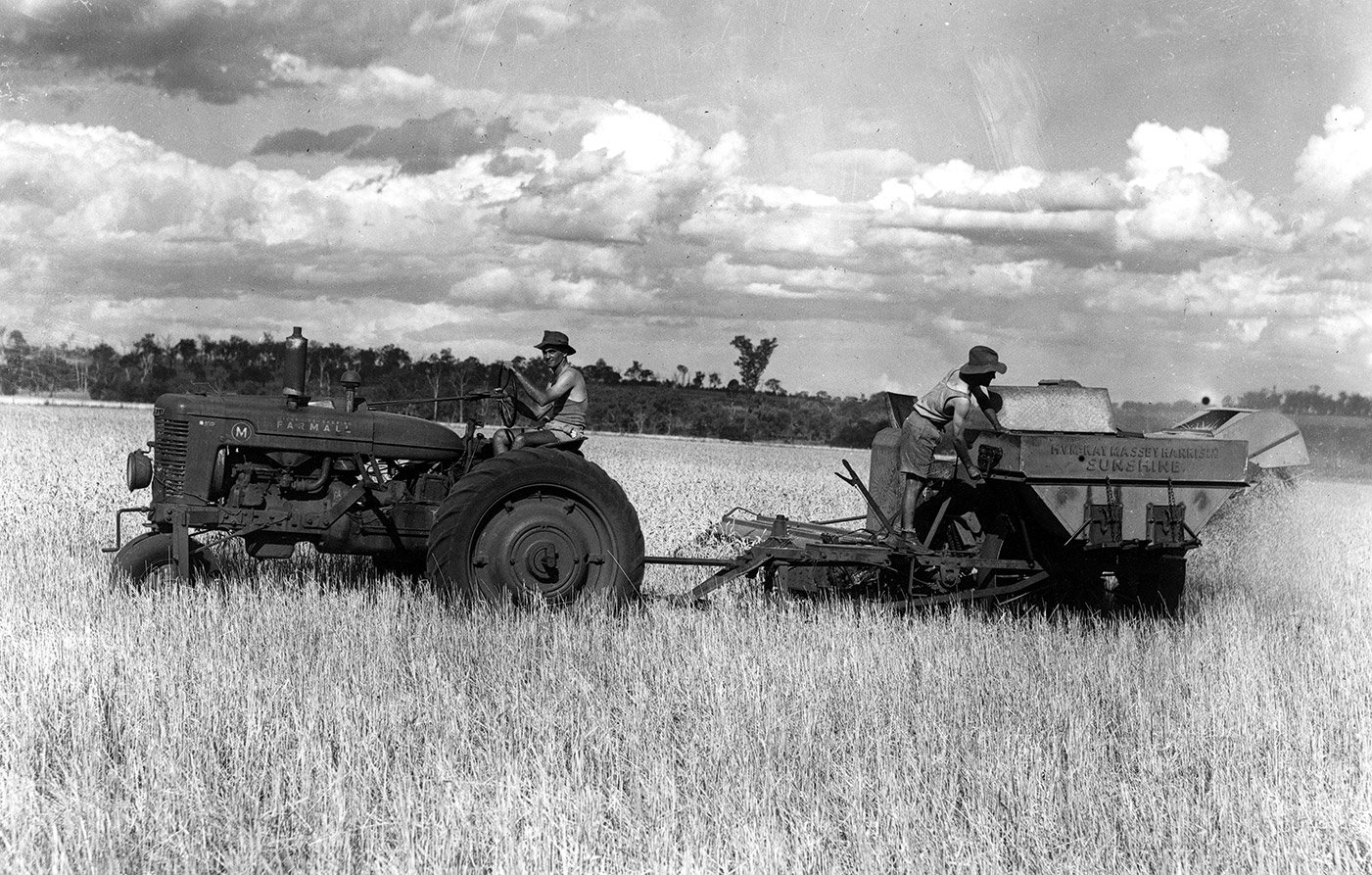
© From the State Library Queensland
In 1883, inspired by what he had read about the giant combine harvesters that were revolutionising Californian wheat farming, he and his brother and father assembled a prototype stripper harvester from existing implements and machines. They patented it in 1885 and displayed it at the National Agricultural Show in August of that year. McKay then went into business and formed the McKay Harvesting Machinery Co. in 1890.
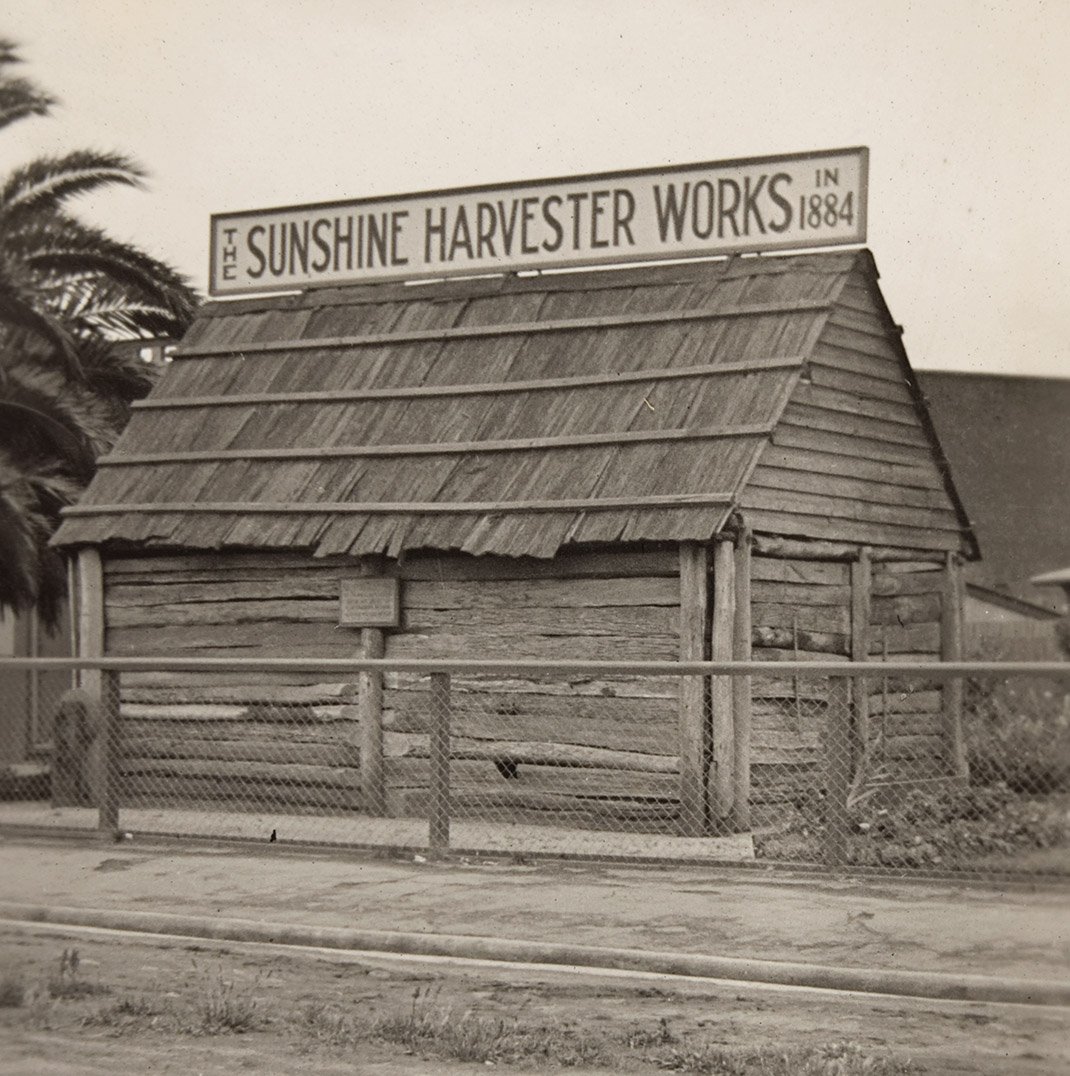
© From the State Library of Victoria
Despite hard times and early challenges, in 1893 he built an improved version of his prototype. He named it the Sunshine, and tested it in two harvests. It proved such a success that 12 more were built in 1895 and a further 500 in 1901. By 1905, his business in Ballarat employed 500 people and had become Australia’s largest exporter.
In 1906, he moved his works to Braybrook Junction, Victoria, and renamed the town Sunshine. There, McKay set up a community of workers, their families and his own extended family. He found himself plagued by industrial disputes with unions and overseas competition (especially from the United States), which threatened to undermine his work. Yet, he prevailed, lobbying for protections and taking the federal government to the High Court, and winning, over the Excise Act in 1908.

In 1911, his workers went on strike, but McKay stood firm and won. In his town of Sunshine, McKay hoped to make unions redundant and instead create an ideal workingman’s community. This utopia was not realised, but McKay’s ‘poor farm boy to Australia’s great industrialist’ story became the stuff of legend.