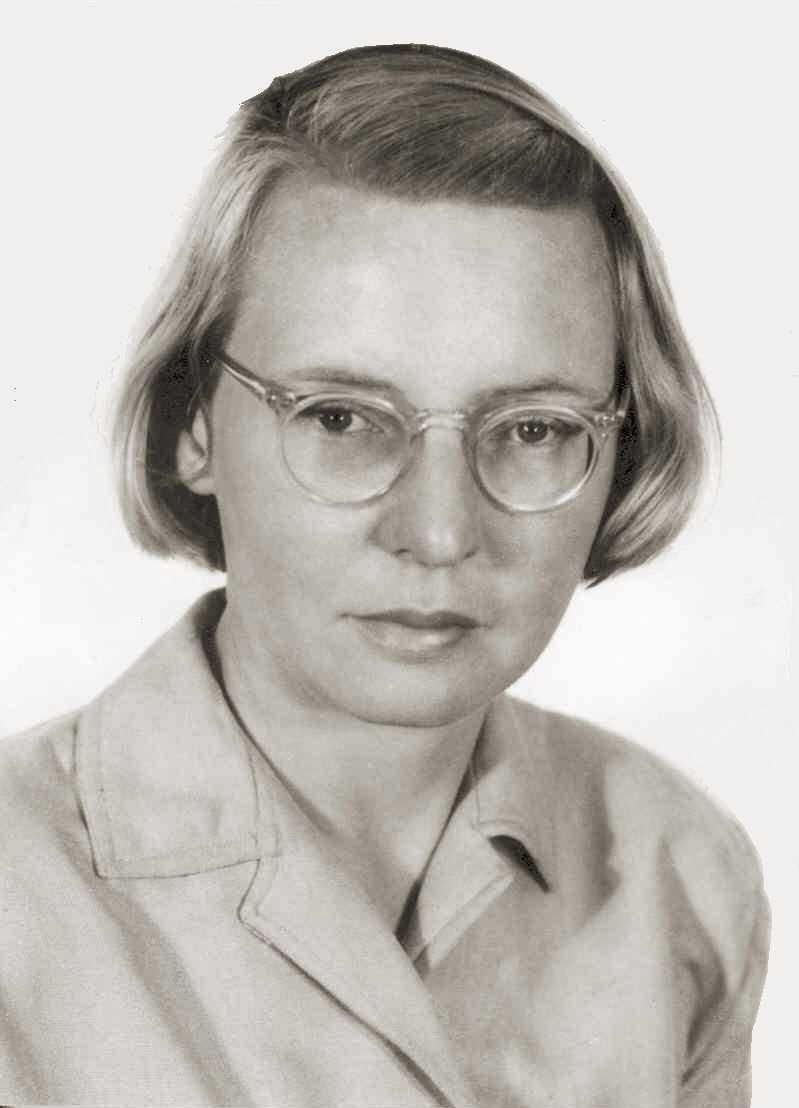
Ruby Payne-Scott
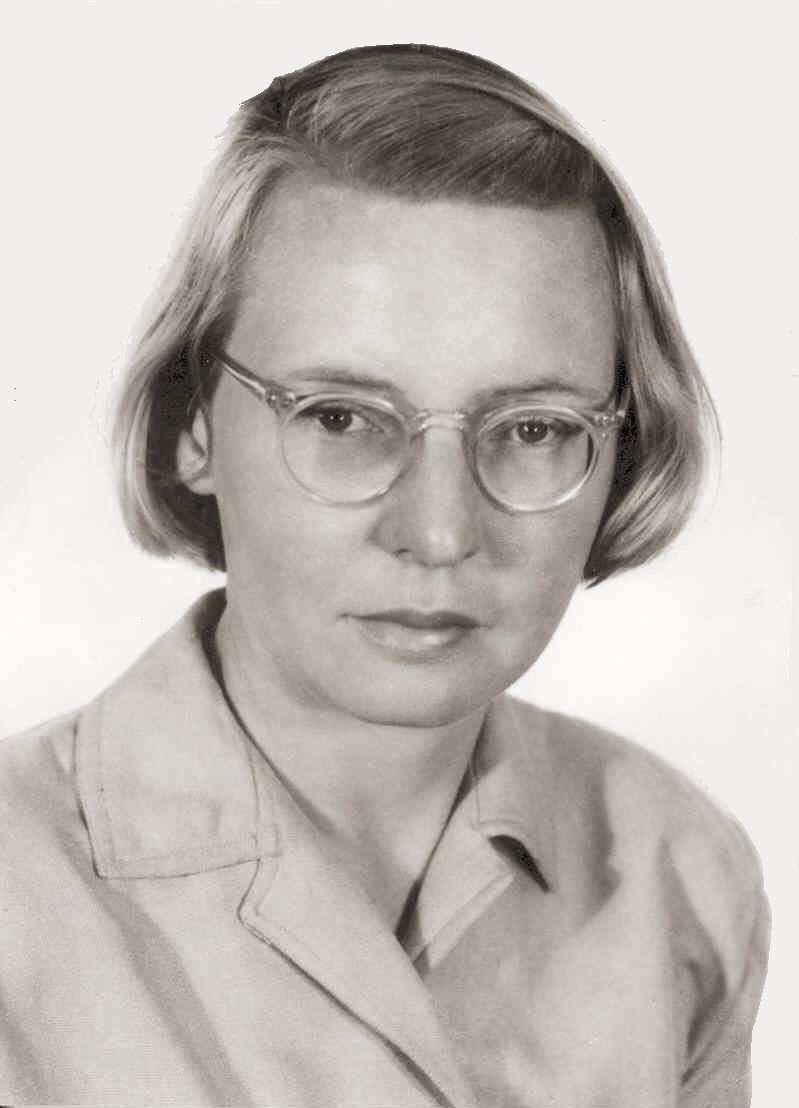 Click to enlarge image
© Peter Hall
Readers note: This is an excerpt from the 200 Treasures exhibition catalogue, developed in 2017. This content was written as a brief biography on why this person was included in the exhibition.
1912 - 1981
Ruby Payne-Scott was a pioneer in radiophysics and radio astronomy and of women in science. She was born in Grafton, NSW, in 1912, and attended Sydney Girls’ High School. She was a prize-winning honours graduate in mathematics and physics from the University of Sydney, graduating during the Great Depression when, despite the scarcity of work, she gained employment at the university with the cancer research committee. Her area of research was the recently discovered treatment of radiation.
In 1936, she completed her master’s thesis entitled, ‘The Wave-length Distribution of the Scattered Radiation in a Medium Traversed by a Beam of X or Gamma Rays’. Periods of high-school teaching were then followed by work as the librarian at Amalgamated Wireless Ltd., where she was soon conducting research on receiver design.
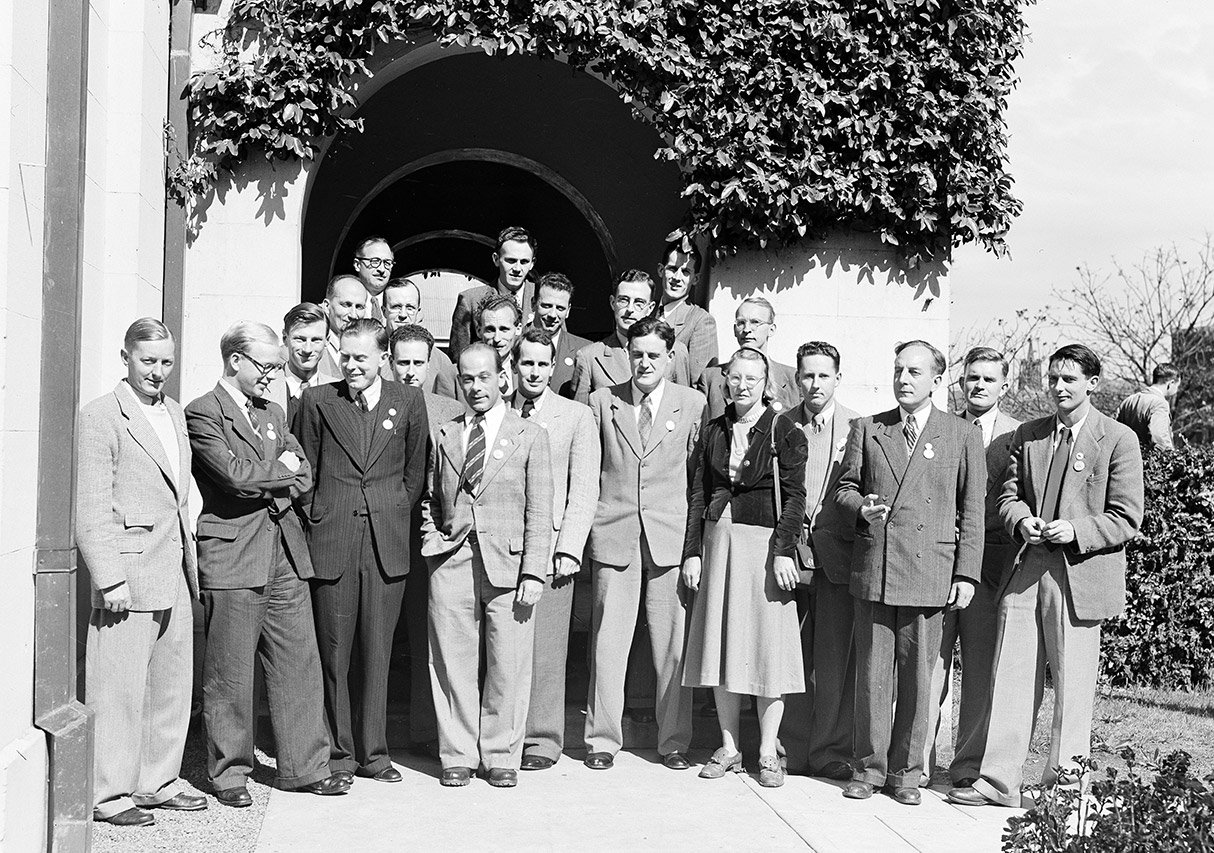
© ATNF Historical Photographic Archive B2842-43.
In 1941, the Council for Scientific and Industrial Research (now the CSIRO) hired Payne-Scott to research the secret defensive weapon, radar. After the war, she formed a team of radiophysicists to explore cosmic static, particularly ‘solar noise’ emanating from the sun, and other astronomical objects. Along with Bernard Mills and John Bolton, Payne-Scott made Australia a leader of the day in radiophysics. Her greatest contribution to the field came in 1947 with her work on unravelling the properties of ‘Fourier components’ in the distribution of radio brightness across the sky. This work allowed for the computation of these components and became the basis of future research in radio astronomy.

When Payne-Scott married in 1950, she was forced to resign from the CSIRO, according to the public service laws of the day. She raised her children and then returned to the classroom, teaching girls high-school mathematics until 1974.