
Kōhau Roŋoroŋo: Talking Tablet
- Pasifika
- Rapa Nui
On this page...
Roŋoroŋo (rongorongo) is the ancient and sacred script of Rapa Nui (Easter Island), unique in Polynesia and among the world's few independently developed writing systems. Kohau, meaning "wood used to make vaka (canoes)" refers to the wooden tablets on which roŋoroŋo glyphs are inscribed. Comprising around 600 distinct glyphs, predominantly anthropomorphic and zoomorphic in character, the script was inscribed on wooden tablets and read in reverse boustrophedon - where text in alternate lines is rotated 180 degrees to enable reading. According to oral tradition, Roŋoroŋo was brought to Rapa Nui by Hotu Matu'a from Hiva, and was used to record genealogies, lunar cycles, cultivation techniques, and other vital knowledge. Instruction took place in hare roŋoroŋo (houses of learning), where students first practiced writing on dried bark before progressing to toromiro wood, etched with obsidian or bone tools.
In the 19th century, epidemics, slave raids, and missionary influence disrupted the transmission of indigenous knowledge. The corpus of Roŋoroŋo is exceptionally limited, comprising only 26 authenticated artefacts held across museums and private collections worldwide, all outside Rapa Nui, and the script remains largely undeciphered. This scarcity is a direct consequence of the devastating disruptions Rapa Nui experienced in the nineteenth century, when epidemic disease, Peruvian slave raids, and missionary suppression of indigenous practice destroyed the communities and knowledge holders through whom knowledge of the script had been maintained.
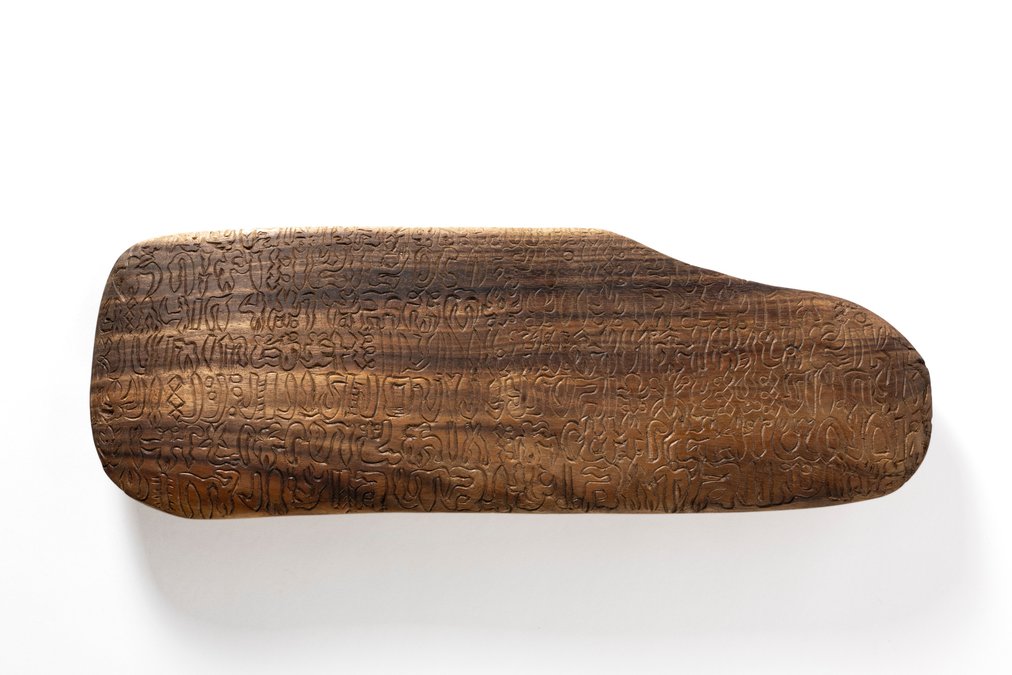
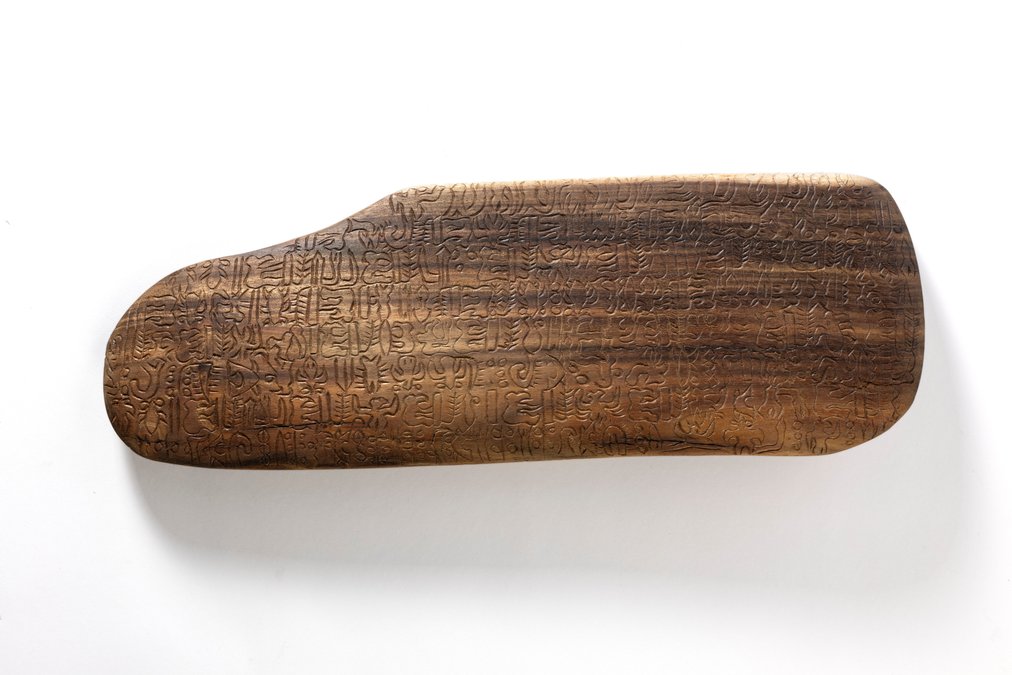
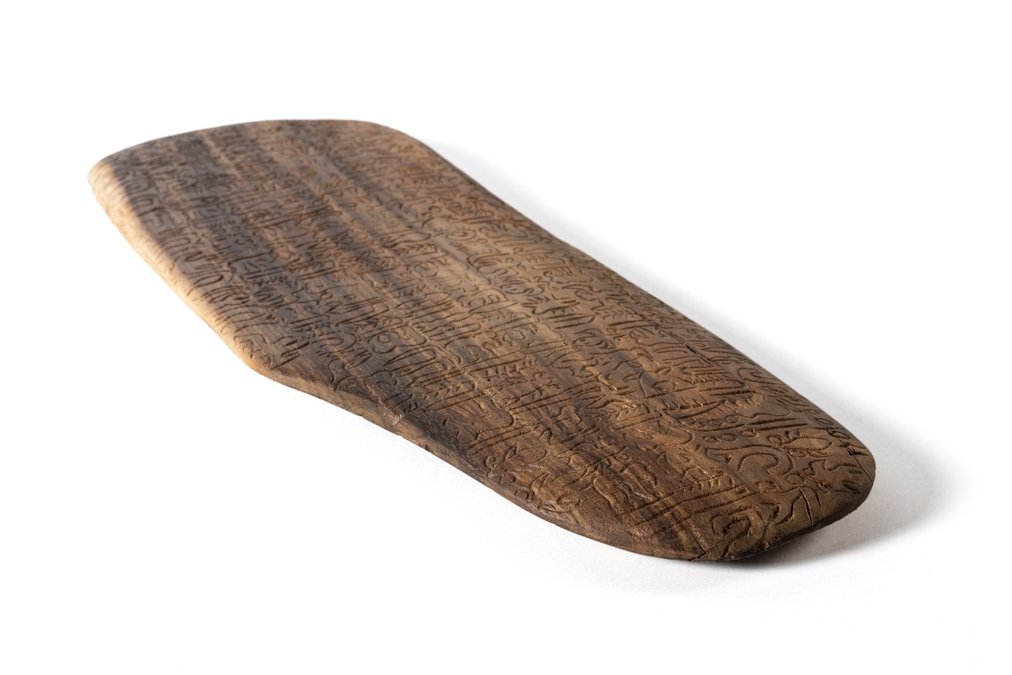
This Kōhau Roŋoroŋo tablet, carved by Rapa Nui artist Victor Pakomio, replicates an original lost to fire, preserving the culture's rich intellectual and spiritual heritage.
Acknowledgement
Information was generously shared by indigenous cultural knowledge holders from Rapa Nui - Victor Pakomio and Johnny Tuki.
The hidden meaning of Kōhau Roŋoroŋo
This tablet preserves highly important knowledge; the cosmos, the stars. The ancient Polynesians recognised more than 200 constellations, recorded through different techniques. Rapa Nui artist Victor Pakomio
The Roŋoroŋo tablets are undeciphered by Western historians however their oral history and meaning has been passed down through generations of Rapa Nui. Artist and guide, Victor Pakomio created this replica Kōhau Roŋoroŋo tablet and explains it's hidden meaning.
This piece, carved from wood, contains glyphs. It is a tablet that has the ancient writing of the Rapa Nui people and is called 'Roŋoroŋo', Kōhau Roŋoroŋo.
The name comes from the traditional woods that were once common. That's why it's called kōhau - named after that wood. Roŋoroŋo means 'to call' or 'to recite'. So literally, it means 'talking tablet'.
Expert archaeologists haven't translated it, but our oral history has preserved some knowledge. For example, this tablet preserves highly important knowledge. The cosmos, the stars. The ancient Polynesians recognised more than 200 constellations, recorded through different techniques. First through string figures, and then uniquely in Rapa Nui, through Roŋoroŋo.
It also recorded when important activities should be done. For example, fishing, checking the moon's movements to know when to fish, so this recorded when to fish, plant, and cut down trees because here it tells us the right time to cut trees and go fishing. There were times when fishing was temporarily prohibited on Rapa Nui to conserve resources.
So, if you cut down a tree at the wrong time, that tree retains its sap. We know this now because of modern technology, but they already knew it. So, the tablet was essentially a way to store practical information.
We also know that it is read from left to right, then rotated 180 degrees and read again left to right. This is the boustrophedon system, as scientists call it. No other island developed such elaborate writing. It marks a milestone. This proves Rapa Nui was a civilisation with written language.
This tablet was made for educational purposes, a little larger than the originals. Today, the Roŋoroŋo is becoming more important to the Rapa Nui people as we increasingly recognise its cultural value, because it defines us and distinguishes us from other cultures and it adds mysticism to discussions about Rapa Nui origins.
Only 30 tablets exist worldwide, because disaster, hunger, and abuse forced people to burn these valuable tablets just to start fires and cook fish to survive. Today, those pieces of wood are incredibly valuable and tragically, none of the original tablets remain on Rapa Nui, which is quite sad for us.
