
Bust of Nua María Aŋata
- Pasifika
- Rapa Nui
On this page...
María ‘Aŋata Veritahi ‘a Peŋo (Nua María Angata) was born into Rapa Nui (Easter Island) society when traditional life was still intact. She witnessed the slave raids that devastated her people, was herself taken to Mangareva to Catholic missions, but returned and used that faith on her own terms to unite Rapa Nui around their ancestral beliefs.
In 1914 she led open resistance against the Williamson-Balfour Company's colonial occupation of the island. An old woman, she stood her ground without fear. She is remembered as a prophetess, a strategist, and for her unyielding commitment to her people's survival.
This carved portrait, held at the Australian Museum, was created by ‘Aŋata’s great-great grandson, Victor Pakomio. This work stands as a continuation, in wood and memory, of the lineage she helped sustain.
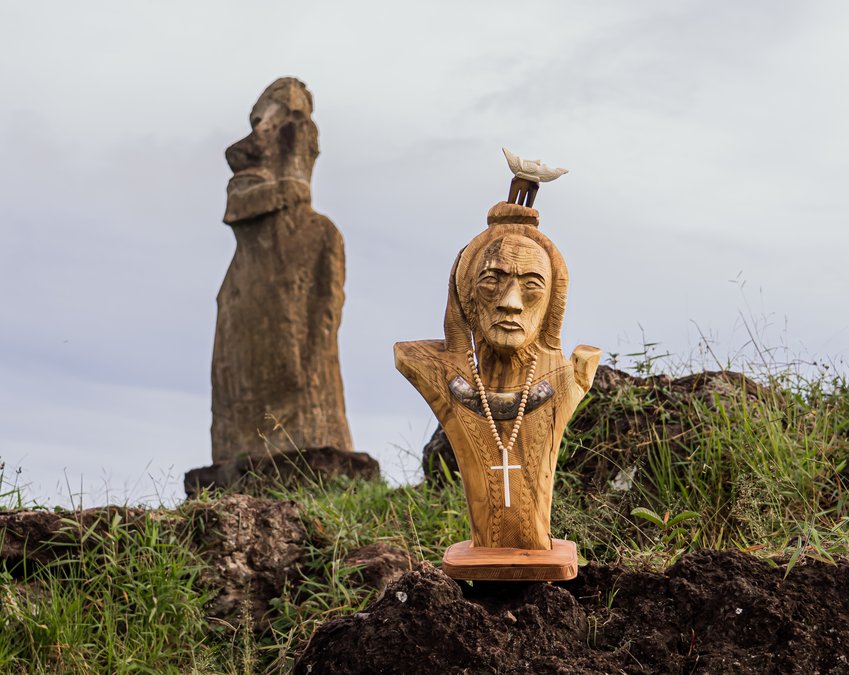
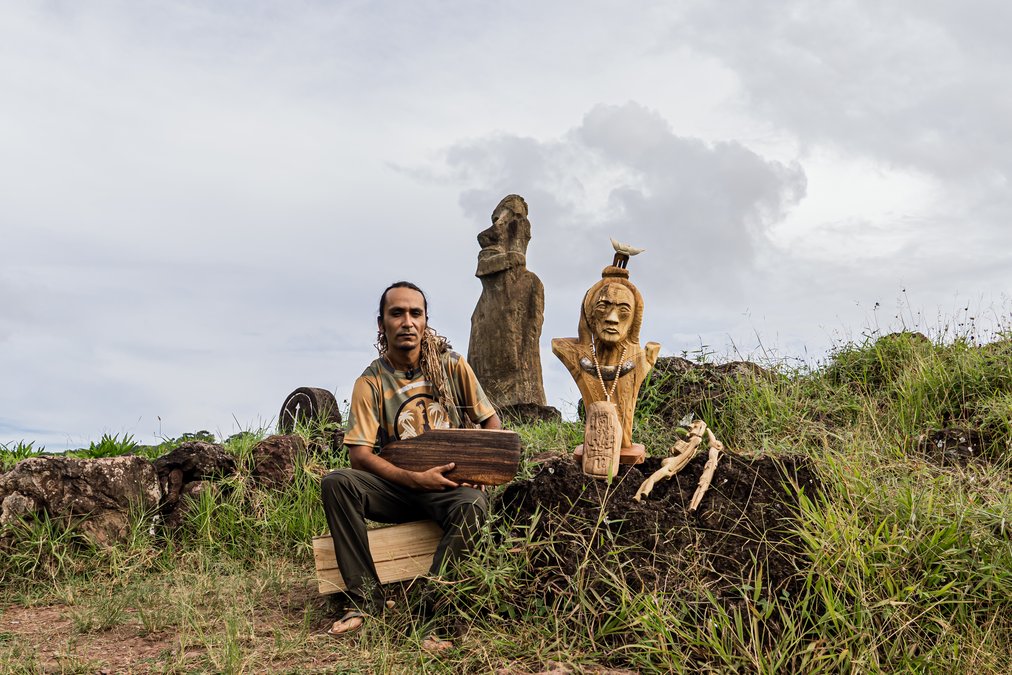
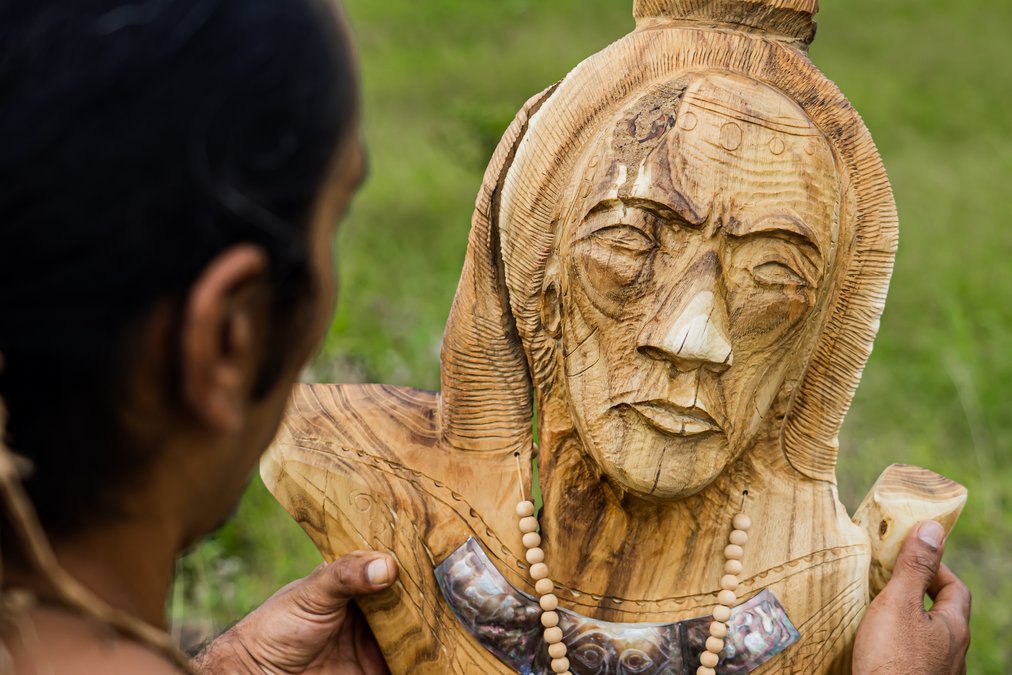
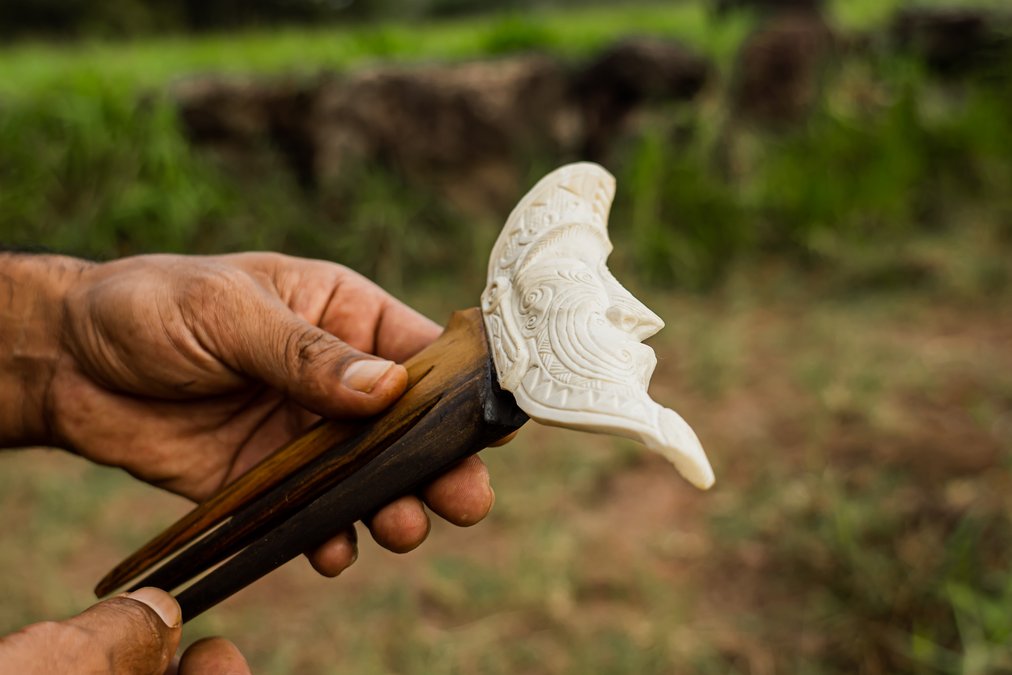
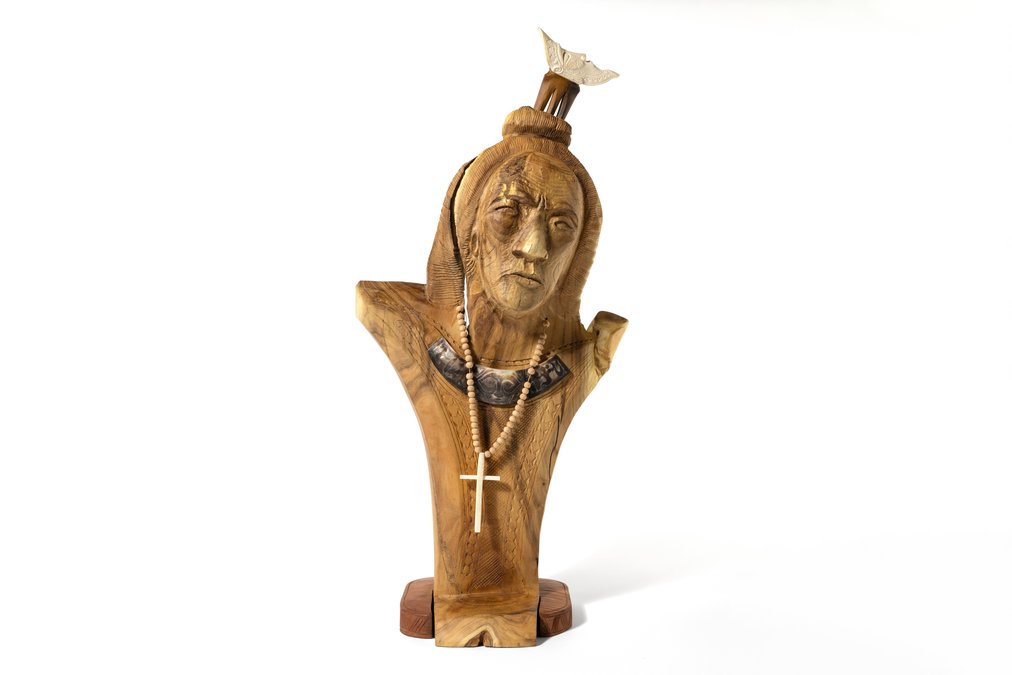
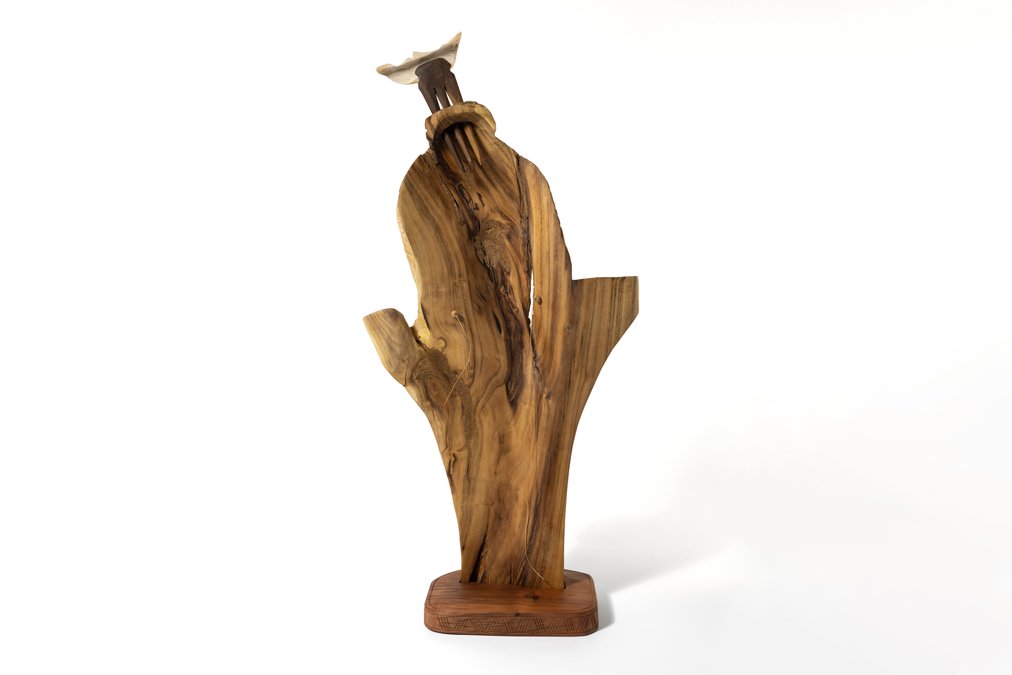
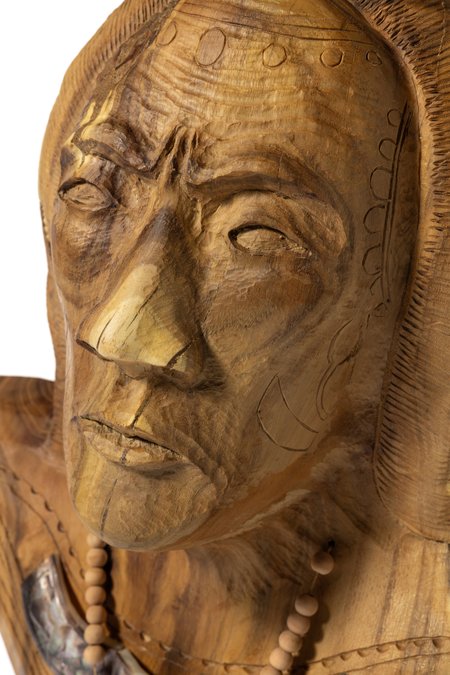
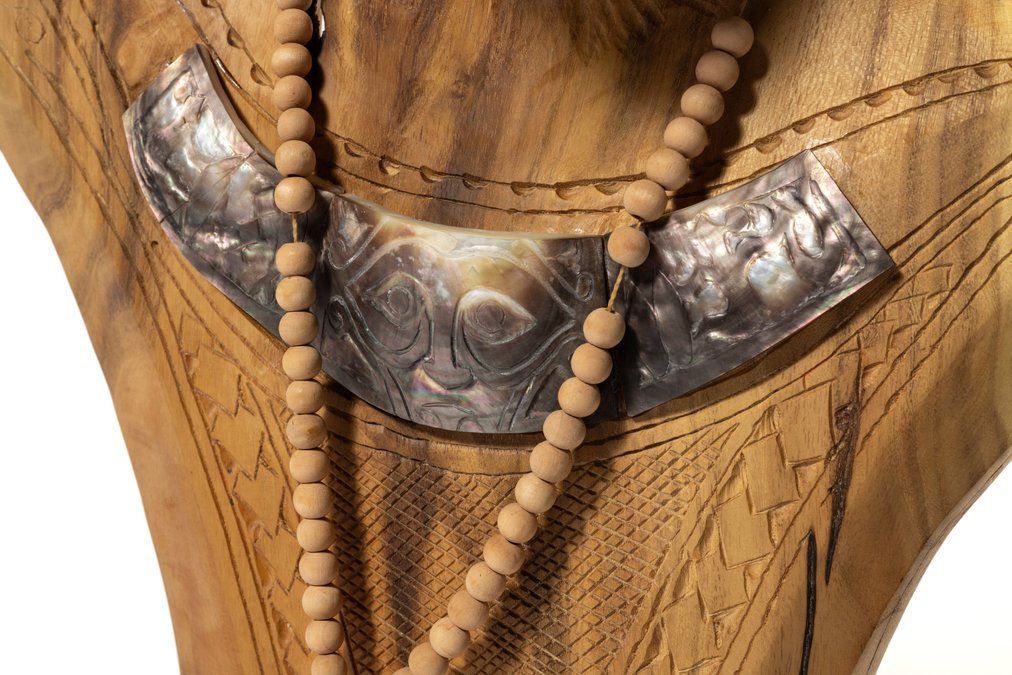
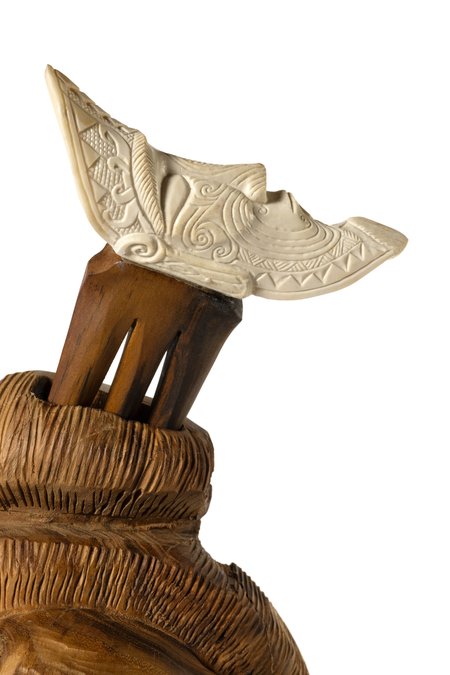
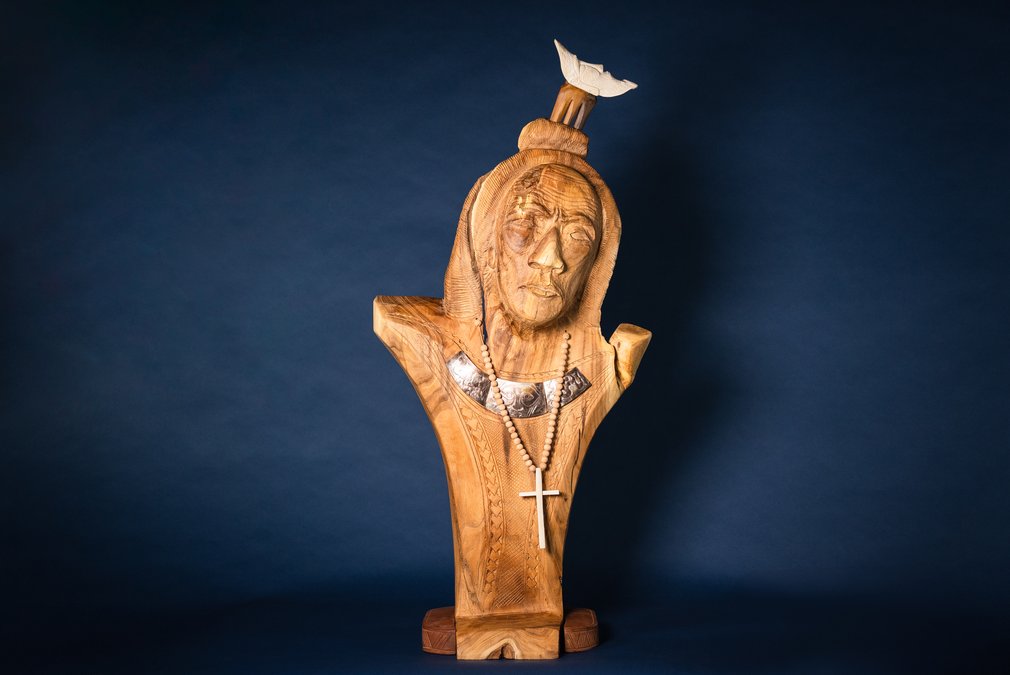
The Story of María Aŋata
Great, great grandson Victor Pakomio shares Nua María Aŋata's story of resilience and mysticism in the face of great adversity.
In the late 19th century, Rapa Nui faced catastrophic upheaval. Peruvian slave raids in the 1860s disseminated the population, taking the ariki, priests and knowledge keepers. Survivors returned with smallpox. Catholic missionaries established themselves on the island, seeking to replace traditional spiritual practices. When the Williamson Balfour Company converted the island into a sheep station, Rapa Nui's traditional leadership had collapsed and its people forced into severe poverty and confinement. During this desperate time, one woman emerged as a spiritual leader and a voice of resistance. Nua María Aŋata.
This figure represents María Aŋata Veri Tahi ʻa Peŋo, daughter of Veri Tahi and her father was Hare Kohou. We're connected by blood. She is my great-great-grandmother.
She was taken as a child by the Catholic priests who were carrying out the forced evangelisation of Rapa Nui. They took her from where she lived to the centre of the island, now known as Hangaroa. She was then forcibly sent to Rikitea, on the island of Mangareva (French Polynesia) where they intended to prepare her to be a future evangelist of the Rapa Nui people, so that Rapa Nui would be baptised into Catholicism.
But the priests punished her. Why? Because a couple of years before, the priests had attempted to evangelise the Rapa Nui people, but the ship was wrecked. So, when the priests in Rikitea questioned her, they confronted her with accusations that had been made against her. A rival claimed she and her father had ordered their clan to kill all the priests, and that she wore a skull around her neck as a trophy. Because of these accusations, the priests punished her and injured her back.
She had a very strong personality and was incredibly spiritual and became vital to the people of that time. They greatly respected her, even regarded her as a witch who had supernatural powers. This rival who spoke against her died - it's documented. And that's when the people in Rikitea began to fear María Aŋata because they believed her enemy had died because of a curse she put on him.
This wasn't María Aŋata's only supernatural experience. Such experiences also took place while on Rapa Nui. Both Europeans and Rapa Nui documented that she made prophecies in her dreams and that she said things that later happened, which only deepened her mystical reputation.
She has become a leader not only of Rapa Nui in the spiritual sense and as a Polynesian. It is more than that. She is a woman, therefore, as a woman she has symbolically become part of the fight against patriarchy that man has carried on for centuries, which we know have been millennia, where man has undoubtedly taken advantage of his position towards women.
So we have a woman who in a very difficult time became a leader, which is remarkable. And every time a foreigner asks me 'Why María Aŋata is so famous?' Because she is a woman who in the 1800s led men and sent them on a mission to seize livestock from the Williamson Balfour Company, which controlled the livestock and had abused the Rapa Nui people. Food was scarce, clothing was unavailable, and foreign diseases were decimating the population reducing it to 111 from a previous 5,000.
Devastating, but this is the reality that many Indigenous peoples experienced, and that's why she's so important. First, she was a woman. Second, she had this profound spiritual presence.
As her great-great-grandson, I am very proud, I carry on that legacy. And of course, that legacy will never die, and that's why I'm very proud that this piece remains in this museum, so others can know her story. And I certainly hope this helps educate people. About ending the abuse of power over women and men. That's it, thank you.
Well, this bust made by .... And this person, eh, represents .... ... daughter of ... and ... is their father. He is asked, Eh.
What happens is that when she arrives in Rikitea, they marry her off to a person called Paea, the oldest descendant of the Manu Heu Roroa family. So, according to one version, Paea had assaulted María Aŋata and that's why she had a mobility problem. The other version is that the priests punished her. And why do they punish her? Well, what happened is that a couple of years before María Angata was extracted from the island, the fathers or the Jesuit priests, eh, had tried to evangelise Rapa Nui on a second coming, and the ship was lost. So, when the parents were there or the religious people were there, they told her, "Why does your father tell a story out there, about an enemy that she had, that out of respect I will not name, because she has Rapa Nui descendants. An enemy said that she and her father had her clan kill all the priests and she wore a skull around her neck. Then the priests punish her and hurt her back. And that's why your position is so important, because being so weak physically, she has an impressive spiritual power.
We know from history, oral accounts, that she had a very strong personality, incredibly spiritual, and quite relevant to the people of that time. They respected her a lot, even associated her with a kind of witch who had supernatural powers. We know, and it is documented, that this enemy who spoke too much about her and was punished for it, died. And that's where Rikitea starts to fear her because they believed she had died because of a curse she had on her.
Well, María Angata's wasn't a unique supernatural experience. We know that it also happened on Rapa Nui. It is documented by Europeans and Rapa Nui that she made prophecies in her dreams and that she said things that later happened, which makes her much more mystical. We don't know for sure if this is real, but these are versions that at least deserve a certain connotation or a certain respect.
She has become a leader not only of Rapa Nui in the spiritual sense and as a Polynesian. It is more than that. She is a woman, therefore, as a woman she has symbolically become part of the fight against patriarchy that man has carried out for centuries, which we know have been millennia, where man has undoubtedly taken advantage of his position with respect to women.
So we have a woman who in a very difficult time became a leader, which is impressive. And every time a foreigner tells me, because when I am in Rapa Nui I am also a guide, apart from being a sculptor, I am a Rapa Nui guide. You ask me why María Angata is so famous? Because she is a woman who in the 18th century led men and sent them on a mission which was to take the animals from the company that had and abused Rapa Nui and that put them in a kind, or gathered them in a kind of ghetto very similar to the Warsaw ghetto, where food was scarce, where there was no clothing, where external diseases were decimating the population, bringing it to 111 people after having been 5000.
Impressive, but it really is the reality that many indigenous peoples experienced, and that's why it is so relevant. First, for being a woman. Second, for its great capacity to transmit a certain spirituality.
And well, now, very proud as her great-great-grandson, I intend to continue that legacy. And of course, obviously that doesn't die, and that's why I'm very proud that this piece remains in this museum, so that many others also know about it. Because the Internet is not the same as looking at a piece made by your great-great-grandson. And I certainly hope this helps educate the population. Regarding ending ending the abuse of power of men over women. That's it.
María ‘Aŋata Veritahi ‘a Peŋo (also Nua María Angata) is remembered as one of the most influential religious and political figures in Rapa Nui history. Born in 1856, she was the daughter of Hare Kohou of the Miru clan and Veri Tahi a Kau of the Haumoana clan. From a young age, she was recognised as a leader and regarded an equal to men; stories recount her mastery of horses and a formidable mental strength that commanded respect within her community.
In June 1874, she married Ure Kino Pakomīo Mā’ori in Mangareva, a man who had himself survived the slave raids that had taken so many Rapa Nui people in the 1860s. A warrior by tradition, Pakomīo is said to have run from Anakena (Hanga Rau o te Ariki) to Tahai upon his return, believing that the old tribal divisions of the island still remained. Together, the couple became the island's primary religious leaders, raising six children and serving as teachers of the faith that had sustained their people through decades of loss.
‘Aŋata’s influence, however, extended beyond the spiritual domain: she was also an advocate for Rapa Nui political leadership, supporting the recognition of ‘ariki (king) Timeone Riro ‘a Kāinga (reign 1892-1898/1899) and Tu’u Hereveri (reign 1901-1902). It was in the twentieth century that ‘Aŋata emerged as a powerful symbol of resistance against the colonial dispossession and corporate exploitation that stripped Rapa Nui people of their land and autonomy. In 1914, she led a peaceful resistance against the Williamson-Balfour Company's occupation of the island, an elderly woman whose authority rested not on force but on prophecy, courage, and resilience. Drawing on both traditional Rapa Nui belief and Catholic faith, she received visions calling her people to reclaim what had been taken from them. Under her leadership, Rapa Nui people engaged in a non-violent uprising, recovering their livestock and asserting their rights to their ancestral lands.
Though ultimately suppressed by Chilean authorities, the movement she led marked a significant turning point in Rapa Nui’s ongoing struggle for self-determination and cultural survival. ‘Aŋata died in December 1914 and was entombed at the Catholic Church of Hanga Roa, her legacy enduring long after her death.
Acknowledgement
Information was generously shared by indigenous cultural knowledge holder from Rapa Nui - Victor Pakomio.
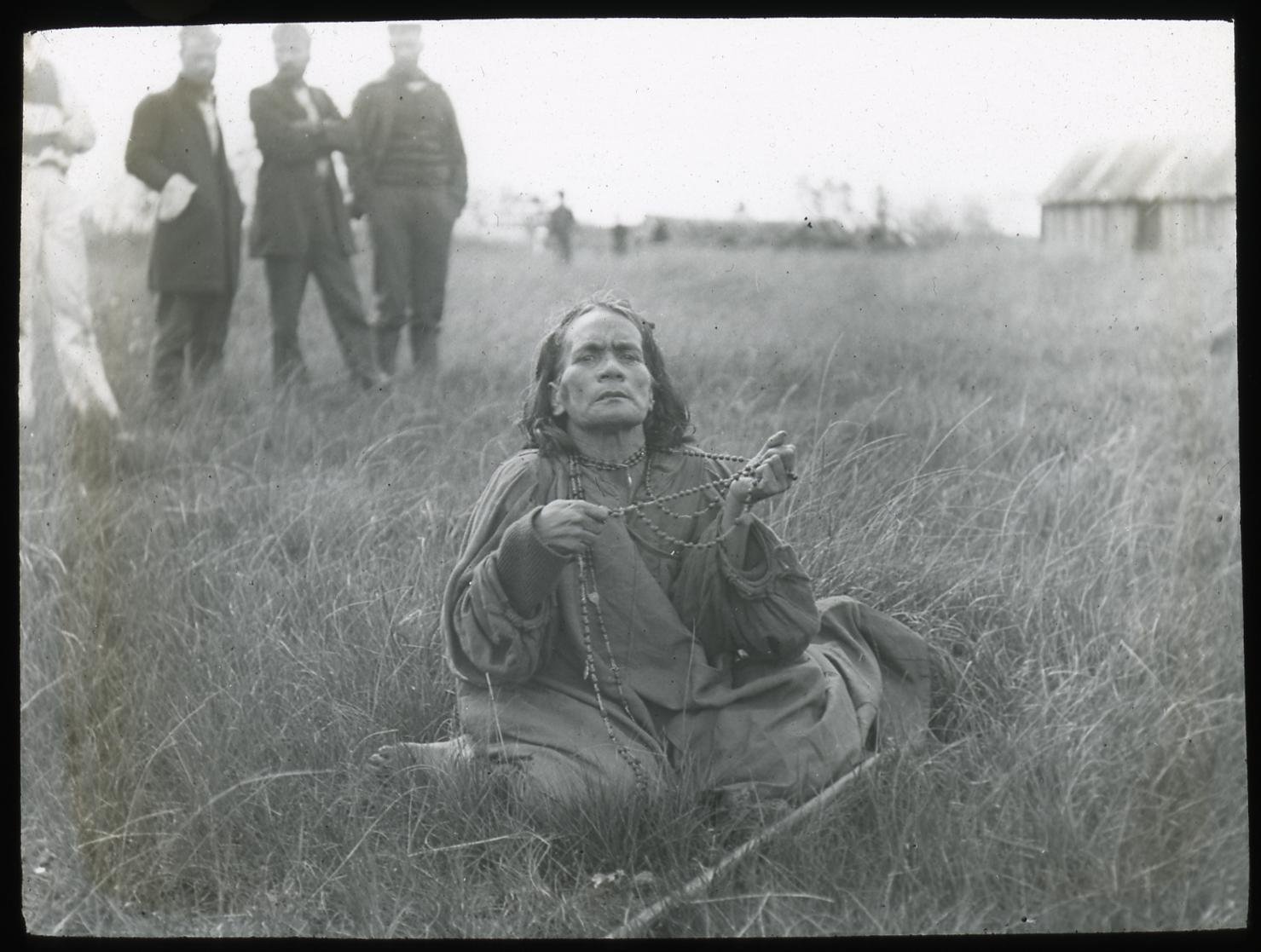
© The Trustees of the British Museum
