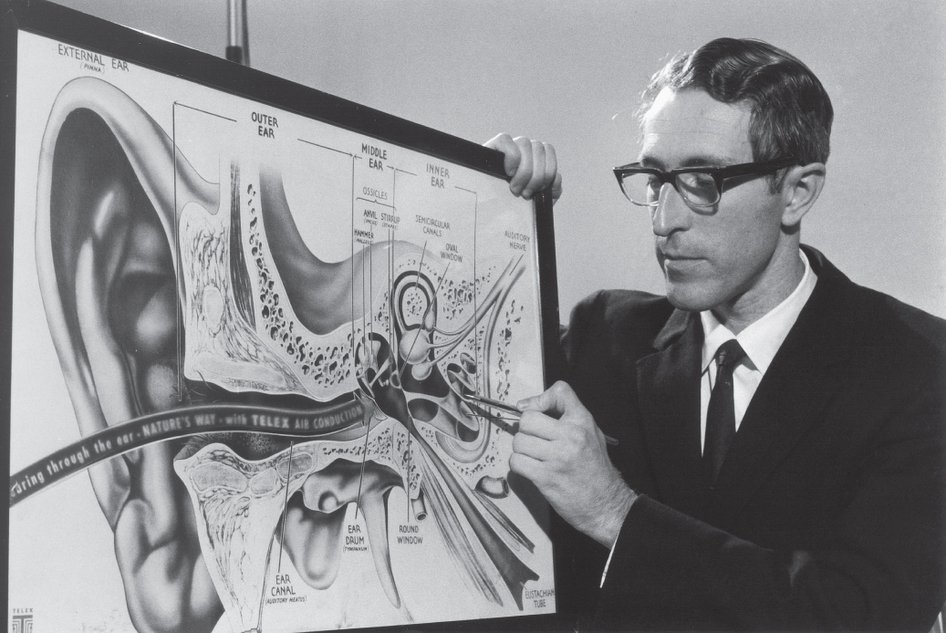
Professor Graeme Clark
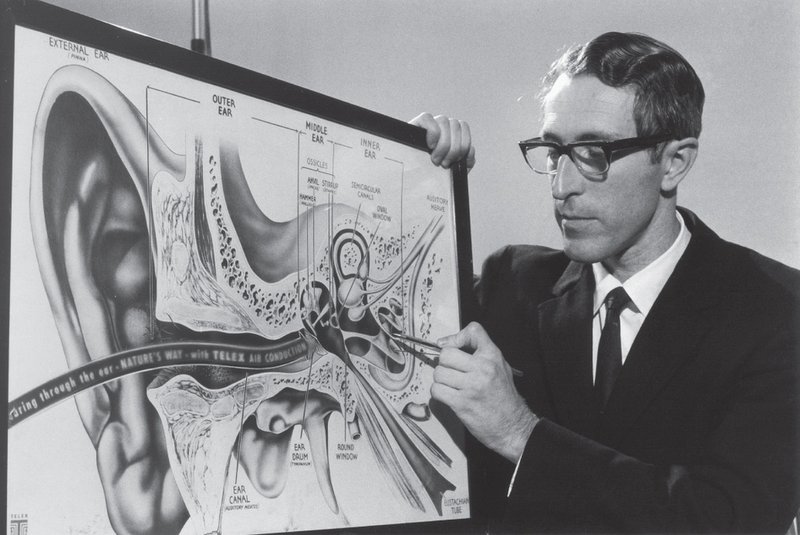 Click to enlarge image
© Public domain
Readers note: This is an excerpt from the 200 Treasures exhibition catalogue, developed in 2017. This content was written as a brief biography on why this person was included in the exhibition.
1935 - present
Professor Graeme Clark’s outstanding career in otolaryngology (the study of diseases of the ear, nose and throat, or ENT) has transformed thousands of lives.
Clark was born in Camden, NSW, in 1935. From the outset, his life’s work was influenced by personal circumstances: his father, Colin, had severe hearing loss and, seeing the distress that it caused him, Clark wanted to find a solution to this at a young age.
As a medical student at the University of Sydney, he began pioneering audiology testing, a science still then in its infancy. He undertook postgraduate training in the UK and qualified as an ENT surgeon. Around 1966, he read about studies that showed profoundly deaf people could hear when electrical currents were passed through wires placed in hearing nerves - and so began his life’s work.
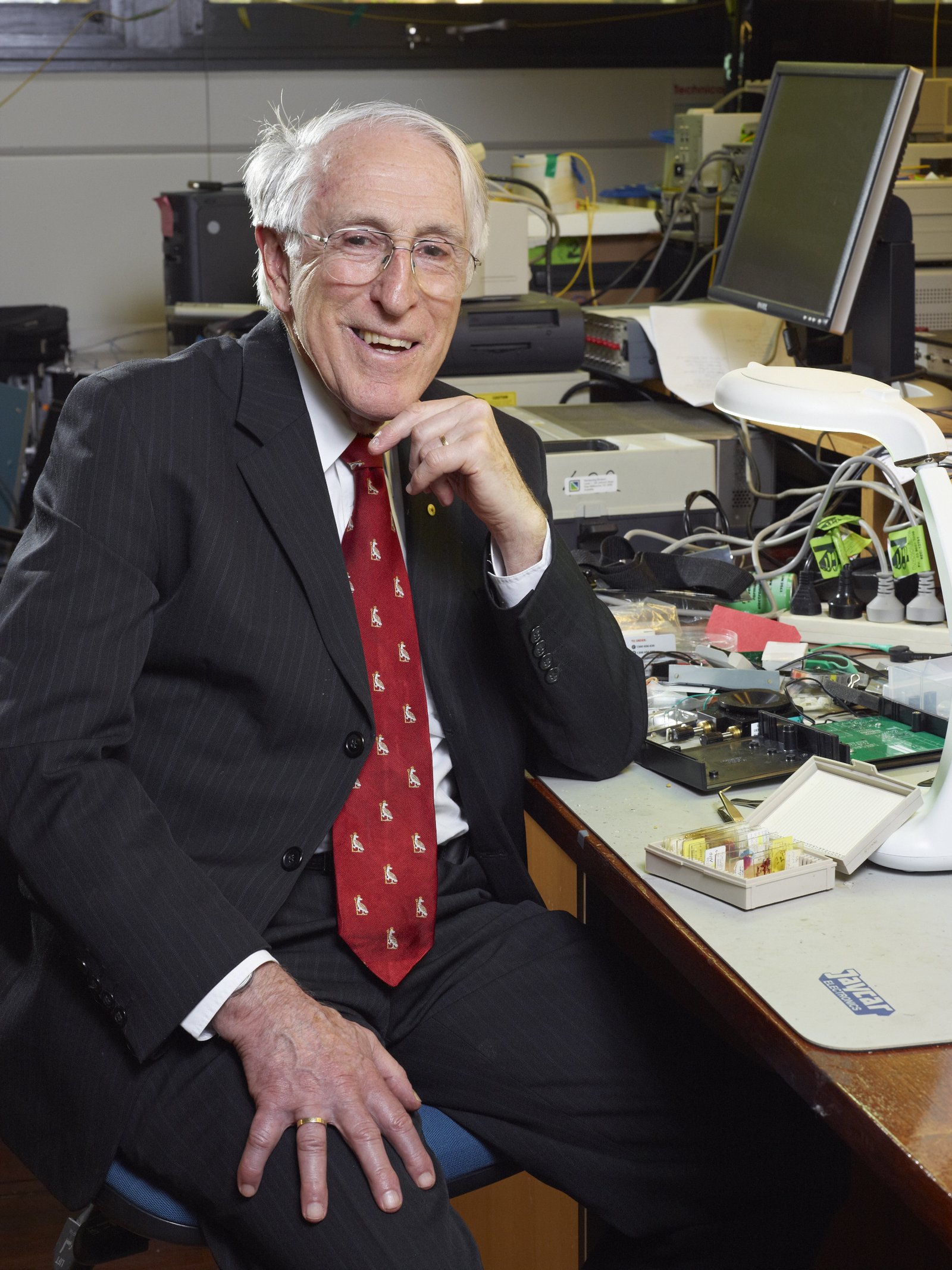
© sdpmedia.com.au

His University of Sydney PhD made very promising findings about electrical stimulations of the hearing nerve. Appointed Chair of Otolaryngology at the University of Melbourne in 1970, he directed his research towards developing a multi- electrode cochlear implant. Thanks to a popular television show of the time, The Bionic Man, this device was dubbed the bionic ear. Clark’s work endured immense challenges of lack of funding, scepticism and a US competitor, but in 1978 resulted in the first implant of a bionic ear. Its recipient, Rodney Saunders, who had lost his hearing in an accident 18 months beforehand, could not only hear sounds again but understand speech.
Determined to retain the bionic ear as an Australian product, Clark founded the Bionic Ear Institute in Melbourne in 1984. Clark has received many accolades for his work, and the institute he founded continues to advance vital knowledge about hearing, its loss and the science of getting it back.