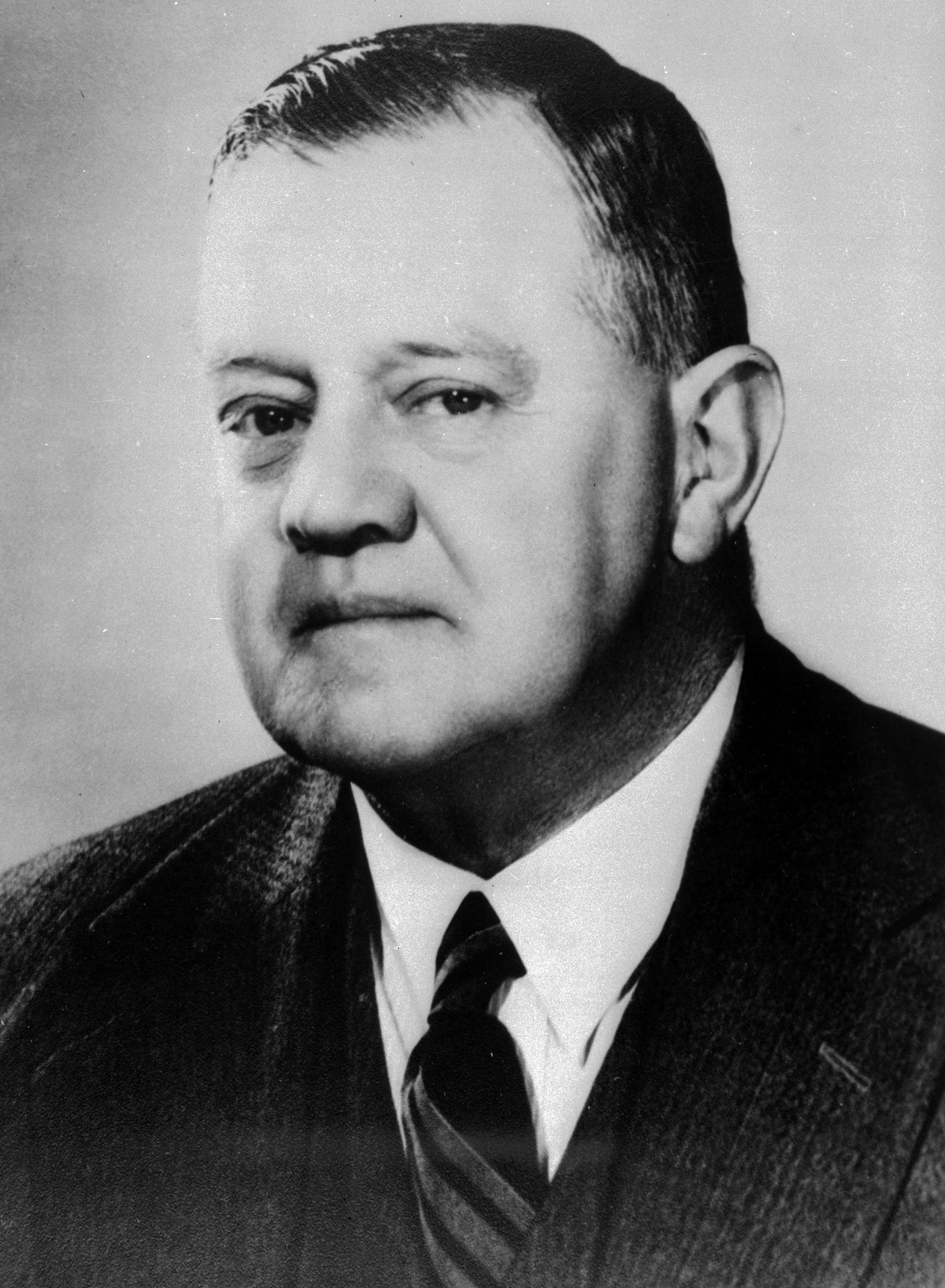
Essington Lewis CH
 Click to enlarge image
© National Library of Australia
Readers note: This is an excerpt from the 200 Treasures exhibition catalogue, developed in 2017. This content was written as a brief biography on why this person was included in the exhibition.
1881 - 1961
Essington Lewis was an industrialist who profoundly impacted the development of Australia’s iron and steel industry as well as the course of Australia’s involvement in World War II.
An imposing figure who mastered the convoluted detail of industrial operations, Lewis was a captain of industry who regularly visited all levels of his company’s operations and knew hundreds of workers by name. He had a prodigious work ethic and held rigid, high expectations for the same in others. Lewis was born in the rural community of Burra Burra in South Australia, and always retained a deep attachment to country life and its values.
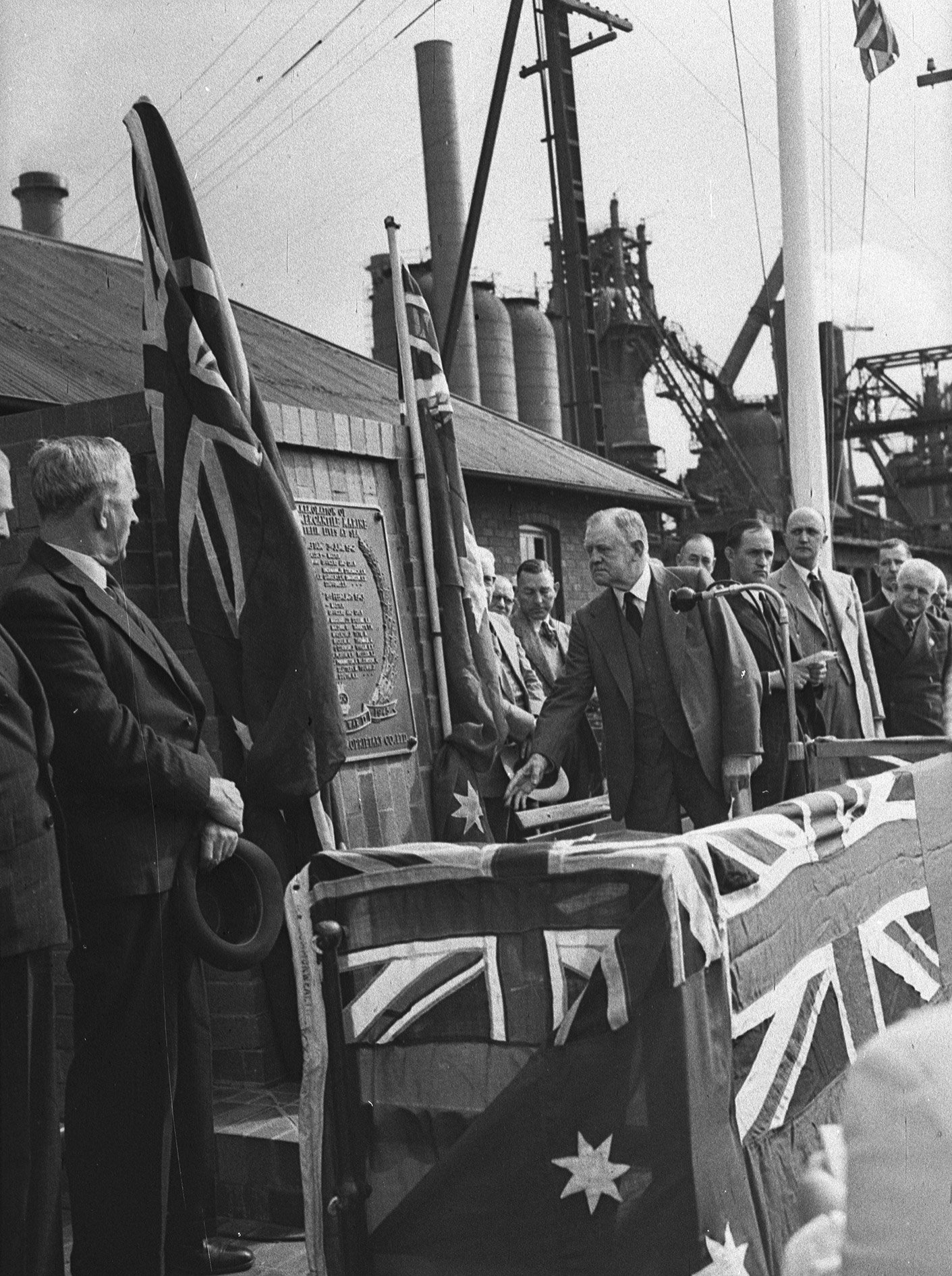
© State Library of NSW
Lewis enrolled in the South Australian School of Mines and Industries in 1901, and signed on with Broken Hill Proprietary Co. Ltd (BHP) three years later. By 1921, through his managerial aptitude and business acumen, Lewis was made general manager, the first Australian appointed to that position in the company in nearly four decades. He set about transforming BHP into the steel powerhouse it was eventually to become, with Newcastle as the centre of operations. Lewis was an avid international traveller and studied operations in the USA and UK, adapting his findings for use in BHP operations. He diversified its production and, during the Depression years, defied the dismal economic trends, with Newcastle producing a record tonnage of steel ingots in 1933–34. During a fact-finding tour of 1934, Lewis visited Japan and was alarmed by the industrial and military potential he saw there.

He began working closely with the federal government to build Australia’s military capacity through diversifying BHP’s operations to include munitions manufacture, and aircraft and ship building. When war broke out, Lewis was appointed to federal government positions to oversee munitions and military material. At war’s end, he returned to industry and was a leading figure in Australia’s postwar industrial development, from supporting the car- manufacturing industry to mechanising the coal industry.