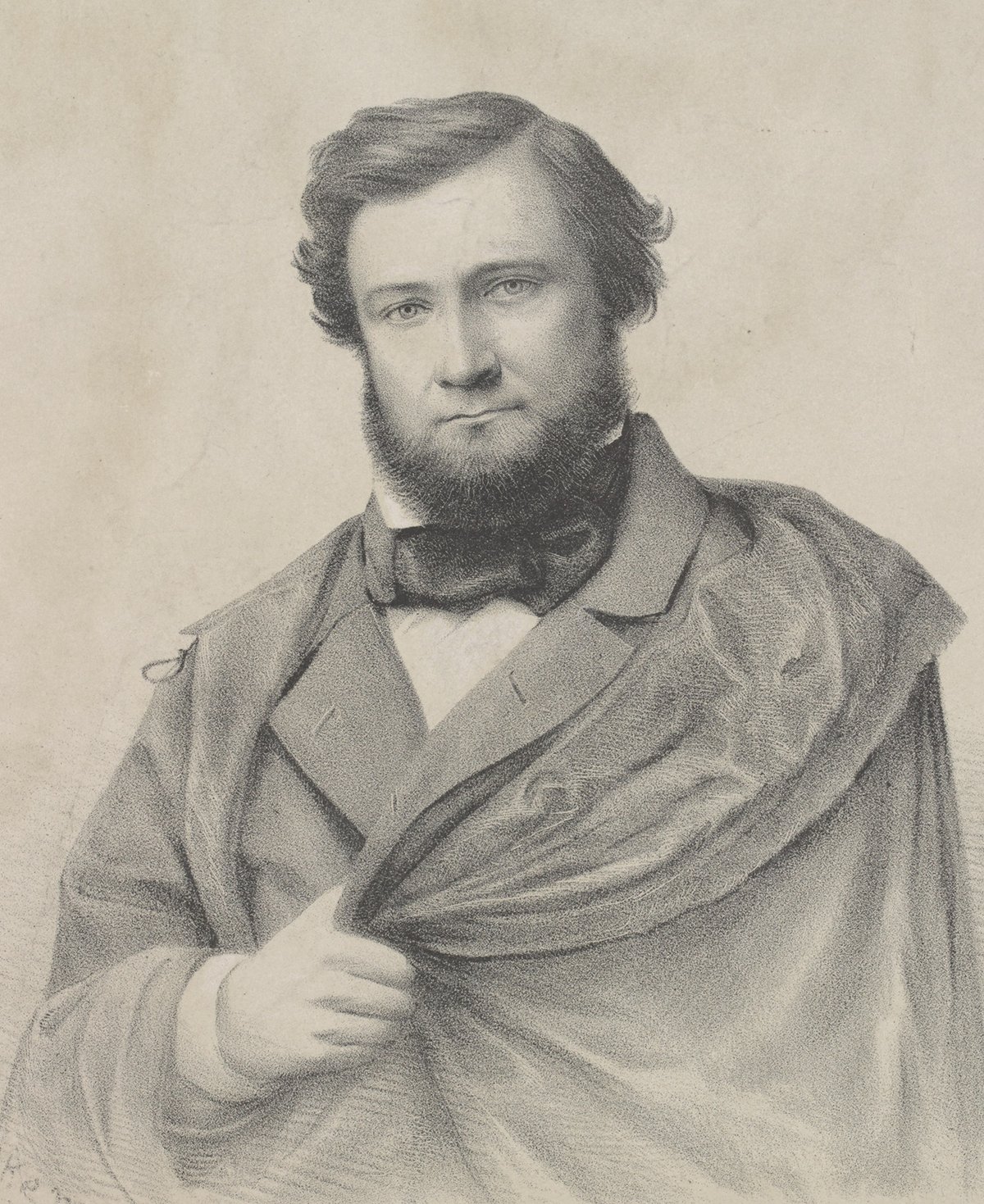
Peter Lalor
 Click to enlarge image
© State Library of Victoria
Readers note: This is an excerpt from the 200 Treasures exhibition catalogue, developed in 2017. This content was written as a brief biography on why this person was included in the exhibition.
1827 - 1889
Peter Lalor went from a wanted outlaw to respected politician in the course of one year. He led rebel miners on the Victorian goldfields in the Eureka Stockade in November 1854 and the following year was elected to the Victorian Legislative Council. Lalor came from political stock.
He was born in Raheen, Queen’s County, Ireland, in 1827, and came of age during the turmoil of the 1840s potato famines. His older brothers were active in the Young Ireland movement and his father, Patrick, had been a representative in the British House of Commons. Peter graduated from Trinity College in Dublin and was a civil engineer before emigrating to Australia in 1852 to try his luck on the Victorian goldfields.
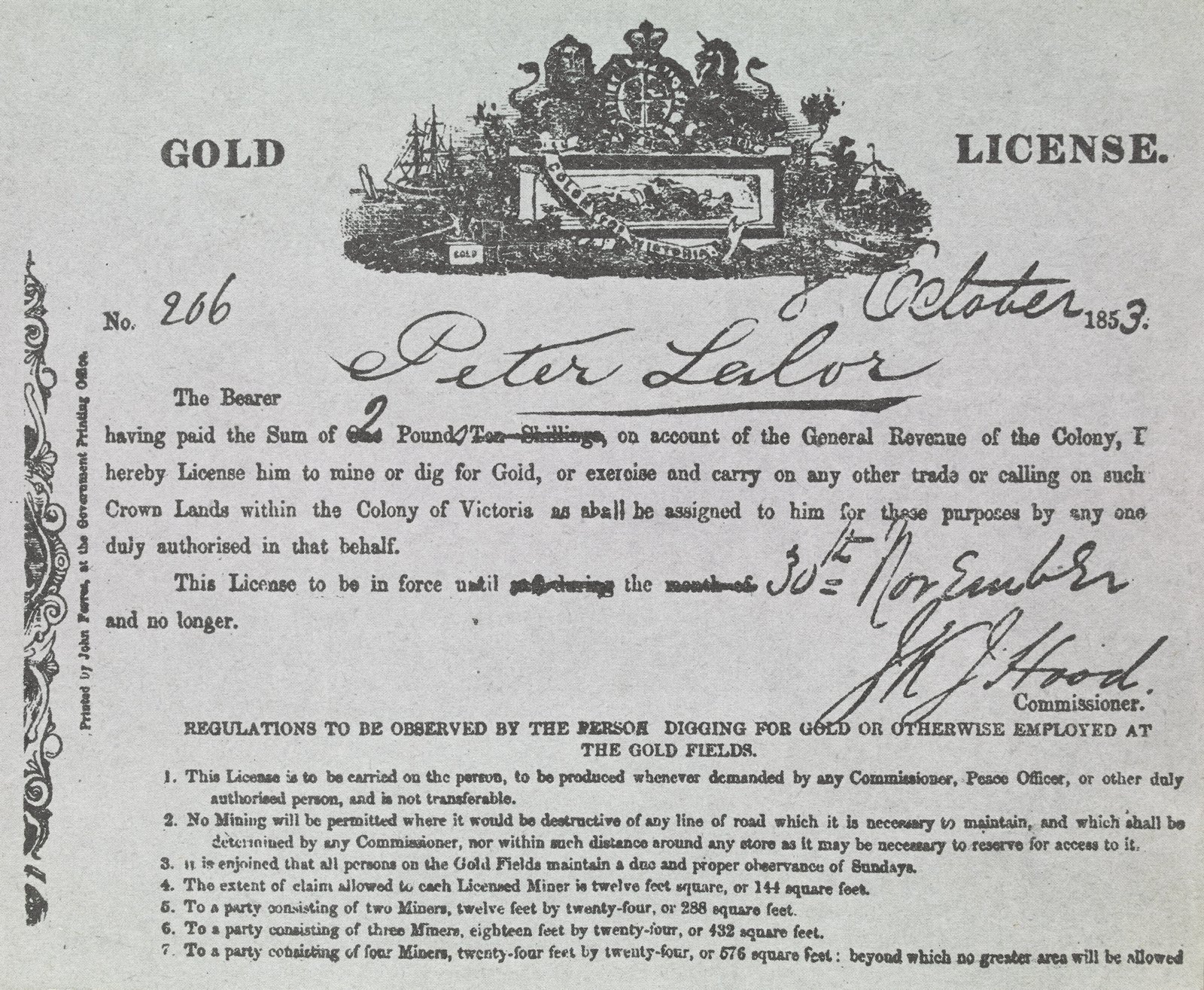
© State Library of Victoria
Lalor found his political cause on the goldfields, where miners were enraged by their mistreatment by authorities. When tensions came to a head in late 1854, Lalor became the leader of the 1500 rebel miners who built the Eureka Stockade. The men demanded the vote, reform of mining licences and access to lands claimed by squatters. They swore an oath to the Southern Cross flag.
On the night of 3 December, only 120 men, including Lalor, were in the stockade when it was attacked. Thirty men were killed, many others taken prisoner. Lalor, who was shot in the arm, was secreted from the battlefield and later had his left arm amputated. Popular support for the rebels compelled the government to accede to their demands, and when the first secret ballot elections were held in 1855, Lalor was elected to represent Ballarat.

In 1859, he won the seat of South Grant, representing that electorate until his death in 1889. Lalor was a controversial and consequential figure in Victorian politics, rising to be Speaker. He commanded great respect for his political service but especially for his role in making history at Eureka in 1854.
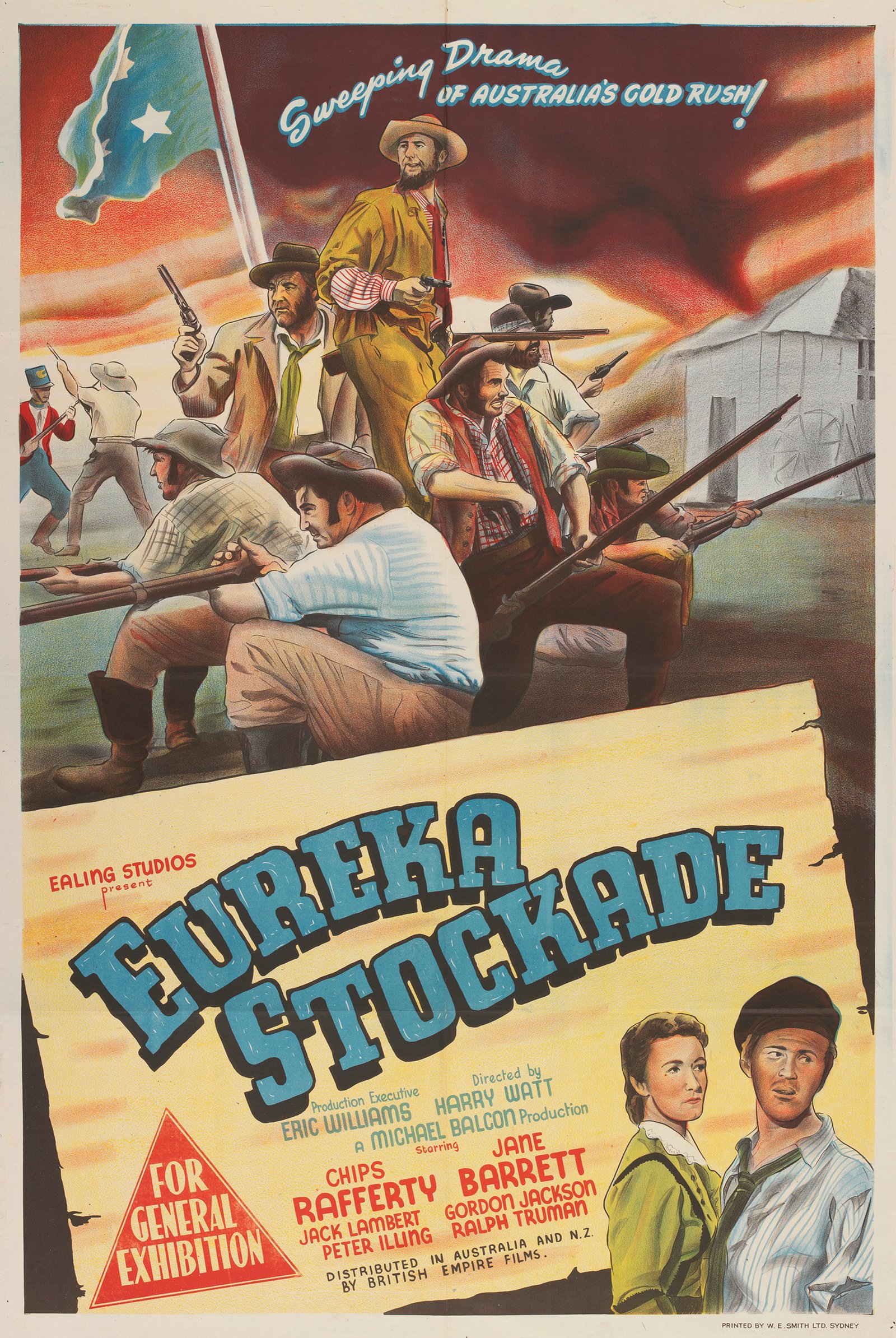
© State Library of Victoria