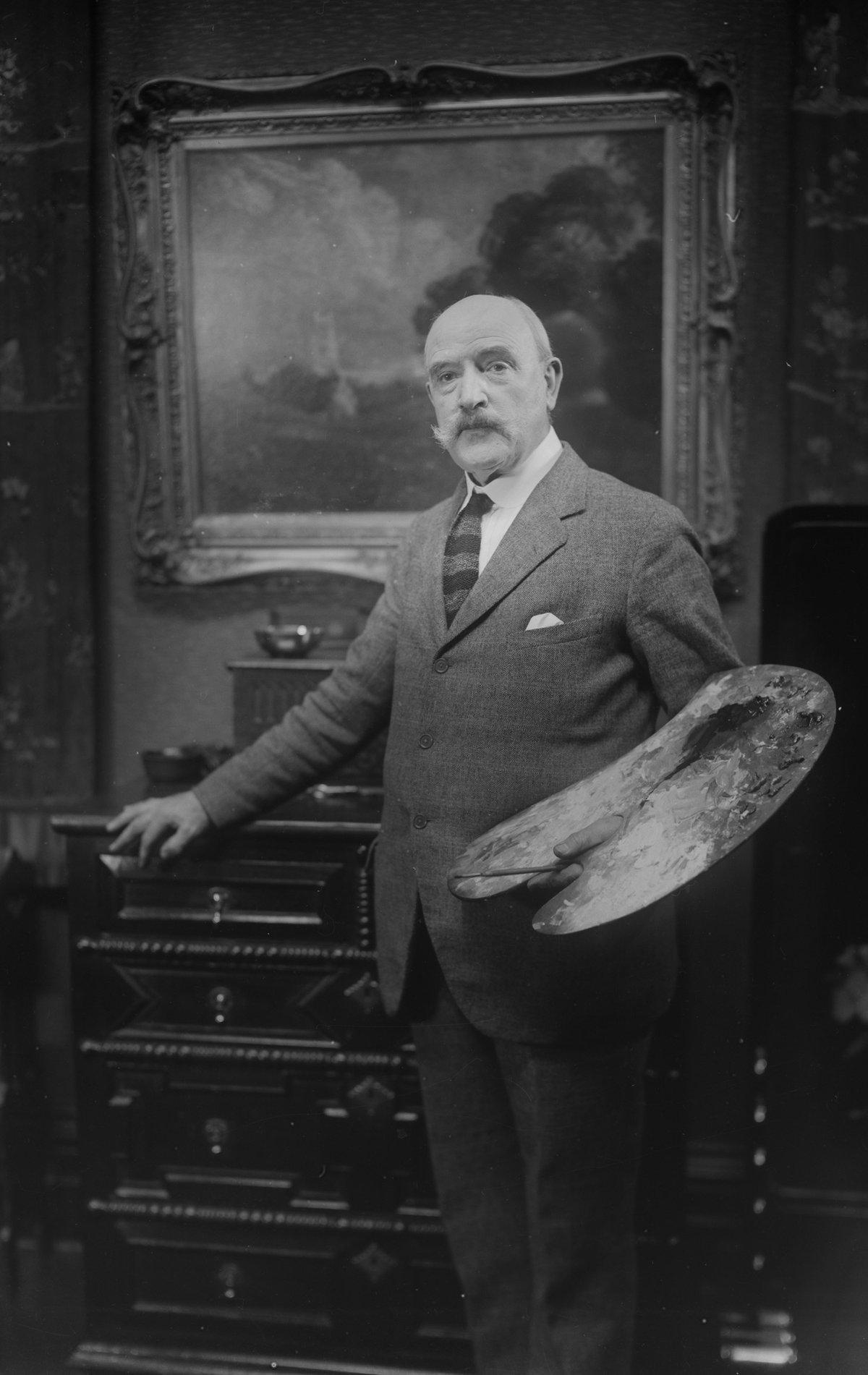
Sir Arthur Streeton
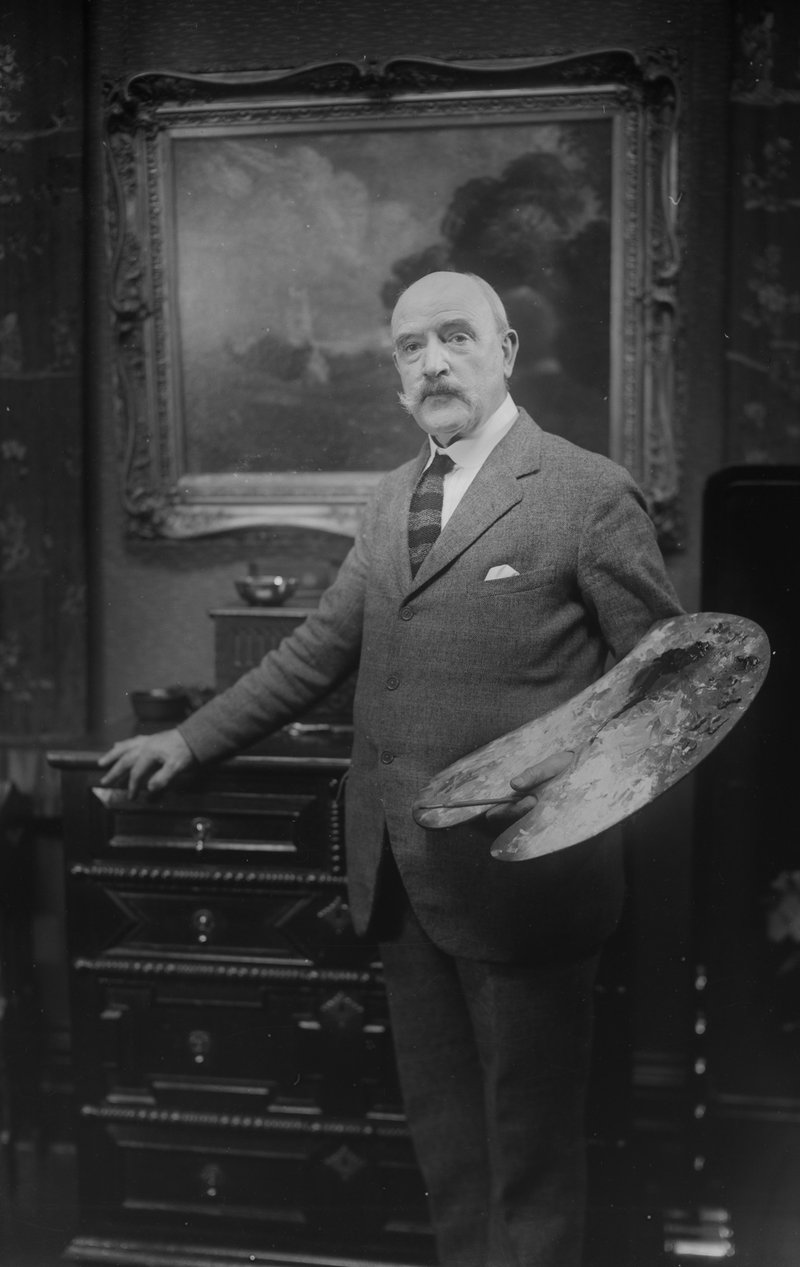 Click to enlarge image
© State Library of Victoria.
Readers note: This is an excerpt from the 200 Treasures exhibition catalogue, developed in 2017. This content was written as a brief biography on why this person was included in the exhibition.
1867 - 1943
Arthur Streeton was described, upon his death, as the ‘greatest individual influence on landscape painting in Australia’. Another writer went further, classifying Streeton as a ‘genius’ whose work was in the league of the greatest of landscape painters such as Joseph Turner and John Constable. Streeton was renowned for his infusion of light and atmospherics into depictions of Australia, and many critics believed he was ‘the first Australian to paint the real Australia’.
Streeton was born in the Victorian town of Bellarine, near Geelong, in 1867. He worked as a lithographer before he undertook some study at the National Gallery School of Art in Melbourne, where he met and was artistically inspired by his famous contemporaries, artists such as Tom Roberts, Frederick McCubbin and Charles Condor. With these men, Streeton was a founding member of the Heidelberg School – ‘the cradle of Australian landscape painting’ – and painted using impressionistic techniques. One of his first paintings, Still Glides the Stream, and Shall Forever Glide (1890), captivated international audiences. Streeton was only 23 when this painting gained all-important notice at the Royal Academy in London, and more prestigious yet, recognition in Paris. The work was awarded an honourable mention at the Paris Salon, making Streeton the first Australian to receive this distinction.
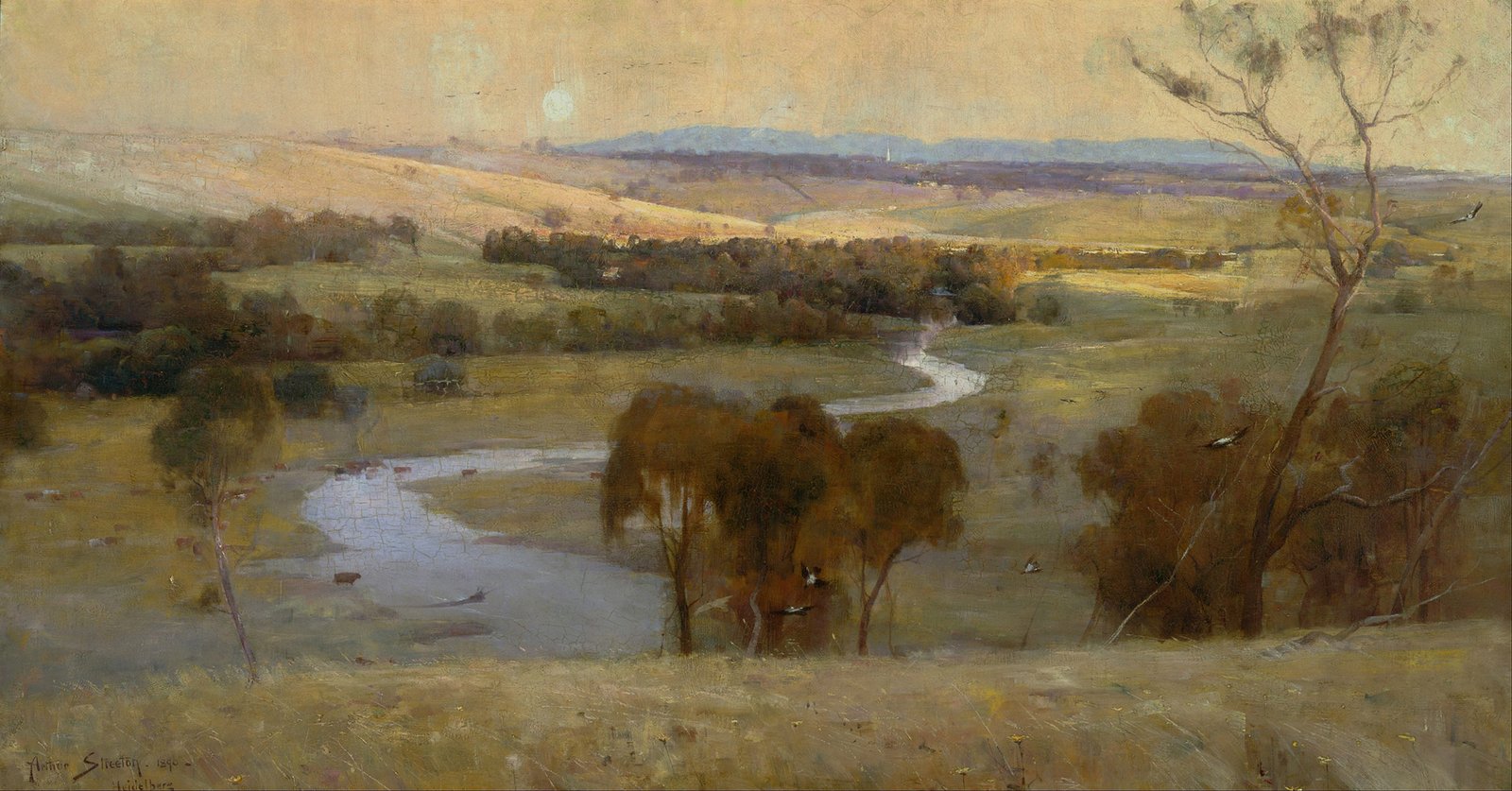
© Art Gallery of New South Wales

Streeton painted more landmark works in his twenties such as The Purple Noon’s Transparent Might, which was exhibited at his first one-man show in Melbourne in 1896. The same year, Streeton left Australia to live abroad for many years, making visits to Australia, before returning permanently in 1923. Streeton continued to paint Australian landscapes during his time abroad, as well as English subjects. He also turned to depicting the desolate landscapes created by World War I in his role as an official war artist for the Australian Army. Streeton continued exhibiting until 1940 and has a stature in Australian cultural life few others have attained.