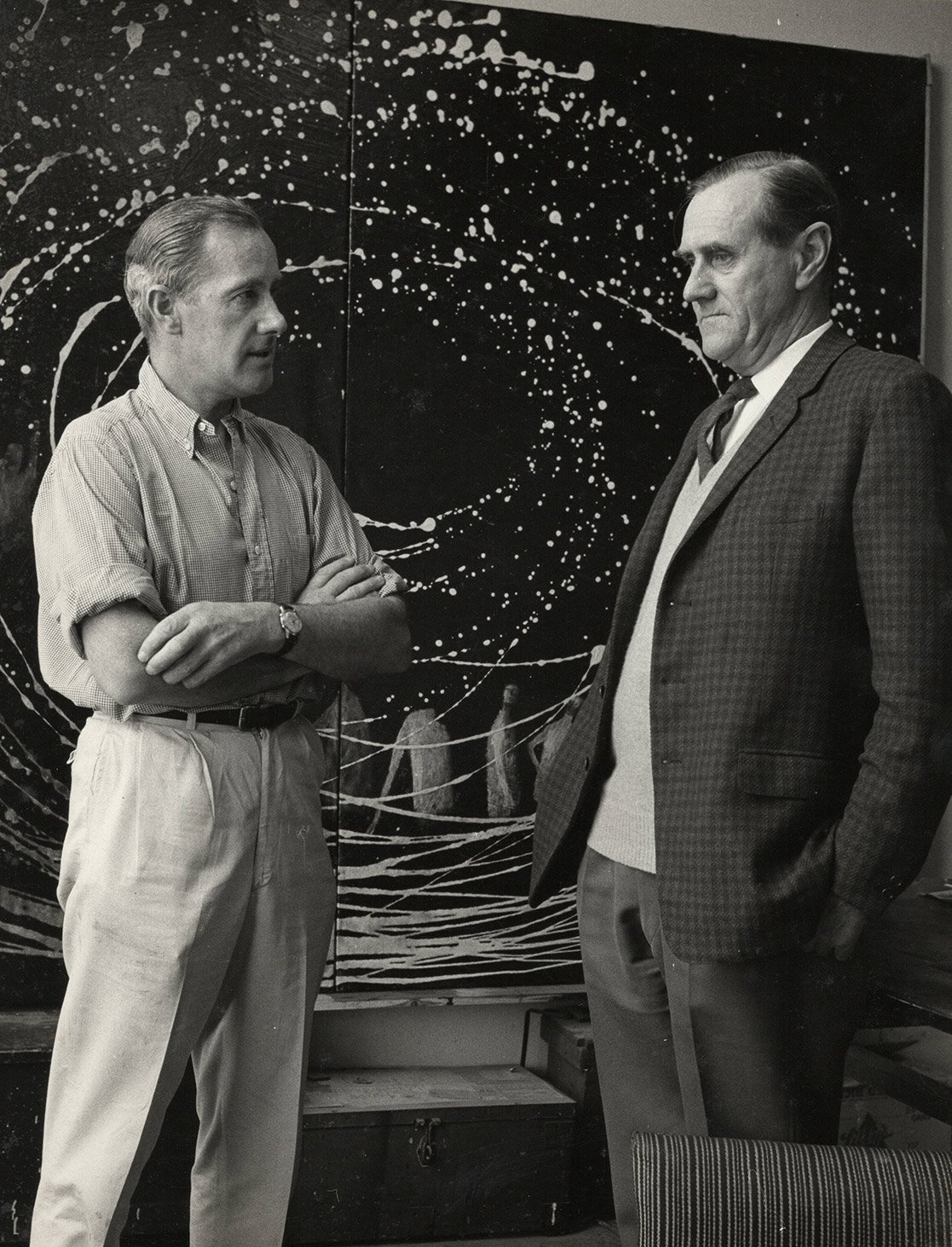
Sir Sidney Nolan OM, AC
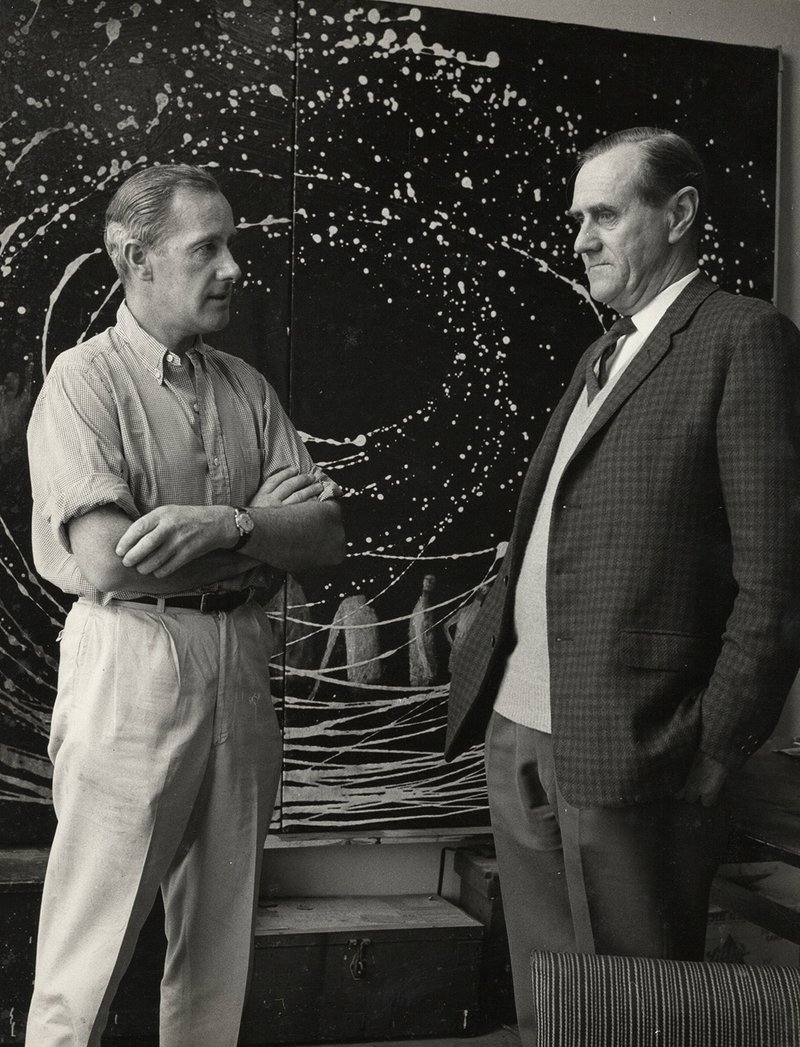 Click to enlarge image
© Courtesy of Jane Novak
Readers note: This is an excerpt from the 200 Treasures exhibition catalogue, developed in 2017. This content was written as a brief biography on why this person was included in the exhibition.
1917 - 1992
Sidney Nolan, one of Australia’s foremost twentieth-century artists, was born in Melbourne in 1917.
He studied at Victoria’s National Gallery School of Art in 1934 and 1936, and educated himself through study of the leading artists of the time such as Pablo Picasso, Henri Matisse and Paul Klee. Nolan was inspired by Modernism and Surrealism and attracted the patronage of John Reed and his wife, Sunday, in 1938.
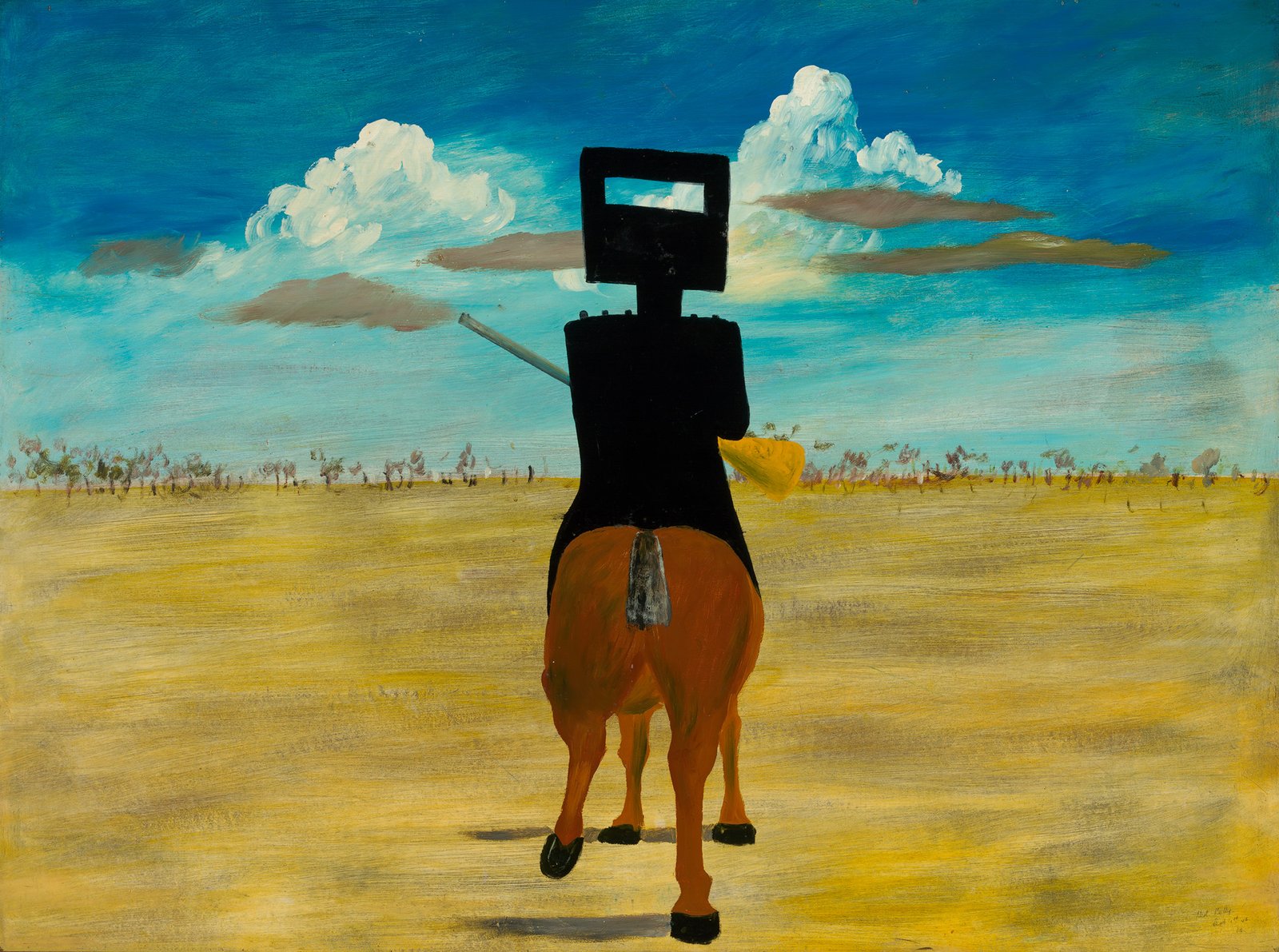
© National Gallery of Australia, Canberra
At the Reeds’ home, Heide, Nolan worked and mingled with other significant artists of the day. The lives, work and loves of this group, known as the Angry Penguins, have caused much intrigue.
Nolan’s first solo exhibition in 1940 was discouraging; he did not sell one painting. After joining the Citizen Military Force after the outbreak of World War II, Nolan produced some of his first most significant paintings of the areas where he was stationed around Wimmera, Victoria. His representation of landscape and stark figures within it is credited with reshaping Australian art. He then embarked on his most significant and famous works depicting the armour-clad bushranger Ned Kelly. These were the first of a series of works that focused on Australian myth and history. These works simultaneously elevated Nolan’s artistic reputation and the Kelly myth.
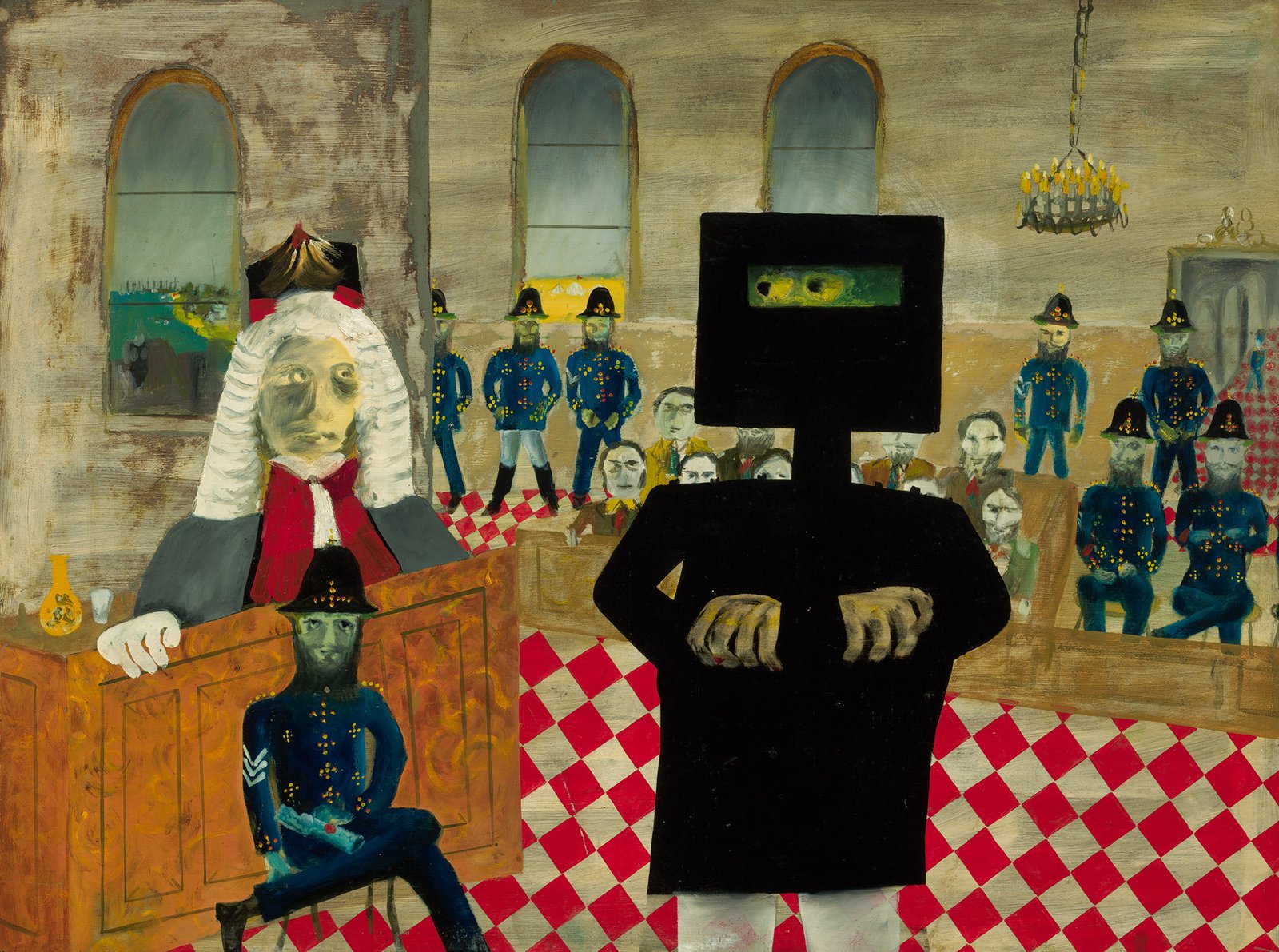
© National Gallery of Australia, Canberra

He would later depict Eliza Fraser, shipwreck victim in 1836, and doomed explorers Burke and Wills. Nolan’s international reputation grew in the 1950s when he left Australia to live in Europe. Here, Nolan continued his depictions of Ned Kelly and from 1955, his work was inspired by the Gallipoli campaign. These and other works were purchased by major collections, cementing his reputation at the forefront of Australian art.
He received many honours from the 1960s on, and in 1981 he was knighted.