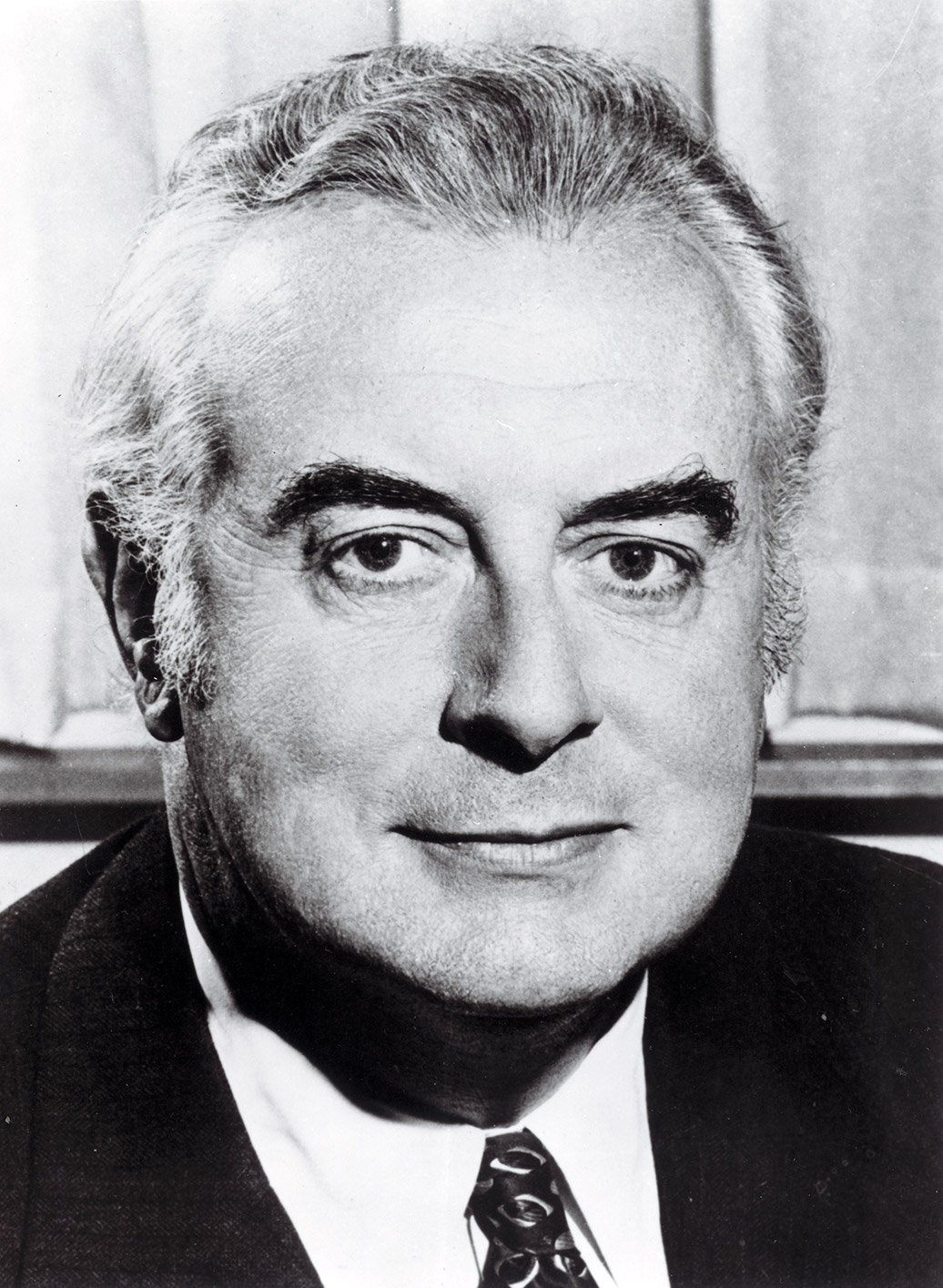
Gough Whitlam AC, QC
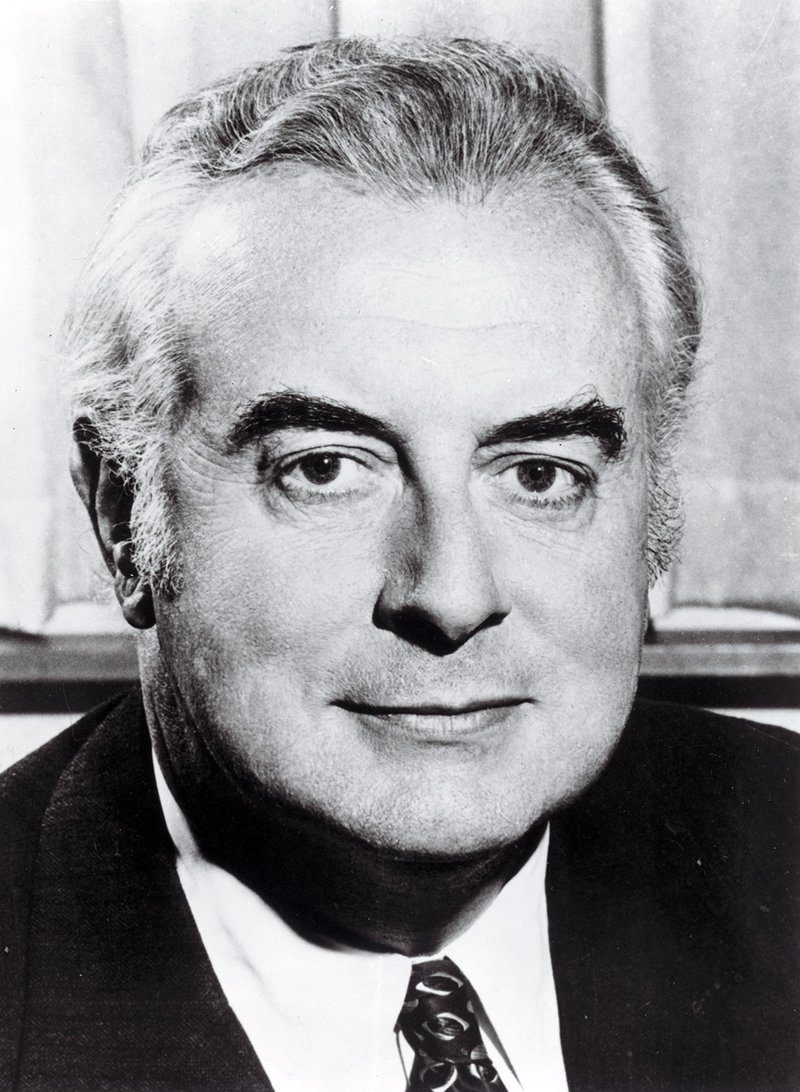 Click to enlarge image
© National Library of Australia
Readers note: This is an excerpt from the 200 Treasures exhibition catalogue, developed in 2017. This content was written as a brief biography on why this person was included in the exhibition.
1916 - 2014
Edward Gough Whitlam served as Australia’s prime minister from December 1972 until 11 November 1975, but in that short time he transformed the country. Whitlam came from an upper-class background but was wedded to ideas of social justice. He was a brilliant young man whose lack of modesty about his talents was a running joke throughout his long life and the stuff of legend.
Whitlam was born in Melbourne and raised in Canberra. He studied arts/law at the University of Sydney, where he met his future wife, Margaret Dovey. Whitlam served in World War II, and then practiced as a barrister from 1947. He gravitated towards the Labor Party, and won the southern Sydney seat of Werriwa in 1952. Whitlam was an agent for change within a divided and disillusioned party, but did not become its leader until 1967. His political rise coincided with the slow demise of the Menzies era.
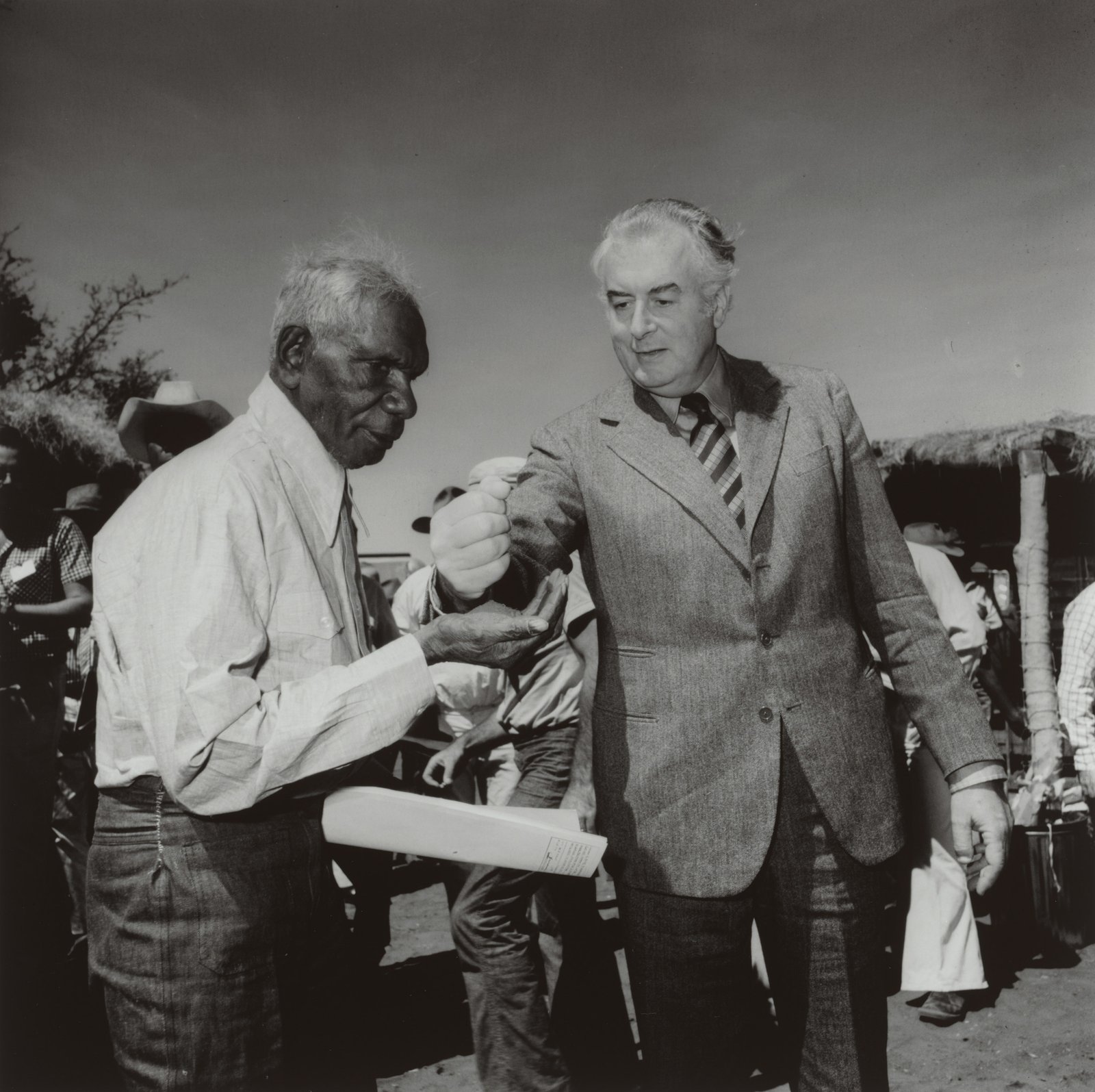
© National Library of Australia
When Whitlam finally won the federal election in 1972, his government introduced a revolutionary legislative agenda that removed many anachronisms that had held Australia in the past. Transformative changes included the end of military conscription to Vietnam, and the introduction of universal health care, free tertiary education and no- fault divorce. Whitlam championed Indigenous rights, the rights of women, and the cutting of imperial ties with Britain. He visited the People’s Republic of China and met Chairman Mao, the first Western leader to do so. Yet, for all his vision, the impact of the global economic stresses of the 1970s, compounded by financial incompetence within his government, generated what would become Australia’s greatest constitutional crisis.

On Remembrance Day 1975, the governor-general dismissed Whitlam’s government, and a month later, the Labor Party lost the election to Malcolm Fraser. Whitlam remained a public figure until his death in 2014, when it was widely agreed, even by his detractors, that he was a colossal figure in Australian history.