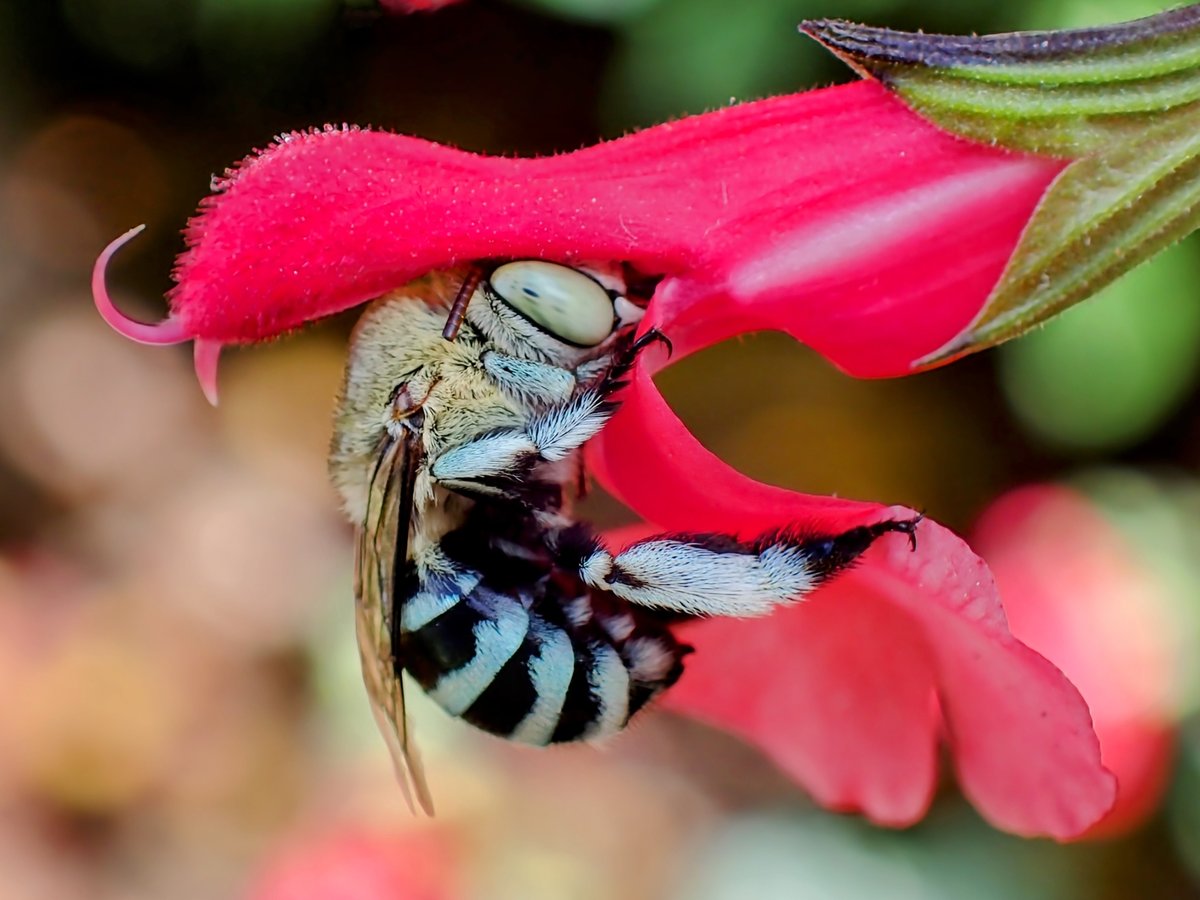
Common Blue-banded Bee
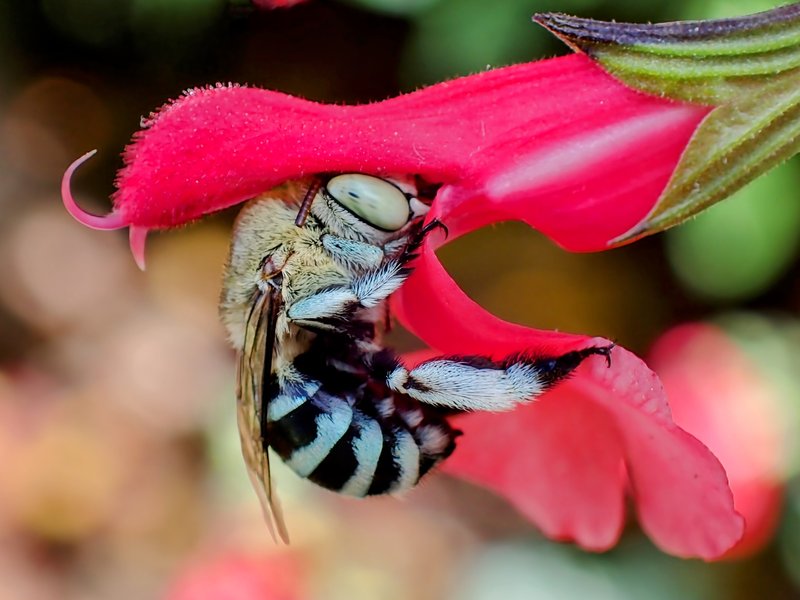 Click to enlarge image
CC BY-NC 4.0
Fast Facts
-
Classification
- Genus
- Amegilla
- Species
- chlorocyanea
- Subfamily
- Apinae
- Family
- Apidae
- Super Family
- Apoidea
- Suborder
- Apocrita
- Order
- Hymenoptera
- Class
- Insecta
- Subphylum
- Uniramia
- Phylum
- Arthopoda
- Kingdom
- Animalia
-
- Size Range
- 1.2 cm
A regular visitor to Sydney gardens is the Common Blue-banded Bee.
What do Common Blue-banded Bees look like?
Identification
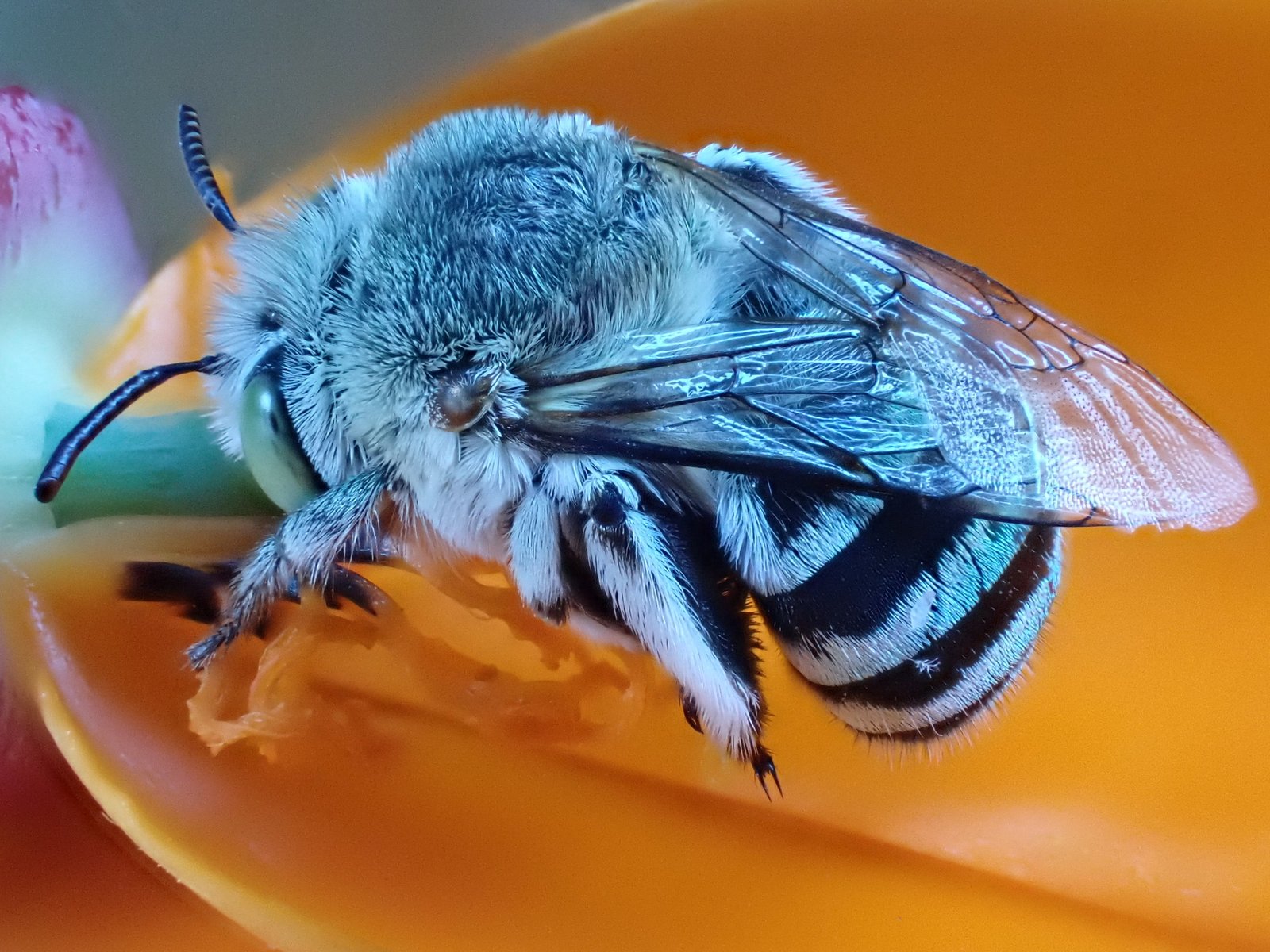
The Common Blue-banded Bee stands out because of the blue bands across its black abdomen and because of its darting, hovering flight pattern. There are several different species of bees that have this common name, each having somewhat iridescent blue or turquoise hair bands on the abdomen. This species of bee can be differentiated by the other species by the blue/green iridescent hairs on the fore and mid legs.
CC BY-NC 4.0
Where do Common Blue-banded Bees live?
Habitat
The Common Blue-banded Bee lives in urban areas, forests and woodlands, and heath.
Distribution
The Common Blue-banded Bee is found throughout most of Australia.
What is the life history cycle of Common Blue-banded Bees?
Other behaviours and adaptations
These bees are highly effective buzz pollinators. The bees vibrate at a certain frequency, shaking both the stamen and anther inside the flower, easily extracting pollen. They do this by curling their bodies around the anther and banging their heads. Regular honeybees are not able to do this.
Life history cycle
This species of bee can burrow to make nests; often in the ground but they have been known to choose other nesting sites, including decaying sandstone, soft mortar and inside termite nests built in tree hollows. The nest shaft is often short, with the cells built at the end. These cells contain an egg with pollen/nectar for the emerging larva. Females can nest by themselves or with multiple individuals where thousands of nests may be occupied.