
Lizard Island Coral Reef Study Tour

On this page...


Lizard Island Coral Reef Study Tour 2026
Lizard Island Coral Reef Study Tour for Students 4-11 October 2026
Are you in Year 11 this year and studying Stage 6 Biology, Stage 6 Living World of Science, or Stage 6 Marine Science? Are you passionate about science and nature? Would you like to learn more about coral reefs? If this sounds like you, we invite you to apply for one of 16 places on the Lizard Island Coral Reef Study Tour 2026.
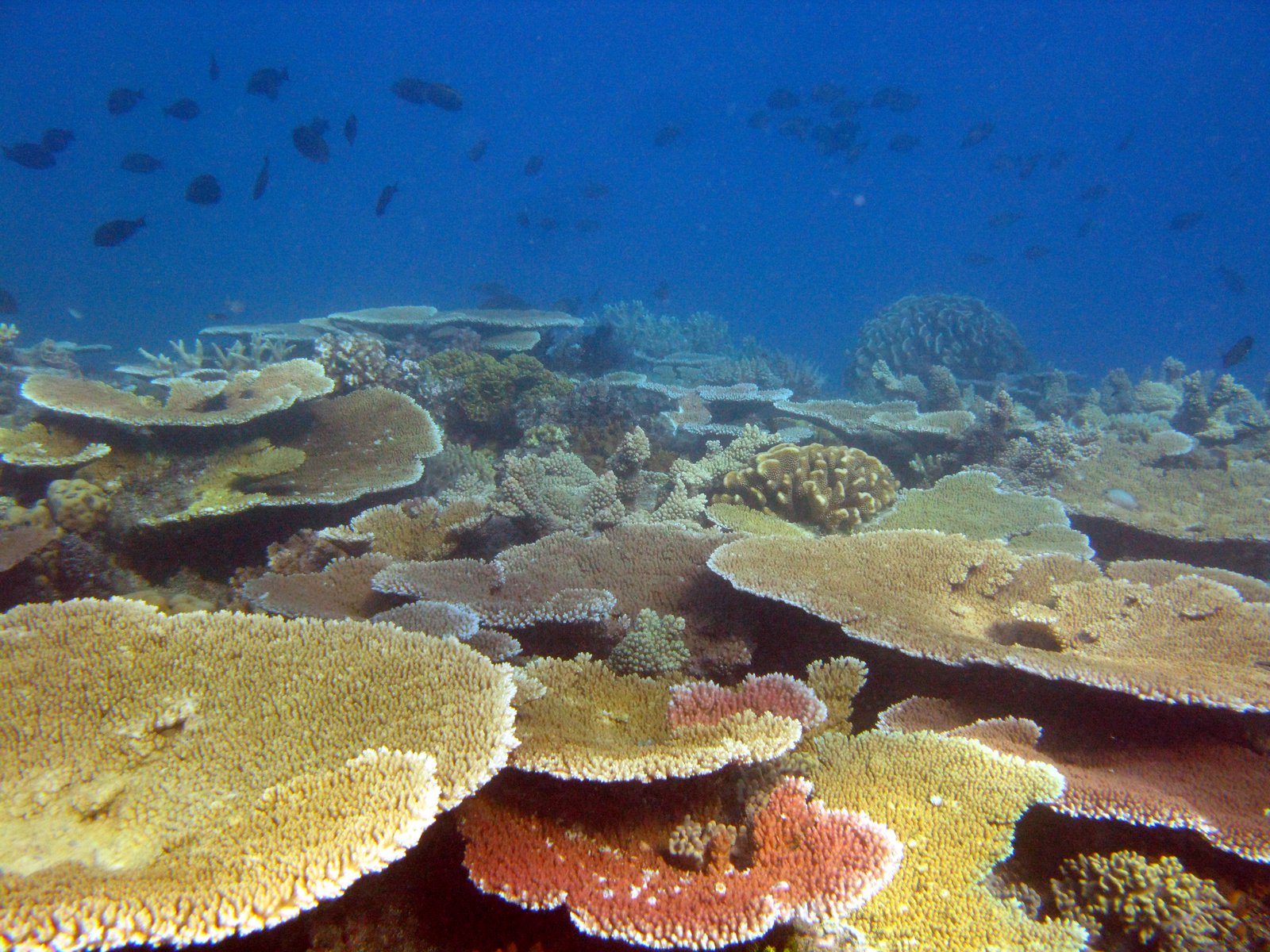
These beautiful reef ecosystems are home to huge biodiversity and currently undergoing a period of rapid change. This tour will provide field research experience and excellent case studies for senior biology students.
What is the program?
The Lizard Island Coral Reef Study Tour is an immersive, live-in educational experience in coral reef science on the Great Barrier Reef led by marine scientists.
Where?
The Australian Museum’s Lizard Island Research Station, an hour’s flight north of Cairns.
When?
4 to 11 October 2026
Who?
The 2026 study tour for Students is open to Year 11 students enrolled in 2026 at any school in NSW and who are studying Stage 6 Biology, Stage 6 Living World of Science, or Stage 6 Marine Science.
We are looking for students that can demonstrate enthusiasm for learning about coral reefs and can communicate how this experience will benefit their studies.
How much?
The cost of this trip, starting in Cairns, is covered by the Lizard Island Reef Research Foundation. The only cost to participants is for their own travel between home and Cairns, and for travel insurance which covers any activities that will be undertaken as part of the trip.
The program covers flights between Cairns and Lizard Island, accommodation at Lizard Island Research Station, food, a busy educational program run by marine science professionals, and equipment for boating and snorkelling. The program is valued at $4,000 per person.
How can I take part?
Application details are below. Selection is based on meeting eligibility criteria, a personal statement, and a letter of support. Applications close on 17 July 2026. We will let you know the result of your application by 21 August 2026.
About the program
Lizard Island Research Station (LIRS) is a coral reef research facility that is owned and operated by the Australian Museum. The Research Station is situated at Lizard Island (Jiigurru) on the Great Barrier Reef, 270 km north of Cairns.
Researchers from all over the world come to LIRS to study various aspects of coral reefs. Their discoveries are published in scientific journals and the information is used by reef managers. Coral reefs are facing many challenges including climate warming, crown-of-thorn starfish outbreaks, and cyclone damage. Much research effort is currently going into understanding these impacts and ways to manage them.
Participating in LICRST was an eye-opening experience. I never truly understood the intricacies of coral reefs until I witnessed their extent first hand. What amazed me most was their remarkable ability to recover from adversity. Student participant in 2023
In my 31 years of teaching there is nothing that I have done that comes close to this experience and the impact that it will have in my classroom. Teacher participant in 2024
The 2026 Lizard Island Coral Reef Study Tours will be led by Dr Justine Jacob and her staff. Dr Jacob is a marine scientist and a past recipient of the Lizard Island Reef Research Foundation Doctoral Fellowship. She is a Lead Science and Mathematics teacher at Emmanuel Anglican College in NSW and has many years of experience leading student and research groups at Lizard Island. The daily program is diverse, involving snorkelling from boats, conducting field research, and classroom sessions covering coral reef biology topics to support the field experiences. There will be substantial input from the LIRS Directors, Dr Emily Howells and Dr David Abrego, who are marine scientists with over two decades of coral research experience. The group will also interact with visiting scientists which will help provide a broad overview of coral reef science.
Program details
Participants must make their own travel arrangements between home and Cairns. Arrive in Cairns no later than midday on the first day of the tour to connect with a chartered flight to Lizard Island that will depart Cairns at about 2:00 pm. For the return trip, a chartered flight from Lizard will arrive in Cairns at about 11:30 am. Your onward flight should not depart Cairns before 1:30 pm on the last day of the tour.
In Cairns, participants must make their own way to the General Aviation terminal, on the opposite side of the runway to the domestic terminal. It’s a 10-minute taxi or Uber ride costing about $20. On departure, the reverse procedure applies.
The group will board two light aircraft for the hour-long flight north to Lizard Island over the dazzling Great Barrier Reef. Research station vehicles will meet the group at the airstrip for the 10-minute trip across the island on a rough, sandy track.
Baggage is strictly limited to 20 kg per person including cabin baggage. The Australian Museum is not responsible for loss or damage to personal property during transit or at the research station.
The group will occupy two adjacent 3-bedroom houses. The bedrooms are either 3-share or 4-share. Each house has two bathrooms and a well-equipped kitchen.
The group leaders will prepare menus and order food from Cairns for delivery to the island by barge prior to the group’s arrival. Any food intolerances will need to be advised in advance for meal planning. Please note that participants with extreme food intolerances or allergies may not be able to be accommodated. Everyone in the group will be rostered to contribute to cooking, washing up and doing other household tasks.
There are no medical facilities at Lizard Island. All LIRS staff and LICRST staff are highly trained first aiders and LIRS has advanced first aid equipment on site. The Royal Flying Doctor Service can provide phone consultations and emergency medical evacuations.
All participants will be required to advise any medical conditions that may affect their ability to snorkel safely and to provide information about any medications that are taken regularly or carried routinely in case of need. The Australian Museum may ask participants to complete a risk and physical capability assessment and medical plan which will require disclosure of personal health information.
A good level of physical ability is required to take part in this trip due to its remote location and the nature of the activities. All participants must be able to swim at least 100 metres in a pool without aids comfortably, and to float on their back and tread water for at least five minutes. Participants must also be capable of getting in and out of small boats and light aircraft, climbing stairs, and walking on soft sand. For the safety of each participant, the Australian Museum reserves the right to determine at its discretion as to whether it will accept any participant after conducting its health and medical risk assessment.
Safety is of paramount importance at LIRS. LIRS has an excellent safety record with well-developed procedures in place for boating and snorkelling that are based on thorough risk assessment. Importantly, it is a small, well-run community of scientists with a kind and caring ethos.
The only mobile carrier to reach the island is Telstra and that is only accessible in a small area close to a booster antenna at LIRS. Participants who have Telstra as their provider can use their own device for phone and internet access. Wifi access is provided free of charge. There is a single desktop computer available for the group to share.
A list of clothing and equipment required for the trip will be provided prior to the trip. It is not extensive.
Snorkelling equipment will be provided at LIRS free of charge, including lycra suits for sun protection, wetsuits if needed, and masks, snorkels and fins.
Successful applicants will need to book and pay for their own travel between home and Cairns.
The program can reimburse participants for part of that cost if they make a statement of need for these funds with their application: up to $300 for people based in Greater Sydney and up to $500 for those based in other parts of the state. Reimbursement will be made within two weeks of the end of the trip on the basis of a valid tax invoice for the fare being provided.
Please explore options within your school and community to obtain funding for the airfare before requesting travel support.
We urge anyone with the means to cover their travel to Cairns to not request travel support. That will enable our funding to go further, enabling benefits for other teachers and students in future.
Monday 18 May - Applications open
Friday 17 July - Applications close
Friday 21 August - Offers made, including for travel support
Early September- Information meeting
- A Zoom meeting will be set up to allow participants and key personnel involved with the trip to meet and ask questions.
Sunday 4 October - Trip begins
Check in for the light aircraft flight to Lizard Island one hour before departure. There you will meet the trip leader, Dr Justine Jacob and her staff.
- Remember that the baggage limit is 20 kg per person, including all cabin baggage.
- Arrive at Lizard Island, transfer to LIRS by 4WD.
- Settle into accommodation, 3 or 4 people per room.
- Welcome and orientation session with LIRS Directors, Dr Emily Howells, Dr. David Abrego, and trip leader, Dr Justine Jacob.
- Sunset swim and beach barbecue.
Next days - Activities on the trip
- A normal day will include lectures, field activities involving boating and snorkelling at locations around Lizard Island, and discussions with visiting researchers.
- Meals are prepared by the group on roster.
Saturday 10 October
Report and evaluation due
- Submit a report with photos to LIRS about the group’s experiences, to which all participants have contributed. Guidelines will be provided.
- Complete an online evaluation form about the program.
- Final beach barbecue with all LIRS residents.
Sunday 11 October - Final day of trip
- Undertake the departure day chores that are required of all LIRS visitors.
- Depart Lizard Island at approximately 10:30 am, arrive in Cairns at 11:30 am. Weather can affect the schedule, which is why at least two hours between flights is recommended.
After the trip
- Additional feedback from participants may be sought to inform the development of future programs.
- Some participants may be invited to become involved in additional activities to promote the work of the LIRRF.
What do I need to do before starting the online application process?
Follow the How to Apply instructions carefully (below). You’ll need to prepare a personal statement outlining how you will benefit from the opportunity. Students will need to provide a letter of support from their Stage 6 Biology, Living World of Science, or Marine Science teacher.
I’ve never snorkelled before. Is that a problem?
If you’re a good swimmer, you will learn to snorkel quickly with the help of the course instructors and the high-quality gear that is provided at LIRS. If you’re not a good swimmer, you will probably have difficulty and that is why we require a certain level of ability to take part in this trip. Being a “good swimmer” in this context is not about winning races. See Eligibility (below) for a guide to what is required.
Where do I find more information about Lizard Island Research Station and the Lizard Island Reef Research Foundation?
Go to https://australianmuseum.net.au/get-involved/amri/lirs/ and https://lirrf.org
Application details
All applicants must meet eligibility criteria 1 and 2.
Eligibility criterion 1: Current status
You must be enrolled in Year 11 at any school in NSW and studying Stage 6 Biology, Stage 6 Living World of Science, or Stage 6 Marine Science.
Eligibility criterion 2: Swimming and physical abilities
The trip is physical in nature and all participants must be able to take part safely in water and other field activities. As such, you need a certain level of physical ability and skills. As a guide, you should be able to:
- swim 100 metres in a pool easily, without aids and at your own pace;
- float on your back and tread water for at least 5 minutes with ease, so that you feel comfortable in water that is deeper than you are tall; and
- walk on soft sand, climb stairs, get in and out of light aircraft and small boats.
Applications will be assessed using the following criteria and marking weights:
Application is submitted in the required format (10%)
For example, the online application form is completed correctly, all documents meet stated guidelines and are uploaded correctly (see How to Apply).
Personal submission (video or written) makes a strong case for the applicant’s inclusion (75%)
For example, applicant clearly demonstrates their interests and motivations. We are looking for good communicators and thinkers who will be able to use this experience to benefit coral reef conservation into the future.
Supporting letter demonstrate that the applicant has qualities that are relevant to the opportunity (15%).
Personal submission
Students: Tell us why you want to come on the trip and how this opportunity can benefit your plans for future schooling, community involvement, or conservation ideas.
Your personal submission can be in one of two formats: either i) a short video (2 minutes maximum) that features you, or ii) a document of no more than 3 pages that may include photos or other images. While good presentation is encouraged, you will be judged on how well you communicate your motivation and reasons for inclusion in the program rather than on slick production values or artistic skill. Make sure you address the eligibility and selection criteria and read the conditions. If you are requesting Travel Support (to get to Cairns), you must include your statement of financial need in your personal submission.
If submitting a video, it must be uploaded to Vimeo and you must provide the link to it in the online application form. It is your responsibility to ensure that the link works. High resolution MP4 is preferred for Vimeo uploads. If you wish to password protect your video, please use the password LizardIsland2026. Please record a minimum of 5 seconds of black before the start and after the end of your program. These 10 seconds are not included in your time limit.
If submitting a document, it must be a word (.docx) or pdf only.
Read Conditions of Application (below) carefully for additional information about preparing your personal submission.
Letter of support from school
Students: Provide a letter of support from your Stage 6 Biology, Stage 6 Living World of Science, or Stage 6 Marine Science teacher.
Application form
When your personal submission and letter of support are ready, complete the online application through the links below. The documents will be uploaded through that form.
Closing date
11.59 pm AEST Friday 17 July 2026
Each school may support a maximum of two applications for each trip. If more than two students at the same school wish to apply, the school must determine the most suitable candidates.
Video applications should be no less than one minute and no longer than two minutes in length, including any titles and credits. Judges will only consider the first two minutes of an entry that exceeds the time limit.
Written applications should be no more than three A4 pages including any images. Allow for easy reading by providing sensible margins, font size and spacing. A smaller number of images at larger size is better than a large number of tiny images. Judges will only consider the first three pages of an entry that exceeds the page limit.
Copyright considerations are the responsibility of the applicant. All sources of information, including any illustrations and music, should be clearly referenced, acknowledged and/or credited.
The online application form must be submitted no later than 11:59 pm AEST Friday 17 July 2026.
Applications submitted after that time will not be considered. Applications containing a video link in which the video link does not work will not be considered.
If you experience issues in uploading your application or have concerns about what has been uploaded, you must email lizard@australian.museum before the close of applications. Applications cannot be added or modified after the close of applications under any circumstances.
The deliberations of the selection panel remain confidential. All recommendations and decisions taken are final and no correspondence will be entered into on such matters.
Information provided by applicants in relation to the Lizard Island Coral Reef Study Tour 2026 (including photos and video), may be used by the Australian Museum and/or the Lizard Island Reef Research Foundation for promotional/publicity purposes. This may include, and is not restricted to, the information being used on websites, social media, printed material, advertisements, press releases etc. and given to the media.
Before the end of the trip, participants are required to contribute to a joint report on their experience. That report must include short individual reflections by each participant. An online evaluation form must also be completed by each participant before departure from Lizard Island.
The cost of the trip will be covered by the Lizard Island Reef Research Foundation. However, you must pay for your own return travel between home and Cairns, and purchase your own travel insurance which covers any activities that will be undertaken as part of the trip. If requested, you must provide a copy of your travel insurance policy certificate. If your successful application included a statement of financial need for Travel Support, you will be reimbursed for travel costs between home and Cairns: up to $300 (residents of Greater Sydney) and up to $500 (residents elsewhere in NSW), or the value of the fare, whichever is lower. Reimbursement will be made by bank transfer within two weeks of the end of the trip, provided that both a valid tax invoice for the fare and bank details are provided before the end of the trip. If these things are not provided before the end of the trip, reimbursement will not be made.
Additional feedback from participants may be sought to inform the development of future programs. Some participants may be asked to be involved in additional activities to promote the work of the LIRRF and the Australian Museum.
Personal information provided to the Australian Museum for the Lizard Island Coral Reef Study Tour can be used by the Australian Museum and the Lizard Island Reef Research Foundation. Such use will only be in connection with the Lizard Island Coral Reef Study Tour.
No applications will be received or considered after the closing date and time.
Failure to meet all conditions of entry will automatically disqualify an entry.
