Moon Jelly
 Click to enlarge image
CC BY-NC 4.0
Fast Facts
-
Classification
- Genus
- Aurelia
- Species
- coerulea
- Family
- Ulmaridae
- Order
- Semaeostomeae
- Class
- Scyphozoa
- Phylum
- Cnidaria
- Kingdom
- Animalia
-
- Size Range
- 40 cm
Introduction
The Moon Jelly is a common ocean animal and can sometimes be extremely abundant.
What do Moon Jellies look like?
Identification
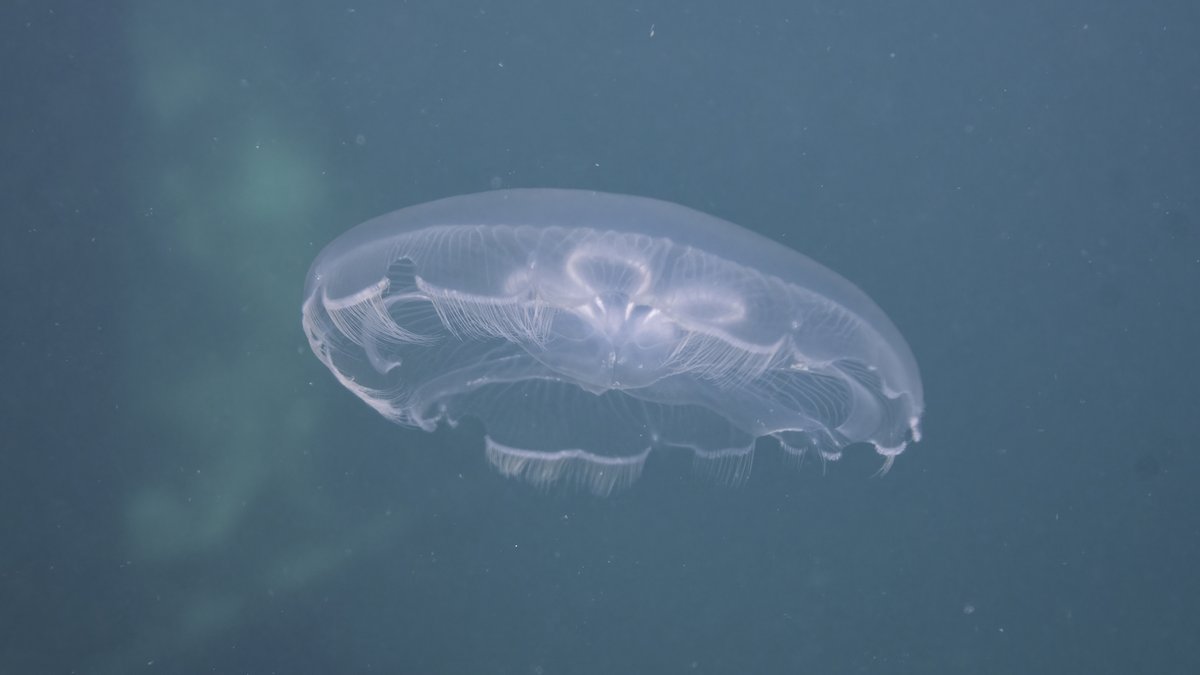
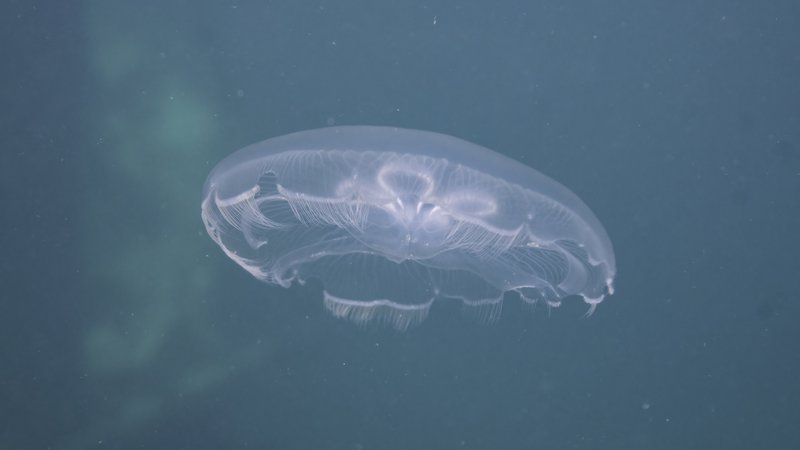
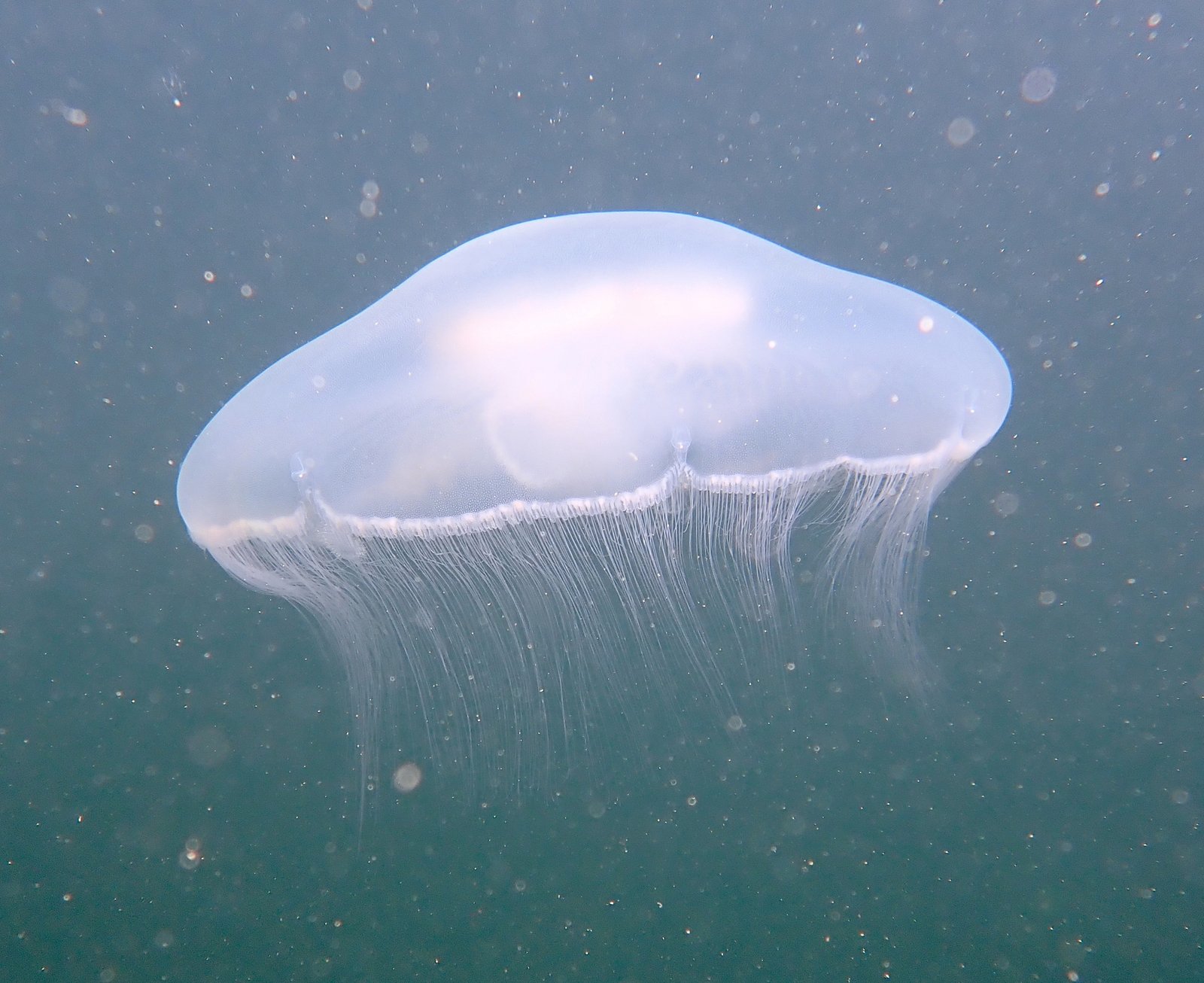
It has a transparent jelly-like bell with four horseshoe-shaped, pinkish reproductive organs that surround a square mouth. At each corner of the mouth a feeding tentacle hangs down into the water below.
CC BY-NC 4.0
Where do Moon Jellies live?
Habitat
Moon Jellies live in oceans, coastal waters and estuaries.
Distribution
Moon Jellies are found throughout Australia.
What do Moon Jellies eat?
Feeding and diet
At each corner of the mouth in Moon Jellies a feeding tentacle hangs down into the water below. These are equipped with stinging cells (nematocysts) to capture small prey that are dragged inward towards the mouth.
How have Moon Jellies adapted?
Other behaviours and adaptations
The outer edge of the Moon Jelly's bell also has tentacles, as well as eight special sensory organs that tell the jellyfish where it is in the water column. Currents may sweep many of these jellyfish into sheltered bays and they are often washed up on beaches.
Predators
The Moon Jelly is one of the favourite foods of many species of turtles.