Freshwater Shrimp
Yabbie
 Click to enlarge image
CC-BY 3.0
Fast Facts
-
Classification
- Genus
- Paratya
- Species
- australiensis
- Family
- Atyidae
- Suborder
- Pleocyemata
- Infraorder
- Caridea
- Order
- Decapoda
- Superorder
- Eucarida
- Class
- Malacostraca
- Subphylum
- Crustacea
- Phylum
- Arthopoda
- Kingdom
- Animalia
-
- Size Range
- 7 cm
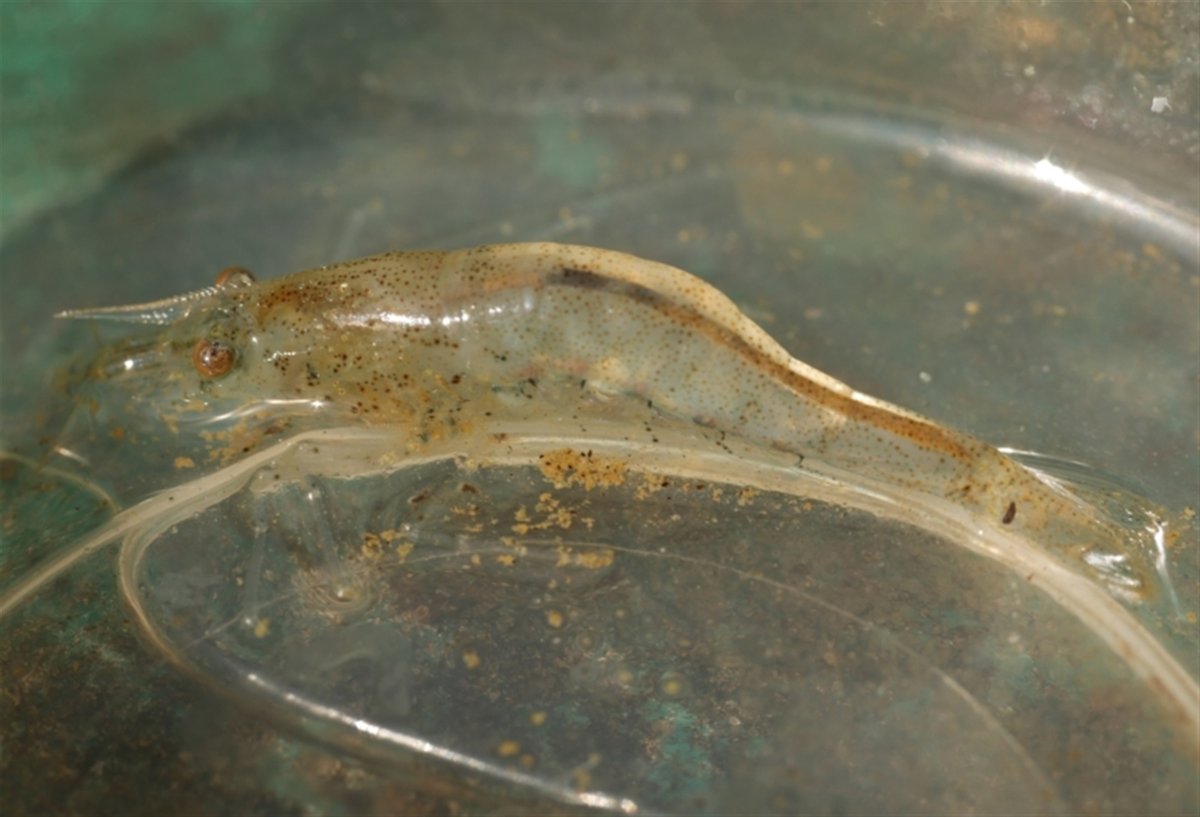
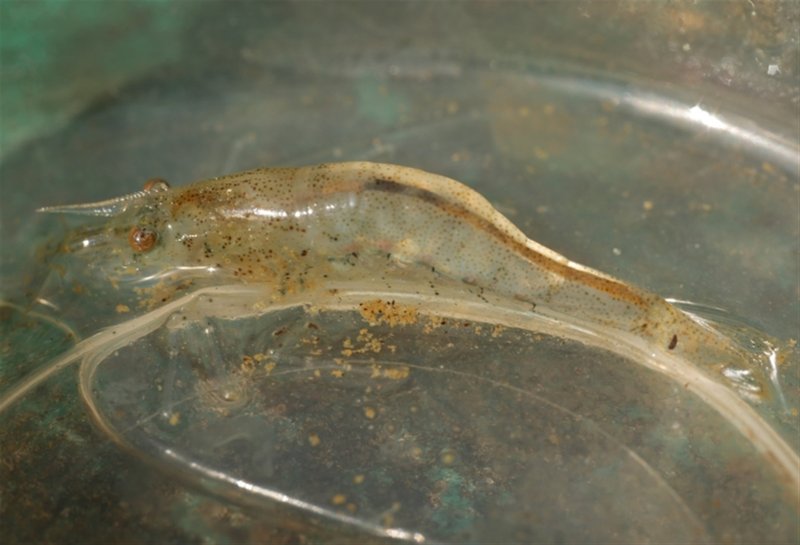
The most widespread freshwater shrimp in eastern Australia, the Freshwater Shrimp (Paratya australiensi) uses a flick of the tail to move quickly and escape from predators.
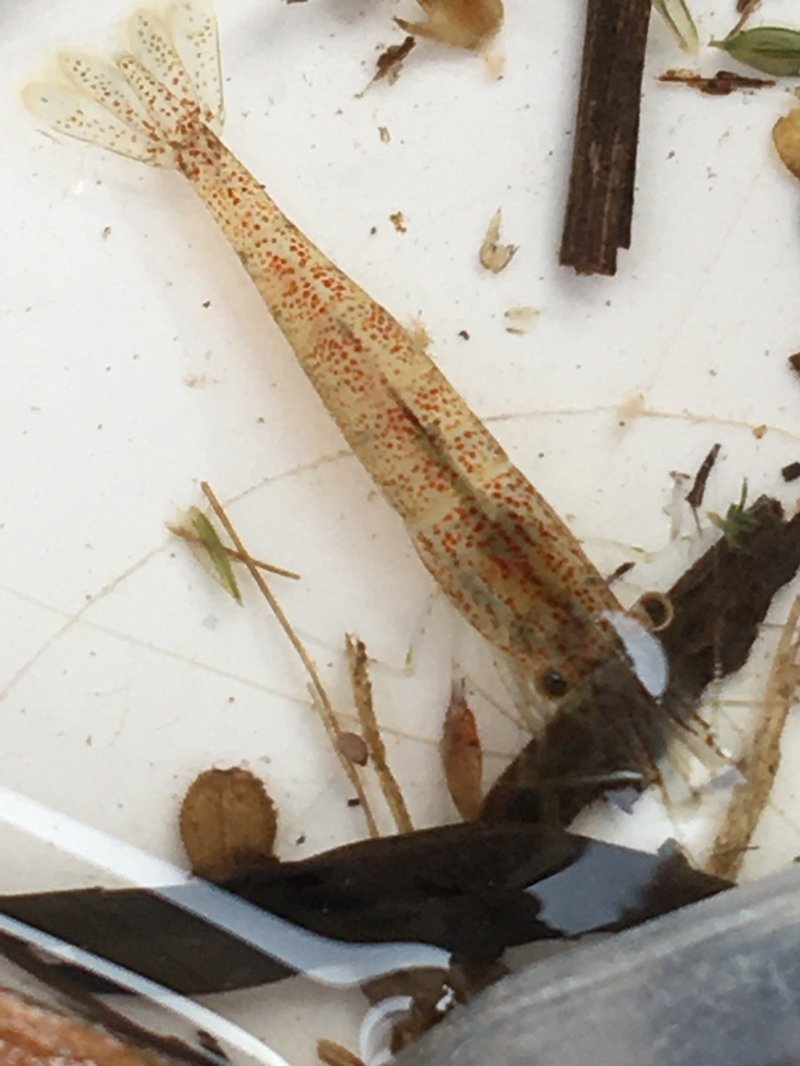
Freshwater Shrimp (Paratya australiensis) is small with a translucent mottled body. They are decapods, with five pairs of long thin legs.
Image: Ned_JohnstonCC-BY 3.0
Identification
Freshwater Shrimp have mottled transparent bodies. As decapods, they have five pairs of long thin legs. This small, translucent species is often mistaken as the young of a yabbie.
Habitat
The Freshwater Shrimp lives in freshwater creeks and streams. It mainly occurs in slowly flowing or still waters in lakes, creeks and lowland streams as well as lower areas of estuaries. It is usually found in aquatic vegetation at the edge of the water.
Distribution
The Freshwater Shrimp is found in Central Queensland, New South Wales, Victoria, Tasmania and South Australia. It is common in Sydney's freshwater creeks and streams, and is an important food source for many fishes and the Platypus.
Behaviours and adaptations
Freshwater Shrimp usually gather at the edge of the water, among submerged vegetation.
They use hairlike setae at the ends of the fingers to scrape food from the sand.