
Tips from a finalist teacher
Annie Martin is a science teacher who has spent many years supporting her students to enter the Australian Museum's school science film competition. Throughout this time, many of her students have had their films shortlisted, and some have even gone on to win their category! In this blog, the Eureka Prizes team speak with Annie about her passion for student science innovation and creativity, and she shares her top tips and tricks for supporting students to create the best films they can.
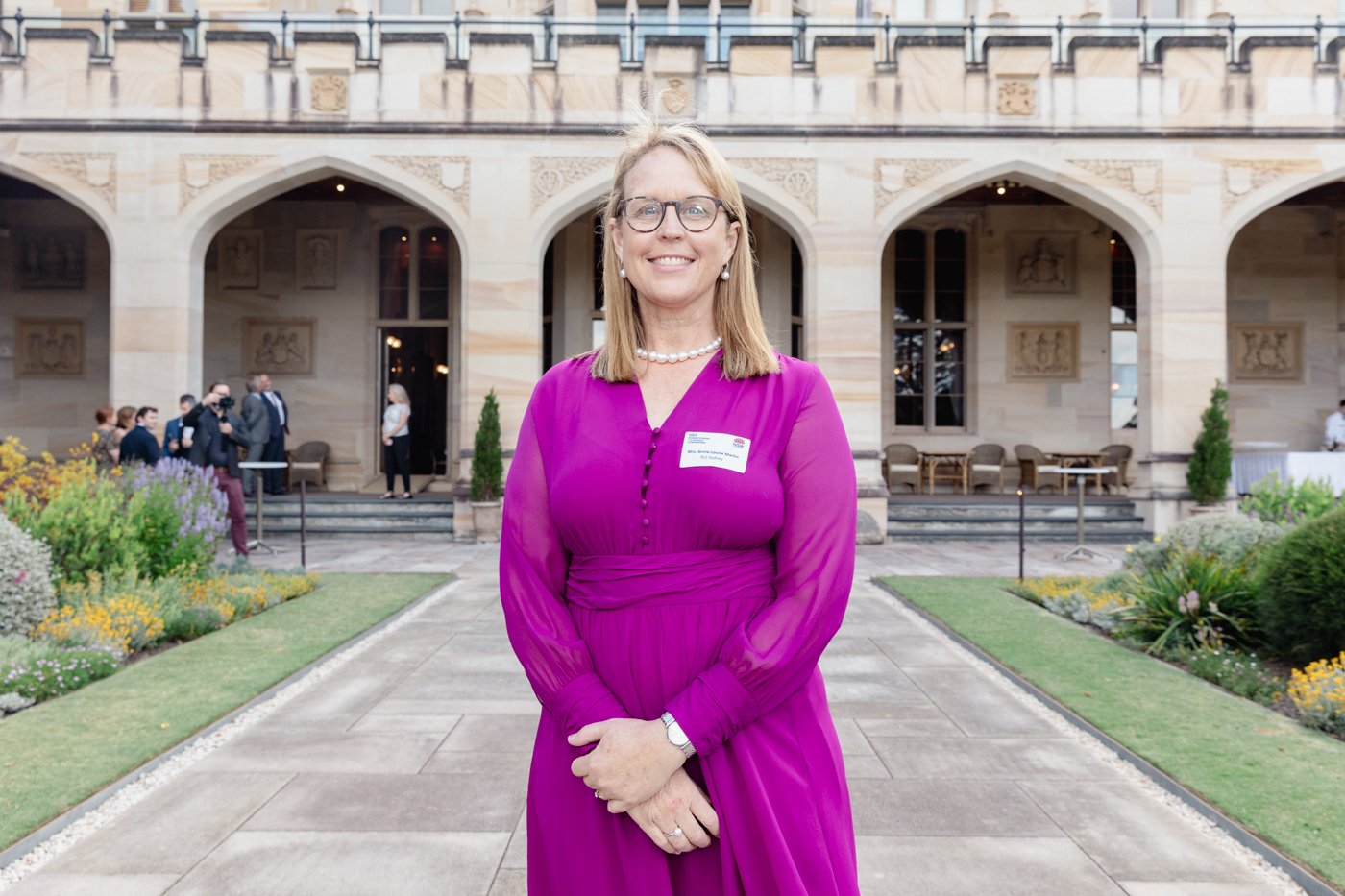
Science teacher Annie Martin.
Image: supplied© Australian Museum
Can you tell us a little bit about yourself, your position and your relationship to the Australian Museum Eureka Prizes?
My name is Annie Martin, and I’ve been teaching Science for over 30 years. I began as a high school science, HSC Chemistry and HSC Biology teacher. Over time I realised I had a passion for teaching younger students as I wanted to capture and promote their curious nature, and so for the last 14 years I was a primary school Science and Technology coordinator. It is in that role that I developed an extra-curricular program for innovation and creativity in science as well as curriculum science in the classroom. In 2026 I have taken on a new role as a Year 9 Science teacher for St Aloysius College, Rozelle Campus. I was a syllabus writer for NESA for the most recent K to 6 Science and Technology syllabus and I am on the council for the Science Teachers’ Association of NSW, regularly presenting workshops and helping organise conferences and other such events. In 2023, my contribution to science teaching was recognised by being awarded the NSW Premier’s Prize for Innovation in Science, Technology, Engineering and Mathematics Teaching.
Over time I realised I had a passion for teaching younger students as I wanted to capture and promote their curious nature.
You have been supporting your students to enter the School Science Eureka Prize for many years. What made you want to build this competition into your school’s science curriculum and what keeps you coming back to it year after year?
In today’s world, information is at our fingertips. But interpreting the information and communicating it in an accessible way is a skill that I think we need to teach our students. I also like the idea of students pursuing passion topics and developing their independence with projects that take time, and I think this competition encourages the development of these skills.
Can you tell us a little bit about your approach to supporting students to enter the competition, both inside and outside the classroom?
I see my role as a mentor. In the real world, scientists work in teams and have colleagues to discuss and plan with and bounce ideas around with. So, I meet with my students on a weekly basis and chat with them about where they’re up to. It also helps keep them on track as big projects like this need to be broken down into small chunks to make them achievable. I meet my students in small groups, each week sharing their latest scenes. Often the sound and lighting is not quite right or a scene has gone on for too long without it really showing much, so together the students give each other constructive feedback which they usually like.
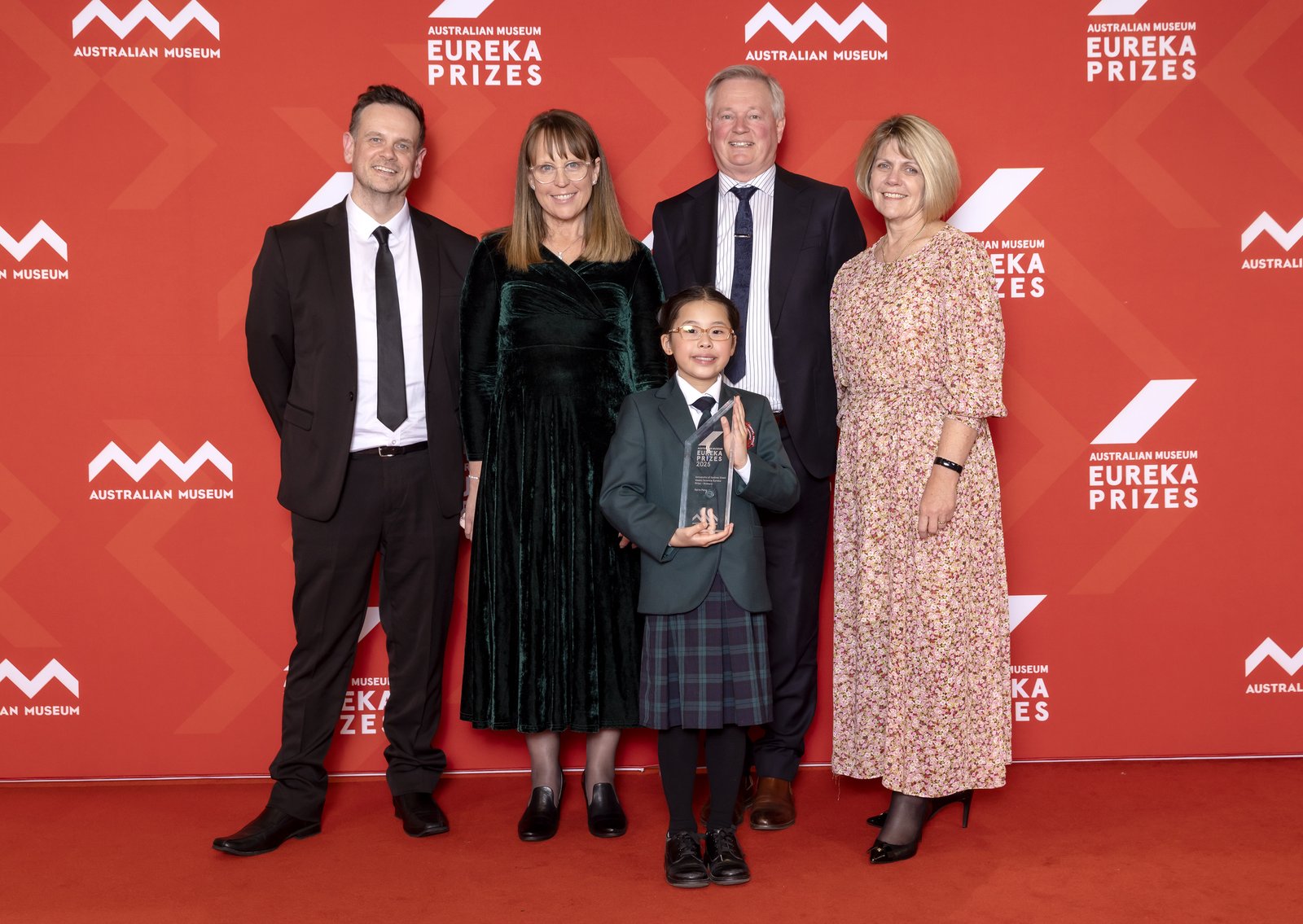
Science teacher Annie Martin with 2025 primary school winner, Keira.
Image: Mel Koutchavlis© Australian Museum
Over the years, many of your students have been recognised on the Eureka Prizes stage! What advice do you give them to make their films stand out to judges?
I always encourage my students to work out how to show and not necessarily tell. I like them to include experiments as part of their films as a way of engaging the audience. I also support them in ways to tell a story rather than give a list of facts.
Access to good technology and video editing software can sometimes make the filmmaking and editing process difficult. Do you have any advice for getting around this?
From my experience, filming on a smart phone and editing on WeVideo or iMovie is sufficient. I just get them to check the sound levels on each scene and reflect on the lighting, encouraging them to refilm a scene if these are not clear.
I always encourage my students to work out how to show and not necessarily tell.
What would your top three tips be to teachers who are wanting to support their students to create wonderful films?
- Take time at the beginning of the project to help your students pick a good topic – the topic needs to resonate with them and suit the theme. If they are passionate about their topic, they are more likely to make an engaging film.
- Check in with the students regularly to help keep them on track.
- Just a few tips on lighting and sound are as much as you probably need to “teach” your students. They are probably more familiar with creating movies than you realise, but do often get carried away.
What would be your top three tips to students who are interested in entering the School Science Eureka Prize?
- Pick a topic that you love and that you are genuinely excited about yourself.
- Research your topic thoroughly before you begin filming.
- Break your filming down into small chunks and plan all your scenes on a storyboard first.

Student of Annie Martin and 2024 primary school finalist, Eugenia.
Image: Supplied© Australian Museum
What excites you most about the School Science Eureka Prize?
I love that students have the opportunity to communicate science and engage in a project that they can be passionate about. We have our own screening of all the films that our school submits and every year I am so impressed with the level of their productions. When our students have been recognised with an award it is a bonus.
The Australian Museum Eureka Prizes are the country’s most comprehensive national science awards, honouring excellence across the areas of research & innovation, leadership, science engagement, and school science.
