
A serenade so fly it may be dangerous
Flies are tuning in to some frogs’ love songs, and their bloodthirsty motives may have even shaped frog evolution!
© Australian Museum
Why are flowers so bright and beautiful? Why do some birds engineer elaborate nests for show only? And why do fireflies light up the sky? The answer’s the same: over a billion years ago sexual reproduction evolved, starting a sexual arms race that never stopped.
Organisms are compelled by their genes to win at one thing: attracting a mate. To do so they use ‘sexual signals’. These can be visual signals like those used by fireflies, or even acoustic or chemical signals. Potential mates decode those ‘sexual signals’ to assess suitors’ availability and quality.
But what hasn’t evolved is sexual signal end-to-end encryption. Those flashy signals, meant to attract a mate, can be and are intercepted. Over half of all animal species are predators or parasites, many of which exploit sexual signals to find a meal. Universally broadcasting your availability is a dangerous game.
Sound is a tried-and-true sexual signal medium; think chorusing frogs. But sound makes things incredibly easy for ‘eavesdroppers’. Those frogs, arguably more reliant on mating calls than other vertebrates, can be loud. While a predator may not interpret ‘male Tusked Frog seeks mate, likes long hops on the pond’, the simpler message, ‘frog, over here!’, is quite effective.
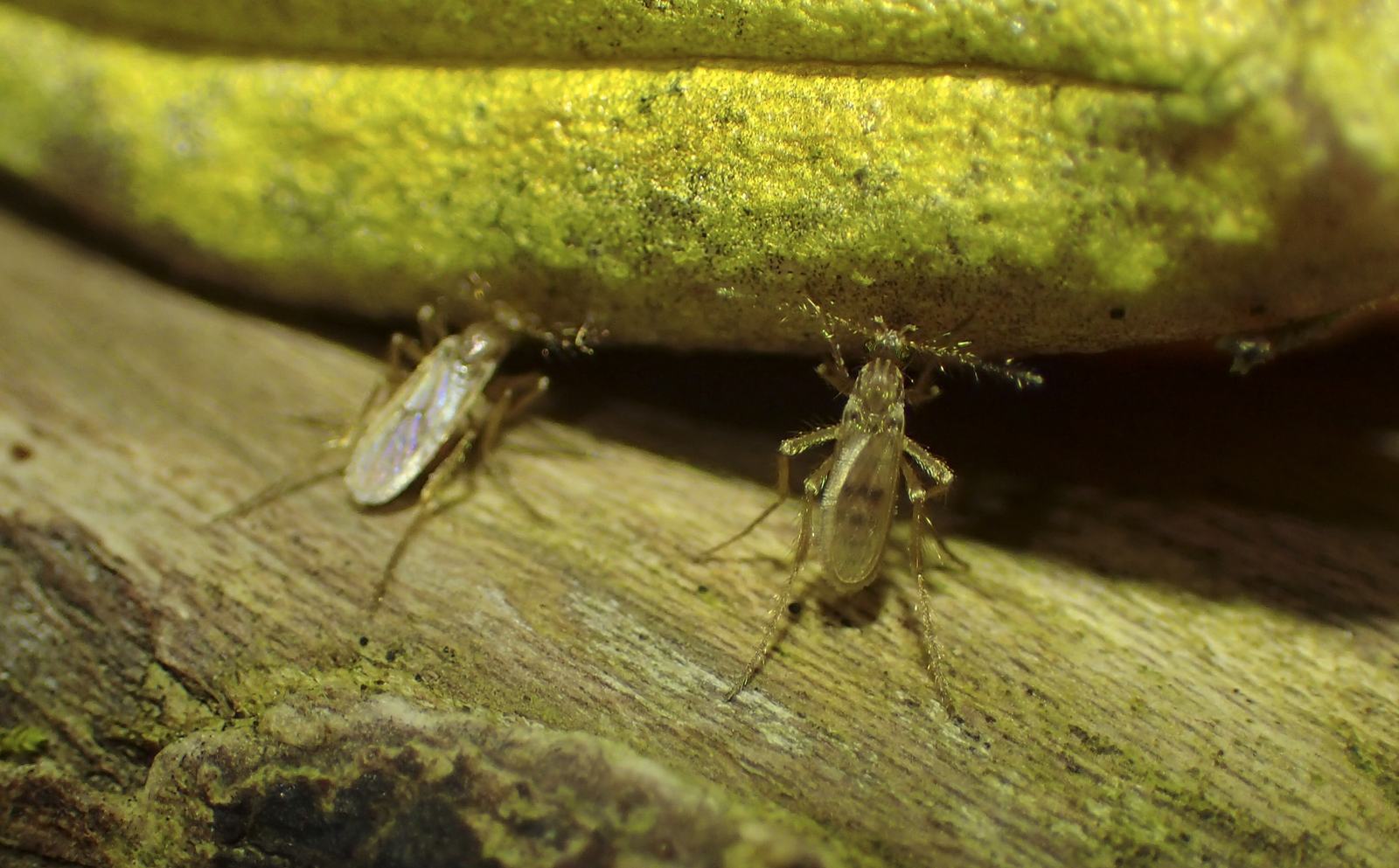
That simple message often has tiny but voracious predators coming in hot: frog-biting flies. Like mosquitos, female frog-biting flies need to drink blood to reproduce. But they get their meals exclusively from frogs and have evolved a surprising way to find it. They follow the sound of calling male frogs!
That can have untold consequences for whether and how well a male frog breeds. Blood loss is one thing, but these flies also transmit blood parasites. Sick frogs tend not to breed much, as do frogs avoiding eavesdroppers by not calling. By impacting which frogs’ genes make the next generation, frog-biting flies are almost certainly influencing frog evolution.
A male gladiator frog (Boana rosenbergi) interrupts its mating call to defend itself against attacking frog-biting flies (Corethrella sp.). Video: Tim Cutajar. © Australian Museum
Pitch can determine which frogs get bitten
So, what determines which frogs get bitten and which don’t? Even in a single species, not all calls are created equal. After all, it’s that variation that female frogs use to select the best mate. It turns out that frog-biting flies are also acoustically selective, and distinguish differences in call complexity, speed, volume, and especially pitch. It’s frogs' calls, then, that largely determine who is ‘attractive’ to frog-biting flies, and which may be shaped by flies via evolutionary shifts away from what flies like.
Frogs are threatened generally, so we wanted to know which call characteristics make likely targets of potentially disease-bearing fly hordes. For a happier reason, frog-biting flies can also help us detect rare frogs, so knowing how to attract them is vital!
In a simple experiment, we played seven sounds in the Australian rainforest and compared which attracted more flies than a silent control. Identical except in pitch and more like reversing trucks than frogs (hear below), our sounds did the job! Three attracted flies (0.5, 0.8, and 1.4 kHz), with higher- and lower-pitched sounds apparently unappealing.
0.1kHz
0.3kHz
0.5kHz
0.8kHz
1.4kHz
2.3 kHz
3.2kHz
Our experiment demonstrated frog-biting flies’ call preferences for the first time anywhere in Oceania. Its findings could help explain how frogs’ sexual signals – and indeed how flies intercept them – have evolved.
The lowest ‘attractive’ pitch curiously matched the lowest-calling local frog. In some other parts of the world where there are frogs with lower-pitched calls, flies are also attracted by lower calls. Flies probably evolutionarily adapt their preferences to what is available. A fly with exotic taste won’t eat (or breed) if she doesn’t like the menu.
What about high-pitched frogs? The pitch of a frog’s call is related to size. Small frogs physically can’t produce low-pitched calls. But we think small frogs might, relatively speaking, lose more blood or suffer worse infections than large frogs, and could exaggerate high-pitched calls beyond what flies like. This is purely speculative, but the smallest frogs local to our study area call completely above the range that attracted flies, and this pattern repeats in Central America and Southeast Asia.
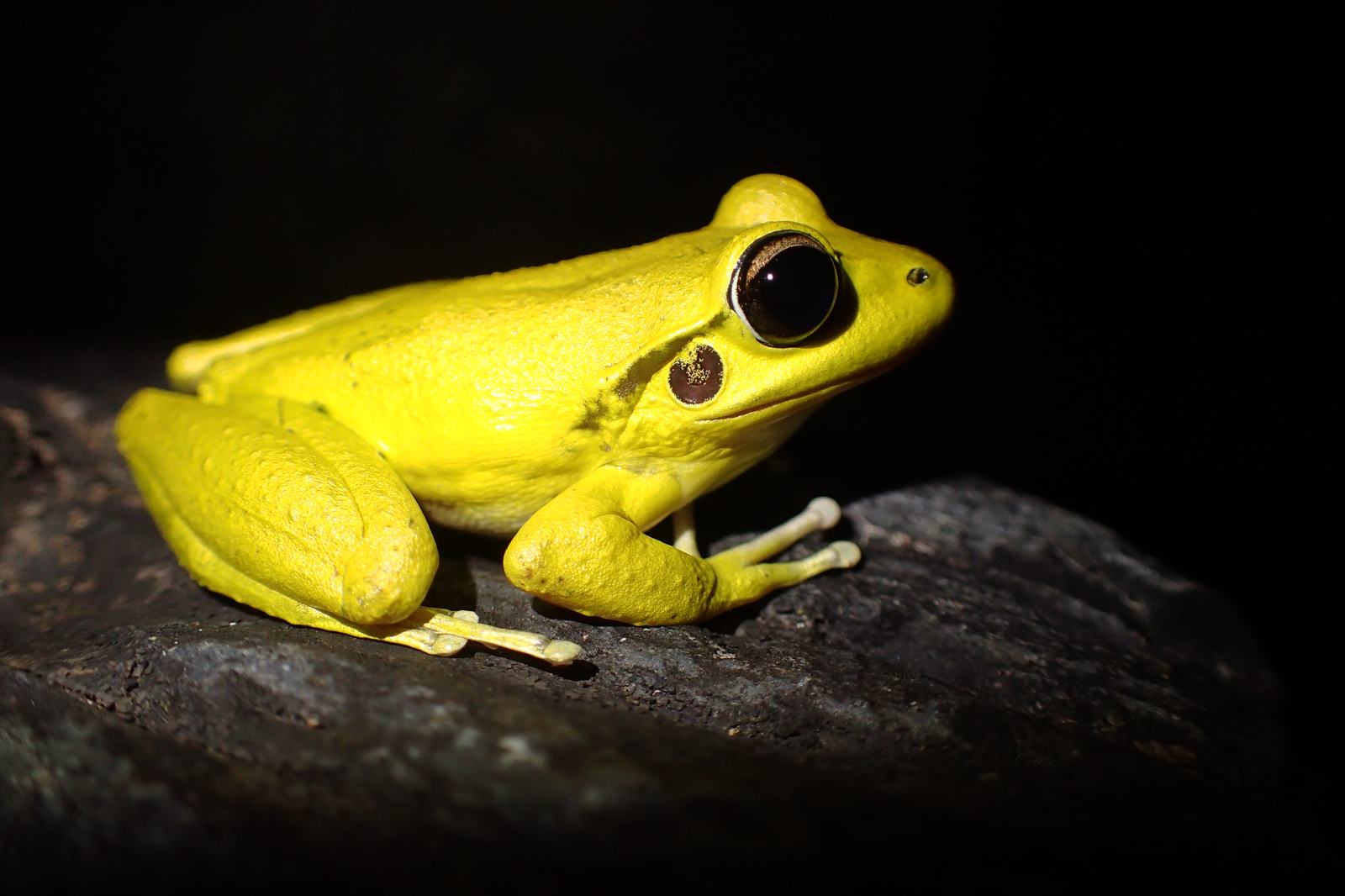
In an unfortunate twist for male frogs, female frogs and flies often share preferences. Pressure to not attract flies may compete with pressure to attract mates. To approach a complete picture of signal evolution, we must consider these potentially interacting pressures. Stony creek frogs (Rhyaconastes wilcoxii) provide just the opportunity. Females buck the trend, lacking a strong preference for low calls on average. Flies attack this species all the time, so they may very well have something to do with it. If flies reduce males’ performance, females’ loose preferences could validate diverging strategies. Low-pitched males might live fast, die young, mating more females but over fewer seasons, where high-pitched but healthy males play a long game.
© Australian Museum
Our hypotheses about exactly how the preferences we discovered might be shaping frog call evolution are just that; these questions need actual testing to answer but are fascinating to consider. What we have found is that frog-biting flies can tell us a lot about the complex ecology of natural soundscapes, and probably how they themselves may be tipping the scales. We just need to listen.
Timothy Cutajar, PhD Candidate, Herpetology; UNSW Sydney, Australian Museum Research Institute and University of Copenhagen.
More information
- Cutajar, T. P., Poore, A. G. B. and Rowley J. J. L. (2026) Host Call Frequency Drives Attractiveness to an Eavesdropping Micropredator. Ecology and Evolution. 16 (9): e74381. https://doi.org/10.1002/ece3.74381
Acknowledgements
We are very grateful to Jane and James Slack of Bobby's Country Rentals, Eccleston NSW, who generously provided accommodation in support of this project, and for fieldwork assistance by Luke Bennett, Tiff Chapple, Maureen Thompson, Emily Schroder, Christopher Portway, Solleille Miller and Nadiah Roslan. We also thank Ximena Bernal and Kristine Bohmann for providing valuable advice on the project.
