
Marine Invertebrates
The Marine Invertebrates section is active in research on a variety of taxa, such as annelids, cnidarians and crustaceans.


The Australian Museum Marine Invertebrates Collection is one of the oldest, most diverse and best-studied assemblages of Australasian and Indo-Pacific invertebrate taxa. It includes over 20 major groups of marine invertebrates, as well as freshwater and terrestrial representatives.
It is used by scientists in the Australian Museum Research Institute (AMRI®), in institutions within Australia and around the world. Our collection contains specimens from most major marine invertebrate groups such as crustaceans, corals, jellyfish, anemones, sea stars, sea urchins, sea squirts, sponges and polychaetes (marine segmented worms). Specimens can be dry or preserved in formalin and ethanol. Additionally, microscope slides, Scanning Electron Microscope (SEM) preparations and frozen tissue for molecular analysis are held. Research using this collection provides information to aid fisheries management, environmental impact monitoring, pest control, conservation biology and establishment of marine protected areas or national parks.
What are Marine Invertebrates?
The most prolific and diverse animals on the planet are the invertebrates - those lacking a backbone or spine. In marine environments, there are significantly more invertebrates representing vastly different forms, life histories and ecologies than in freshwater or terrestrial environments. Familiar examples include include jellyfish, corals, anemones, sponges, crabs, shrimp, barnacles, sea stars, sea urchins, shellfish and sea squirts.
Often considered 'ecosystem engineers', invertebrates are vital parts of food webs. They also fulfil many environmental services, such as decomposition, nutrient release, water filtration, sediment aeration, predation and grazing. These services play key roles in the function of marine habitats.
While we may also consider some to be nuisances - stingers, biters and parasites, to name a few - others are desirable delicacies (think lobsters, crabs and prawns) and form the basis for fisheries and recreational activities.
Listen to Professor Shane Ahyong, Senior Principal Research Scientist along with Dr Claire Rowe, Collection Manager, as they share why we collect this diverse groups of creatures that live in water for research and conservation outcomes.
Marine Invertebrates are animals without backbones that live in the water.
The vast majority of marine invertebrates live in the sea, there's a whole group of, 20 odd phyla that we deal with and that can include things like crabs, lobsters, crustaceans; which have shells and spines and legs, but we also have squishy things like jellyfish, sea anemones, spiny stuff like sea urchins, starfish and all kinds of other worm-like creatures, whether they be parasites or worms you see in the beach.
My name is Shane Ahyong and I'm the Head of Marine Invertebrates at the Australian Museum and a Senior Principal Research Scientist. When we think about marine conservation and conservation of animals in aquatic habitats, in rivers, we generally only think about large animals and seabirds, whales, fish, and of course, we should. But it's easy to forget that there are the aquatic invertebrates in there as well, and they are very often threatened to a greater degree.
Conservation is a really important issue for aquatic invertebrates. And it's also, very easily underestimated by, by the average person because most invertebrates and are not seen, they're inconspicuous, they often come out at night so you don't see them. So many people don't even realize they're there. If we destroy the habitats that they live in, they’re gone.
We get to see a range of animals that most people would never see. We do exploration in the deep sea and there are millions of marine invertebrates down there, too.
My name is Claire Rowe, and I'm Collection Manager of Marine Invertebrates. The marine invertebrates collection is over 500,000 lots. So we're one of the largest collections in the museum. We cover a lot of different phyla. All the different departments of the museum, they will have one taxa that they focus on and we're basically; other, so we're everything else.
So we have specimens in our collection that have been collected from Australia since the 1860s, though the oldest specimen in our collection was collected in the States in 1802 and it's an Amphipod, which is basically a small crustacean. So we're a very complex collection.
Most of our collection is built up of Arthropods, so they're things like crustaceans or sea spiders, but we cover other things like Cnidaria; so your corals and jellyfish, Echinoderms; so sea stars, we also cover, anemones, bryozoa, we're a very diverse collection.
Some of the animals that we deal with are just gorgeous. They're beautiful. I mean, they all are, of course, but there are others that we could describe as ghastly. But they all have their own interest and their scientific value and, we treat all things equally around here.
The Australian Museum Marine Invertebrates Collection
This historic and complex collection is one of the largest in the Southern Hemisphere. Specimens have been collected from Australia since the 1860s. The oldest specimen (an Amphipod) was collected in the States in 1802. Collection material is housed both at the main Sydney CBD museum site and at the Castle Hill Discovery Centre.
Size and specimens
The Marine Invertebrates Collection contains over 511,000 specimens and lots, and consists of:
- 13,000+ type specimens
- dry preserved specimens
- wet specimens in formalin or ethanol
- microscope slides
- frozen tissue for molecular analysis
- SEM and photographic images
- books and journals.
Type specimens are those on which the scientific description of a species is based.
The collection has a focus on material from Australia, particularly New South Wales, but also has strong holdings for most taxa across the Indo-Pacific region as well as important samples from other international locations.
Crustacea - crabs, lobsters, amphipods, prawns, pentastomids and isopods
Animals in the phylum Arthropoda (which includes insects and spiders). Among the most widespread and diverse group of invertebrates. Larger malacostracan crustaceans (crabs, lobsters, prawns) are economically valuable. Originally aquatic, many crustaceans, are adapted to life on land.
Annelida - earthworms, polychaetes, leeches and peanut worms
Worm-like bodies with nervous, digestive and circulatory systems. Many have segmented bodies with a pair of leg-like appendages (not jointed) attached to every segment.
Acanthocephala - intestinal parasites
Found in vertebrates, particularly fish. About 700 species are known. Our collection comes from Australia and Antarctica and includes type lots.
Bryozoa - lace corals or moss animals
These encrusting animals are found on hard surfaces in oceans. There are about 4,500 species. Our collection has historical importance and includes more than 140 type lots and 5,000+ lots mainly from Australia and Antarctica.
Chaetognatha - arrow worms
These planktonic animals live in the upper layers of all oceans. Our collections include more than 100 lots from Australia and Antarctica including Johnston's types of Sagitta australis and Eukrohnia hamata.
Chelicerata - horseshoe crabs and sea spiders
Includes Horseshoe crabs (Merostomata) and sea spiders (Pycnogonida). collections include collections from Australia and Antarctica and include more than 120 type lots.
For Chelicerata spiders, mites, scorpions and ticks, go to Arachnology.
Ciliophora - protozoans
Common in aquatic environments, may be parasitic or free-living. There are almost 8,000 species. Our collection of ciliates is mainly from Australian freshwater crustaceans.
Cnidaria - corals, jellyfish, sea fans, anemones, and hydroids
All classes of Cnidaria are in the collection of more than 12,000 lots. It includes more than 350 type lots and a large collection of Indo-Pacific corals.
Ctenophora - comb jellies
Transparent and gelatinous animals that are found in the plankton. We hold a small collection, mainly from Australian waters.
Echinodermata - sea stars, sea cucumbers, sea urchins, feather stars, brittle stars, sea daisies
Our large and important collection comprises over 34,000 lots of all echinoderm classes from Australia and the Pacific. It includes more than 700 type lots. Many are cited in the Zoological Catalogue of Australia.
Foraminifera - unicellular plankton
Foraminiferans are unicellular and are planktonic, benthic and vary in size and shape.
Hemichordata - acorn worms
These worm-like marine animals are usually found in shallow waters. Our collections include more than 120 lots, predominantly of pterobranchs and a small number of enteropneusts. They are mainly from Antarctica and the Great Barrier Reef and the collection includes 3 type lots of Tornaria.
Kamptozoa - small, sessile animals that attached to algae, shells and rocks
Our small collection of Kamptozoa (or Entoprocta) comes from south-eastern Australia. It has been verified and curated by a researcher in this field. We do not hold any types.
Kinorhynca
Less than 1mm in length and found in sand and mud on the sea floor. The only kinorhyncs in the collection are the types of Kinorhynchus phyllotropis.
Nematoda - round worms or thread worms
One of the most abundant animal groups, found in most habitats. Parasitic or free living. Collections include more than 500 lots of free-living and parasitic nematodes predominantly from Australia, including more than 50 type lots. Host animals for parasitic nematodes in the collection include reptiles, fish and mammals.
Nematomorpha - horsehair/gordian worms
A small group (about 250 species) of worm-like animals found mainly in freshwater and marine environments. Parasitic in the larval stage. We have about 50 lots of Nematomorpha in the class Gordioida, mostly from Australia. We do not hold any types.
Nemertea - ribbon worms
Unsegmented, mainly marine worms. There are about 1,000 described species. We have more than 500 lots of nemerteans, mainly from Australia and including sectioned specimens on slides. The collection includes 23 type lots.
Phoronida - worm-like marine tube-dwellers
Suspension-feeders found on the continental shelf and upper slope. Our collection contains more than 100 lots, mainly from Australian waters. We do not hold any types.
Platyhelminthes - flat-worms (e.g. flukes and tapeworms),
Human parasites but also free-living in marine and freshwater environments. More than 1600 lots are held in the collection as both wet specimens and slides, the majority is from Australia and Papua New Guinea and includes more than 200 type lots.
Porifera - sponges
Over 13,000 lots of sponges mainly from Australian waters, and freshwater sponges from around the world. More than 1100 type lots and many specimens and slides of historical importance.
Priapulida
An ancient group of worm-like burrowing animals found only in the marine environment. The 15 described species live from the tropic to the poles. A small collection with specimens from Australia, Antarctica and Denmark. The collection contains no type material.
Rotifera - freshwater wheel animals
Tiny metazoans common in freshwater habitats. There are more than 1800 described species. The collection comprises the holotype and paratypes of Brachionus baylyi Sudzuki & Timms and one slide of Pedalion fennicum from the Solomon Islands.
Tunicata - sea squirts, ascidians and salps
More than 1600 lots, mainly from Australia and Antarctica, including more than 200 type lots. Predominantly ascidians with some thaliaceans and salps, but few larvaceans.
Collection enquiries
For collection enquiries, please contact Dr Claire Rowe, Marine Invertebrates Collection Manager.
For other enquiries, please contact Senior Principal Research Scientist, Professor Shane Ahyong.


How the Collection is used
Research using this collection provides information to aid fisheries management, environmental impact monitoring, pest control, conservation biology and establishment of marine protected areas or national parks.
The Marine Invertebrate Collection is an important resource for researchers working in the AMRI. Research covers shrimps, crabs, amphipods, isopods, cnidarians, annelids and many other taxa. The department is a centre for collaboration with universities and scientific institutions around Australia and around the world. Many honours, masters and doctoral students work with the research staff and the museum collections.
Researchers organise and participate in expeditions within Australia and internationally, from the shallow waters of Sydney Harbour to the deep-sea seamounts off the south coast of Tasmania. The Marine Invertebrates department is also actively involved in Citizen Science projects, such as ‘Upside-down Jellyfish in Lake Macquarie’.
Search Australian Museum Collection records on the Atlas of Living Australia (ALA) or visit Online Zoological Collections of Australian Museums (OZCAM).
The Marine Invertebrates group processes loan requests and welcomes donations of marine invertebrate material. Please contact AMRI in relation to loans and donations.
Volunteers are recruited as staff need them. Positions are limited and are advertised when available to assist with Marine Invertebrates activities. Please register your interest.
Volunteers may assist sorting, data entry, cataloguing, labelling, cross-checking, shelving, specimen identification or help with research.
Specimens on display at the AM
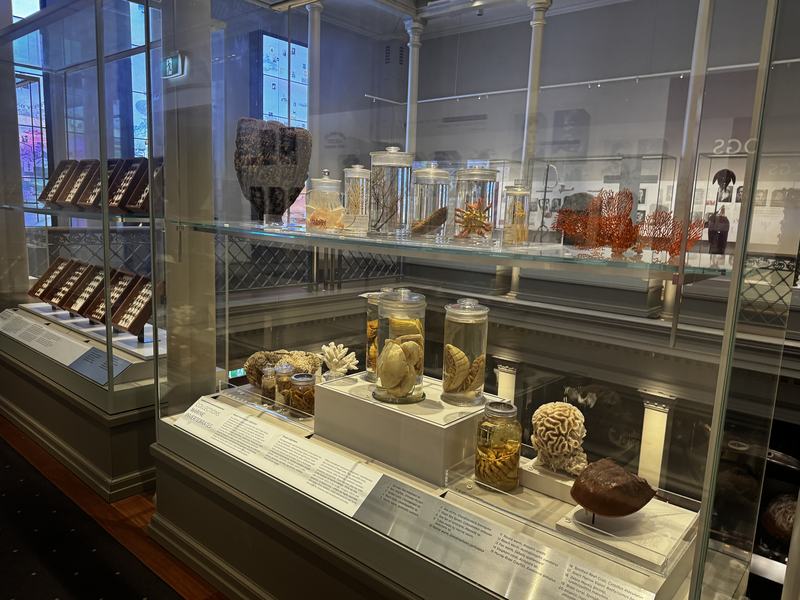
The Australian Museum has a permanent display of Marine Invertebrates Collection specimens in the Westpac Long Gallery 200 Treasures exhibition. See dangerous, familiar and curious species of invertebrates, all of which lack a spine or backbone. In marine environments, there are significantly more invertebrate groups representing vastly different body forms, life histories and ecologies than in freshwater or terrestrial environments. Specimens on display here include marine worms, different types of corals and sponges, crustaceans such as crabs and barnacles, echinoderms such as sea urchins and sea stars and cnidarians with tentacles.
Learn more about marine invertebrates


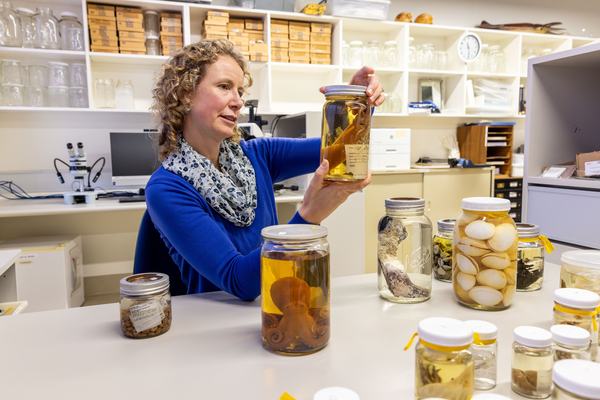

Use our invasive Polychaete identifier website
Developed from an Australian perspective, the identifier that enables you to quickly and accurately identify polychaetes and distinguish potentially invasive species from Australian native species.
Sign up now


