
Eastern Pygmy Possum
Scientific name: Cercartetus nanus
Similar species:
Sometimes mistaken for a rat or mouse.
Sometimes mistaken for a rat or mouse.
 Click to enlarge image
The Eastern Pygmy Possum is a small marsupial with a rounded head, very large eyes, long whiskers, and large ears, with fawn-coloured fur above, white fur below, and soft dense coat. Its long prehensile tail is furred above, naked underneath, and tapers to a fine point.
Image: Kathy Atkinson
© Australian Museum
© Australian Museum
Fast Facts
-
Classification
- Genus
- Cercartetus
- Species
- nanus
- Family
- Burramyidae
- Order
- Diprotodontia
- Subclass
- Marsupialia
- Class
- Mammalia
- Subphylum
- Vertebrata
- Phylum
- Chordata
- Kingdom
- Animalia
-
- Size Range
- Body 70 mm - 110 mm, Body weight 15 g - 43 g
-
- Life history mode
- nocturnal
-
- Feeding Habits
- frugivorous, insectivorous, nectarivorous
The Eastern Pygmy Possum is a tiny marsupial.
Identification
The Eastern Pygmy Possum has the following distinguishing features:
- Front teeth Three pairs of upper incisors, one pair of lower incisors.
- Head Rounded head and very large eyes. Long whiskers.
- Ears Large ears.
- Colouring Fawn above, white below. Soft dense fur.
- Tail Prehensile tail with seasonally fattened base, naked underside, furred above, tapers to fine point. 75-105 mm.
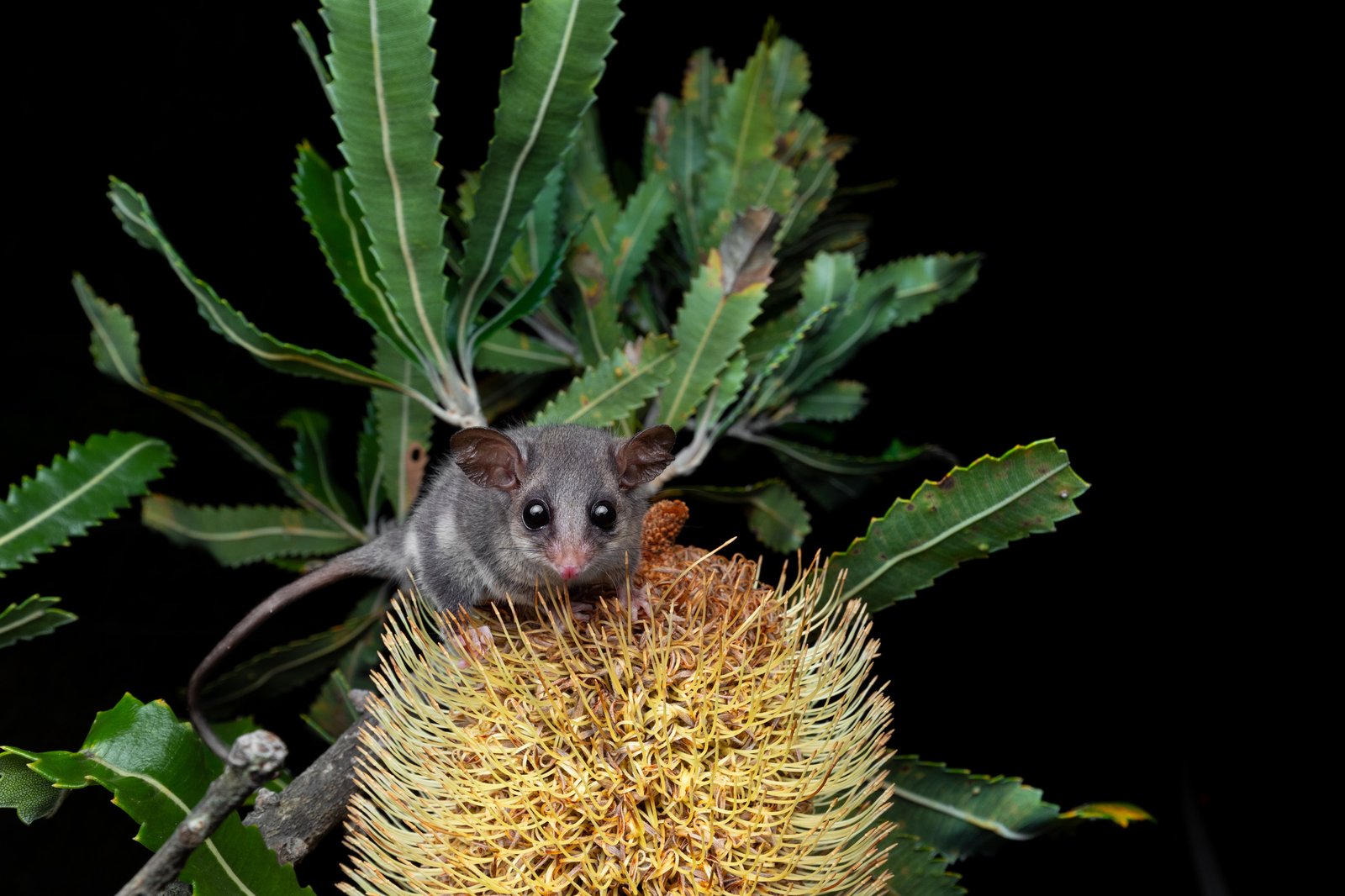
Eastern Pygmy Possum, Cercartetus nana, feeds mainly on nectar and pollen from eucalypts, banksias, and bottlebrushes, and also eats insects and fruit.
Image: Indra Bone
CC BY-NC 4.0
CC BY-NC 4.0
Habitat
The Eastern Pygmy Possum lives in forests, from rainforest and sclerophyll to heath.
Distribution
This map shows species occurrence observations from data recorded in the Atlas of Living Australia.
Feeding and diet
The Eastern Pygmy Possum feeds on nectar and pollen from eucalypts, banksias, and bottlebrushes, supplemented by insects and fruit.
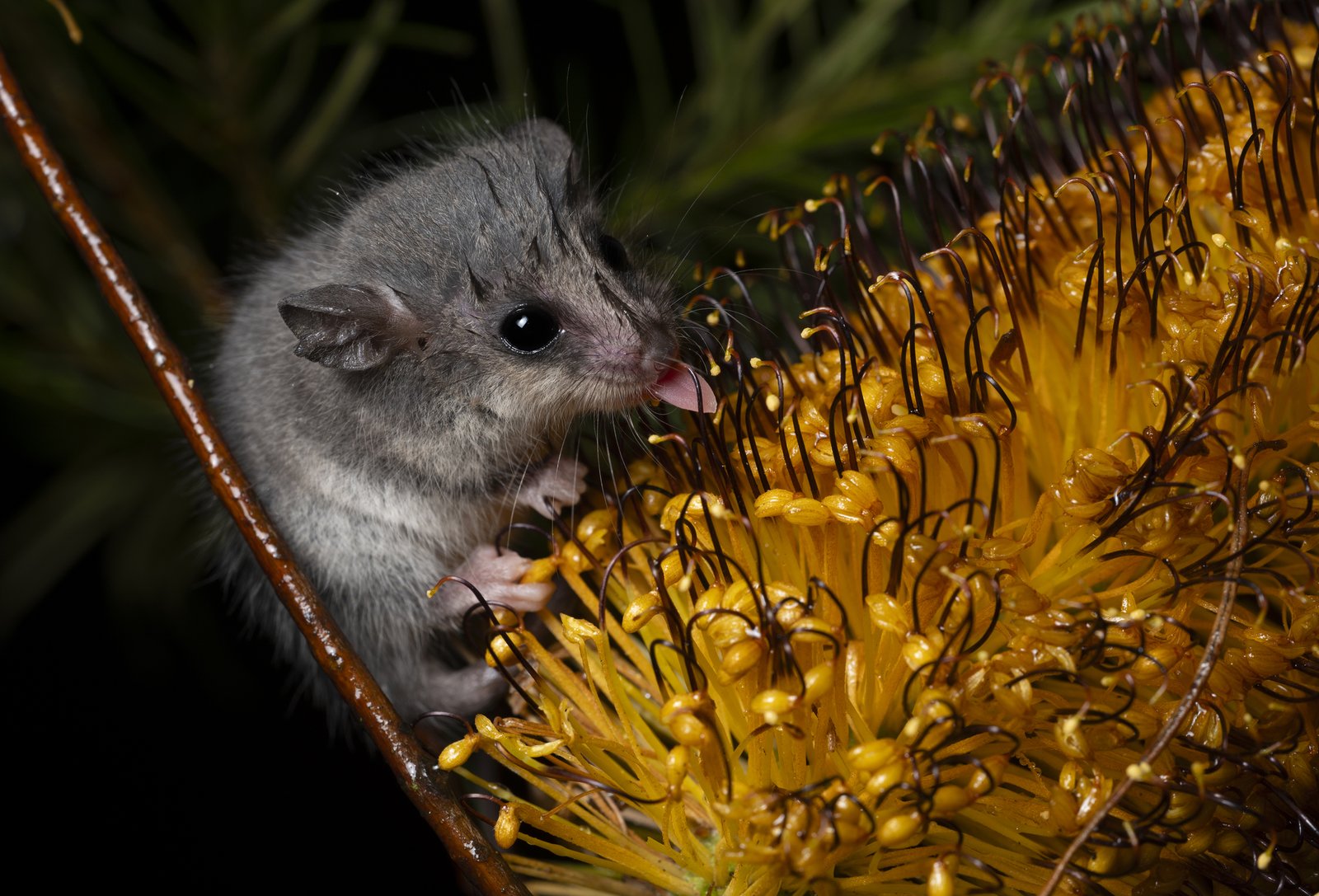
The Eastern Pygmy Possum is a small marsupial with a rounded head, very large eyes, long whiskers, and large ears, with fawn-coloured fur above, white fur below, and a soft, dense coat. Its long prehensile tail is furred above, naked underneath, and tapers to a fine point.
Image: David Sinnott
CC BY-NC 4.0
CC BY-NC 4.0
Reproduction and life cycle
Mother Eastern Pygmy Possums nest with their young in tree hollows or in small spherical nests of shredded bark. The possums may also shelter in abandoned bird nests or the forks of trees
Behaviours and adaptations
Eastern Pygmy Possums are nocturnal.
Support the Australian Museum
Your donation supports the exceptional work of our inspiring scientists, explorers and educators as they help to protect Australia’s vital natural and cultural heritage for generations to come.
Donate now
