Winghead Shark
Slender Hammerhead, Arrow Headed Hammerhead, and Arrow-headed Hammer-head.
 Click to enlarge image
© Public Domain
Fast Facts
-
Classification
- Genus
- Eusphyra
- Species
- blochii
- Family
- Sphyrnidae
- Class
- Chondrichthyes
- Subphylum
- Vertebrata
- Phylum
- Chordata
- Kingdom
- Animalia
-
- Size Range
- The Winghead Shark grows to 186 cm TL in length.
Introduction
The Winghead Shark is the only species of hammerhead within the genus Eusphyra. This genus name comes from the Greek words eū, meaning very or good, and sphūra, meaning hammer. Eusphyra is an apt name for the Winghead Shark as its most distinctive feature is its immense head, which stretches longer than any other species of hammerhead.
What do Winghead Sharks look like?
Identification
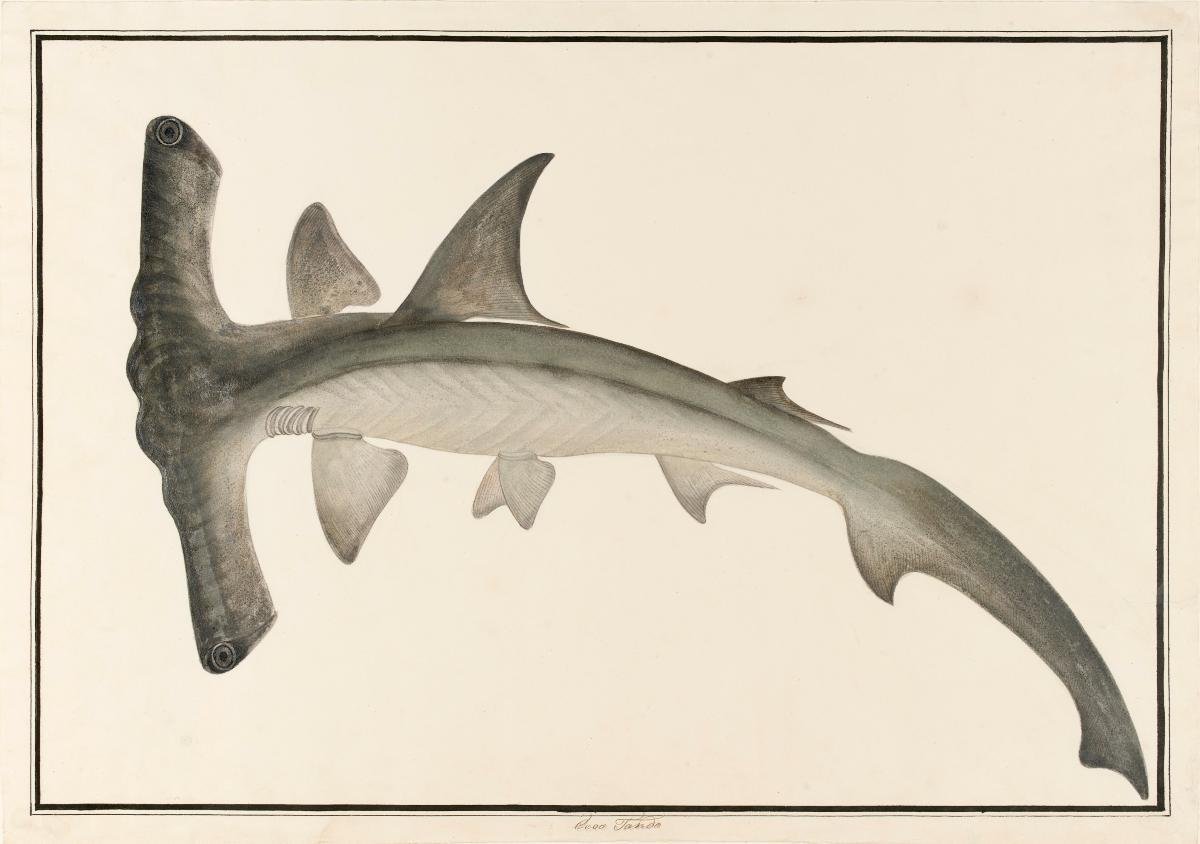
Winghead Sharks have a long, slender, fusiform body which is grey to greyish-brown on the dorsal (top) surface, and pale to white on the ventral (bottom) surface. From head to tail, they can reach over 1.8m in total length, which is on the smaller side compared to other hammerhead species.
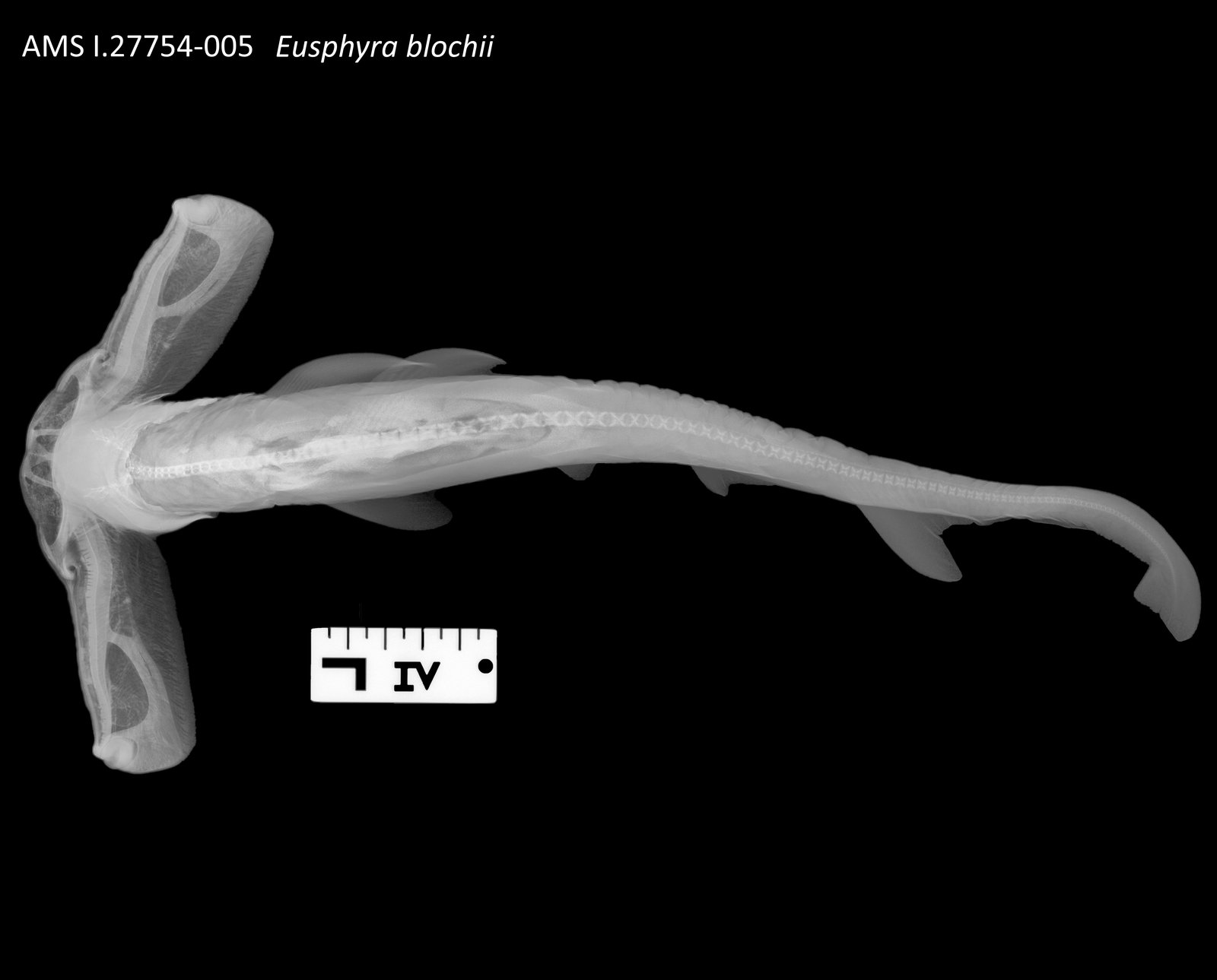
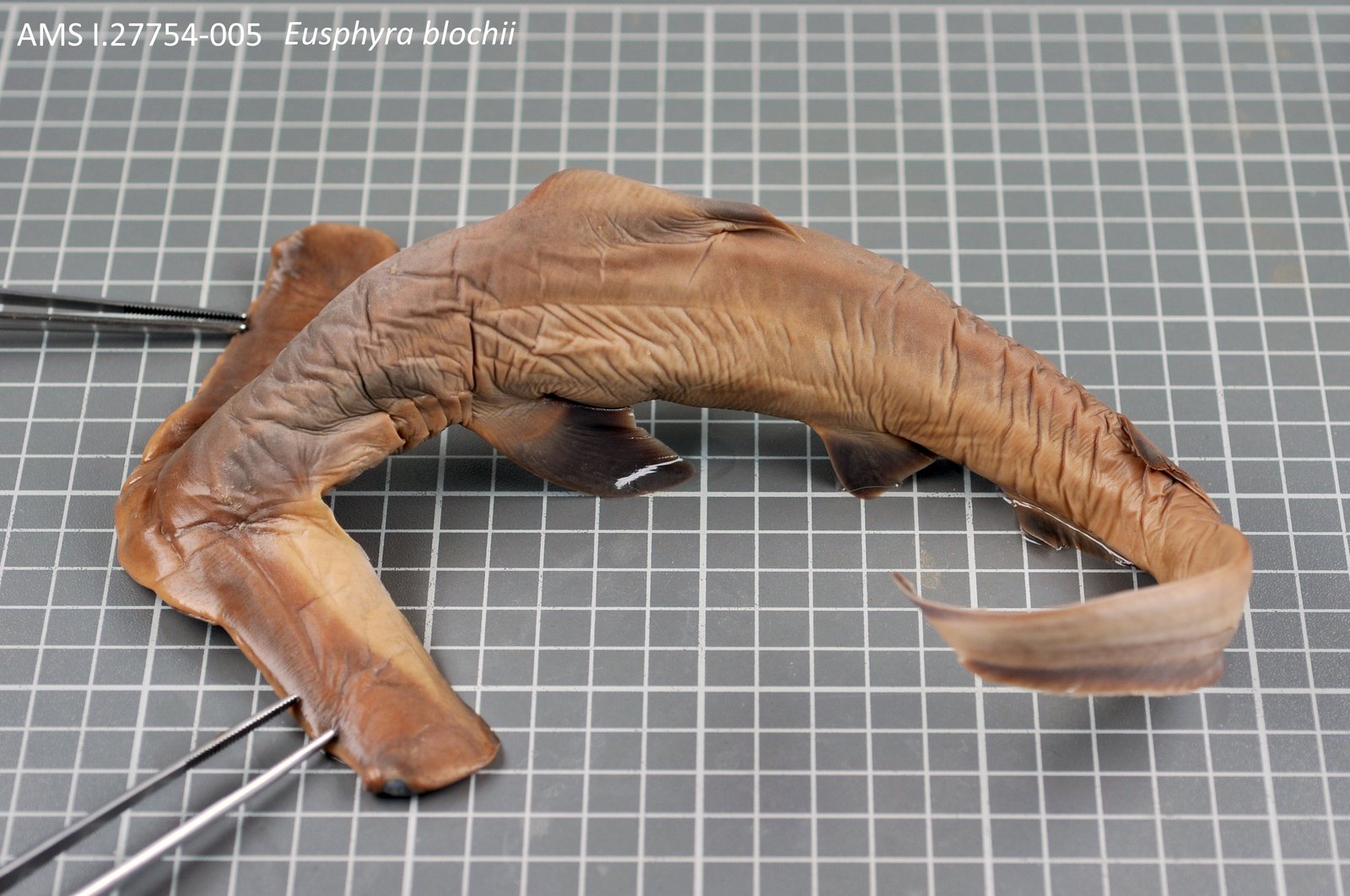
The most distinctive feature of the Winghead Shark is their wide and slender head. The lateral wing-like extensions form the characteristic ‘hammer’ shape called a cephalofoil, which can reach almost half of the total length of the Winghead Shark’s body! Along the front of their cephalofoil you can find another one of the Winghead Shark’s distinguishing features: a pair of massive nostrils. These nostrils are enormously expanded compared to other hammerheads, each extending twice as long as the width of the shark’s mouth.
© Australian Museum
Where do Winghead Sharks live?
Habitat
Winghead Sharks can be found in the shallow waters of continental and insular shelves of tropical and subtropical waters. They frequent coastal waters around river mouths and estuaries.
Distribution
These sharks are distributed around the tropical regions of the Indo-West Pacific Ocean, stretching from the Persian Gulf to the Philippines. Along Australia’s northern coastline, the Winghead Shark has a patchy distribution throughout the Timor, Arafura, and Coral Seas. Their range extends south to the Monte Bello Islands (Western Australia) and around Ingham (Queensland) - although in 2023 one was found in Moreton Bay (QLD) around 800 km further south than the species' known range.
The map below shows the Australian distribution of the species based on public sightings and specimens in Australian Museums.
What do Winghead Sharks eat and how do they mate?
Feeding and diet
Winghead Sharks are demersal feeders, meaning they prefer to feed near the sea floor. Most of their diet consists of small bony fishes, but they also eat prawns, other small crustaceans, and cephalopods.
Breeding behaviours
All hammerhead sharks are viviparous, which means that they give birth to live young. In Australia, Winghead Sharks mate yearly, with males biting along the sides of females to signal the start of copulation.
The embryos of Winghead Sharks are initially nourished by yolk sacs. As the embryos develop and their yolk supply runs low, the yolk sac interlocks with the uterine wall to form the placenta which fuels the rest of their embryonic development. In Australian waters, gestation takes around 10-11 months in total and litters are born at the end of summer. Baby sharks - called pups - pop out at around 45-47 cm in length in litters numbering anywhere between 6-25.
How have Winghead Sharks adapted and are they dangerous?
Behaviours and adaptations
While it is commonly accepted that the large ‘hammer’ head of the Winghead Shark evolved as an enhancement of its sensory system, the exact nature of these enhancements remain unclear. Two of the reasons proposed by scientists for such an extreme ‘wing-head’ are:
- Increased binocular vision - Binocular overlap refers to the field of vision where both eyes are seeing the same thing at the same time, and it is crucial for depth perception and 3D visualisation. Binocular overlap has been shown to be enhanced in hammerhead sharks, increasing with the length of their cephalofoil. The Winghead Shark in particular, which has the longest cephalofoil of any species, has been found to have a substantial binocular overlap of 48° - almost four times larger than that of Lemon and Blacktip Sharks.
- Enhanced sense of smell - The Winghead Shark’s unique nostrils could potentially aid it in detecting prey items in a number of ways. Their midpoints are set very far apart along the cephalofoil, which could give them a ‘stereo’ sense of smell and help them to determine the direction of a prey item’s scent trail. The probability that they encounter the odour of their prey is also potentially greatly increased by the sheer size of their nostrils, which can sample an astounding 2,359 cm2 of water per second - far more than any other hammerhead species.
Both of these adaptations may increase the Winghead Shark’s predatory power by enhancing its ability to track down its prey.
© Australian Museum
Danger to humans
The Winghead Shark is a relatively small species of hammerhead with quite a little mouth relative to its body size - the perfect size for eating little fish and prawns, but not anything much bigger than that. As such, it poses very little threat to humans and is regarded as mostly harmless. The Florida Museum’s International Shark Attack File has never documented any cases of unprovoked attacks on humans by Winghead Sharks, and only 18 other unprovoked attacks are recorded across all other hammerhead species since 1580.
References
- Appukuttan, K.K. (1978). "Studies on the developmental stages of hammerhead shark Sphyrna (Eusphyrna) blochii from the Gulf of Mannar" (PDF). Indian Journal of Fisheries. 25 (1–2), pp. 41–52.
- Devadoss, P. (1988). "Observations on the breeding and development of some sharks". Journal of the Marine Biological Association of India. 30 (1–2), pp. 121–131.
- Florida Museum of Natural History. 2025. Species Implicated in Attacks, 1580-present. International Shark Attack File. [Webpage: database] https://www.floridamuseum.ufl.edu/shark-attacks/factors/species-implicated/ [Accessed on 30/07/2025]
- Heemstra, P. C., Heemstra, E., Ebert, D. A., Holleman, W., Randall, J. E. 2022. Eusphyra blochii (Cuvier 1816). In Coastal Fishes of the Western Indian Ocean: Volume 1. South African Institute for Aquatic Biodiversity, Makhanda, South Africa. ISBN 978-1-998950-35-5. p. 539
- Kajiura, S.M., Forni, J.B. and Summers, A.P. (2005), Olfactory morphology of carcharhinid and sphyrnid sharks: Does the cephalofoil confer a sensory advantage?. Journal of Morphology, 264, pp. 253-263. https://doi.org/10.1002/jmor.10208
- Last, P. R., Stevens, J. D. 2009. Winghead Shark. In Sharks and Rays of Australia. 2nd ed. CSIRO Publishing, Collingwood, VIC. ISBN 978-0-674-03411-2. p. 288
- Lubitz, N., Barnett, A. 2023. Possible range extension in the endangered and understudied winghead shark (Eusphyra blochii). Journal of Fish Biology 102(3), pp. 718-720. https://doi.org/10.1111/jfb.15301
- Scharpf, C. 2024. Family Sphyrnidae. The ETYFish Project [Webpage: database] https://etyfish.org/sphyrnidae/ [Accessed on 30/07/2025]
- Stevens, J. D., Lyle, J. M. 1989. Biology of Three Hammerhead Sharks (Eusphyra blochii, Sphyrna mokarran, and S. lewini) from Northern Australia. Marine and Freshwater Research 40(2), 129-146. https://doi.org/10.1071/MF9890129
- McComb, D. M., Tricas, T. C., Kajiura, S. M. 2009. Enhanced visual fields in hammerhead sharks. Journal of Experimental Biology 212 (24), pp. 4010–4018. https://doi.org/10.1242/jeb.032615