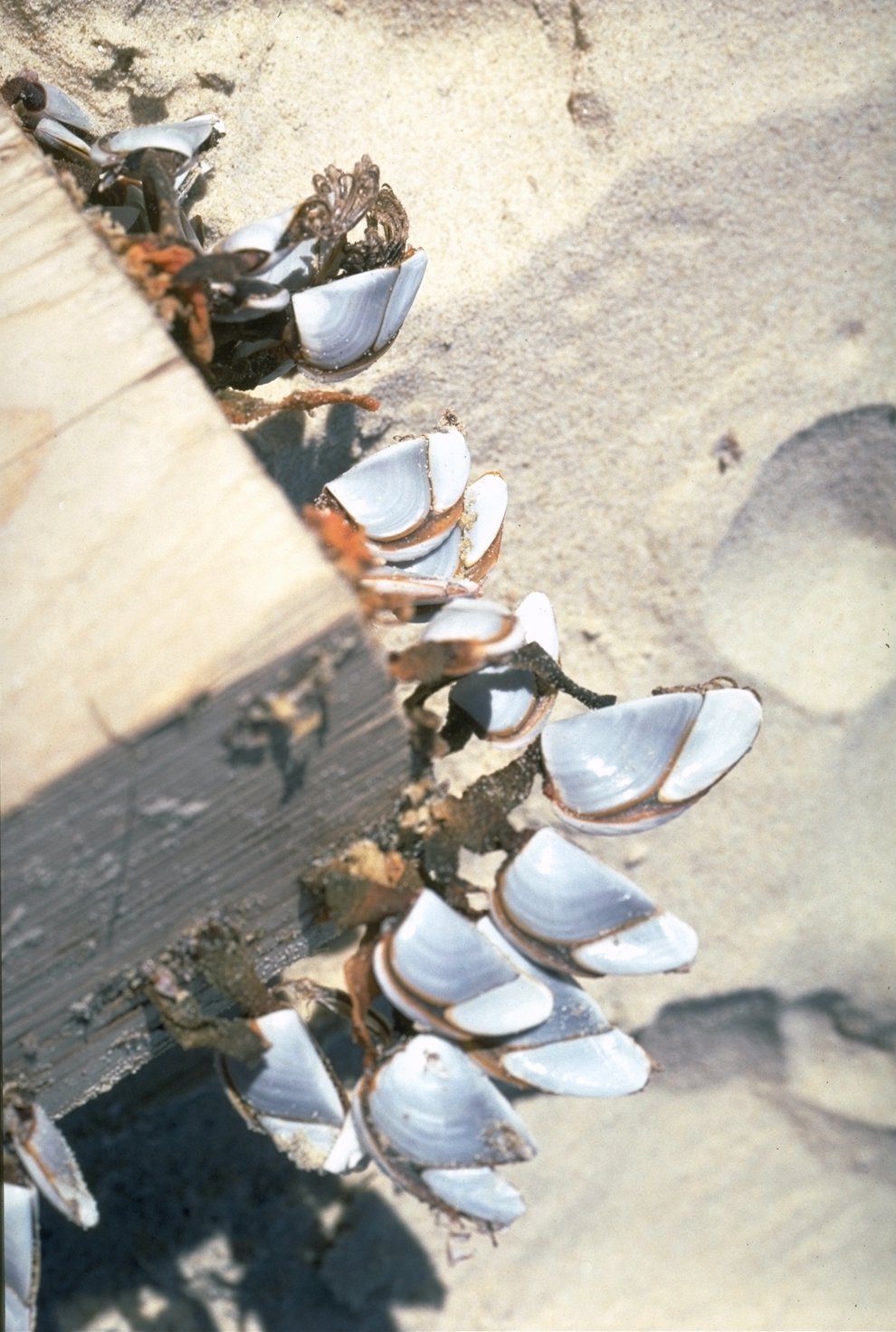
Goose Barnacle
 Click to enlarge image
© Australian Museum
Fast Facts
-
Classification
- Genus
- Lepas
- Species
- pectinata
- Family
- Lepadidae
- Order
- Pedunculata
- Subclass
- Cirripedia
- Subphylum
- Crustacea
- Phylum
- Arthopoda
- Kingdom
- Animalia
-
- Size Range
- 2.5 cm
This and other goose barnacles have long rubbery stalks and are usually found in large groups either attached to floating objects, on wharves and piers or washed up on the shore.
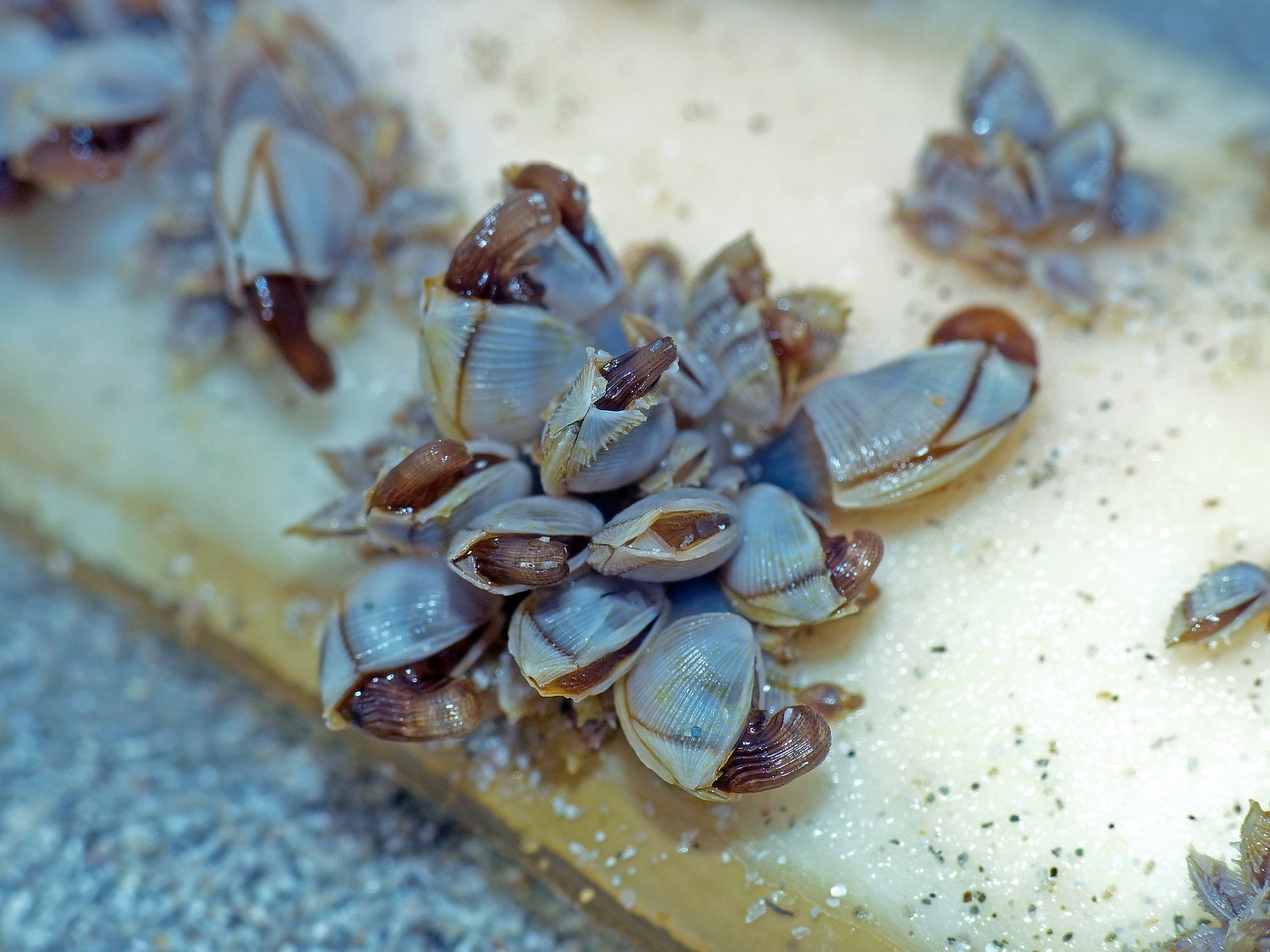
Goose barnacles (Lepas pectinata) are filter-feeding crustaceans. They have a fleshy stalk, one end connecting to a capitulum (armour that protects the soft body) and the other to driftwood, piers, or intertidal rocks
Image: Simon Grove (TMAG)CC-BY-NC-SA 4.0
Identification
Two major types of barnacles are found in Australian waters - the Goose Barnacle and the Acorn Barnacle. Both have a tough shell covering on the outside. Some people believe that barnacles are more closely related to snails than they are to crabs and lobsters. Barnacles, however, are very much crustaceans - using their jointed legs to catch small particles of food.
Habitat
Goose barnacles live on intertidal beaches and in coastal waters and oceans.
Distribution
Goose barnacles are found in Queensland, New South Wales, Victoria, South Australia and Western Australia. Common overseas.
Behaviours and adaptations
Throughout the Middle Ages a legend evolved that goose barnacles were in fact goose eggs. It was believed that when geese disappeared in winter, their 'eggs' (or goose barnacles) floated back to shore.