
Associations of the stingless bee with a native brood mite and the acarine community in nests
Presented by Ana Pantoja
Honours Student, University of Sydney
Supervisors: Dr Rosalyn Gloag (USyd, Dr Kenya Fernandes (USyd), Dr Matt Shaw (AM)
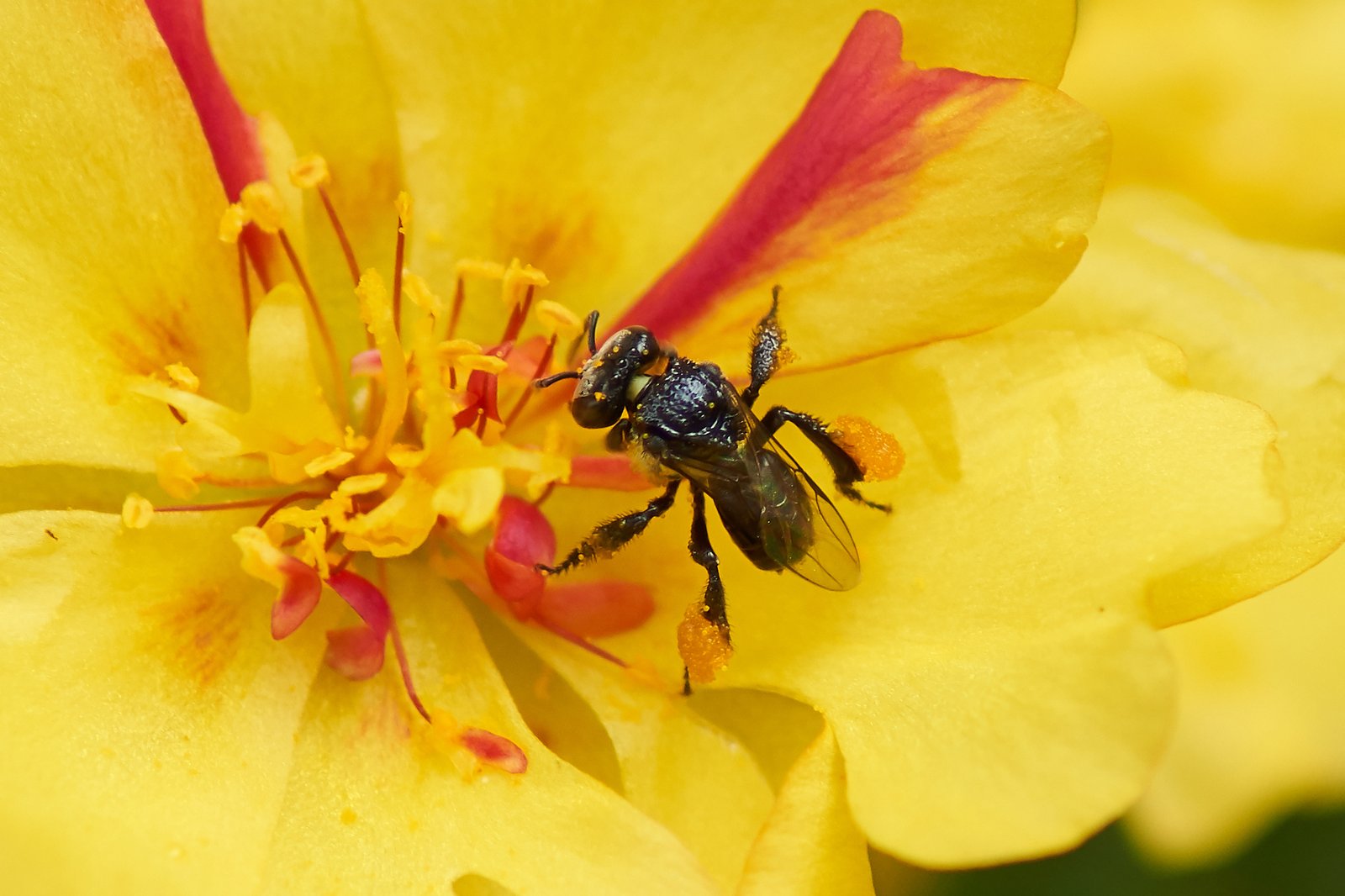
The nests of stingless bees (Meliponini) represent valuable resources for many invertebrates, with mites (Acari) being one of the most prevalent associates in these habitats and having varied health effects (positive and negative) on their bee hosts. Tetragonula carbonaria is a species of Australian stingless bee with cultural and economic significance, whose association with mites, including the recently described brood mite Proctotydeaus furnarius, are largely understudied. In this project, Ana investigated the relationship between T. carbonaria and P. furnarius morphological and developmental analyses. Ana also quantified the impact of mite abundance on bee morphology in 12 colonies, finding varied responses of colonies to mite load and a positive, but weak, association between individual cell mite-load and odds of deformity.

Ana measured the effects of experimentally added mites on brood development in-vitro for five colonies, finding no effect of bees in brood development. Finally, Ana surveyed the acarine and invertebrate communities of declining/dead nests and found 32 morpho groups, out of which 25 represented mites including families like Cheyletidae and Acaridae. In conclusion, Ana found that P. furnarius has a potentially complex relationship with T. carbonaria and found no beneficial impacts of its presence for bee health and development. Ana also found that T. carbonaria nests harbour diverse acarine communities which may be implicated in nest decline and/or decomposition.
CC BY-NC 4.0
