
Science and Engineering Challenge: inspiring inclusive STEM learning nationwide
Who Science and Engineering Challenge
What The Science and Engineering Challenge is a national not-for-profit program that delivers 170 STEM outreach events across 88 Australian locations, reaching 25,000 students each year. More than half come from rural and remote areas, with many students experiencing economic or other disadvantage, as well as female and First Nations students.
Winner of the 2025 Department of Industry, Science and Resources Eureka Prize for STEM Inclusion.
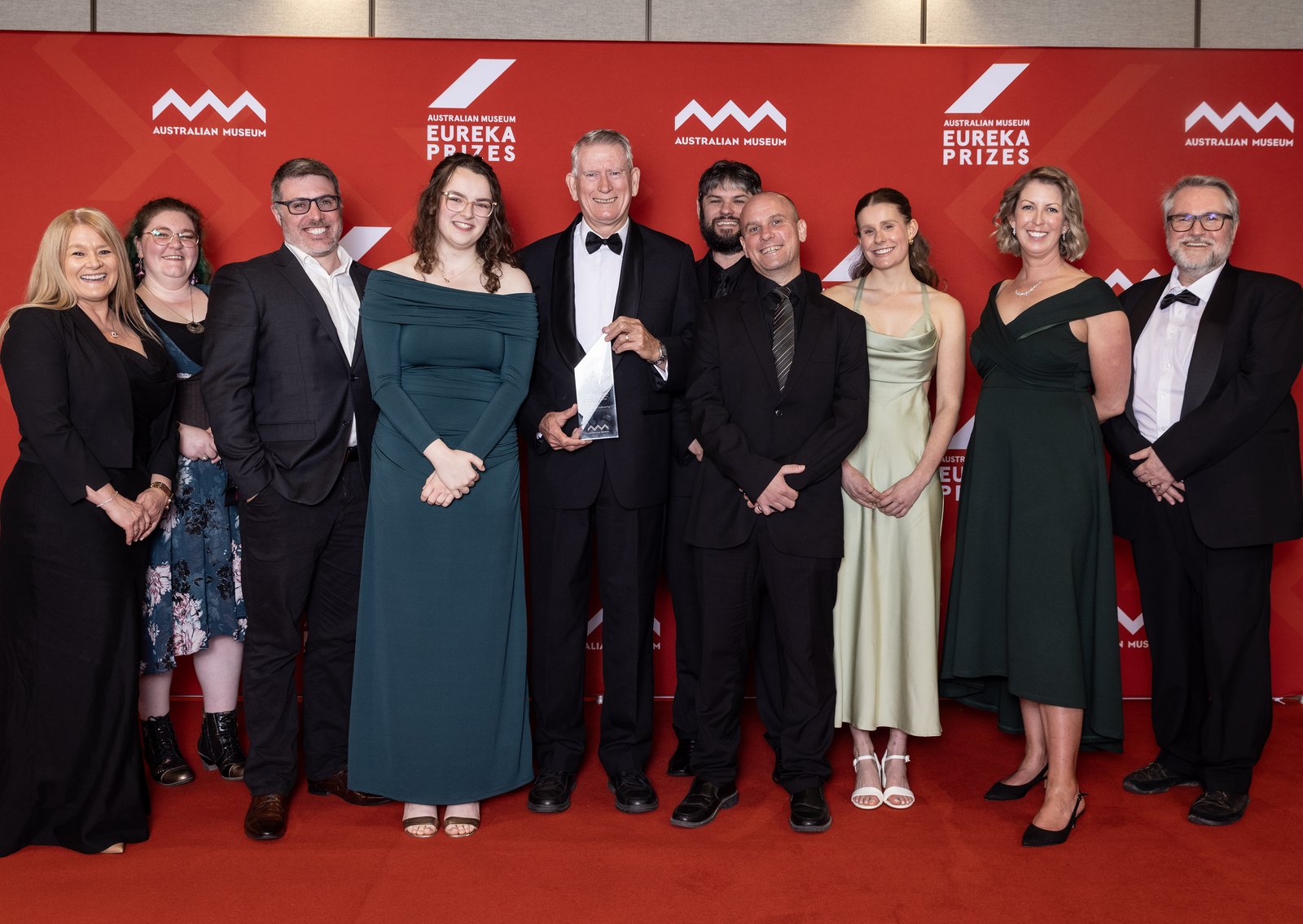
Science and Engineering Challenge at the 2025 Australian Museum Eureka Prizes Award Ceremony. Photo by Mel Koutchavlis
Image: Mel Koutchavlis© Mel Koutchavlis
The Science and Engineering Challenge has been running for over 20 years. What led to the inception of the project and how it has changed throughout the many years it has been running for?
The Science and Engineering Challenge (SEC) began as an initiative of the Faculties of Engineering and Built Environment, and Science and Information Technology at the University of Newcastle in 2000 as a response to shortages of scientists and engineers in Australia. The first official SEC event was held on the Central Coast in the year 2000 as an activity for National Science Week. The aim was, and remains, to challenge students’ perceptions of science and engineering, to provide hands-on experience and to inspire students in Year 10 to choose science and mathematics subjects in Years 11 and 12, thereby considering a future career in STEM.
Over SEC’s twenty-five years of operation, the Science and Engineering Challenge has grown and expanded significantly. In 2000-2001, events were initially held around the Newcastle area and other parts of Northern and regional NSW. In 2002 the first Challenge Days were held outside of NSW, starting with Canberra. In the following years SEC rapidly expanded across the country, with Challenge Days being conducted in Queensland, Tasmania, South Australia and Victoria. By 2005 SEC events were being held in every state and territory in Australia. This year SEC also introduced the National Final, where the winners from each state competed for the national title, adding a new level of competitive focus and recognition.
In 2005 SEC further expanded to include events for primary school students (Years 5 and 6) called Discovery Days, featuring simplified activities and shorter formats. During the COVID-19 pandemic of 2020 SEC introduced an offering called SEC in a BOX. SEC in a BOX allowed schools to purchase their choice of three SEC activities to run their own SEC experience at school.
Over the years SEC has run international events in Singapore, Fiji and New Zealand and introduced free Teacher PD to help upskill teachers.
Your program has astounding reach, particularly to rural and remote areas. What do you find most rewarding about running the challenge outside of the city?
The reach into regional, rural and remote Australia is arguably the most essential and rewarding element of the Science and Engineering Challenge. In a major city, students have easy access to universities, major STEM employers, science museums and specialised teachers. In rural and remote areas, these opportunities are often severely limited. SEC event days bring high-quality, hands-on and novel STEM experiences right to many rural and remote communities. The most rewarding feeling is providing a level playing field of opportunity, ensuring that a student's career options are not predetermined by their postcode.
There are a lot of programs out there doing their best to engage disadvantaged students. What makes the Science and Engineering Challenge special?
The activities are the heart of our program and are designed to be practical, creative and immediately engaging. They shift the focus from theoretical learning to applied problem-solving, which resonates strongly with all students, especially those who may not thrive in the traditional classroom setting. The hands-on nature of the activities ensures that students from low socioeconomic status (SES) backgrounds who may be struggling with school STEM subjects can participate, feel success, and develop confidence in their problem-solving abilities.
SEC is specifically structured to reach students who traditionally have the least exposure to high-quality, inspiring STEM experiences. SEC is delivered in rural and remote towns across Australia, overcoming the geographical barriers that often exclude these schools from metropolitan outreach programs. It is also typically offered at a very low or nominal cost to participating schools. This is vital for disadvantaged schools with limited budgets for excursions or special programs, ensuring that participation is based on interest, not financial capacity.
The competition format with a final Bridge testing injects excitement and creates an exhilarating event atmosphere. It motivates students to perform, fostering a sense of fun and achievement that can be a powerful catalyst for future subject choice.
What have been some of the unexpected outcomes of the program that you have noticed since you’ve been involved?
What began as a local project by the University of Newcastle rapidly scaled up to a truly national program. The program's early successful delivery led to the unforeseen growth. Soon after inception SEC was running events in every state and territory of Australia, establishing a widespread footprint that far surpassed its original role as a regional outreach exercise.
The sheer scale and depth of the partnership network were an unexpected development. The program now boasts strong partnerships with over 200 Rotary Clubs, 30 Australian Universities and large amounts of industry. This level of cross-sector, volunteer-driven collaboration has proven essential to the program's sustainability and reach, demonstrating a powerful groundswell of support for STEM engagement.
The most gratifying and personal unexpected outcome is the rich tapestry of alumni success stories. One example is Michael Bullen, who is now conducting cardiac research at the Victor Chang Cardiac Research Institute in Sydney, who explicitly cites SEC as the program that put him on this pathway into a STEM career. This evidence confirms SEC isn't just a fun day out, it serves as a critical, early-stage intervention that fundamentally steers students toward a future in science and engineering.
“The students studying science now aren't just filling existing jobs, they will be inventing the careers and companies of the future.”
What excites you most about the future of STEM?
The most thrilling part is knowing the next big STEM wave hasn't even been thought of. This isn’t just improving current tech, we’re talking about building entirely new industries from scratch, with sectors that solve problems we haven't managed to address yet. The students studying science now aren't just filling existing jobs, they will be inventing the careers and companies of the future.
If you asked someone 30 years ago about a pocket computer that could instantly connect them to all the world's knowledge, they wouldn't have understood. That's the level of excitement we have now. The biggest breakthroughs will be things we can't predict, fundamental shifts that change the way we understand and interact with reality. It's the promise of truly radical, unforeseen invention that promises to redefine human life.
What comes next for the Science and Engineering Challenge?
The Science and Engineering Challenge has a continual focus on process improvement, partnerships and activity development. By the introduction of new and relevant workshop style STEM activities, the program pushes to become more engaging and relevant to keep up to date with changes in the STEM world and be a national leader in the STEM Outreach space.
Partnerships are incredibly important to SEC. The program annually interacts with around 1,000 schools, between 25,000-30,000 students, around 30 universities, over 200 Rotary Clubs and a significant amount of industry. It is important for SEC there are exciting event days, win-wins for all involved and a program that is the reason why students choose STEM subjects in Year 11. At the heart of SEC are the key stakeholders who coordinate the events each year. Making sure these people are heard, and event delivery is to an impeccable standard is always at the forefront of the programs focus.
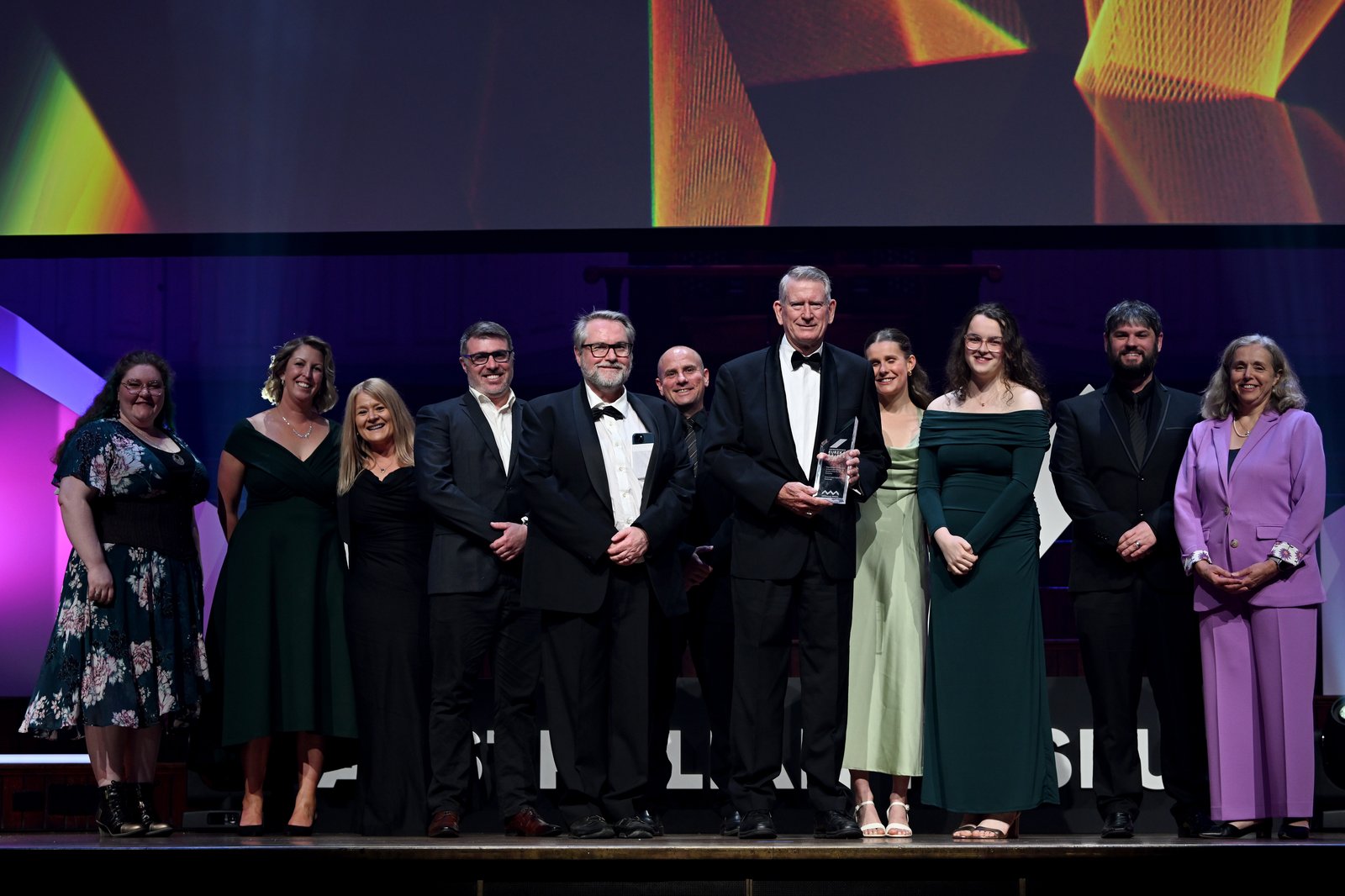
Science and Engineering Challenge accepting the 2025 Department of Industry, Science and Resources Eureka Prize for STEM Inclusion. Photo by Getty
Image: Wendell Teodoro/Getty Images for Australian Museum© 2025 Getty Images
What does winning a Eureka Prize mean to you?
Winning the Eureka Prize is HUGE! There are so many people who contribute to the success of the Science and Engineering Challenge. These people are also quite often volunteers too. Without these people who believe in the mission of SEC, the program would not stand where it does today. Receiving the award for STEM Inclusion is direct recognition of the efforts of all these people. We hope they understand just how much they contribute to the success of the program and our national reach.
The Australian Museum Eureka Prizes are the country’s most comprehensive national science awards, honouring excellence across the areas of research & innovation, leadership, science engagement, and school science.
