
Two new ‘doctors of the reef’ cleaner wrasses identified by museum scientists
Sydney 25 May 2026: Australian Scientists have identified two new species of the Cleaner Wrasse genus (Labroides): the Goldenrod Cleaner Wrasse (Labroides inopinatus) and the Cinnabar Cleaner Wrasse (Labroides flammulatus). The research, published today in the Raffles Bulletin of Zoology also reveals that one of the new species thrives in deeper ocean environments, challenging the notion that Cleaner Wrasses provide ecosystem services exclusively in shallow reefs.
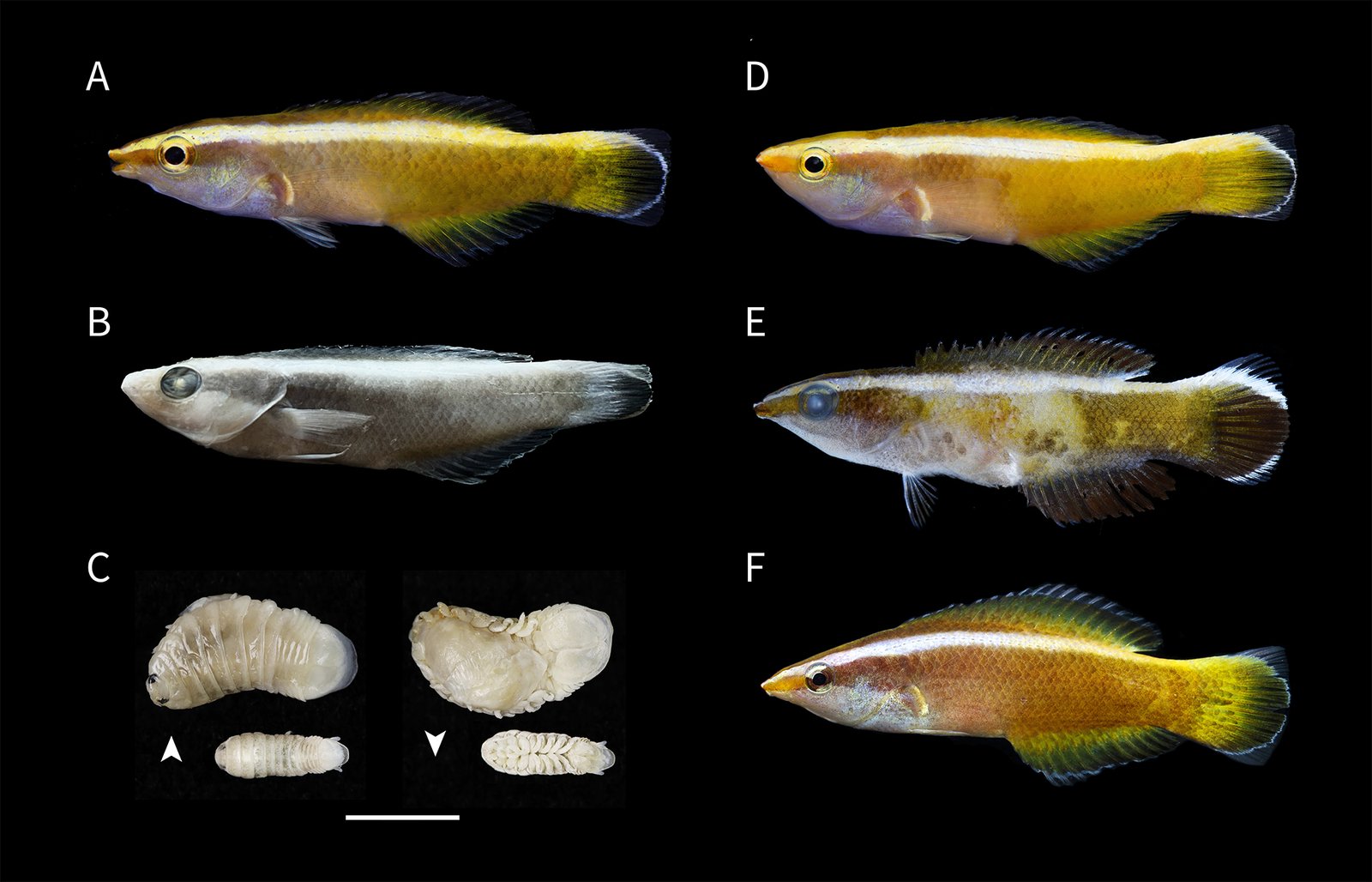
© Y.K. Tea; J. Goh; H. Wada; S. Ramones
Cleaner wrasses perform critical ecological services on coral reefs by removing parasites, dead tissue and debris from larger reef fishes. They operate dedicated ‘cleaning stations’ where larger fish literally queue to be serviced. These cleaning services are so vital that experimental removal of cleaner wrasses from reef systems has been shown to reduce the health and diversity of fish communities.
Australian Museum Curator of Ichthyology, Dr Yi-Kai Tea, said that the discovery of two new species of Cleaner Wrasses demonstrates that despite the multitude of research directed at this charismatic group, there is still a lot to learn about the fundamental taxonomy and identity of these iconic fishes.
"Cleaner wrasses are among the most studied fishes on coral reefs, so finding not one but two new species is an exciting moment for science and an important reminder that understanding the full diversity of the genus is important as climate change and ocean warming place increasing pressure on reef ecosystems worldwide," said Dr Yi-Kai Tea, who is also a research affiliate at the University of Sydney.
Much of the difficulty in resolving the identity of these Cleaner Wrasses is because the species have similar colouration and behaviour, making them difficult to tell apart. Using genetics and micro-CT scanning techniques, Dr Yi-Kai Tea from the Australian Museum and Dr Peter Cowman from the Queensland Museum were able to tease apart their identities, leading to the discovery of new species hidden in plain sight.
Queensland Museum Principal Scientist and James Cook University Associate Professor, Dr Peter Cowman, highlighted the importance of the new DNA analyses and the power of the research collaboration.
“By using advanced phylogenomic techniques, we’ve been able to reveal the true evolutionary history of these fish in much higher resolution. It’s like putting on a new pair of glasses; suddenly, species that were indistinguishable have become distinct.
“This discovery shows that even our most iconic reef residents still hold genomic secrets that can only be unlocked through high-tech analysis and institutional collaboration,” Dr Cowman said.
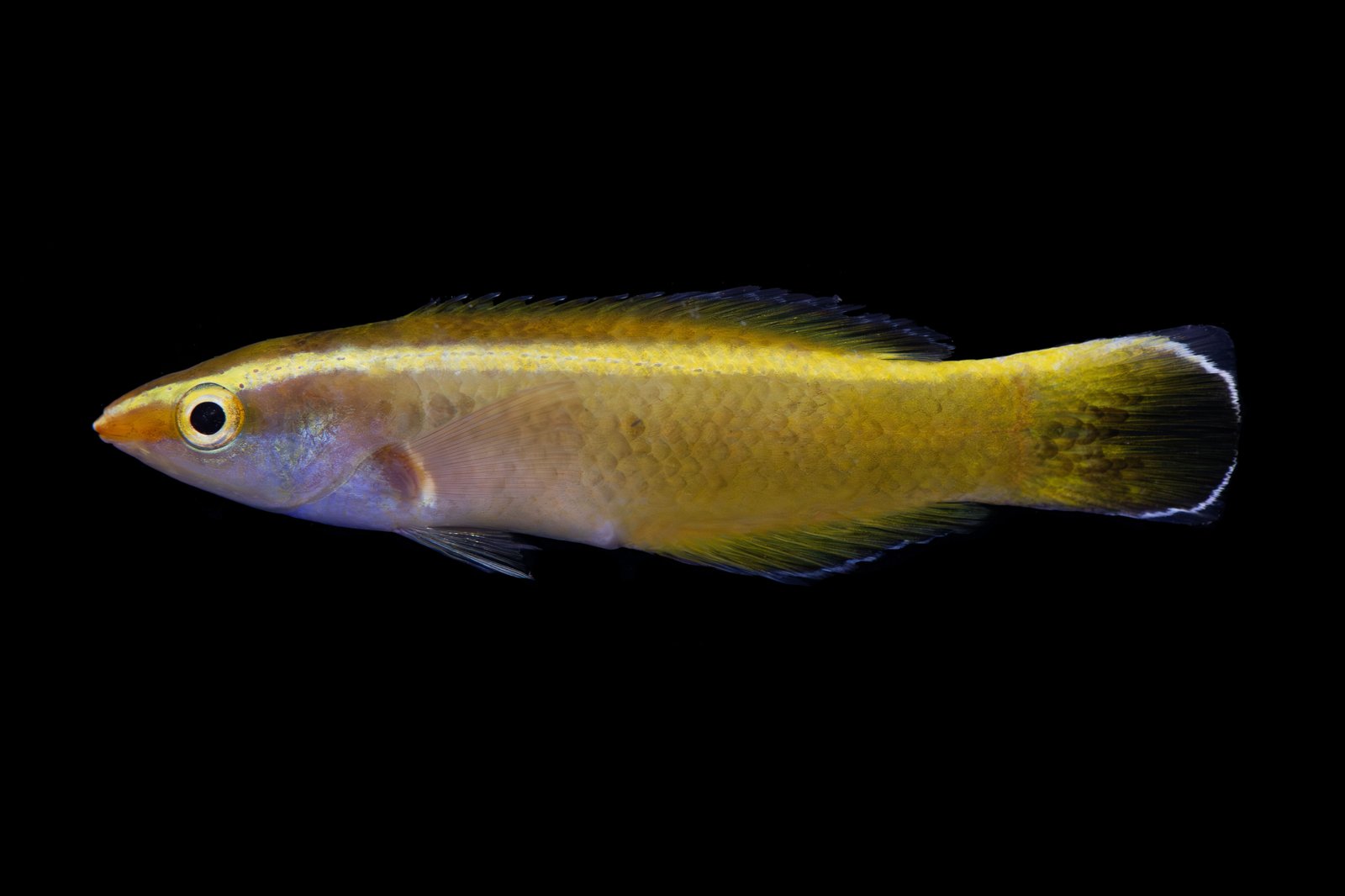
© Yi-Kai Tea
The Goldenrod Cleaner Wrasse (Labroides inopinatus) takes its species name from the Latin for "unexpected”, a nod to its surprising discovery, found between 40 and 145 metres below the surface of the water. It is one of only a handful of cleaner wrasses documented at these depths, suggesting that cleaning stations, traditionally considered a feature of shallow reef life, might play an important ecological role even in deep reefs.
“Most cleaner wrasses operate in the sunlit shallows, but the Goldenrod Cleaner Wrasse is a specialist of the mesophotic zone: the reef's ‘Twilight Zone’. Specimens were collected from the Coral Sea off Queensland, Sagami Bay in Japan, and Boulari Pass in New Caledonia, which suggests a widespread but poorly characterised distribution across the Western Pacific,” Dr Tea said.
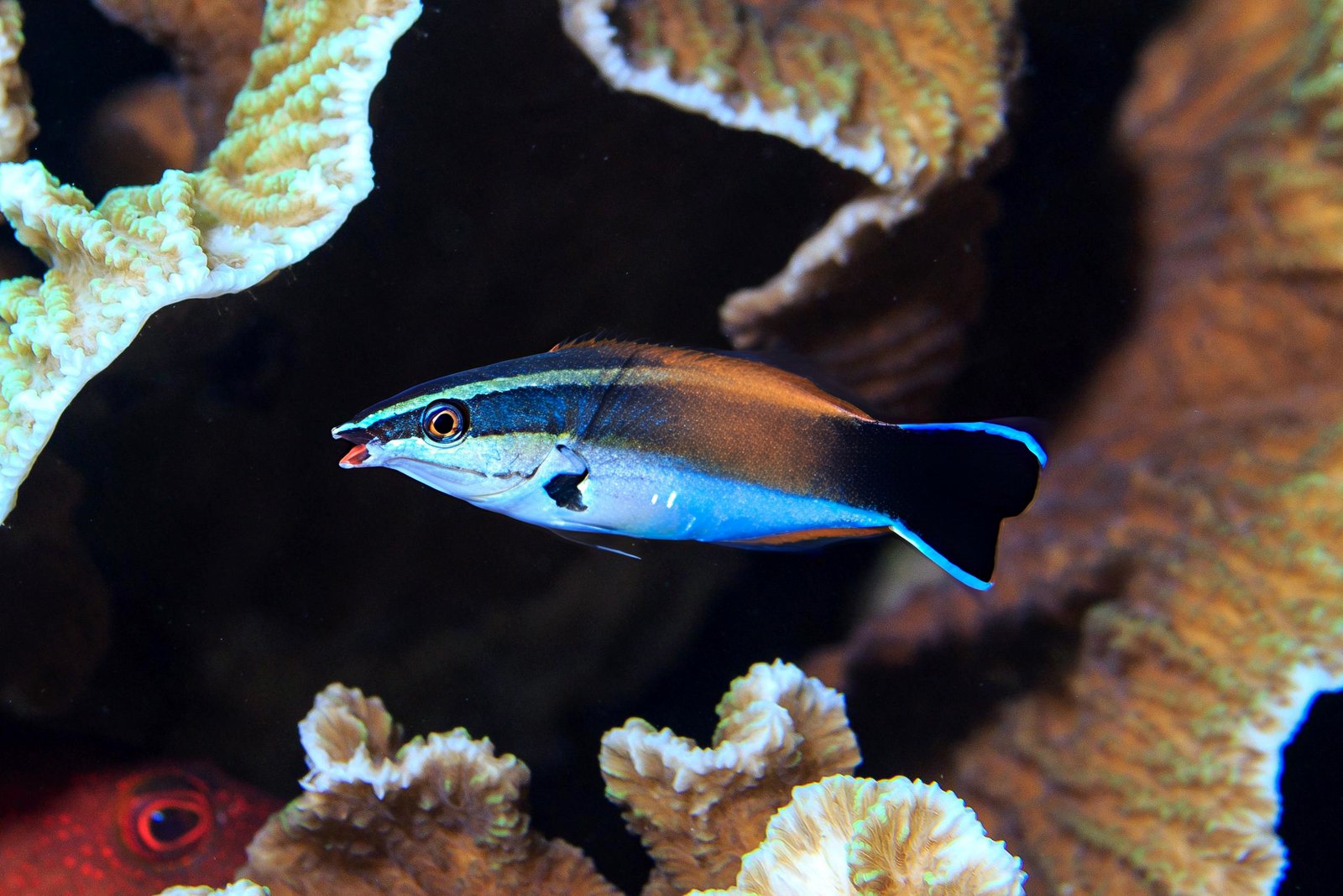
© T. Sinclair-Taylor
The Cinnabar Cleaner Wrasse (Labroides flammulatus) draws on the Latin term for "bearing a small flame", in recognition of its distinctive orange-brown markings, and was collected by the paper’s co-author Jean-Paul Hobbs from the University of Queensland. The Cinnabar was awarded its name by school students who attended the Australian Museum’s annual Sydney Science Trail event in 2023.
"Connecting young students to the naming of this vibrant and well-loved fish means they are now part of the story of this species… forever. I hope they are as thrilled as we are with the discovery and perhaps it might inspire a few to also learn more about our incredible oceans," Dr Tea said.
The specimens that were used to describe the new species are now in the AM’s Type collection*, where they will remain as part of the reference collection for further study and research.
Dr Yi-Kai Tea and the Australian Museum received funding from the Minderoo Foundation and the University of Sydney to support this research.
Dr Peter Cowman received funding through the QM Project DIG and the ARC Discovery Early Career Research Award (DECRA) administered by JCU.
*Type specimens form part of biological collections maintained by museums and universities where they can be accessed by other scientists.
Download the media release
Media contact
Clare Patience
Head of Communications Australian Museum
media@australian.musuem
Christine Robertson
Media and PR Manager, Queensland Museum
media@qm.qld.gov.au
About the Australian Museum
The Australian Museum (AM) was founded in 1827 and is the nation’s first museum. It is internationally recognised as a natural science and culture institution focused on Australia and the Pacific. The AM’s mission is to ignite wonder, inspire debate and drive change. The AM’s vision is to be a leading voice for the richness of life, the Earth and culture in Australia and the Pacific. The AM commits to transforming the conversation around climate change, the environment and wildlife conservation; to being a strong advocate for First Nations cultures; and to continuing to develop world-leading science, collections, exhibitions and education programs. With 22 million objects and specimens and the Australian Museum Research Institute (AMRI), the AM is not only a dynamic source of reliable scientific information on some of the most pressing environmental and social challenges facing our region, but also an important site of cultural exchange and learning.
