
Marsupials found alive after 6,000 years of extinction
Sydney, March 06, 2026: Published today in the Records of the Australian Museum journal, ground-breaking research led by Professor Tim Flannery, Australian Museum Distinguished Visiting Fellow, and Professor Kristofer Helgen, President and CEO of Bishop Museum, indicates two marsupial species, previously thought to be extinct for over 6,000 years, have been discovered living in the remote rainforests of the Vogelkop Peninsula in Papuan Indonesia.
The identification of the Pygmy Long-fingered Possum (Dactylonax kambuayai) and the Ring-tailed Glider (Tous ayamaruensis) – two 'Lazarus taxa’ (species that appear to have come back from the dead) – was made possible by piecing together evidence gathered across the globe, which included the only known specimen held at the Australian Museum (collected in 1992 and misidentified at the time), rare photographs taken by local researchers as well as fossil fragments.
A longstanding relationship between Professor Flannery and researchers from The University of Papua, alongside working with local Elders from the Tambrauw and Maybrat clans, was pivotal in understanding the remote location and gaining insight into the local knowledge about the marsupials.
"The discovery of one Lazarus taxon, even if thought to have become extinct recently, is an exceptional discovery. But the discovery of two species, thought to have been extinct for thousands of years, is remarkable," Professor Tim Flannery said.
"The findings underscore the critical importance of preserving these unique bioregions and the value of collaborative research in uncovering and protecting hidden biodiversity."
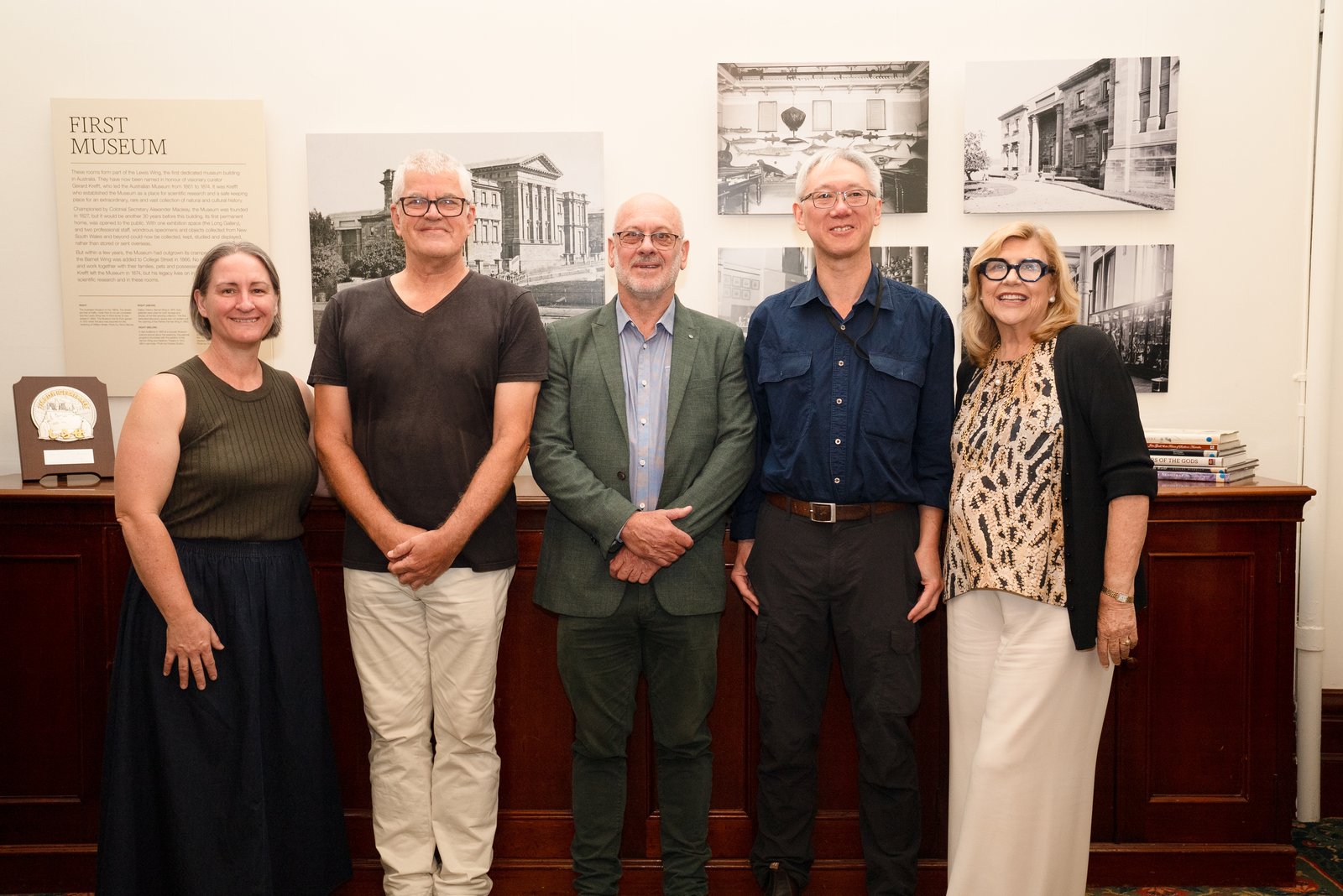
A special breakfast was held to celebrate the publication (L to R) Julie Elmers, Acting Director of the Australian Museum Research Institute (AMRI), Shane McEvey, Editor of the Records of the Australian Museum journal, Professor Tim Flannery (centre), Australian Museum Distinguished Visiting Fellow, with Professor Shane Ahyong Chief Scientist, AMRI and Kim McKay, AO, Director and CEO of the Australian Museum.
Image: Louise Reily© Australian Museum
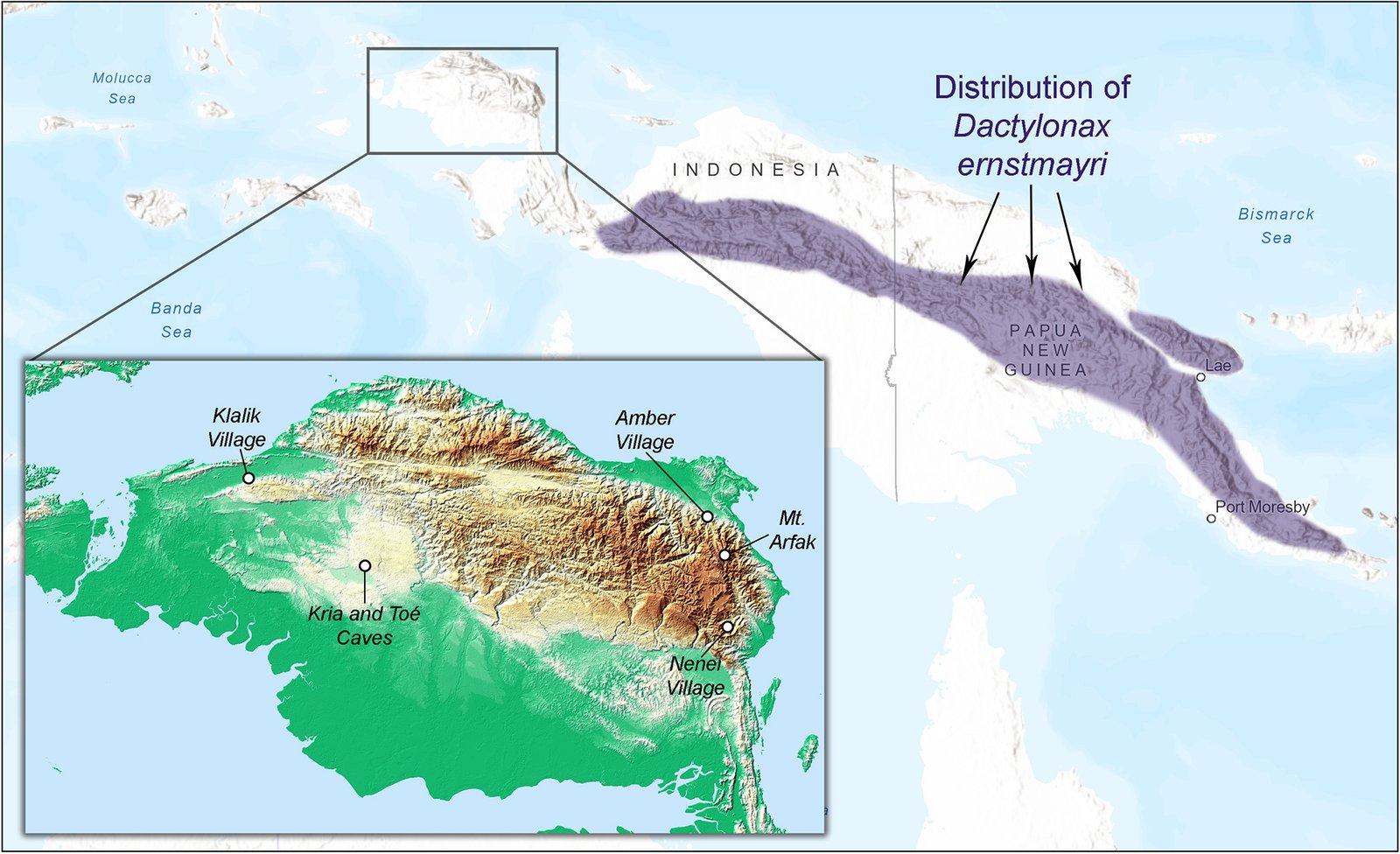
The Pygmy Long-fingered Possum (Dactylonax kambuayai) is a boldly striped marsupial with a remarkable adaptation – one digit on each hand is twice the length of the next longest finger. The species appears to have vanished from Australia during the Ice Age, the geological epoch when iconic megafauna, such as the diprotodon and the marsupial lion (the subject of a newly unveiled Australian Museum exhibition, Surviving Australia) also became extinct.
© Tim Flannery, Journals of the Australian Museum
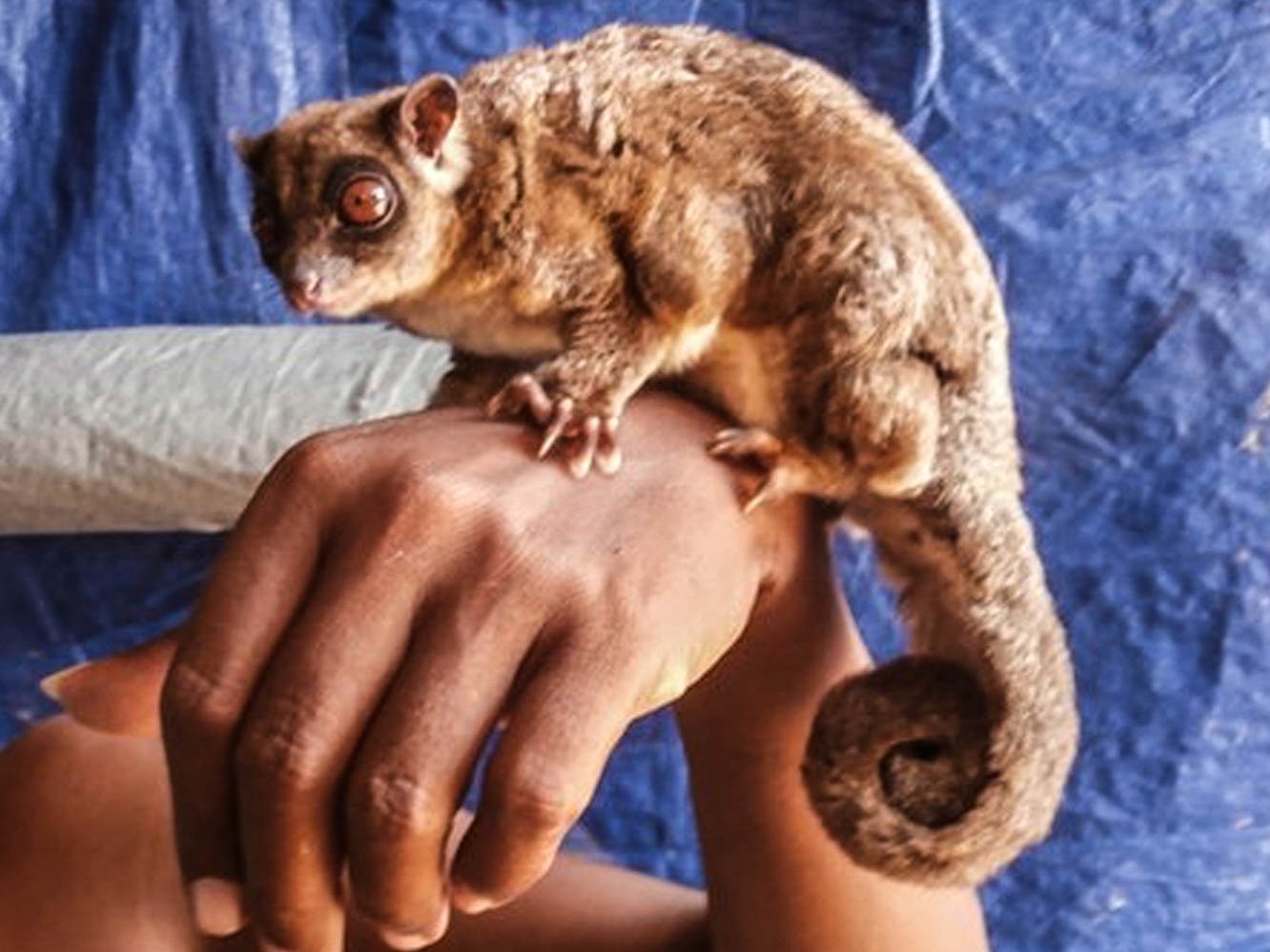
The second discovery, the Ring-tailed Glider (Tous ayamaruensis), is the nearest living relative of the Australian Greater Glider and represents the first new genus of New Guinean marsupial described since 1937. Smaller than its Australian cousins, with unfurred ears and a strongly prehensile tail, the Ring-tailed Glider forms lifelong pair bonds and only raises one young annually. Like greater gliders, the species nests in tree hollows in the tallest forest trees and faces threats from logging.
© Arman Muharmansyah
The glider holds deep cultural significance for local communities of the region. Tous is considered sacred by some Vogelkop clans, who have protected its forest habitat for millennia. At the heart of this habitat stand gigantic kauri trees that local people believe mark the birthplace of all animals and humans.
“Referred to locally as Tous by some Tambrauw and Maybrat clans, the glider is a sacred animal. Considered a manifestation of ancestors’ spirits and central to an educational practice referred to as “initiation”. We worked very carefully and collaboratively with Tambrauw Elders and identification would not have been possible without cooperation with Traditional Owners and this connection has been essential for ongoing work,” Rika Korain, a Maybrat woman and co-author of the paper said.
© Tim Flannery, Journals of the Australian Museum
“I’m very proud that Papuan researchers contributed to these landmark discoveries, and want to thank the people of the Misool, Maybrat and Tambrouw regions who supported us in the field,” Dr Aksamina Yohanita of the University of Papua said.
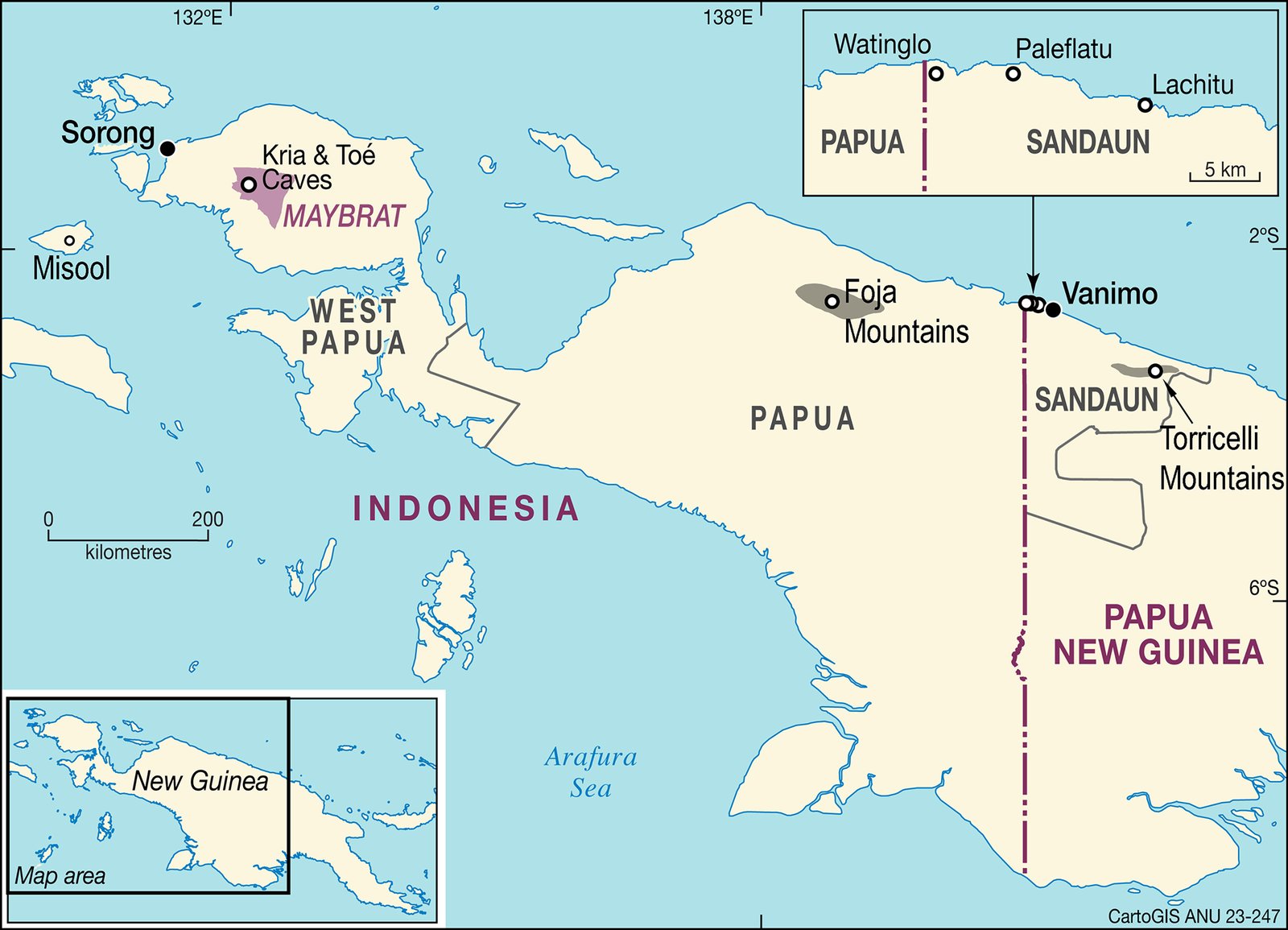
Previously known from Pleistocene fossils in Australia, and from Pleistocene-early Holocene fossils from New Guinea, both species have been found in isolated lowland forest habitats on the Vogelkop Peninsula and have no close relatives elsewhere in New Guinea, offering important clues about the region's geological history.
"The Vogelkop is an ancient piece of the Australian continent that has become incorporated into the island of New Guinea. Its forests may shelter yet more hidden relics of a past Australia," Flannery said.
The research was supported by The Global Wildlife Fund with the Minderoo Foundation, and raises new questions about species survival, extinction, and the hidden biodiversity that may still exist in remote forests. Global Wildlife Fund, supported by Minderoo Foundation and other Australian donors, is working with local communities to provide urgent protection for the Vogelkop forests, which are possibly the last stronghold for these newly described species. This underscores the critical importance of protecting ancient habitats and the knowledge of Indigenous communities who have served as their custodians.
Records of the Australian Museum is a peer-reviewed, Open Access journal publishing the results of studies based on Australian Museum collections. Published on 6 March, 2026, the most recent issue, ‘Contributions to the Mammalogy of New Guinea,’ compiles eight papers highlighting recent discoveries and research, including the two papers: ‘A New Genus of Hemibelideine Possum (Marsupialia: Pseudocheiridae) from New Guinea and Australia’ and ‘Found Alive After 6,000 Years: Modern Records of an ‘Extinct’ Papuan Marsupial, Dactylonax kambuayai´, which detail the identification of the Pygmy Long-fingered Possum and the Ring-tailed Glider.
For media inquiries, contact Clare Patience, 0408 846 224 or email media@australian.museum.
About the Ring-tailed Glider:
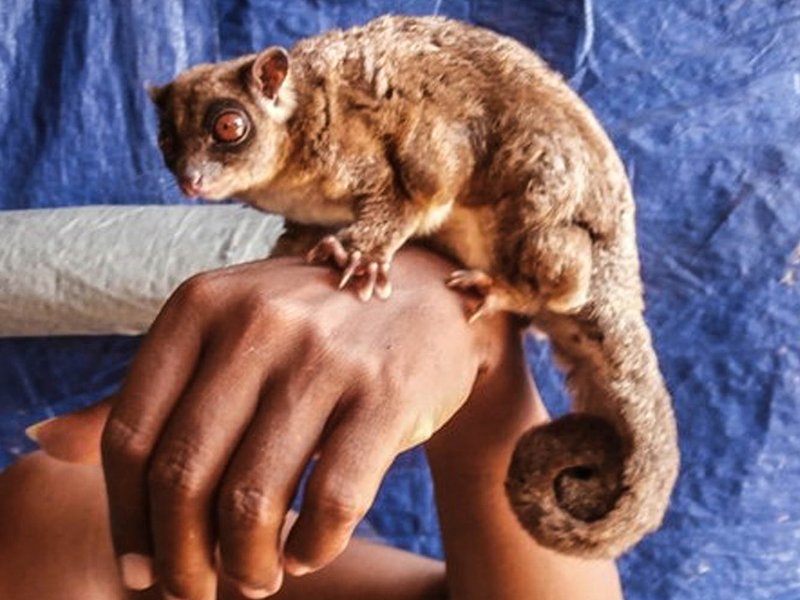
The Ring-tailed Glider (Tous ayamaruensis)
- Description: A gliding possum with large eyes and a powerfully prehensile tail
- Size: Around 300 grams (half the size of the smallest greater gliders)
- Related to: Greater Glider
- Diet: possibly sap, some leaves
- Habitat: Rainforest
About Records of the Australian Museum ‘Contributions to the Mammalogy of New Guinea’
The Records of the Australian Museum occasionally publishes special thematic issues when multiple manuscripts on related animal groups are submitted simultaneously. The 6 March 2026 issue, “Contributions to the Mammalogy of New Guinea,” compiles eight papers highlighting recent discoveries and research. These include two discoveries of species known previously only from fossils: the Pygmy Long-fingered Possum (Dactylonax) and the Ring-tailed Glider (Tous), which was co-authored by Tim F. Flannery, Kristofer M. Helgen, Loukas G. Koungoulos, Erik Meijaard, Aksamina M. Yohanita, Arman Muharmansyah, Ichlas Al Zaqie, Kenneth P. Aplin, Frederika Korain, and Marneks Mjam. The issue also features the description of a new bandicoot species; the detailed genetic analyses of several tree kangaroo species and a study of the rare New Guinea Big-eared Bat. A zoogeographic investigation examines mammal evolution and dispersal effected by the accretion of four ancient island blocks into the northern Australian continental margin. The issue concludes with a translation of a century-old diary by a German naturalist. Together, these articles by 29 Australian and Indonesian researchers offer a multidisciplinary update on New Guinea’s mammalian diversity, evolutionary history, and conservation importance.
About the Australian Museum
The nation’s first museum, the Australian Museum (AM) was founded in 1827 and will mark its 200-year milestone in 2027. It is internationally recognised as a natural science and culture institution focused on Australia and the Pacific. The AM holds more than 22 million objects and specimens in its collection, and pursues a mission to ignite wonder, inspire debate and drive change. The AM’s vision is to be a leading voice for the richness of life, the Earth and culture in Australia and the Pacific and commits to transforming the conversation around climate change, the environment and wildlife conservation; being a strong advocate for First Nations cultures; and continuing to develop world-leading science through its Australian Museum Research Institute (AMRI). The AM is not only a dynamic source of reliable scientific information on the environmental and social challenges facing our region, but also an important site of cultural exchange and learning. Visit www.Australian.Museum
About Global Wildlife Fund
Global Wildlife Fund (GWF) is an Australian charity that partners with local conservation organisations around the world to support effective, science-based projects designed to restore wildlife populations and habitats in priority locations in Africa, South America and the Asia-Pacific. GWF negotiate project funding agreements, track the progress of projects and report back on outcomes and metrics. Key projects include translocations of wildlife, funding the acquisition of land for private (non-profit) reserves and initiatives to ensure local communities benefit from conservation. Visit www.globalwildlifefund.org
About Minderoo
Minderoo Foundation is a modern Australian philanthropy working to create a future where people and the natural ecosystems we depend on can thrive. Minderoo takes responsibility for driving lasting change by strengthening communities, advancing gender equality and protecting natural ecosystems. Through partnerships, evidence and advocacy, Minderoo supports practical reform and develops solutions that address root causes across Australia and the Asia Pacific. Visit www.minderoo.org.
