
Medusae of the Australian Seas (1887)
Affectionately known as the 'jellyfish painting', 'Medusae of the Australian Seas' (1887) is one of the most beloved artworks held in the Australian Museum Archives.

Created for an Australian Museum scientific catalogue in 1887, Medusae of the Australian Seas is one of the earliest visual records of Australian jellyfish. In the painting, artist Ellen von Lendenfeld beautifully documents delicate jellyfish species that were historically too difficult to preserve and display in a museum for scientists to study.
About the artwork
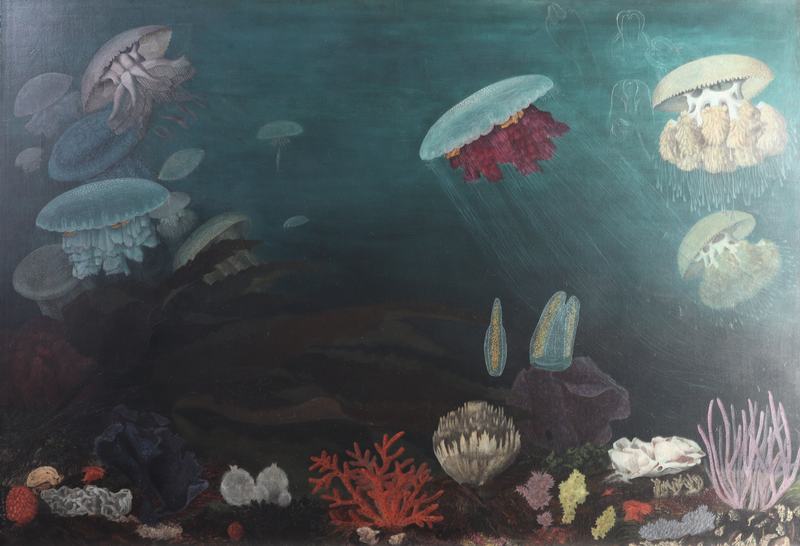
In 1887, Robert von Lendenfeld (1858-1913), an Austrian naturalist renowned for his pioneering research on Australian marine life, created a catalogue of Australian jellyfish species for the Australian Museum. At the time, many of these species had not yet been described or illustrated, so Lendenfeld's catalogue became an important record for both scientists at the AM and abroad. Critical to Lendenfeld's catalogue was a one-page plate that illustrated the different species, based on the 100cm x 150cm oil painting now in the Australian Museum Archives.
For a long time, it was thought that Lendenfeld himself had painted the artwork. However, research during the painting's recent conservation treatment revealed that his mother Ellen von Lendenfeld had actually painted the artwork specially for her son's project. Today, Ellen's original painting is held in the AM Archives and serves as a testament to how naturalists combined art with science, as well as to the often hidden role of women in natural history illustration in 19th century Australia.
© Supplied by International Conservation Services
© Supplied by International Conservation Services
© Supplied by International Conservation Services
The first catalogue and oil painting of Australian jellyfish
In the late 19th century, underwater scenes were notoriously difficult to illustrate and marine invertebrates notoriously difficult to describe. For one, underwater photography didn't yet exist, so it was extremely difficult to get references for artists to work from. Further, gelatinous creatures like jellyfish are much more challenging to preserve than other animals like mammals, fish and birds, which meant that museums didn't have great sample specimens for artists to draw from life or for scientists to study and describe. As Robert von Lendenfeld said himself:
The difficulty connected with the preservation of these beautiful animals has been a great obstacle in the way of a thorough knowledge of them. Robert von Lendenfeld, 'Descriptive catalogue of the medusae of the Australian seas : in two parts' (1887).
To create his catalogue, Robert von Lendenfeld therefore had to undertake his own fieldwork, observing living animals in the wild and collecting fresh specimens. This enabled him to describe five new species from New Zealand, Victoria and Port Jackson, while also correcting errors in species that had been misidentified by earlier naturalists.
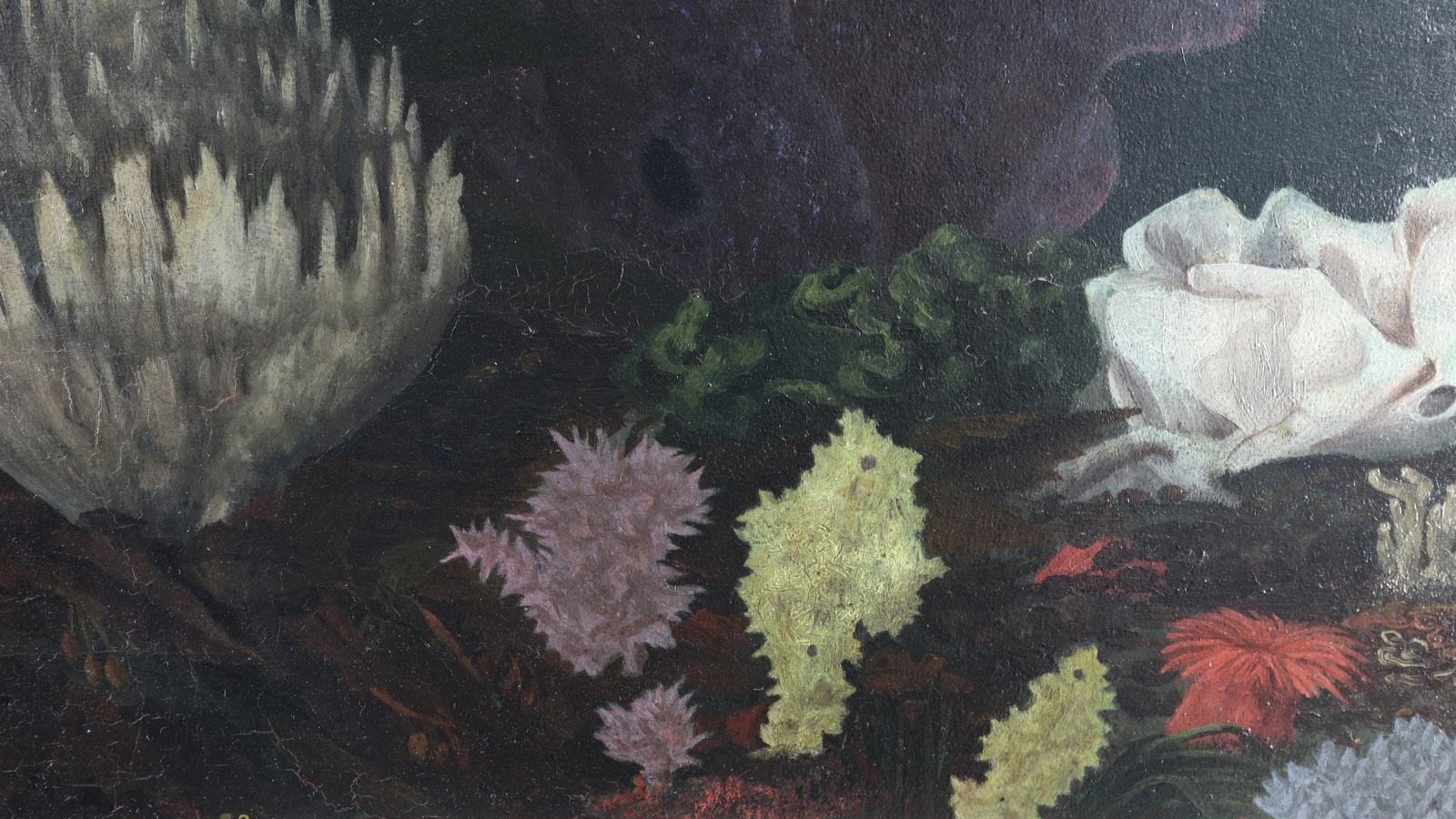
Ellen von Lendenfeld translated her son's scientific discoveries into paint, depicting his newly described jellyfish alongside corals and sponges. Working from his descriptions and perhaps his freshly collected specimens, she produced the first known visual representation of several species. In doing so, she not only contributed to scientific knowledge but also created the first known Australian oil painting of an underwater scene, securing her place in the histories of both Australian science and art.
Restoration of the painting
As one of the oldest and most loved pieces in the AM's Archives, time naturally took its toll on Lendenfeld's artwork throughout its 150+ year history. In 2025, recognising the significance and beauty of this piece, the AM's Collection Care and Conservation and Archives departments successfully applied for a grant from the Copland Foundation to restore the painting's vibrancy and integrity for generations to come.
Through the grant, the AM was able to send the jellyfish painting to International Conservation Services in Sydney for specialist conservation work with Matteo Volonté, Head of Paintings Conservation.
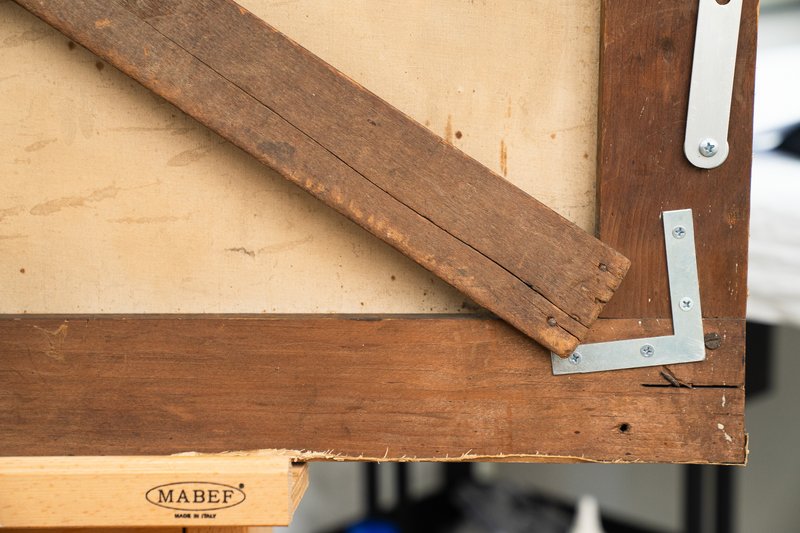
Structural stabilisation
The first phase of the conservation project addressed the physical condition of the work, which included:
- Encompassing surface cleaning, consolidation of unstable media
- Flattening of deformations
- Repair of tears
- And, re-stretching of the canvas.
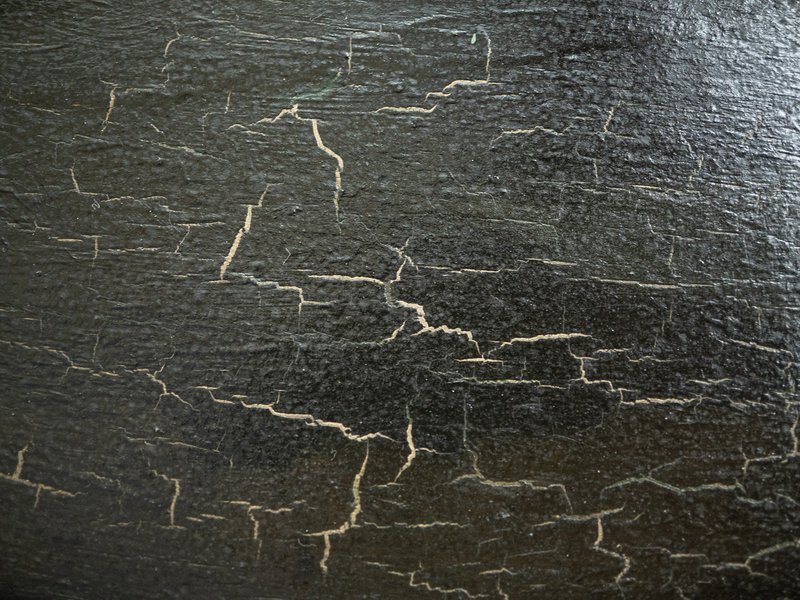
Aesthetic restoration
The second phase focused on the visual integrity of the painting, which involved:
- Removing discoloured varnish and previous retouching
- Infilling of paint losses
- Inpainting with conservation-grade materials
- And, the application of a final unifying varnish.
Together, these treatments restored both the structural integrity and visual legibility of Underwater Scene with Medusae and Corals (1887), ensuring this rare and striking work remains stable, interpretable and accessible within the AM's collection.
Any painting, any artwork, any historical piece, is a piece of the puzzle that helps us understand ourselves more. Matteo Volonté on the importance of preserving 'Medusae of the Australian Seas', 2026.
Slide to see the painting before and after treatment
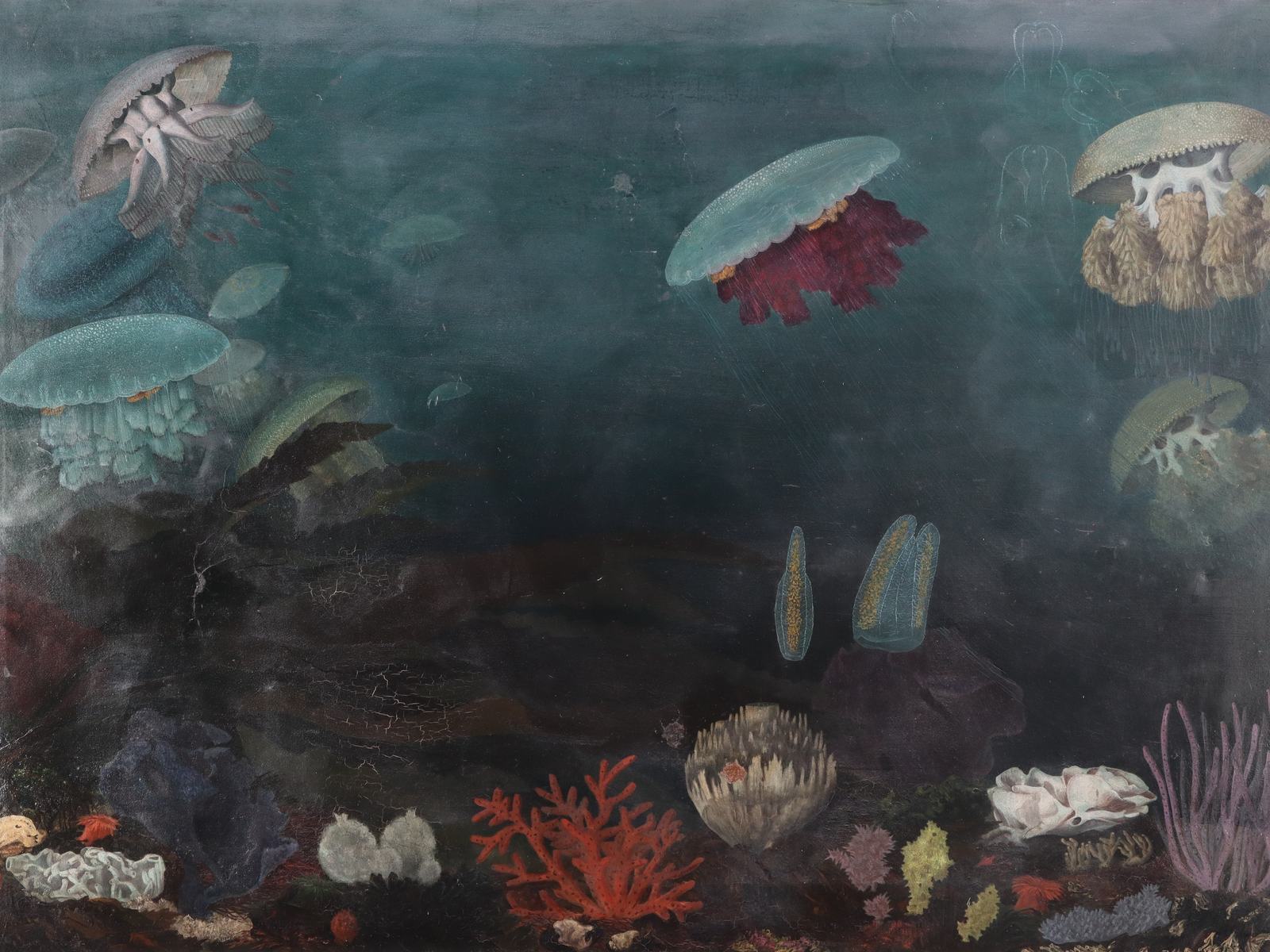
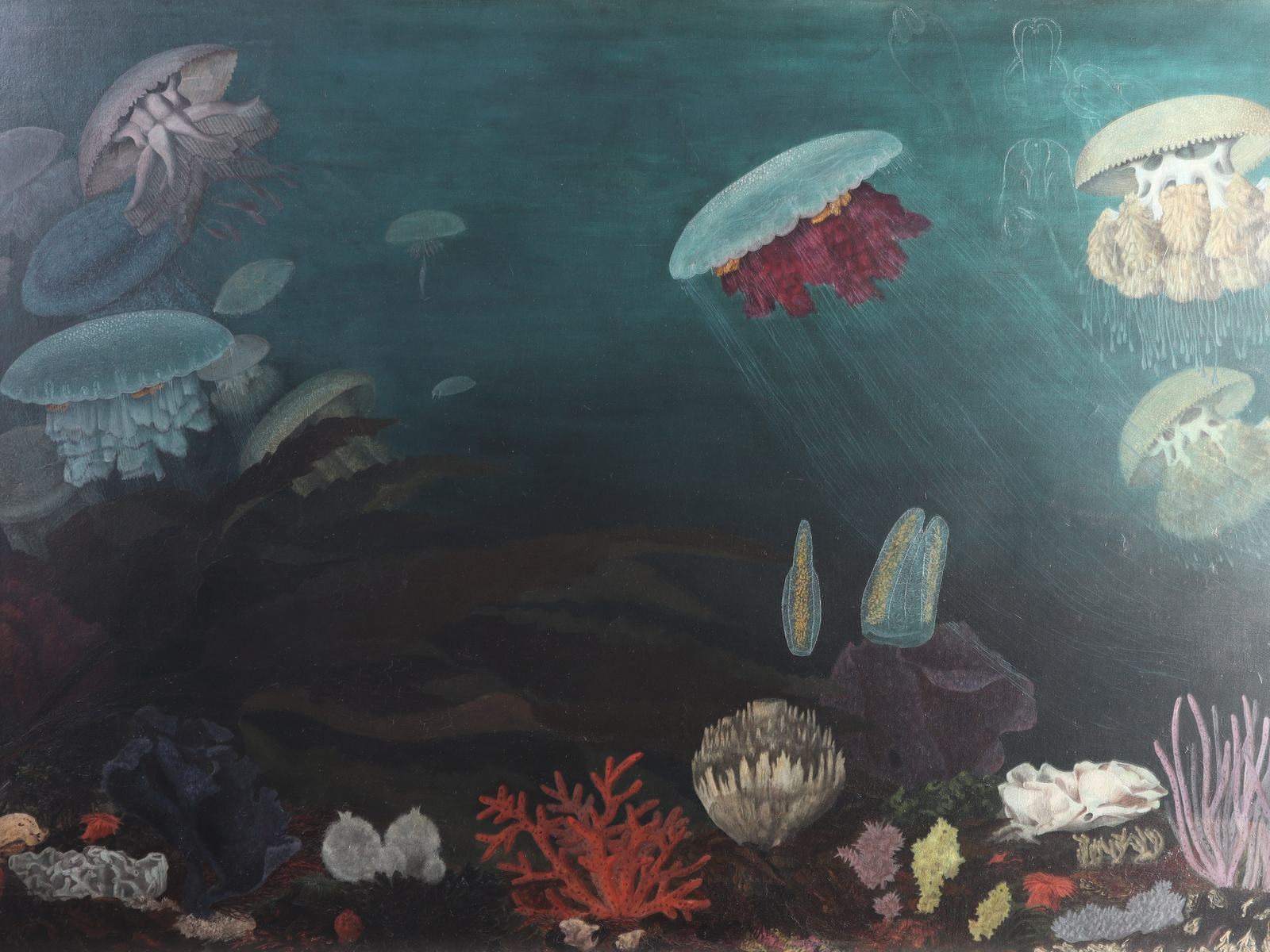
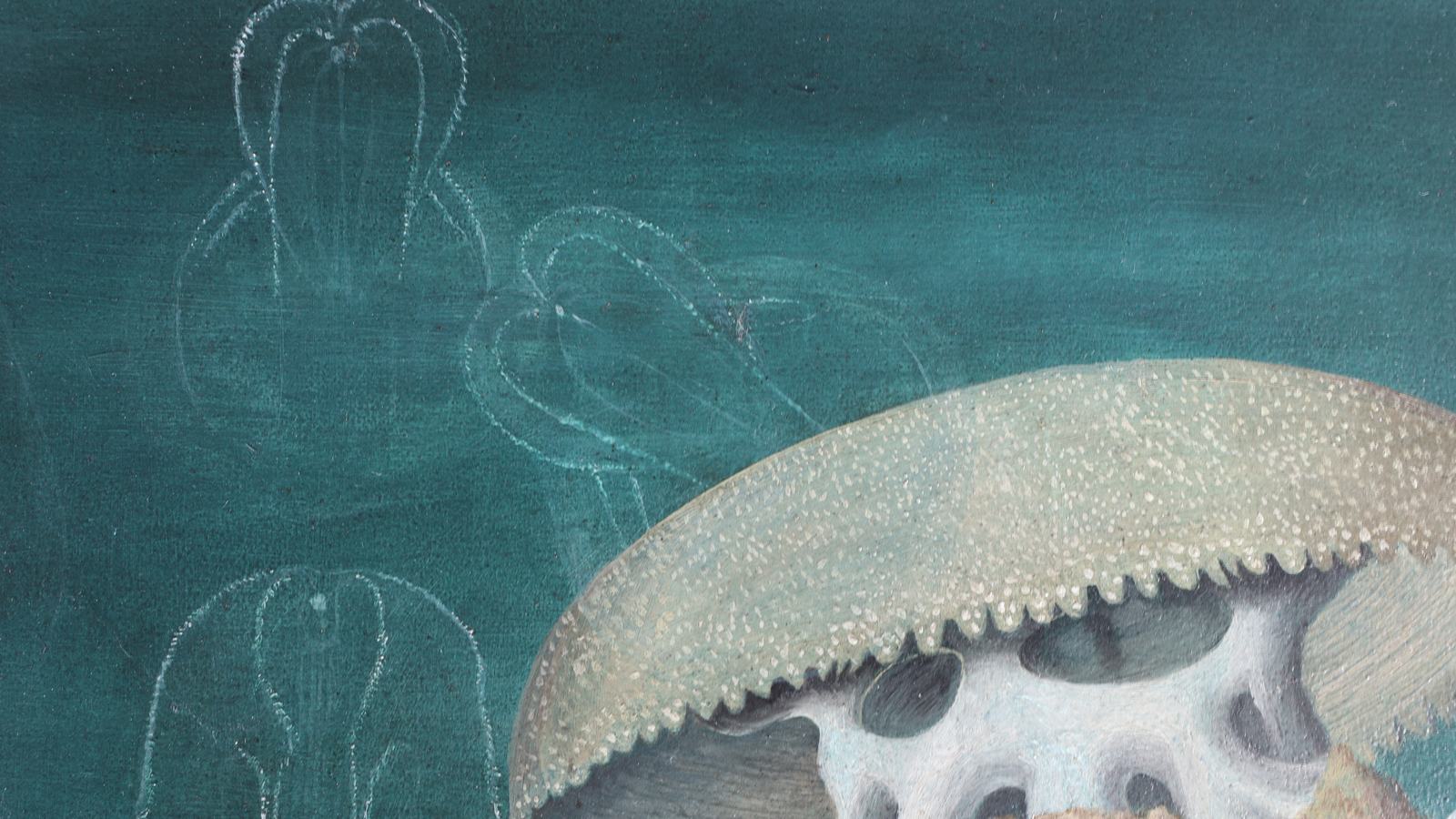
These pictures show how the conservation treatment brought the colours, details and vibrancy of the painting back to life. Images supplied by International Conservation Services.
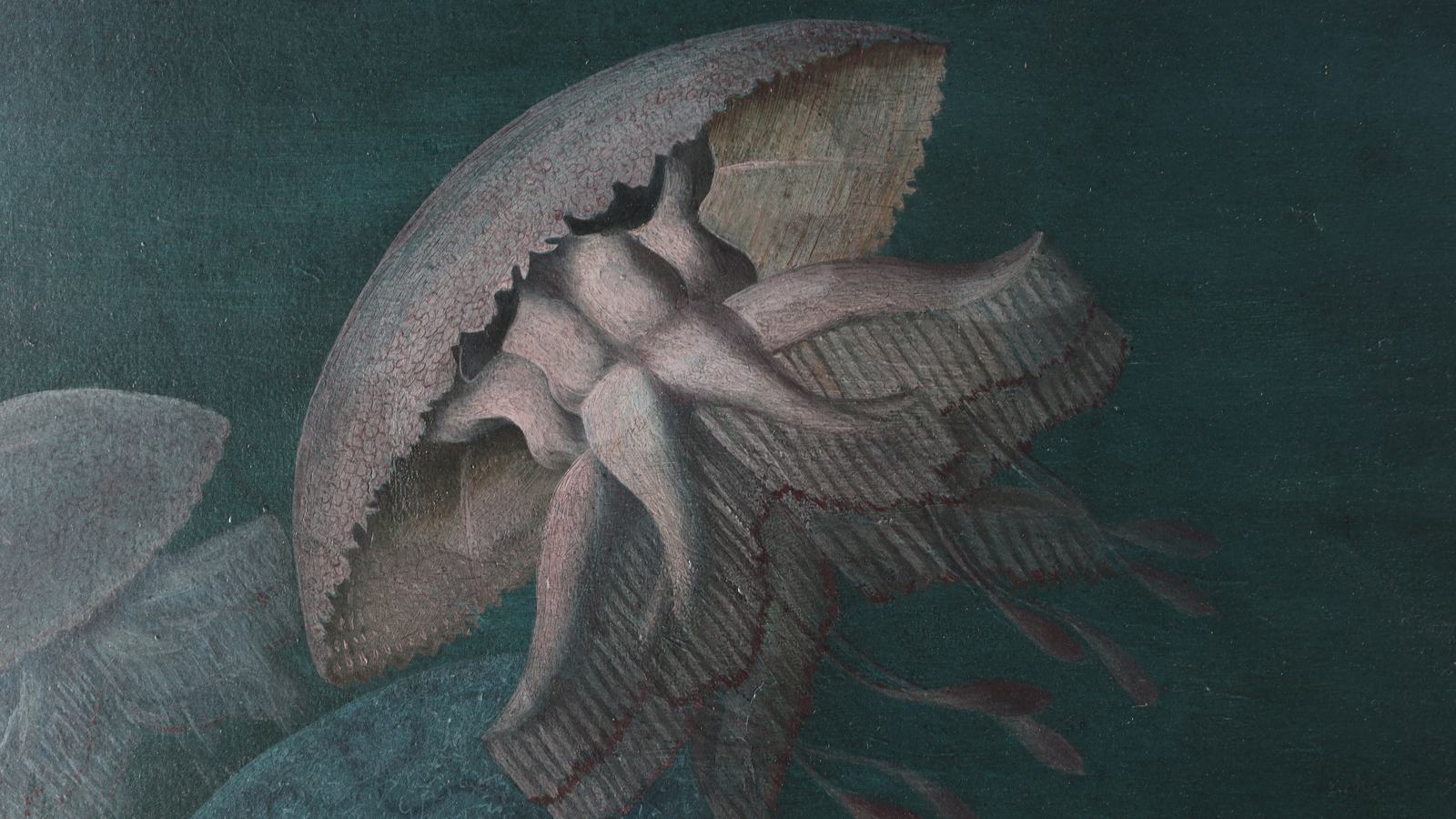
Slide to see the Cyanaea annaskala specimen before and after varnish removal
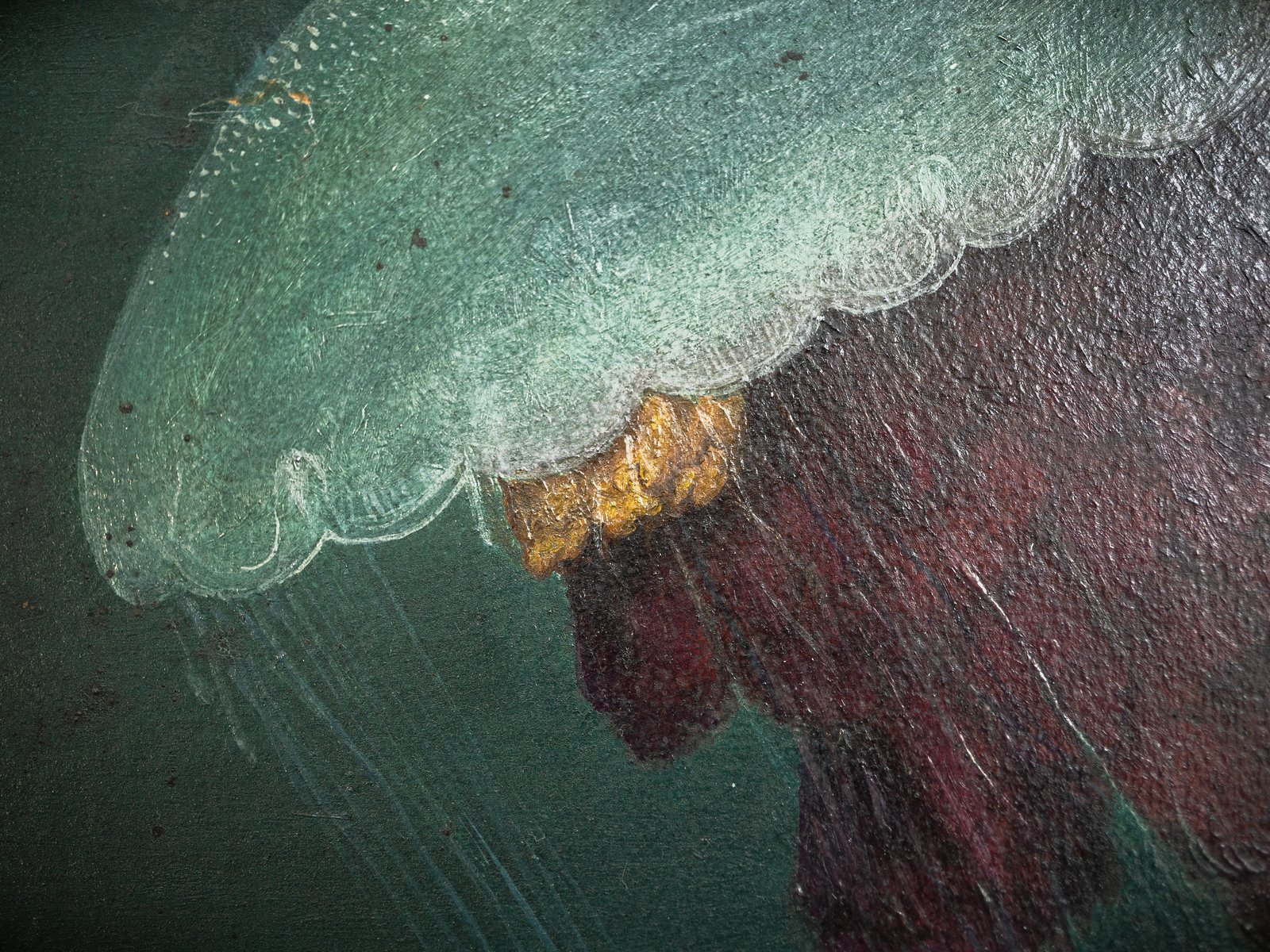
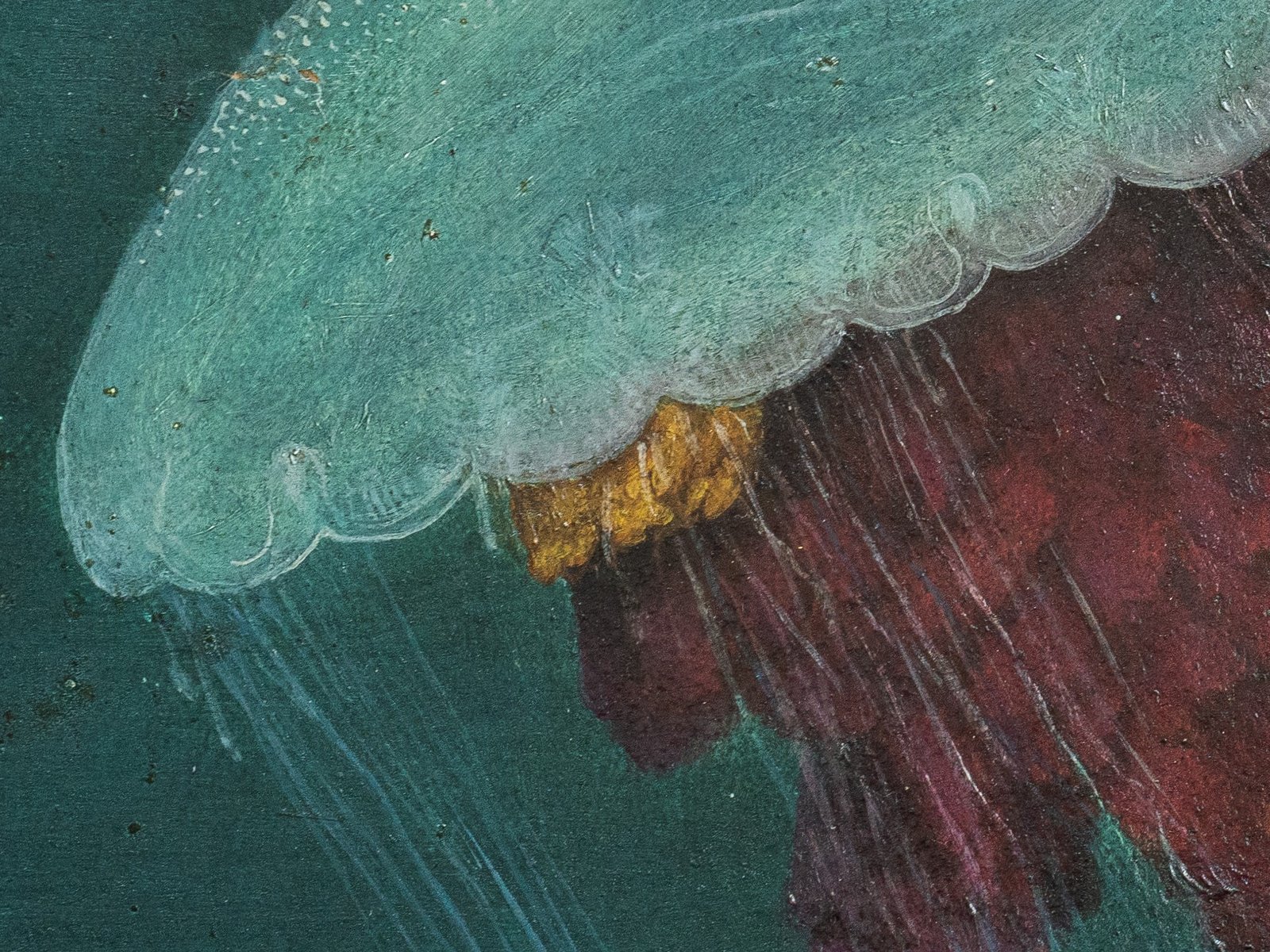
Robert von Lendenfeld discovered this species, commonly known as the Lion's Mane jellyfish, in 1882. Images taken by Louise Reily, Australian Museum.
